
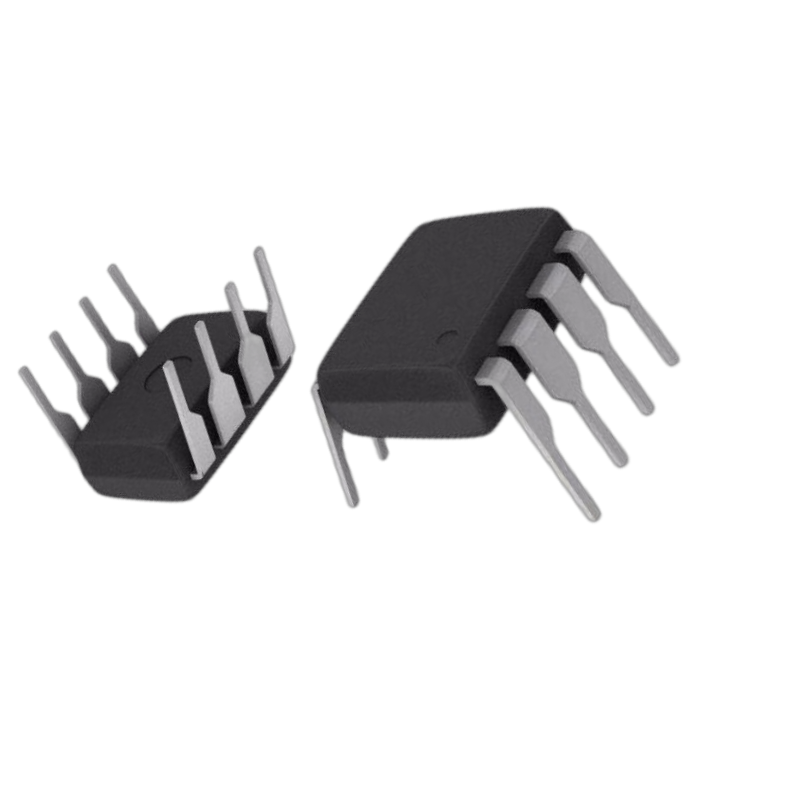
ADI 5962-9096201MQA
- Monolithic BiMOS II tracking resolver-to-digital converter with user-selectable 10/12/14/16-bit resolution
- Ratiometric tracking conversion — continuous position output with no conversion delay
- High tracking rate: up to 1,040 RPS at 10-bit resolution with user-defined dynamic performance
- Analog velocity output replaces tachogenerator — linear to ±1% full scale
- MIL-STD-883 Class B qualified under SMD 5962-90962 — 40-lead ceramic SBDIP package
- Military temperature range: –55°C to +125°C
Resolver-to-digital conversion is one of the less glamorous but more consequential functions in military motion control and navigation systems. The resolver is robust, radiation-tolerant, and mechanically simple — but its sinusoidal angle-encoded outputs require a dedicated converter to produce the digital position word that the rest of the system can use. The ADI 5962-9096201MQA is the military SMD designation for Analog Devices' AD2S80AS, a monolithic BiMOS II tracking RDC that handles this conversion in a single 40-lead ceramic package, qualified to MIL-STD-883 Class B under SMD 5962-90962.
What makes the AD2S80A architecture particularly useful for military system designers is the combination of user-configurable resolution and dynamics. Two control pins select the output resolution — 10, 12, 14, or 16 bits — and external resistor and capacitor values determine the converter's bandwidth, maximum tracking rate, and velocity scaling. This means a single qualified component can be tuned to the specific motion profile requirements of a given axis without substituting a different part. The ratiometric tracking conversion method — which continuously tracks the resolver angle rather than performing discrete conversions — delivers uninterrupted position data with high noise immunity and tolerance for cable length between the converter and the resolver, a practical advantage in military installations where signal runs can be long and electrically noisy.
Related Products For Your Business
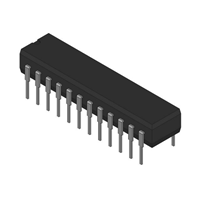
Resolvers dominate military angle sensing because they survive what encoders cannot — vibration, shock, extreme temperature, and radiation. But the resolver’s output is analog, and every digital motion control or navigation system needs a converter between the resolver and the processor. The ADI 5962-9096201MQA does that job in a single qualified component: a monolithic tracking RDC that converts resolver sin/cos signals into a parallel digital position word continuously, without conversion delay, and with the noise immunity that long cable runs in military installations demand.
5962-9096201MQA Architecture: Tracking Conversion and User-Defined Dynamics
The AD2S80A tracking architecture maintains a continuously updated digital estimate of resolver angle using an internal phase-sensitive detector, integrator, VCO, and up/down counter loop. Unlike successive-approximation or flash converters that produce position data only on demand, the tracking approach delivers the current angle at any time without latency — which matters in real-time servo control loops where conversion delay introduces phase error. The resolution — 10, 12, 14, or 16 bits — is set by two pins (SC1, SC2), and the loop dynamics are defined by external passive components. The table below shows how resolution selection trades against maximum tracking rate:
| Resolution | Max Tracking Rate | Angular Accuracy |
|---|---|---|
| 10 Bit | 1,040 RPS (62,400 RPM) | 8 arc min ±1 LSB |
| 12 Bit | 260 RPS | 8 arc min ±1 LSB |
| 14 Bit | 65 RPS | 8 arc min ±1 LSB |
| 16 Bit | 16.25 RPS | 8 arc min ±1 LSB |
For high-speed axes — antenna drives, motor commutation — 10-bit or 12-bit resolution at maximum tracking rate is the typical operating point. For precision positioning where angular accuracy is the priority over speed, 14-bit or 16-bit resolution provides finer position granularity within the 8 arc min ±1 LSB angular accuracy specification of the S grade.
5962-9096201MQA Interface and Signal Chain Integration
The 5962-9096201MQA outputs a 16-bit parallel natural binary position word organized as two 8-bit bytes, with BYTE SELECT, ENABLE, and INHIBIT pins that directly accommodate both 8-bit and 16-bit military processor data buses. The analog velocity output — linear to ±1% full scale — provides a tachogenerator-equivalent signal that can close a velocity feedback loop without a separate velocity sensor. In designs that also require precision analog signal conditioning ahead of or after the RDC, the 5962-8872101PA OP270 dual precision op amp and the 5962-8876401LA OP27E are natural companion components for low-noise signal conditioning of the resolver excitation and output signals within the same MIL-STD-883 qualification framework.
Sourcing the ADI 5962-9096201MQA
Military RDCs are specialized components with limited distribution channels and long program lifespans — the AD2S80A has been in continuous use in defense servo and navigation programs for decades. We maintain verified 5962-9096201MQA inventory with full lot traceability, MIL-STD-883 certificate of conformance, and anti-counterfeit inspection. Contact us today to confirm availability and request a quote — our team responds within 24 hours.
- Monolithic single-chip solution — replaces multi-chip discrete RDC implementations
- User-selectable resolution eliminates the need for different qualified parts across different axis requirements
- Ratiometric tracking provides continuous position output — no conversion latency in servo control loops
- Analog velocity output eliminates tachogenerator in many military servo applications
- BUSY, DIRECTION, and RIPPLE CLOCK outputs support cycle counting and position verification in external logic
- ESD Class 2 protection (2,000V minimum) for robust handling in military assembly environments
- 40-lead ceramic SBDIP package — hermetic construction rated for military environmental extremes
- Full lot traceability and MIL-STD-883 certificate of conformance on every order
Frequently Asked Questions (FAQ)
What Is the ADI 5962-9096201MQA and What Is Its Commercial Equivalent?
The 5962-9096201MQA is the military SMD procurement designation for Analog Devices’ AD2S80AS processed to MIL-STD-883 Class B under drawing 5962-90962. It is a monolithic BiMOS II tracking resolver-to-digital converter with user-selectable 10/12/14/16-bit resolution, 8 arc min angular accuracy, analog velocity output, and parallel natural binary position output in a 40-lead ceramic SBDIP package, rated for military operation from –55°C to +125°C.
What Is Ratiometric Tracking Conversion and Why Is It Preferred in Military Systems?
Ratiometric conversion computes the angle from the ratio of the resolver’s sine and cosine outputs rather than their absolute amplitudes — making the conversion insensitive to variations in reference voltage, cable impedance, and signal level. Tracking conversion maintains a continuously updated digital position estimate, providing position data at any time without conversion delay. Together, these characteristics give the AD2S80A high noise immunity and reliable operation over long cable runs in electrically noisy military environments.
How Is Resolution Selected on the 5962-9096201MQA?
Two pins — SC1 and SC2 — select the resolution: both low for 10-bit, SC2 high for 12-bit, SC1 high for 14-bit, and both high for 16-bit. The selection can be made with simple hard-wired connections or driven by logic outputs for applications that switch resolution dynamically. No other configuration changes are required — the same device operates correctly at any of the four resolution settings.
Does the 5962-9096201MQA Replace a Tachogenerator?
In many applications, yes. The analog velocity output is proportional to resolver shaft velocity, linear to ±1% full scale, with an output voltage range of ±10V into a 1kΩ load. For servo control loops that currently use a tachogenerator for velocity feedback, the AD2S80A’s velocity output can provide an equivalent signal, eliminating the separate tachogenerator and its associated wiring and qualification requirements.
How Do I Request a Quote for the ADI 5962-9096201MQA?
Submit an inquiry through our website contact form or email our sales team directly. We will respond within 24 hours with pricing, availability, and lead time — and can discuss long-term supply agreements for production programs.