
ADI AD203SN
- Transformer-coupled isolation amplifier with 1,500V RMS continuous input-to-output CMV isolation
- 10 kHz full power bandwidth with ±0.025% maximum nonlinearity at unity gain
- Single +15V supply operation with on-board isolated ±15V DC power output — no external DC/DC converter required
- Rugged construction tested to MIL-STD-883C shock (1,500g), vibration (20g), and temperature cycling methods
- Uncommitted input amplifier with user-configurable gain from 1 V/V to 100 V/V
Galvanic isolation in a signal chain solves problems that no amount of common-mode rejection in a standard amplifier can address. When input and output grounds differ by hundreds of volts — as they do in engine monitoring systems, high-voltage instrumentation, and military power conversion equipment — a transformer-coupled isolation amplifier is the only solution that maintains signal integrity while protecting downstream electronics from fault voltages and transient overstress. The ADI AD203SN is purpose-built for exactly these conditions: a rugged, military temperature rated isolation amplifier from Analog Devices' AD200 Series that provides complete galvanic isolation between input and output stages, including the power supplies, through internal transformer coupling.
What makes the AD203SN practical for military system integration is the completeness of its design. A single +15V supply powers the entire device — the internal DC/DC converter generates the isolated ±15V front-end power supply, eliminating the external converter that competing isolation solutions require. The uncommitted input amplifier accepts user-defined gain from 1 V/V to 100 V/V, with an output buffer driving ±10V minimum into a 2.5 kΩ load. The device has been tested against the full battery of MIL-STD-883C environmental methods: moisture resistance, temperature cycling from –55°C to +125°C, mechanical shock at 1,500g, variable frequency vibration at 20g, and resistance to solvents — a qualification profile that reflects the hostile operating environments for which it was designed.

Related Products For Your Business

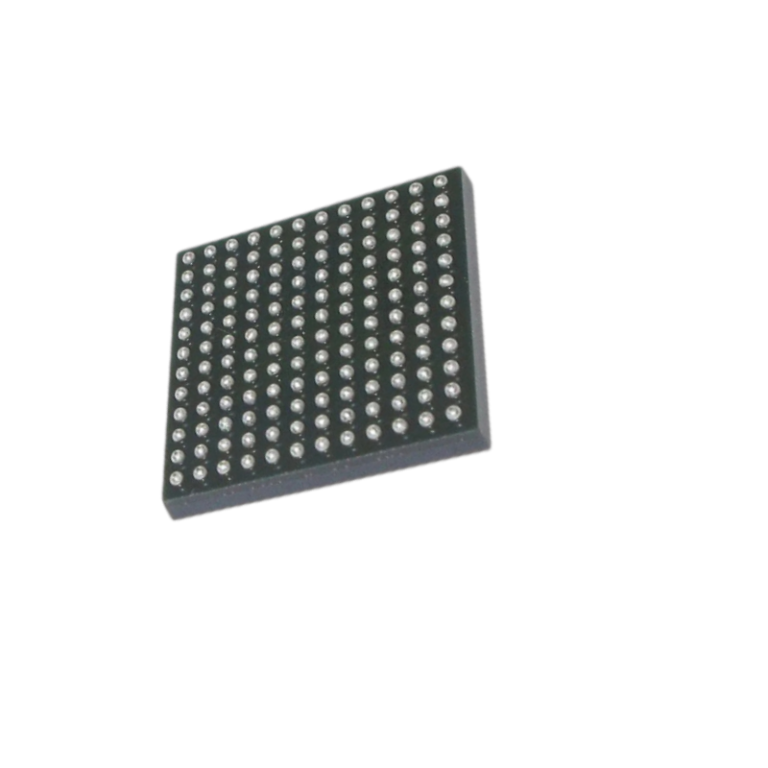
Isolation amplifiers are the component category that most signal chain designers avoid specifying until a system-level problem forces the issue — a ground loop that corrupts measurement accuracy, a fault voltage that destroys a front-end amplifier, or a common-mode voltage that exceeds the input range of every standard op amp in the catalog. The ADI AD203SN is designed to be specified proactively, not reactively. With 1,500V RMS continuous galvanic isolation, ±0.025% maximum nonlinearity, and a rugged construction tested to MIL-STD-883C shock, vibration, and temperature cycling methods, it is the isolation amplifier that military system designers reach for when the operating environment cannot be controlled.
AD203SN Architecture: Transformer Coupling and On-Board Isolated Power
The transformer-coupled isolation architecture of the AD203SN provides advantages over capacitive and optical isolation technologies that are directly relevant to military applications. Transformer coupling achieves lower nonlinearity and better drift characteristics than either alternative — the ±0.025% maximum nonlinearity at unity gain and 50 ppm/°C gain TC over the full –55°C to +125°C range reflect this inherent advantage. The internal DC/DC converter that generates the isolated ±15V front-end power supply is significant because it eliminates an entire design problem: the isolated power supply for a remote sensor or floating input conditioner is already present, with ±5 mA per rail available for external use through the VISO+ and VISO– pins. For military signal chains that include remote transducers, bridge sensors, or current shunt measurement configurations, this eliminates the external isolated supply that would otherwise be required.
AD203SN vs AD202/AD204: Selecting the Right AD200 Series Variant
The AD203SN sits within the AD200 family alongside the AD202 and AD204, all sharing the transformer-coupled architecture. The practical selection criteria between variants center on power supply and performance requirements:
| AD203SN | AD202 | AD204 | |
|---|---|---|---|
| Power Supply | Single +15V | Single +15V | Externally Supplied |
| Isolated Power Output | ±15V @ ±5 mA | ±15V @ ±2 mA | Not provided |
| Full Power Bandwidth | 10 kHz | 2 kHz | 5 kHz |
| Nonlinearity | ±0.025% max | ±0.05% max | ±0.025% max |
| CMV Isolation | 1,500V RMS | 1,500V RMS | 1,500V RMS |
| Best For | Military, rugged, wider bandwidth | Low power applications | Externally powered systems |
The AD203SN’s 10 kHz bandwidth and improved nonlinearity specification make it the highest-performance single-supply variant in the AD200 family. For military programs where both bandwidth and ruggedness are requirements, the AD203SN is the correct selection.
Sourcing the ADI AD203SN
The AD203SN is a specialized hybrid module with limited distribution channels and consistent demand in military and industrial programs where transformer-coupled isolation is a system requirement. We maintain verified inventory with full traceability and anti-counterfeit inspection on every order. Contact us today to confirm availability and request a quote — our team responds within 24 hours.
- On-board isolated ±15V power output available for external sensor excitation — eliminates separate isolated supply
- 1,500V RMS continuous CMV rating maintained under sustained common-mode stress conditions
- Uncommitted input amplifier accepts external feedback network for filtering, summing, or high-voltage ranging
- 106 dB CMR at 60 Hz with 100Ω source resistance — effective against power line frequency interference
- ESD Category 2 protection per MIL-STD-883C Method 3015 — rugged handling in military assembly environments
- Pin-compatible upgrade path from AD202 and AD204 in existing military board designs
- 11-pin SIP module format fits standard AC1062 mating socket for tool-free field replacement
- Full lot traceability and anti-counterfeit inspection on every order
Frequently Asked Questions (FAQ)
What Is the ADI AD203SN and What Does It Do?
The AD203SN is a transformer-coupled isolation amplifier from Analog Devices’ AD200 Series, providing complete galvanic isolation between input and output stages including power supplies, with 1,500V RMS continuous CMV rating, 10 kHz full power bandwidth, and ±0.025% maximum nonlinearity. It operates from a single +15V supply and includes an on-board isolated ±15V power output, rated for the full military temperature range from –55°C to +125°C.
Why Use Transformer Coupling Instead of Optical or Capacitive Isolation?
Transformer-coupled isolation provides lower nonlinearity, better drift performance, and superior common-mode rejection compared to optical and capacitive alternatives at equivalent bandwidth. The AD203SN’s ±0.025% maximum nonlinearity and 50 ppm/°C gain TC across the military temperature range reflect the inherent linearity advantage of transformer coupling, which optical isolators cannot achieve without additional linearization circuitry.
What Is the Isolated Power Output Used For?
The ±15V isolated power output — available at the VISO+ and VISO– pins at up to 5 mA per rail — provides a completely isolated power supply for floating input signal conditioners, front-end amplifiers, bridge sensor excitation, or remote transducers connected to the input stage. This eliminates the need for a separate isolated DC/DC converter in the design, reducing component count and system complexity.
Is the AD203SN Compatible With the AD202 and AD204?
The AD203SN is pin-compatible with both the AD202 and AD204 in the standard SIP module footprint. It can be substituted directly in existing board designs using either predecessor, with the improvement in bandwidth from 2 kHz (AD202) to 10 kHz and the reduction in maximum nonlinearity from ±0.05% to ±0.025% as direct benefits.
How Do I Request a Quote for the ADI AD203SN?
Submit an inquiry through our website contact form or email our sales team directly. We will respond within 24 hours with pricing, availability, and lead time — and can discuss long-term supply agreements for production programs.