
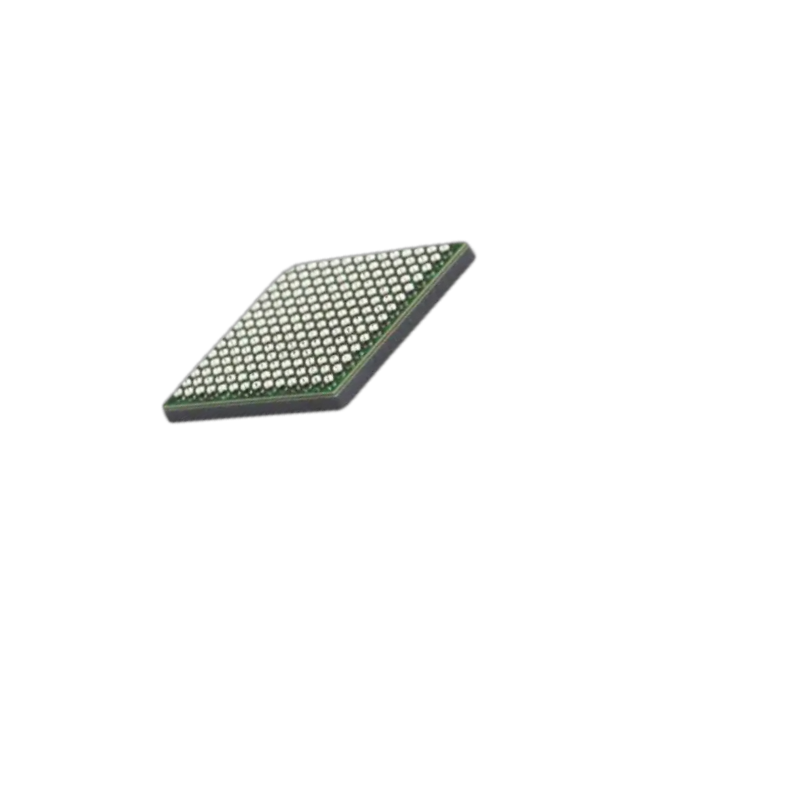
ADI AD6688BBPZ-3000
- Dual 14-bit, 3.0 GSPS direct RF sampling ADC with 1.2 GHz instantaneous bandwidth
- 9 GHz input bandwidth (–3 dB) supports direct IF sampling of signals up to 5 GHz
- Four integrated wideband DDC blocks with decimation filters and NCOs for multi-band reception
- JESD204B serial output interface supporting up to 16 Gbps/lane with flexible lane configuration
- Export-controlled device — pin-compatible with AD9208-3000, same schematic and layout applicable
The ADI AD6688BBPZ-3000 is a 1.2 GHz bandwidth, mixed-signal, direct RF sampling observation receiver from Analog Devices — the export-controlled variant of the AD9208-3000, sharing the same silicon die, pin-compatible footprint, and complete schematic compatibility. It integrates two 14-bit ADC cores running at 3.0 GSPS, four wideband digital downconverter (DDC) blocks with integrated decimation filters and numerically controlled oscillators (NCOs), programmable fast overrange detection, and signal monitoring capability — all in a 196-ball BGA package rated for –40°C to +85°C industrial operation. The "BBPZ-3000" suffix identifies the 196-ball BGA package and 3000 MSPS sampling rate variant.
What makes the AD6688BBPZ-3000 significant for wideband receiver designs is the combination of direct RF sampling bandwidth and integrated digital signal processing. The ADC input bandwidth extends beyond 9 GHz at the –3 dB point, enabling direct sampling of signals across L, S, C, and X bands without external downconversion mixers — a fundamental simplification of the receive chain that reduces latency, component count, and the phase noise contributions of the LO chain. The four DDC blocks provide decimation, channel filtering, and frequency translation in the digital domain, configurable via SPI for multi-band and diversity receiver architectures. The JESD204B output interface supports one, two, four, six, and eight lane configurations at up to 16 Gbps per lane, directly interfacing to FPGAs and ASICs in the digital back-end.

Related Products For Your Business
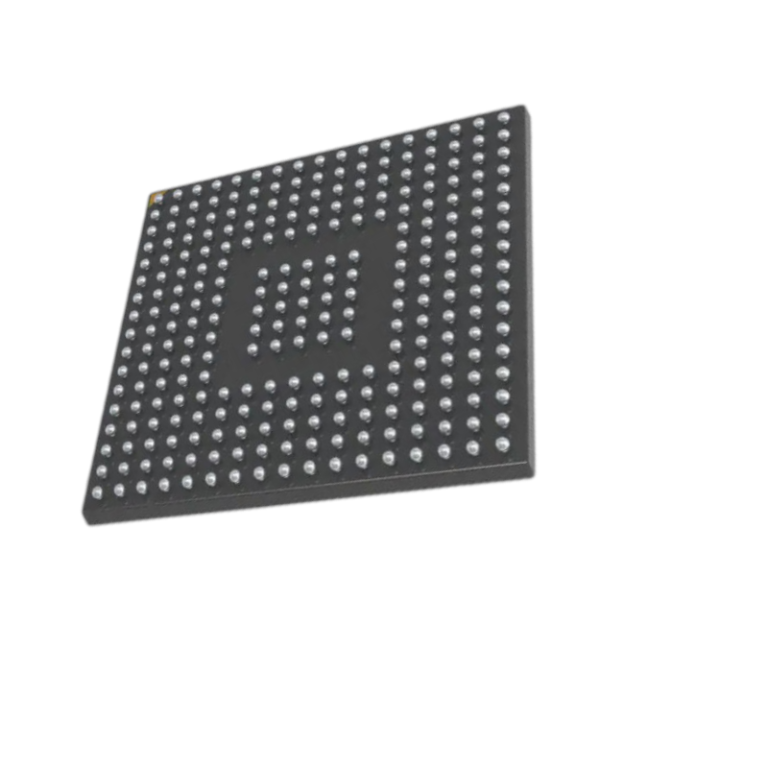
Direct RF sampling receivers have been a design goal for decades — a front-end that digitizes the RF signal directly, without a mixer, an LO, and the associated phase noise, spurious, and timing complexity those components introduce. The ADI AD6688BBPZ-3000 delivers that capability at 3.0 GSPS across a 9 GHz input bandwidth, making it one of the highest-performance RF sampling ADCs available in a production component. As the export-controlled variant of the AD9208-3000, it targets defense and controlled-access programs that require performance identical to the commercial AD9208 under export compliance frameworks — same pin-out, same performance, documented ECCN classification.
AD6688BBPZ-3000 Architecture: Direct RF Sampling and Integrated DDC
The AD6688BBPZ-3000’s dual 14-bit pipelined ADC cores use a multistage differential architecture with integrated output error correction, optimized for wide input bandwidth at 3.0 GSPS while maintaining the linearity performance that wideband receiver designs require. The input buffer offers programmable full-scale adjustment and DC coupling options, with buffer current controls for SFDR optimization across different input frequencies and bandwidths. The four DDC blocks — each with a half-band filter decimation chain and independent NCO for frequency translation — enable simultaneous processing of up to four independent frequency bands from the two physical ADC channels, supporting the multi-band and diversity receiver architectures common in modern electronic warfare and SIGINT systems. Fast NCO switching via GPIO pins enables rapid frequency hopping without SPI transaction latency.
AD6688BBPZ-3000 vs AD9208-3000: Export Control and Design Migration
The AD6688 and AD9208 are the same device differentiated by export classification:
| AD6688BBPZ-3000 | AD9208BBPZ-3000 | |
|---|---|---|
| Silicon Die | Identical | Identical |
| Pin Compatibility | Yes | Yes |
| Schematic/Layout | Common | Common |
| Export Control | Yes — ECCN classified | Standard commercial |
| Performance | Identical | Identical |
| Best For | Defense / export-controlled programs | Commercial programs |
For programs where export control documentation is required for the procurement specification or end-use certificate, the AD6688BBPZ-3000 is the correct acquisition path. For commercial programs without export restrictions, the AD9208-3000 provides identical performance with standard commercial procurement. Both devices share the same evaluation board platform (AD6688-3000EBZ / AD9208-3000EBZ) and the ACE software package for device control and data capture.
Sourcing the ADI AD6688BBPZ-3000
The AD6688BBPZ-3000 is an export-controlled component — procurement requires compliance with applicable export regulations, and end-use documentation may be required. We maintain verified inventory with full lot traceability, anti-counterfeit inspection, and export-compliance support on every order. Contact us today to confirm availability and discuss export documentation requirements — our team responds within 24 hours.
- Export-controlled variant of AD9208-3000 — identical performance, ECCN-classified for defense procurement compliance
- Direct RF sampling to 9 GHz eliminates mixer, LO, and IF chain in wideband receiver designs
- Four independent DDC channels enable simultaneous multi-band processing from two physical ADC inputs
- Fast overrange detection with programmable threshold provides low-latency AGC control signal
- On-chip temperature diode enables junction temperature monitoring for thermal management
- Pin-compatible with AD9208 — common schematic, layout, and evaluation platform across both variants
- JESD204B output supports FPGA and ASIC digital back-end interfaces at up to 16 Gbps per lane
- Export compliance support and end-use documentation assistance available on request
Frequently Asked Questions (FAQ)
What Is the ADI AD6688BBPZ-3000 and How Does It Differ From the AD9208-3000?
The AD6688BBPZ-3000 is a 14-bit, 3.0 GSPS dual-channel direct RF sampling ADC with 1.2 GHz instantaneous bandwidth and four integrated DDC blocks, in a 196-ball BGA package. It is the export-controlled version of the AD9208-3000 — identical silicon, identical pin-out, and identical performance. The difference is classification: the AD6688 carries ECCN export control designation for defense and controlled-access program procurement, while the AD9208 is the standard commercial variant.
What Does “Direct RF Sampling” Mean for Receiver System Design?
Direct RF sampling means the ADC digitizes the RF or IF signal directly, without a downconversion mixer and local oscillator stage. The AD6688BBPZ-3000’s >9 GHz input bandwidth allows signals across L through X band to be captured directly at the ADC input, with frequency translation and channel filtering performed by the integrated DDC blocks in the digital domain. This eliminates the mixer’s phase noise contribution, LO leakage, and image response — simplifying the analog receive chain significantly.
What FPGA Interfaces Are Compatible With the AD6688BBPZ-3000 Output?
The JESD204B serial output interface is supported by all major FPGA families with GT/GTP/GTX/GTH transceiver resources, including Xilinx UltraScale+ and Versal, Intel Arria and Stratix, and Microsemi PolarFire. Lane rate and configuration are programmable via SPI, with the AD6688-3000EBZ evaluation board providing a reference design interfacing to the ADS7-V2EBZ FPGA capture platform using Analog Devices’ ACE software.
Does the AD6688BBPZ-3000 Require Export Documentation to Purchase?
Yes. The AD6688BBPZ-3000 is export-controlled with an ECCN classification. Procurement may require an export license, end-use certificate, or other documentation depending on the destination country and end use. We provide export compliance support and can assist with documentation requirements as part of the procurement process.
How Do I Request a Quote for the ADI AD6688BBPZ-3000?
Submit an inquiry through our website contact form or email our sales team directly. We will respond within 24 hours with pricing, availability, lead time, and export compliance guidance — and can discuss long-term supply agreements for production programs.