
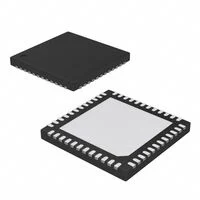
ADI AD9265BCPZ-125
- 1.8 V supply operation with military temperature range (−55°C to +125°C) and controlled manufacturing baseline qualification
- Low power: 110 mW per channel at 125 MSPS with scalable power options and full-chip standby mode
- SNR = 74 dB (to Nyquist); SFDR = 90 dBc (to Nyquist) at 125 MSPS conversion rate
- Serial LVDS (ANSI-644, default) and low power reduced signal option (similar to IEEE 1596.3) with programmable output alignment
- 650 MHz full-power analog bandwidth with 2 V p-p input range and internal 1.0 V reference
Related Products For Your Business
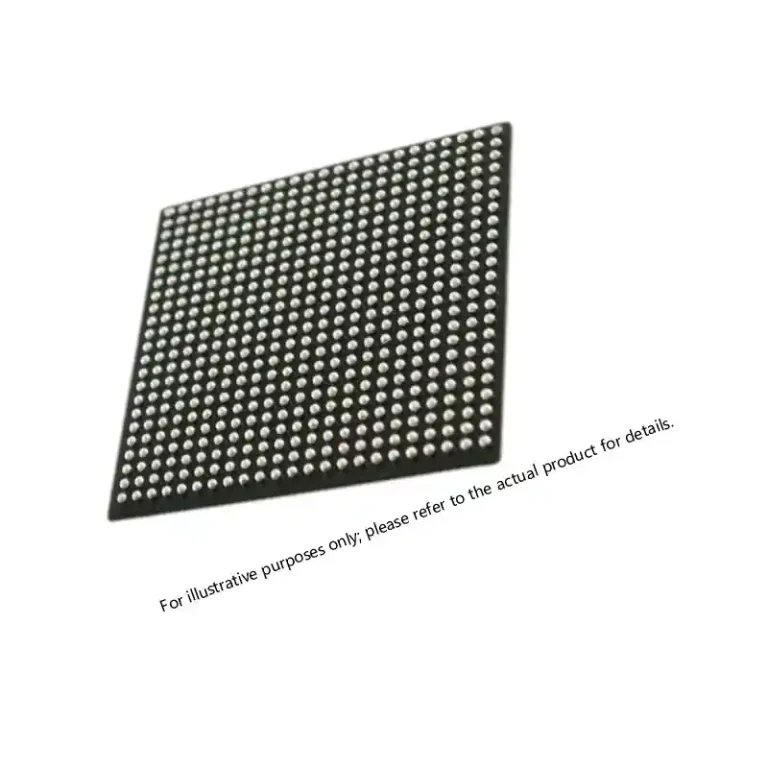
The AD9268BCPZ-125 provides dual 16-bit 125 MSPS ADC performance optimized for aerospace radar and electronic warfare applications where high dynamic range and wide bandwidth determine system effectiveness. You get 78.2 dBFS SNR and 88 dBc SFDR at 70 MHz with a 650 MHz full-power bandwidth that handles IF signals up to 300 MHz without intermediate downconversion stages. This dual ADC operates from a single 1.8 V analog supply with separate digital output driver support for both 1.8 V CMOS and LVDS interfaces, giving you flexibility in system timing and EMI management. The integrated programmable voltage reference and 1-to-8 input clock divider simplify board-level design while maintaining excellent jitter performance through the on-chip duty cycle stabilizer.
Dual-Channel Pipeline ADC Architecture for Aerospace Radar Systems
Two independent 16-bit ADC channels digitize at 125 MSPS through a multistage differential pipelined architecture with integrated output error correction. Direct IF sampling at frequencies up to 300 MHz converts intermediate frequency signals straight to digital format, skipping the extra downconversion stages that would otherwise add components to your signal chain. The 650 MHz full-power bandwidth enables capture of wideband radar returns and electronic warfare signals with minimal signal degradation. Optional on-chip dither improves SFDR performance for challenging low-power analog inputs, and the programmable internal reference voltage from 1.0 V to 2.0 V eliminates external reference components in most designs. The 95 dB channel isolation ensures that signals on one channel do not interfere with the other, critical for I/Q demodulation systems where phase accuracy affects beamforming performance.
AD9268BCPZ-125 vs AD9258BCPZ-125: Resolution and Dynamic Range Comparison
Pin-compatible dual ADC options from Analog Devices differ primarily in resolution while maintaining identical electrical interfaces and power characteristics. The comparison table below shows the key differences between the 16-bit industrial variant and the 14-bit industrial variant.
| Parameter | AD9268BCPZ-125 (16-Bit Industrial) | AD9258BCPZ-125 (14-Bit Industrial) |
|---|---|---|
| Resolution | 16 bits | 14 bits |
| Channels | Dual (2) | Dual (2) |
| Sampling Rate | 125 MSPS | 125 MSPS |
| SNR | 78.2 dBFS (at 70 MHz) | 77.6 dBFS (at 70 MHz) |
| SFDR | 88 dBc (at 70 MHz) | 88 dBc (at 70 MHz) |
| IF Sampling Frequency | Up to 300 MHz | Up to 300 MHz |
| Full-Power Bandwidth | 650 MHz | 650 MHz |
| Power Consumption | 750 mW (at 125 MSPS) | 750 mW (at 125 MSPS) |
| Package | 64-Lead LFCSP BCPZ-125 (Tray) | 64-Lead LFCSP BCPZ-125 (Tray) |
| Operating Temperature | −40°C to +85°C (Industrial) | −40°C to +85°C (Industrial) |
| Output Interface | 1.8 V CMOS or LVDS | 1.8 V CMOS or LVDS |
| Best Application Fit | Aerospace Radar & EW with High Resolution | Medical Ultrasound & Imaging |
If your application needs the extra two bits of resolution for improved target discrimination in radar systems or more dynamic range in electronic warfare receivers, the 16-bit device provides that advantage while keeping the same form factor and pinout. For applications where 14-bit resolution works adequately and cost optimization is a priority, the AD9258 offers identical electrical characteristics at lower power consumption per effective bit. Both devices maintain the same 750 mW power budget at 125 MSPS, so the resolution choice does not impact thermal design significantly. For complete transceiver integration with both transmit and receive functionality in a single device, the AD9176BBPZ and AD9081BBPZ-4D4AC handle both sides of the signal chain.
Sourcing ADI AD9268BCPZ-125 with Industrial Grade Validation
The BCPZ-125 tray packaging works well for prototype and qualification builds of the AD9268 in the 64-lead LFCSP package, and the BCPZRL7 tape-and-reel variant is available when you move into production volumes that need automated assembly. We stock verified inventory with full lot traceability from the manufacturer to your facility, including documentation packages like Certificates of Conformity and material declarations that aerospace and defense contractors typically need for qualification processes. Anti-counterfeit inspection happens on every order to confirm authenticity, and we handle export compliance documentation for international shipments to defense contractors and aerospace manufacturers worldwide. The AD9268 evaluation board (AD9268-125EBZ) and supporting software tools are available for rapid prototyping and system characterization before committing to production volumes.
- Dual 16-bit architecture with 125 MSPS sampling rate enabling high-resolution radar digitization
- Direct IF sampling up to 300 MHz eliminates intermediate downconversion stages
- 650 MHz full-power bandwidth supporting wideband radar and EW signal capture
- Optional on-chip dither for improved SFDR performance with low-power inputs
- Integer 1-to-8 input clock divider enabling flexible clock architecture design
- Duty cycle stabilizer maintaining consistent performance across clock variations
- Separate digital driver supply accommodating both 1.8 V CMOS and LVDS interfaces
- Pin compatibility with AD9258BCPZ-125 enabling easy migration between 16-bit and 14-bit variants
Frequently Asked Questions (FAQ)
What Is the Difference Between AD9268BCPZ-125 and AD9258BCPZ-125 for Radar Applications?
These two devices are pin-compatible dual ADCs from the same Analog Devices product family, differing primarily in resolution while maintaining identical electrical interfaces and power characteristics. The 16-bit device provides 78.2 dBFS SNR and 88 dBc SFDR specified for industrial temperature range from −40°C to +85°C, making it suitable for aerospace radar and electronic warfare systems requiring higher dynamic range and improved target discrimination. The 14-bit variant offers 77.6 dBFS SNR and 88 dBc SFDR with the same 750 mW power consumption at 125 MSPS, and is available in the same industrial temperature range. For radar applications requiring the extra two bits of resolution for better target discrimination or more dynamic range in electronic warfare receivers, the 16-bit device provides the necessary performance advantage, while the 14-bit device is appropriate for medical ultrasound and imaging applications where 14-bit resolution is sufficient.
Does AD9268BCPZ-125 Support Direct IF Sampling at 300 MHz?
Yes, this device supports direct IF sampling frequencies up to 300 MHz through its 650 MHz full-power differential analog input bandwidth. The multistage differential pipelined architecture maintains excellent SNR performance at high input frequencies, and the integrated sample-and-hold circuitry is optimized for wideband signal capture. Direct IF sampling eliminates the need for intermediate downconversion stages in radar receiver front ends and electronic warfare digitizers, reducing component count and system complexity while maintaining signal fidelity up to the Nyquist frequency of the 125 MSPS conversion rate.
What Is the Power Consumption of AD9268BCPZ-125 at 125 MSPS?
The device consumes 750 mW typical when both channels are operating at the maximum 125 MSPS conversion rate with the 1.8 V analog supply and 1.8 V digital driver supply. Flexible power-down options allow significant power savings when desired, including individual channel power-down for applications where fewer than two channels are continuously required. The separate digital driver supply enables additional power optimization by selecting the appropriate voltage for CMOS or LVDS operation, though the LVDS interface typically consumes similar power to CMOS at the same data rate and voltage level.
Can AD9268BCPZ-125 Operate with Both CMOS and LVDS Outputs?
Yes, this dual ADC supports both 1.8 V CMOS and LVDS output interfaces through the separate DRVDD digital output driver supply. The 1.8 V CMOS mode provides traditional parallel output compatibility with existing FPGA and processor interfaces, while LVDS mode offers reduced EMI and improved signal integrity over longer board traces or in densely packed avionics chassis. The output data format is configurable through the SPI interface to support offset binary, twos complement, or gray coding, enabling flexible interfacing with various digital processing platforms used in aerospace and defense systems.
How Do I Request a Quote for ADI AD9268BCPZ-125?
Submit an inquiry through our website contact form or email our sales team directly. We will respond within 24 hours with pricing, availability, and lead time, and can discuss long-term supply agreements for radar and EW production programs requiring industrial-grade ADC components with full lot traceability and anti-counterfeit inspection.