MIL-SPEC Components for Missile Defense: Procurement Best Practices
Table of Contents
- What Components Do Missile Defense Systems Require?
- Which MIL-SPEC Standards Govern Missile Defense Electronics?
- Rad-Hard vs. Rad-Tolerant: What Missile Defense Designers Need to Know
- Why Are MIL-SPEC Component Lead Times So Long?
- How Does Obsolescence Threaten Missile Defense Program Timelines?
- Counterfeit Components: A Growing Risk in Defense Supply Chains
- How Can You Verify Authenticity of MIL-SPEC Components?
- What Certifications Should a Military Component Distributor Hold?
- What Long-Term Supply Strategies Work for Missile Defense Components?
- Die Banking and Wafer Procurement: Is It Right for Your Program?
- Technology Refresh Planning for FPGA-Based Systems
- How Do Export Controls Affect MIL-SPEC Component Procurement?
- Understanding ITAR vs. EAR for Defense Electronics
- Documentation Required for Export-Compliant Shipments
- Securing Your Supply Chain for Missile Defense Programs
- Common Questions About Sourcing MIL-SPEC Missile Defense Components
- How long does it typically take to receive a quote for military-grade FPGAs?
- Can you source components that are no longer in production?
- What level of traceability do you provide with each order?
- Do you handle export controls for international shipments?
- What is the minimum order quantity for MIL-SPEC components?
MIL-SPEC components for missile defense carry requirements far beyond commercial parts. Over twelve years sourcing hi-rel electronics, I have watched programs face one-year lead times, zero-notice obsolescence, and counterfeit devices that slipped through weak verification. A radar processor or interceptor guidance board cannot tolerate a single inauthentic capacitor. The supply chain must deliver not just the right part numbers, but full traceability, compliant documentation, and a supplier who understands that every order supports a mission-critical system. This article walks through the component landscape, procurement obstacles, and practical steps to ensure your missile defense electronics arrive genuine, tested, and on schedule.
What Components Do Missile Defense Systems Require?
Missile defense systems encompass ground-based interceptors, shipboard radars, airborne sensors, and command-and-control networks. Each requires a range of electronic components qualified to MIL-SPEC standards. Signal processing chains rely on high-performance FPGAs from Xilinx (Virtex-5, Kintex-7) and Microsemi (ProASIC3, SmartFusion2) to handle radar beamforming and target discrimination algorithms. Data conversion between analog sensor inputs and digital processing depends on high-speed ADCs such as the ADC12DJ3200 from Texas Instruments or the AD9208 from Analog Devices, often sampling at multiple gigasamples per second. Digital-to-analog converters like the AD9164 drive waveform generation for electronic warfare and communication countermeasures.
Power management in these systems is not an afterthought. DC-DC converters from Vicor (e.g., V300A28H500BN) provide regulated low-voltage rails with input filtering that meets EMI requirements. Memory subsystems use synchronous SRAM and NAND flash rated for extended temperatures. Passives include MIL-PRF-39003 tantalum capacitors and MIL-DTL-38999 connectors for rugged interconnect.
| Component Type | Example Device | Function | Typical Qualification |
|---|---|---|---|
| FPGA | Xilinx XQ5VFX130T | Radar signal processing | QML Class Q per MIL-PRF-38535 |
| High-Speed ADC | TI ADC12DJ3200 | Receiver digitization | JANTX/JANTXV per 5962-series |
| Power Module | Vicor V300A28H500BN | DC-DC conversion | MIL-STD-704E input compliance |
| Memory | Cypress CY7C140-25JC | SRAM cache | MIL-STD-883 screening |
Which MIL-SPEC Standards Govern Missile Defense Electronics?
The foundational document is MIL-PRF-38535, which defines Quality Monolithic (QML) certification for integrated circuits. Components meeting QML Class Q or V undergo rigorous screening per MIL-STD-883, including temperature cycling, burn-in, and hermeticity testing. For passive components, MIL-PRF-39014 covers ceramic capacitors, while MIL-PRF-55342 applies to chip resistors. Interconnect standards like MIL-DTL-24308 (D-subminiature) and MIL-DTL-38999 (circular connectors) ensure mechanical integrity under vibration and shock. Radiation hardness is often specified via MIL-STD-750 for discrete semiconductors, but some rad-hard FPGAs follow manufacturer-specific flows certified by the Defense Logistics Agency.
Rad-Hard vs. Rad-Tolerant: What Missile Defense Designers Need to Know
Missile defense components face two radiation environments: prompt dose from nuclear events and accumulated total ionizing dose (TID) over mission life. Rad-hard parts are designed and tested to survive both, often using silicon-on-insulator (SOI) processes, while rad-tolerant devices can withstand moderate levels but may fail under high-dose-rate conditions. For an interceptor that must operate through a nuclear blast region, rad-hard FPGAs and memories are non-negotiable. For a ground radar, rad-tolerant may suffice if shielding is adequate. The distinction affects cost: rad-hard components can be five to ten times more expensive than their rad-tolerant counterparts, and lead times stretch accordingly.
Why Are MIL-SPEC Component Lead Times So Long?
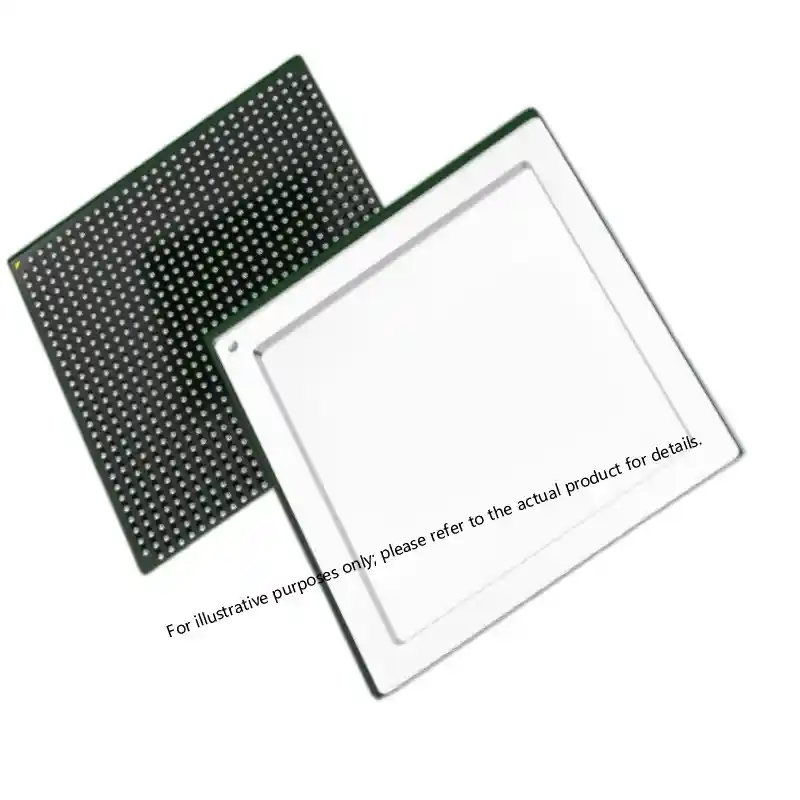
Procurement teams often underestimate the time it takes to receive MIL-SPEC components for missile defense. A radiation-hardened Virtex-5 QV FPGA might have a manufacturer lead time of 52 weeks from order to delivery, not including additional time for third-party testing or export licensing. Several factors drive these extended timelines. Semiconductor foundries allocate limited wafer starts to defense-grade flows because commercial volumes dominate their business. Once fabricated, each lot undergoes extended screening per MIL-STD-883: 160 hours of burn-in at 125°C, temperature cycling from -65°C to +150°C, and fine/gross leak testing. Any fallout restarts the clock. Components bound for missile defense programs may also require export control review, adding weeks to the shipping schedule.
If your program involves radiation-hardened FPGAs or custom power modules, confirm current lead times and wafer allocation early. We can provide a realistic schedule at xuansc2144@gmail.com.
How Does Obsolescence Threaten Missile Defense Program Timelines?
A missile defense system may be expected to operate for 30 years or more, while semiconductor manufacturers retire product lines every five to ten years. When a key FPGA like the Xilinx Virtex-II Pro reached end-of-life, programs relying on it had to either redesign boards or secure last-time buys. In some cases, we have helped customers locate remaining factory inventory of obsolete MIL-SPEC ADCs and DACs to bridge the gap until a redesign could be qualified. Without proactive obsolescence monitoring, a program can find itself unable to procure a critical part with no drop-in replacement, forcing costly and time-consuming requalification.
Counterfeit Components: A Growing Risk in Defense Supply Chains
Counterfeit electronic components have infiltrated defense supply chains, including missile defense. These parts may be relabeled commercial-grade devices, used parts pulled from scrapped equipment, or clones with incorrect die. A counterfeit FPGA installed in a radar signal processor can fail during operation, potentially compromising a mission. Our team has seen parts that passed initial visual inspection but failed X-ray comparison against known-good units, revealing different leadframe construction. Defense contractors must require full lot traceability back to the original component manufacturer and be prepared to perform destructive physical analysis when doubts arise.
How Can You Verify Authenticity of MIL-SPEC Components?
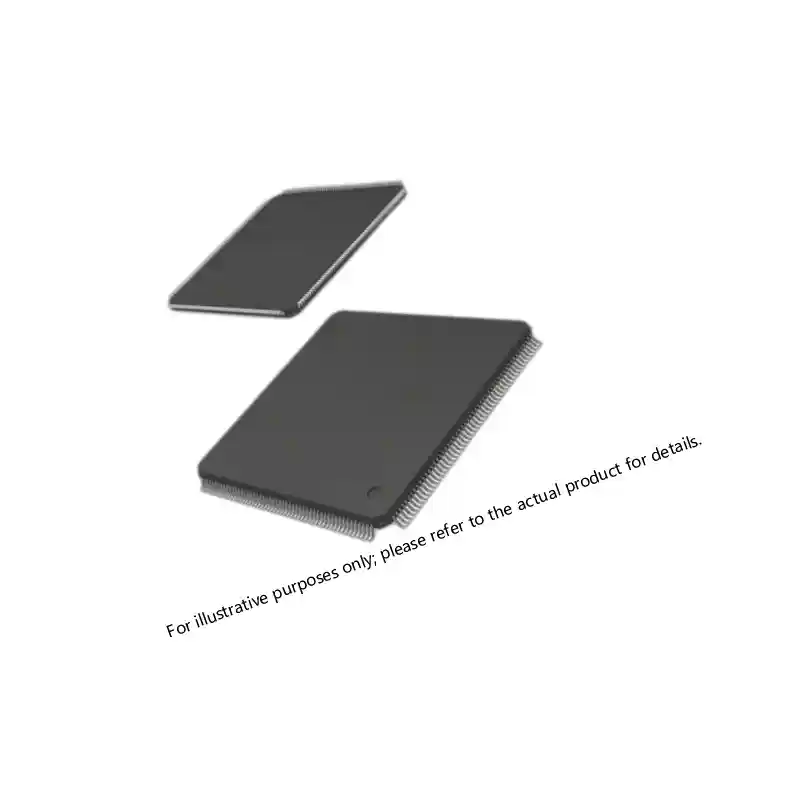
Confirming that a MIL-SPEC component is genuine requires a layered approach. Start with supplier qualification: a distributor should hold AS9120 certification for aerospace quality management and ideally AS6081 for counterfeit avoidance in the authorized distribution chain. They must provide a Certificate of Conformance (C of C) that traces each lot to the manufacturer’s production record, including date code, wafer lot, and test data. Next, incoming inspection should include visual examination under a microscope for signs of resurfacing or blacktopping, X-ray to compare internal structures to a known-good reference, and electrical testing at room temperature and over the full military temperature range. In high-risk cases, decapsulation and die inspection may be necessary. We maintain documented inspection procedures and can coordinate third-party testing when program requirements demand it.
What Certifications Should a Military Component Distributor Hold?
Beyond QML or JANTX markings on the component itself, the distributor’s own certifications matter. AS9120 demonstrates a quality management system tailored to aerospace and defense distribution. AS6081 specifically addresses counterfeit electronic parts avoidance. ITAR registration (if applicable) indicates compliance with defense trade controls. ISO 9001 is a baseline but insufficient alone. When evaluating a new supplier, request copies of these certifications and verify their current status through the accreditation body.
What Long-Term Supply Strategies Work for Missile Defense Components?
Sustaining a missile defense system through decades of operational life demands proactive supply planning. Die banking, where a program purchases and stores unassembled semiconductor wafers, allows fabrication of additional parts after the production line closes. This approach preserves form, fit, and function without redesign. For FPGAs, we have worked with programs to secure wafer access for legacy Xilinx and Microsemi devices, then coordinate assembly through qualified packaging partners. Another strategy is the last-time buy: when an obsolescence notice arrives, forecast the total number of units needed for the remaining program life and purchase them in a single order. While this ties up capital, it guarantees component availability. Strategic stock agreements with a distributor can also provide buffer inventory without upfront cost, if the distributor is willing to hold parts based on forecast.
Die Banking and Wafer Procurement: Is It Right for Your Program?
Die banking works best for high-volume, long-life programs where the semiconductor process is stable and the package is standard. It requires a few months of planning and upfront investment, but it eliminates the risk of obsolescence for the life of the stored wafers. For example, a missile defense radar using a specific ADC fabricated on a 0.18µm CMOS process might purchase enough wafers to produce 5,000 units, then draw from the bank as needed. We assist customers in locating available wafer stock and coordinating with assembly houses that hold MIL-PRF-38535 certification.
Technology Refresh Planning for FPGA-Based Systems
When redesign is unavoidable, a technology refresh plan maps the migration path from an obsolete FPGA to a newer, compatible device. For instance, moving from a Virtex-5 to a Virtex-7 or Kintex-7 while maintaining pinout compatibility if possible. The key is to execute the refresh before the old part becomes unavailable, allowing a gradual transition. Our team helps programs cross-reference part numbers and identify candidate replacements that meet the original system’s performance and environmental requirements.
How Do Export Controls Affect MIL-SPEC Component Procurement?
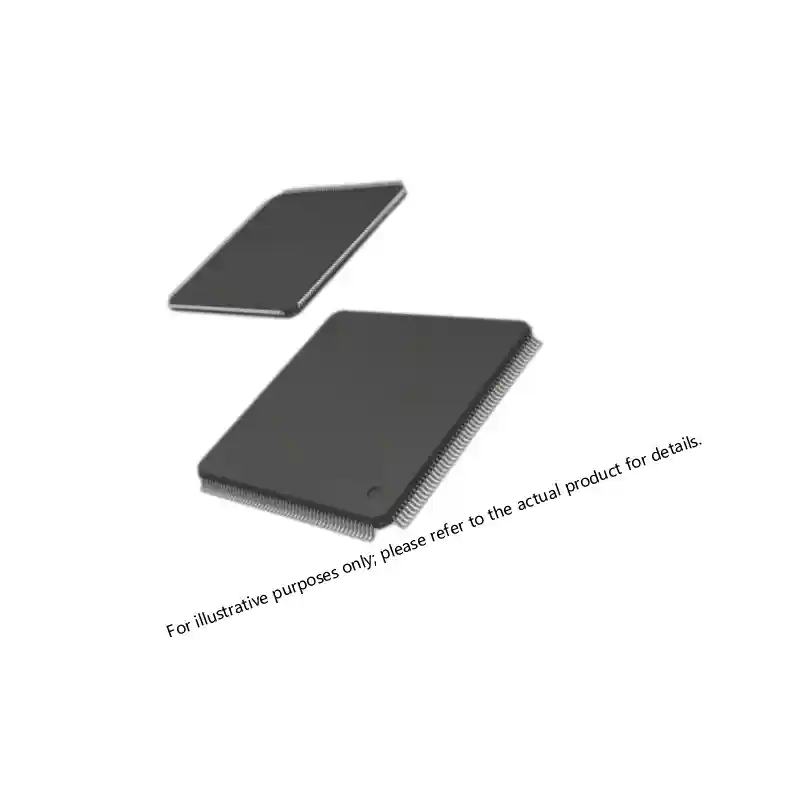
Missile defense falls under the International Traffic in Arms Regulations (ITAR) in the United States. Many MIL-SPEC components with radiation-hardened or high-speed capabilities are classified as defense articles and require export licenses for transfer to foreign entities. Even a simple FPGA can be ITAR-controlled if it is marketed for missile guidance. When sourcing components for a multinational missile defense program, procurement teams must verify that the supplier holds the necessary export authorizations and can provide end-use statements. Failure to comply can lead to shipment seizures, fines, and program delays. We handle ITAR compliance as part of our standard process for international orders, ensuring all documentation meets U.S. Department of State requirements.
Understanding ITAR vs. EAR for Defense Electronics
ITAR covers items specifically designed for military use, while the Export Administration Regulations (EAR) control dual-use items. Many commercial-off-the-shelf (COTS) components used in missile defense may be EAR99 if they are not designed for military applications, but a radiation-hardened version of the same device often becomes ITAR. Always consult with your export control officer and confirm with the distributor before placing an international order.
Documentation Required for Export-Compliant Shipments
At minimum, an export for missile defense components requires a commercial invoice with a detailed description of the items, an Export Control Classification Number (ECCN) if applicable, and a DSP-5 license for ITAR articles. The distributor must also maintain records of the end user and end use. Our team provides these documents proactively and can coordinate with your compliance office to ensure nothing is missing.
Securing Your Supply Chain for Missile Defense Programs
The complexity of sourcing genuine, compliant, and timely MIL-SPEC components for missile defense can overwhelm procurement teams, especially when facing obsolescence, export controls, and counterfeit risks. Sparkle Electronics has spent over a decade building trusted relationships with defense contractors worldwide, supplying authentic, traceable components with full documentation and program-level support. For a confidential quotation on your missile defense BOM, email your part numbers and target quantities to xuansc2144@gmail.com. We respond to RFQs within 24 hours and can advise on lead time, obsolescence risk, and compliance requirements.
Common Questions About Sourcing MIL-SPEC Missile Defense Components
How long does it typically take to receive a quote for military-grade FPGAs?
We aim to provide a full quotation within one business day of receiving a complete RFQ that includes part numbers, quantities, and target delivery dates. The speed depends on component availability and the complexity of the export documentation, but our team works with factory representatives to expedite the process. For urgent requirements, we can often provide preliminary lead time estimates within hours.
Can you source components that are no longer in production?
Yes, obsolescence management is a core part of our service. We maintain relationships with authorized suppliers holding residual inventory, and we assist with last-time buys, die banking, and cross-referencing for drop-in replacements. If a direct replacement is not available, we can help you identify functionally equivalent parts that can be retrofitted with minimal design changes.
What level of traceability do you provide with each order?
Every component we ship includes a Certificate of Conformance that traces the lot back to the original manufacturer, including date code, wafer lot, and test data. We can also provide full chain-of-custody documentation upon request. For high-risk programs, we coordinate third-party electrical testing and X-ray inspection to validate authenticity before shipment.
Do you handle export controls for international shipments?
For ITAR-controlled components, we file the required DSP-5 license applications and manage the documentation throughout the process. For dual-use items, we classify them under the appropriate ECCN and ensure compliance with EAR. Our logistics team coordinates with freight forwarders experienced in defense shipments to minimize customs delays.
What is the minimum order quantity for MIL-SPEC components?
There is no fixed minimum. We support programs of all sizes, from prototyping quantities to full production volumes. Some manufacturers may impose minimum order quantities on custom or rad-hard devices, but we can advise on those constraints when you submit your BOM. Share your requirements and we will confirm availability and cost.
If you’re interested, check out these related articles:
A1020B-PG84B ACT2 FPGA: Specs, Sourcing, and Availability
UltraScale KU085 FPGA Specifications for Defense Systems