
Verify Military Component Authenticity Before Procurement
Table of Contents
- Supplier Qualification Is the First Verification Step
- Documentation Review Before Placing an Order
- Visual and Physical Inspection Upon Receipt
- Beyond Visual: Electrical Testing and Destructive Analysis
- Why a Specialized Distributor Reduces Counterfeit Risk
- Common Questions About Military Component Authenticity Verification
Counterfeit military-grade electronic components are not a distant risk, they are a recurring operational threat. In more than twelve years of defense supply chain support, I have seen program timelines derailed, test failures traced back to substandard parts, and entire lot purchases quarantined because authenticity wasn’t established before funds were committed. The most damaging misconception in procurement is that verification starts after the shipment arrives. It doesn’t. Verification that only begins at incoming inspection already assumes risk that should have been eliminated at the sourcing stage. This article outlines how to verify military component authenticity before procurement, drawing on direct experience with MIL-SPEC, QML, and 5962-series devices across dozens of defense programs.
Supplier Qualification Is the First Verification Step
Component authenticity is inseparable from supplier integrity. A part purchased from an unvetted source carries unknown handling history, regardless of what the markings or paperwork suggest. Before evaluating the component itself, the procurement team must evaluate the entity supplying it.
A distributor handling military-grade parts should hold at least AS9120 or AS6081 quality management certification, and ideally be listed on QML or recognized by DMEA under the Trusted Supplier program. These are not abstract credentials. They indicate that the supplier operates under documented quality controls, with defined incoming inspection, storage conditions, and lot traceability protocols. I have disqualified otherwise capable distributors because their chain-of-custody records stopped at the broker level, with no verifiable link to an OEM or authorized franchise line.
Request the supplier’s quality manual or audit summary covering counterfeit avoidance procedures. If the distributor cannot produce it, or describes their process in vague generalities rather than specific inspection gates, the risk is already unacceptably high. The time to learn this is before a purchase order is issued, not after 500 units arrive with unverifiable date codes.
Documentation Review Before Placing an Order
Paperwork alone does not guarantee authenticity, but the absence of specific documents is a red flag that no amount of visual inspection can overcome. Before committing to a purchase, require the following from the supplier:
- Full Certificate of Conformance (C of C) traceable to the original manufacturer, not a redistributor-generated equivalent unless accompanied by the OEM’s original certificate.
- Lot-level test reports, including any screening data under MIL-STD-883 or MIL-PRF-38535, if the part is advertised as QML or /883 compliant.
- Date code and lot code that align with the manufacturer’s production records and do not fall into known gap periods where counterfeits are prevalent.
- Country of origin disclosure, particularly relevant for NDAA Section 889 compliance and DFARS flow-down requirements.
I have encountered documentation packages that looked complete until we cross-referenced the lot numbers with the manufacturer. The lots either didn’t exist in the OEM’s shipment records, or they were marked as “scrapped” five years prior. A supplier that pushes back on providing these documents before payment is signaling that traceability doesn’t go as deep as they claim.
Review the C of C for consistency: the authorized signature, the issuing facility, the manufacturer’s name, and the part marking format must all match the part you intend to buy. A “5962-XXXXXXX” device with a C of C issued by a generic logistics company rather than the QML manufacturer should stop the transaction immediately.
If your program involves long-duration sustainment or legacy parts with obsolescence risk, it is worth confirming documentation completeness with a specialist before finalizing the BOM. Reach out at xuansc2144@gmail.com to verify that the paperwork you’re receiving supports the component’s claimed provenance.
Visual and Physical Inspection Upon Receipt
Even with strong documentation, physical inspection upon receipt remains a necessary verification layer. This is not about finding obvious defects; it’s about identifying inconsistencies that contradict the documentation that was just reviewed.
Start with the package. Military-grade components should arrive in properly sealed ESD packaging with humidity indicators and desiccant packs intact. Moisture-damaged packaging on a part listed as MSL 3 or higher suggests rehandling. Then move to the component itself. Under 10x to 20x magnification, examine the marking format, font consistency, and pin-1 indicator. Manufacturers vary their marking techniques, but the same part number from the same date code should show uniform laser engraving or ink dot patterns, not a mix of both.
The surface finish tells a story. Resurfaced or “blacktopped” packages often show subtle differences in gloss level, edge rounding, or laser-etch contrast compared to factory-original units. I once inspected a batch of JANTX-qualified transistors where every unit passed electrical initial test, but the top surface had a faint witness line around the perimeter. Under acetone swab, the top coating dissolved, revealing a commercial-grade die underneath. That inspection took less than five minutes and saved a flight-control program from a latent reliability disaster.
| Inspection Step | What to Check | Indication of Counterfeit |
|---|---|---|
| Package condition | Sealed ESD bag, intact humidity indicator card, desiccant | Opened or resealed packaging suggests repackaging |
| Marking consistency | Font, alignment, pin-1 indicator, date/lot code format | Mixed marking methods across same lot indicate remarking |
| Surface finish | Gloss uniformity, edge condition, lack of witness lines | Resurfacing or blacktopping visible under magnification |
| Dimensions | Package outline, lead coplanarity, standoff height | Deviations from manufacturer datasheet suggest rework |
| Lead finish | Solderability, plating uniformity, contamination | Scratched, re-tinned, or corroded leads indicate used parts |
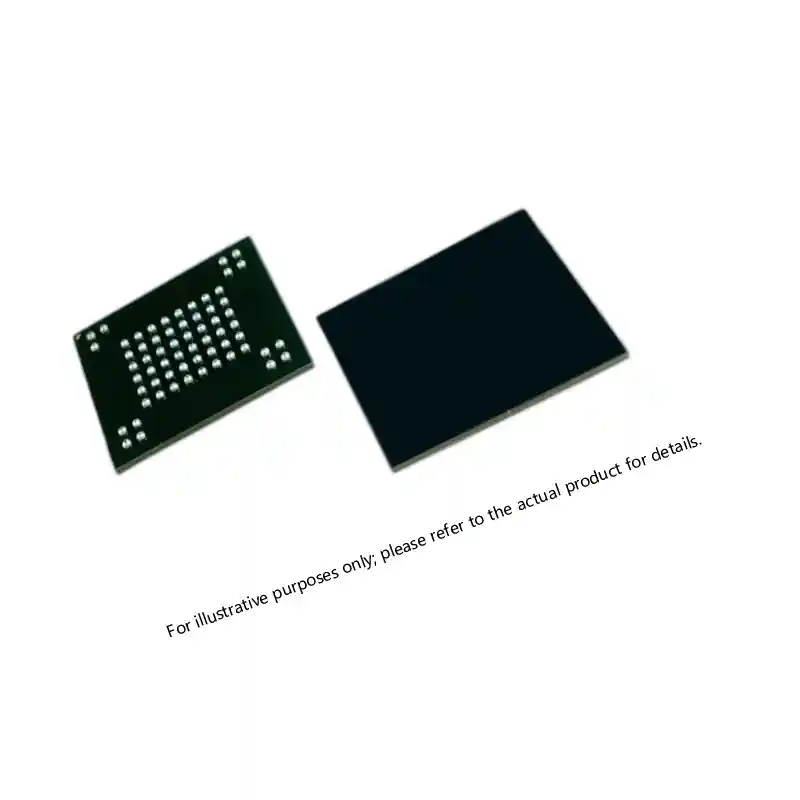
For components that arrive in trays or tubes, check that the cavity count and orientation match the manufacturer’s standard packaging quantity. A partial tube with mixed orientations is common in broker-sourced parts and impossible to fully reconcile with any documented chain of custody.
Beyond Visual: Electrical Testing and Destructive Analysis
Visual inspection catches the crude counterfeits. It misses the sophisticated ones. Military programs with mission-critical or safety-significant functions should supplement visual checks with electrical testing on a sample basis. The depth of testing depends on the part’s complexity and the consequences of failure.
For discrete semiconductors and simple logic devices, curve trace analysis comparing the device’s I-V characteristics against a known-good reference can expose functional discrepancies even when visual inspection passes. For programmable devices like FPGAs, CPLDs, and microcontrollers, blank-check verification and JTAG boundary-scan testing confirm that the device is not a remarked lower-grade part with fused ID registers.
X-ray inspection is the most valuable non-destructive tool for high-value ICs. It reveals lead-frame condition, wire-bond integrity, and die size. A counterfeit FPGA sourced from e-waste will often show a smaller die than the authentic version, with inconsistent bond-wire placement and residual underfill from prior PCB removal. X-ray exposes these in minutes without opening the package. For lots where any single unit’s failure would ground a platform, we have coordinated with third-party test labs to perform X-ray on 100% of the shipment before acceptance.
When non-destructive methods still leave uncertainty, destructive physical analysis (DPA) on a sacrificial unit provides definitive verification. Decapsulation and die-level inspection can confirm the manufacturer’s die markings, metallization layers, and bond-pad layout, all of which are unique to the genuine part. This step is expensive and reserved for high-consequence decisions, but it is the only way to catch deeply embedded counterfeits where the package and initial electrical behavior are skillfully replicated.
A structured testing plan that begins with non-invasive screening and escalates to DPA only when anomalies are found keeps costs manageable while providing traceable evidence for every acceptance decision.
Why a Specialized Distributor Reduces Counterfeit Risk
The verification methods described above are effective, but they are also reactive. Every hour spent inspecting, testing, and analyzing a suspect lot is an hour stolen from program execution. The most efficient counterfeit mitigation is to source components through a distributor whose own procurement and quality management processes make counterfeits unlikely to enter the supply chain in the first place.
Sparkle Electronics operates on this principle. We stock MIL-SPEC, 5962-series, JANTX/JANTXV, and QML-qualified devices from authorized channels, with full lot traceability and documented inspection at every handoff. Our inventory includes FPGAs from Microsemi and Xilinx, high-speed ADCs and DACs from Analog Devices and Texas Instruments, military-grade memory from Cypress and Micron, and hi-rel power modules from VICOR and VPT, among hundreds of other part numbers supporting defense programs across 30+ countries.
The value of working with a specialized military component distributor is not just access to inventory. It is the upstream verification that has already been performed: supplier audits, documentation review, and lot screening that parallel the verification steps this article describes. When a part arrives with our certification package, the receiving inspection team still performs its checks, but it does so from a position of documented confidence rather than suspicion.
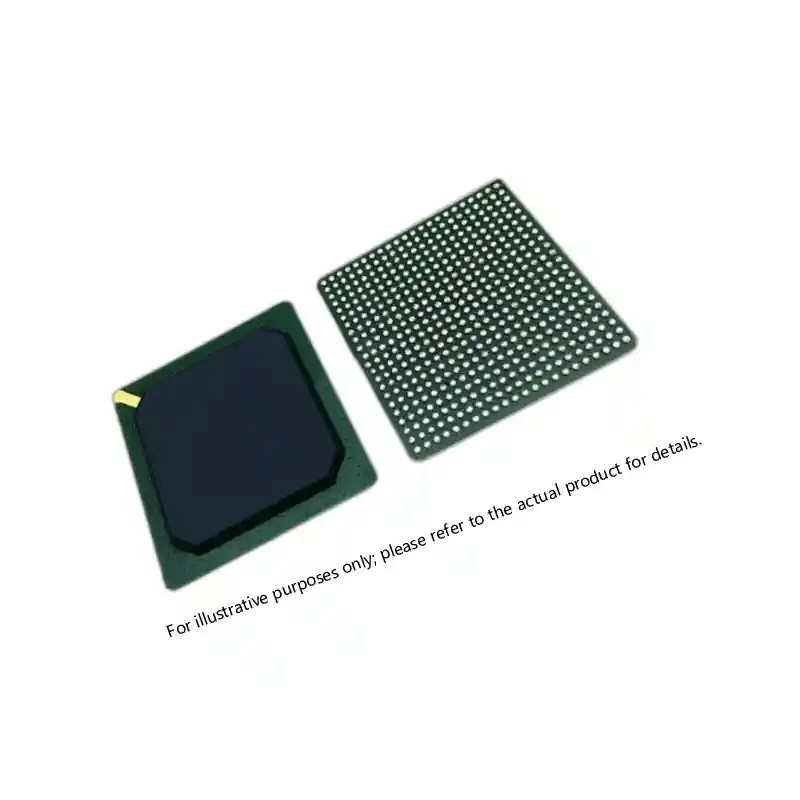
For defense contractors managing critical BOMs with long lead times and zero failure tolerance, building a relationship with a qualified military component distributor replaces ad-hoc verification with a systematic quality assurance pipeline. That shift from inspection to assurance is what program reliability ultimately depends on.
Common Questions About Military Component Authenticity Verification
A Certificate of Conformance is not a guarantee of authenticity on its own. A C of C confirms what the supplier claims, but only when it is issued by the original manufacturer and traceable through an unbroken chain. We require C of Cs that reference the OEM’s name, the purchase order, and the lot date code. If any of these are missing or inconsistent, the certificate is not worth the paper it’s printed on.
In programs we have supported, the parts most frequently counterfeited are not always the most expensive. High-volume MIL-SPEC logic ICs, voltage regulators, and older memory devices are attractive targets because they move through many channels and don’t always receive the same scrutiny as a $2,000 FPGA. We’ve seen counterfeit CD54-series logic where the functional behavior was close enough to the original that the board passed functional test, but the operating temperature margin was half of what the datasheet specified. That margin matters when the platform is deployed.
It depends on the component type and the program’s risk classification. For a QML Class V space-grade FPGA, we recommend full documentation review, X-ray on 100%, and sample DPA. For a JANTX diode going into a ground vehicle processor, documentation plus 100% visual and curve trace on a sample may be sufficient. The correct level of verification is the one that matches the consequence of failure, not the one that feels most reassuring.
If your supplier’s documentation trail ends at an unauthorized broker, the only safe path is to reject the lot and source through a qualified channel. Re-verifying a part that entered the supply chain through unknown intermediaries is rarely cost-effective. The hours and testing cost often exceed the price of the components themselves. We recommend procurement teams build their approved vendor list around distributors that can demonstrate OEM-authorized sourcing and documented inspection processes. If you are uncertain whether a supplier’s documentation package supports the component’s claimed pedigree, share your requirements and we’ll confirm whether the evidence holds up. Reach out at xuansc2144@gmail.com.
If you’re interested, check out these related articles:
A1020B-PG84B ACT2 FPGA: Specs, Sourcing, and Availability
XCKU085 UltraScale FPGA: Performance for Critical Systems
UltraScale KU085 FPGA Specifications for Defense Systems
Virtex-7 690T FPGA: Performance, Packaging, and Reliability Insights