Virtex-7 690T FPGA: Performance, Packaging, and Reliability Insights
Table of Contents
- What the XC7VX690T-2FFG1761I Part Number Actually Tells You
- Why the -2 Speed Grade Matters for Real-Time Processing
- How the FFG1761 Package Handles Harsh Environments
- What Authentic Sourcing Looks Like for Defense Programs
- Where the Virtex-7 690T Fits in Defense and Aerospace Systems
- FAQs
- What makes the Virtex-7 690T suitable for military applications?
- How important is component traceability for the XC7VX690T-2FFG1761I?
- Can the XC7VX690T-2FFG1761I be customized for specific project needs?
The Virtex-7 690T FPGA remains a workhorse for high-performance computing in defense and aerospace systems. Its architecture delivers the processing headroom these environments demand, and for system architects and procurement leads, understanding its performance envelope, packaging choices, and long-term reliability implications is where component selection either succeeds or creates problems downstream.
What the XC7VX690T-2FFG1761I Part Number Actually Tells You
The part number XC7VX690T-2FFG1761I encodes everything you need to know about the device before pulling a datasheet. Each segment carries specific technical meaning that engineers sometimes gloss over during initial component screening.
The “XC” prefix identifies a Xilinx device. “7V” places it in the Virtex-7 family, which Xilinx positioned for high-bandwidth, high-logic-capacity applications. “X690T” specifies this particular device: 690,000 logic cells with integrated transceivers. That “T” suffix matters because it confirms high-speed serial transceivers are on-die, which is essential for rapid data transfer in radar processing or secure communications links.
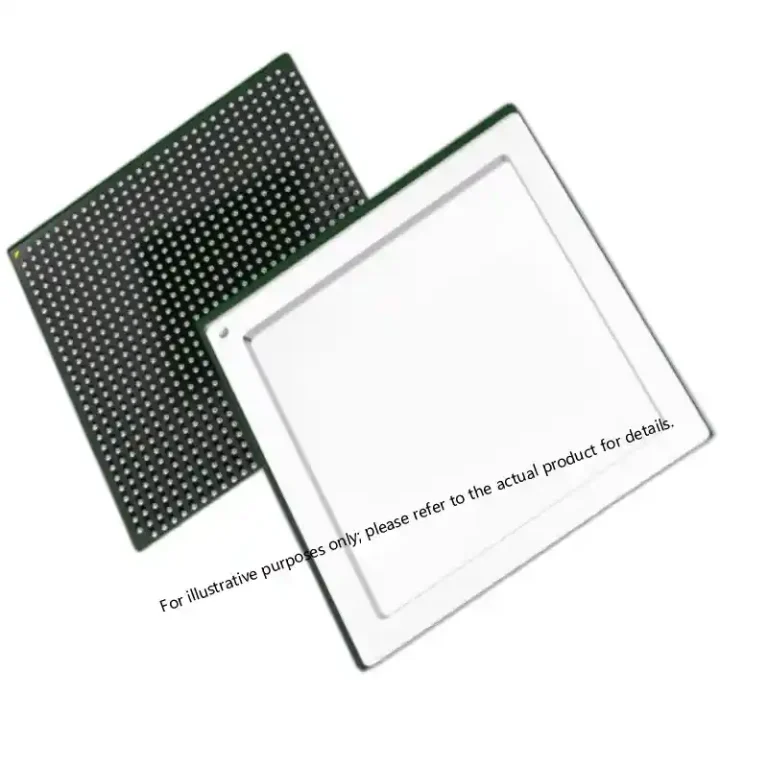
The “-2” following the device designation is the speed grade, a parameter that defines maximum operating frequency and the performance ceiling you can design against. “FFG1761” describes the package: a flip-chip fine-pitch ball grid array with 1761 pins, engineered for both physical robustness and electrical integrity. The trailing “I” specifies industrial temperature range operation, meaning the device maintains performance across a wider thermal window than commercial-grade parts.
| Part Number Segment | Description | Significance |
|---|---|---|
| XC | Xilinx device | Manufacturer identification |
| 7V | Virtex-7 family | High-bandwidth, high-logic architecture |
| X690T | Device variant with transceivers | 690K logic cells, integrated high-speed serial |
| -2 | Speed grade | Performance tier and max frequency |
| FFG1761 | Flip-chip BGA package | 1761 pins, optimized thermal and electrical |
| I | Industrial temperature | Extended operating range vs. commercial |
This level of granularity matters for systems requiring long-term support. Precise component identification prevents the kind of misinterpretations that create procurement headaches years into a program.
Why the -2 Speed Grade Matters for Real-Time Processing
The “-2” speed grade on the XC7VX690T-2FFG1761I represents a specific performance tier, not just a faster clock. It defines guaranteed performance under specified operating conditions, which is the foundation for timing closure in demanding applications.
Higher speed grades like -2 or -3 tend to appear in designs requiring real-time processing, high-speed data acquisition, or complex algorithmic execution where latency tolerance is measured in nanoseconds. A secure communication system for a defense contractor, for example, might require cryptographic operations to complete within strict timing windows. The enhanced clock speed and improved signal integrity of the -2 grade can be the difference between meeting those specifications and redesigning the timing architecture.
The Virtex-7 series also incorporates advanced interconnect technology that minimizes signal degradation and propagation delays, which compounds the speed grade advantage at the system level.
| Speed Grade | Typical Max Frequency (MHz) | Relative Performance | Power Consumption | Typical Application |
|---|---|---|---|---|
| -1 | 400 | Standard | Moderate | General purpose |
| -2 | 500 | High | Higher | High-speed processing |
| -3 | 600+ | Ultra-High | Highest | Extreme performance |
Speed grade selection also affects power consumption. Faster switching times and increased current draw mean the -2 grade runs hotter than a -1 under equivalent workloads. System designers need to balance performance requirements against thermal management constraints to maintain long-term reliability.
How the FFG1761 Package Handles Harsh Environments
The FFG1761 package was designed for the thermal and mechanical demands of military and aerospace deployment. This flip-chip fine-pitch ball grid array uses a direct die-to-substrate connection, which reduces parasitic inductance and improves thermal dissipation compared to wire-bond packages. For a high-power FPGA like the Virtex-7 690T, efficient heat removal is not optional.
Several characteristics make this package suitable for harsh environments. The mechanical construction provides resistance to shock and vibration, which matters in airborne or ground-based military platforms. The 1761 I/O pins support high-density interconnections with surrounding components, enabling complex system integration without routing compromises. The thermal properties are optimized for demanding temperature cycles, though realizing those properties requires appropriate heat sinking and airflow management.
Proper thermal design is where many projects run into trouble. The package can handle the heat, but only if the system design actually moves that heat away from the die.
What Authentic Sourcing Looks Like for Defense Programs
Sourcing authentic, traceable components like the XC7VX690T-2FFG1761I is not a procurement preference; it is a program requirement. The integrity of mission-critical systems depends on every component being exactly what the documentation claims it is. Counterfeit mitigation prevents project delays, system failures, and potential security vulnerabilities that can compromise entire programs.
MIL-PRF-38535 compliant and QML-qualified devices meet the quality and traceability standards defense programs require. Robust supply chain protocols and rigorous inspection processes are designed to guarantee authenticity. Meticulous traceability records have prevented non-compliant parts from reaching integration on numerous occasions, saving significant time and resources for defense partners.
If your program requires verified sourcing for high-reliability FPGAs, it is worth discussing traceability requirements and compliance documentation before committing to a supplier.
Where the Virtex-7 690T Fits in Defense and Aerospace Systems
The Virtex-7 690T’s combination of logic density and integrated transceivers makes it a natural fit for advanced signal processing, secure communications, and embedded computing in mission-critical applications. Implementing complex algorithms directly in hardware provides performance that software-based approaches cannot match for real-time data analysis.
The device’s massive logic capacity, high-bandwidth memory interfaces, and DSP slices accelerate computationally intensive tasks across several application domains.
Radar and electronic warfare systems use the device for processing sensor data in real-time, supporting target detection, tracking, and jamming operations. Secure communications applications implement encryption and decryption algorithms at speeds that protect sensitive information without introducing latency. Image and video processing for surveillance and reconnaissance benefits from high-resolution analysis and compression capabilities. Avionics and flight control systems rely on the deterministic behavior for critical aircraft functions.
The XC7VX690T-2FFG1761I specifically addresses military and aerospace requirements through its industrial temperature range and robust packaging, which maintain operational stability under extreme environmental conditions. FPGA programmability also supports future upgrades and adaptations, extending system lifecycle and reducing obsolescence risk. For long-term programs that need flexible hardware platforms, this adaptability is a significant advantage.
To discuss specific requirements for high-reliability FPGAs or other military-grade components, contact SPARKLE ELECTRONICS CO., LIMITED at sales@sparklemilchip.com or +852-5936-3900.
FAQs
What makes the Virtex-7 690T suitable for military applications?
The device combines high logic capacity, advanced DSP slices, and high-speed transceivers with robust packaging and industrial temperature range operation. These characteristics support demanding aerospace and defense applications requiring both extreme reliability and processing performance. Radiation-hardened variants extend suitability to space and high-altitude environments where commercial parts would fail.
How important is component traceability for the XC7VX690T-2FFG1761I?
Traceability is non-negotiable for military-grade applications. It ensures authenticity, quality, and compliance while mitigating counterfeit risk. Long-term system integrity and support depend on knowing exactly where each component originated and how it was handled through the supply chain. Defense programs cannot accept uncertainty on this point.
Can the XC7VX690T-2FFG1761I be customized for specific project needs?
The core silicon architecture is fixed, but the Virtex-7 690T offers extensive programmability. Engineers can implement custom logic, optimize memory interfaces, and configure I/O to meet unique project requirements. This flexibility allows the same device to serve different applications through design changes rather than hardware substitution. For programs with evolving requirements, reach out to discuss how programmable logic can address your specific application constraints.
If you are interested, you may want to read the following articles:
XC7VX485T FPGA: Virtex-7 Performance for Defense
A1020B-PG84B ACT2 FPGA: Specs, Sourcing, and Availability