Military Electronics Glossary: Terms Defense Engineers Need
Table of Contents
- Military Component Standards and Qualification Terms
- What Does QML Qualification Mean for Your Procurement?
- JANTX vs JANTXV: Which Screening Level Do You Need?
- Defense Procurement and Supply Chain Terminology
- Authorized vs Independent Distributor: How Documentation Differs
- Compliance and Regulatory Terms for Defense Buyers
- How Does NDAA Section 889 Affect Component Sourcing?
- Counterfeit Prevention and Authentication Terminology
- What Incoming Inspection Procedures Apply to Military Components?
- Technical Device Terms Defense Engineers Use Daily
- Radiation-Hardened vs Radiation-Tolerant: Which Does Your Program Require?
- Common Questions About Military Electronics Procurement
- What is the most important certification for a military component distributor?
- Can commercial off-the-shelf components be used in military systems?
- How do I verify that a component is authentic before procurement?
- What does hi-rel mean versus standard military-grade?
- When should an independent distributor be considered over an authorized source?
When procurement engineers first encounter military electronics documentation, the terminology can feel like a separate language. MIL-SPEC, QML, JANTXV, ITAR — each term carries procurement implications that go well beyond the definition. A military electronics glossary is not just a reference list; it is a decision-making tool. Missing the difference between JANTX and JANTXV screening, or misunderstanding what QML qualification actually requires of a supplier, can delay program milestones and introduce compliance risk. After twelve years in defense component sourcing, I have seen how terminology gaps create real procurement problems and how mastering the vocabulary changes the way engineers evaluate suppliers and specify components.
Military Component Standards and Qualification Terms
Military electronic components operate under a structured hierarchy of standards that define everything from manufacturing quality to testing requirements. The umbrella term MIL-SPEC references the broader Department of Defense specification system, but procurement teams need to understand the specific standards that apply to their component categories. MIL-PRF-38535 governs monolithic integrated circuits and establishes Class B for standard military and Class S for space-level requirements. MIL-STD-883 defines the test methods used to verify component reliability, including thermal cycling, burn-in, and hermeticity testing.
The 5962 series provides a standardized part numbering system for military microcircuits. When a part number begins with 5962, it identifies a device built to a specific military drawing under MIL-PRF-38535. These numbers encode the device type, package style, and screening level in a predictable format that simplifies cross-referencing.
QML, or Qualified Manufacturers List, represents a higher tier of supplier qualification. Under QML, the manufacturer’s entire process is certified rather than having each individual part number separately qualified, and the manufacturer’s in-house test data is accepted as compliance evidence. For procurement engineers, QML certification on a supplier means their process controls, materials management, and testing infrastructure have passed defense agency audit — not just individual product tests. This matters when you are evaluating new suppliers or considering alternate sources for long-running programs.
What Does QML Qualification Mean for Your Procurement?
QML qualification changes what you can accept from a supplier without additional source inspection. Under MIL-PRF-38535, QML-certified manufacturers have demonstrated that their production line consistently produces compliant devices. When you purchase a QML component, the manufacturer’s own test data accompanies the shipment and the device ships with a certificate of conformance backed by the QML status. For non-QML sources, independent test verification at incoming inspection may be necessary, adding time and cost. I have seen procurement teams accept non-QML parts without understanding this distinction, only to face documentation gaps during customer audits. If your program requires traceability to a certified production line, confirm QML status before placing the order — the documentation chain starts at the source.
JANTX vs JANTXV: Which Screening Level Do You Need?
JANTX and JANTXV are screening designations for discrete semiconductors defined under MIL-PRF-19500. The differences are concrete and affect both cost and reliability.
| Screening Step | JANTX | JANTXV |
|---|---|---|
| Temperature cycling | Required | Required |
| Hermetic seal testing | Required | Required |
| Electrical parameter verification | Required | Required |
| Preconditioning burn-in | Not required | Required |
| Typical lead time impact | Baseline | 2–4 weeks additional |
JANTXV adds a preconditioning burn-in step that catches early-life failures before the part leaves the factory. JANTXV parts cost more and have longer lead times, but the additional screening reduces the probability of receiving a component that fails during board-level testing. For ground-based systems where board replacement is straightforward, JANTX often provides sufficient reliability. For sealed modules, remote installations, or flight hardware where a component failure means depot-level repair, the incremental cost of JANTXV screening is almost always justified by the avoidance of a single field failure.
Defense Procurement and Supply Chain Terminology
Procurement in the defense electronics sector operates with its own vocabulary that shapes how buyers interact with suppliers. An authorized distributor holds a direct franchise agreement with the component manufacturer and receives product directly from the factory with full traceability documentation. An independent distributor sources from multiple channels — excess inventory, other distributors, or discontinued stock — and may offer better availability for allocation-constrained parts, but carries different documentation requirements that the buyer must verify.
AS6081 and AS9120 are quality management standards for electronic component distributors. AS6081 covers the detection and avoidance of counterfeit parts through inspection, testing, and supply chain verification. AS9120 addresses broader quality management for aerospace and defense distribution. When evaluating a new supplier, AS6081 certification tells you the distributor has documented processes for authenticating shipments before they reach your incoming dock.
An Approved Vendor List is the procurement team’s vetted roster of acceptable suppliers. Getting a new distributor onto the AVL typically requires a qualification process that examines certifications, financial stability, counterfeit prevention procedures, and past performance. A properly structured RFQ for military components includes the full part number, required screening level, acceptable date codes, and compliance documentation requirements. Lead time refers to the period between order placement and delivery.
LTB, or Last-Time Buy, is the final opportunity to purchase a component the manufacturer has announced for discontinuation. For defense programs that support systems for decades, missing an LTB notice means losing access to a critical component. EOL, or End of Life, is the formal notification that a part is being discontinued, triggering the LTB window. Obsolescence management is the discipline of monitoring component lifecycles and executing LTB purchases or identifying alternate sources before supply channels close. Strategic stock refers to inventory held in anticipation of future demand, used to buffer against lead time variability for components with unpredictable factory schedules.
Authorized vs Independent Distributor: How Documentation Differs
The documentation trail differs fundamentally between these two sourcing channels. Authorized distributors provide the manufacturer’s original certificate of conformance, factory test data, and a direct chain of custody from the production line. Independent distributors must supplement with additional verification: third-party test reports, visual inspection documentation, and in many cases X-ray or decapsulation analysis to confirm authenticity. For new production builds requiring full manufacturer warranty coverage, authorized distribution is the standard path. For legacy systems with obsolete parts where factory lead times exceed program schedules, a qualified independent distributor with AS6081 certification can be a legitimate source — but the incoming inspection burden increases. Your procurement documentation package needs to reflect which path you took and include the corresponding verification evidence.
Compliance and Regulatory Terms for Defense Buyers
Compliance terminology in defense electronics procurement extends beyond quality into national security regulations. ITAR, the International Traffic in Arms Regulations, controls the export of defense-related articles and technical data. Electronic components designed specifically for military applications may be ITAR-controlled, meaning they cannot be exported without authorization. EAR, the Export Administration Regulations, covers dual-use items with both commercial and military applications. The practical question for procurement engineers is whether parts require export licenses for their specific destination.
DFARS, the Defense Federal Acquisition Regulation Supplement, imposes requirements on defense contractors that flow down to component procurement, including source restrictions on certain materials and countries. NDAA Section 889 specifically prohibits federal agencies and contractors from procuring certain telecommunications equipment and components from specific Chinese manufacturers and their subsidiaries. This has direct impact on component selection: if an assembly contains covered components, the entire system may be non-compliant for U.S. government contracts.
A certificate of conformance is the supplier’s documented declaration that delivered components meet the specified requirements. Traceability, or chain of custody, is the documented record of every entity that has handled the components from manufacturer to end user, supporting authenticity verification and counterfeit prevention.
If your program involves NDAA 889 compliance or ITAR-controlled components, it is worth confirming country-of-origin documentation and export classification before finalizing your BOM — reach out at xuansc2144@gmail.com to verify sourcing compliance for your specific part list.
How Does NDAA Section 889 Affect Component Sourcing?
NDAA Section 889 requires procurement teams to verify that purchased components do not originate from prohibited sources. For each part number, confirm the manufacturer is not on the prohibited list and that the component itself is not a covered telecommunications product. This is straightforward when buying from major U.S. or European manufacturers with established compliance documentation. It becomes more complex when sourcing through independent distributors who may have mixed inventory from global sources. A certificate of conformance alone does not always address NDAA 889 compliance — you may need specific country-of-origin documentation. In our procurement verification process, manufacturer origin is checked as a standard step before quoting defense program requirements, because discovering a compliance issue after parts arrive creates delays that no program can absorb.
Counterfeit Prevention and Authentication Terminology
Counterfeit electronic components — parts misrepresented as to their origin, testing, or condition — pose one of the most serious risks in military electronics procurement. Incoming inspection is the first line of defense: a documented process for visually examining components for physical anomalies, marking inconsistencies, and packaging irregularities before they enter inventory.
Lot testing takes inspection further by selecting samples from a shipment and subjecting them to electrical testing across temperature. Authentication is the broader term for verifying that a component is exactly what it claims to be, covering manufacturer origin, date of manufacture, and screening level. Authentication may involve comparing the physical part against known-good samples, checking documentation against manufacturer records, and performing electrical characterization.
Upscreening refers to taking a commercial or industrial-grade component and subjecting it to additional testing to verify performance at military temperature ranges or reliability levels. While upscreening can make commercial parts usable in some military applications, it does not turn a commercial part into a MIL-SPEC part — the original fabrication process controls are not retroactively applied. COTS, or Commercial Off-The-Shelf, describes components designed for commercial markets that defense programs adopt to reduce cost or access newer technology. The decision to use COTS components involves a deliberate trade-off between performance and the reduced documentation and traceability compared to full MIL-SPEC parts.
What Incoming Inspection Procedures Apply to Military Components?
A thorough incoming inspection begins with documentation review: confirm the certificate of conformance matches the purchase order, verify date codes and lot codes against the manufacturer’s format, and check for any signs of altered paperwork. Visual inspection under magnification examines the component body for sanding marks, inconsistent laser etching, or package anomalies that suggest remarking. For higher-risk parts — obsolete components, parts from non-authorized sources, or devices destined for critical assemblies — additional testing may include X-ray inspection against a known-good reference, electrical testing at room and elevated temperature, and in some cases decapsulation with die inspection. The depth of inspection scales with the risk profile of the part and its source. Components from authorized distributors with full traceability may require only documentation verification; parts from independent sources warrant the full inspection sequence.
Technical Device Terms Defense Engineers Use Daily
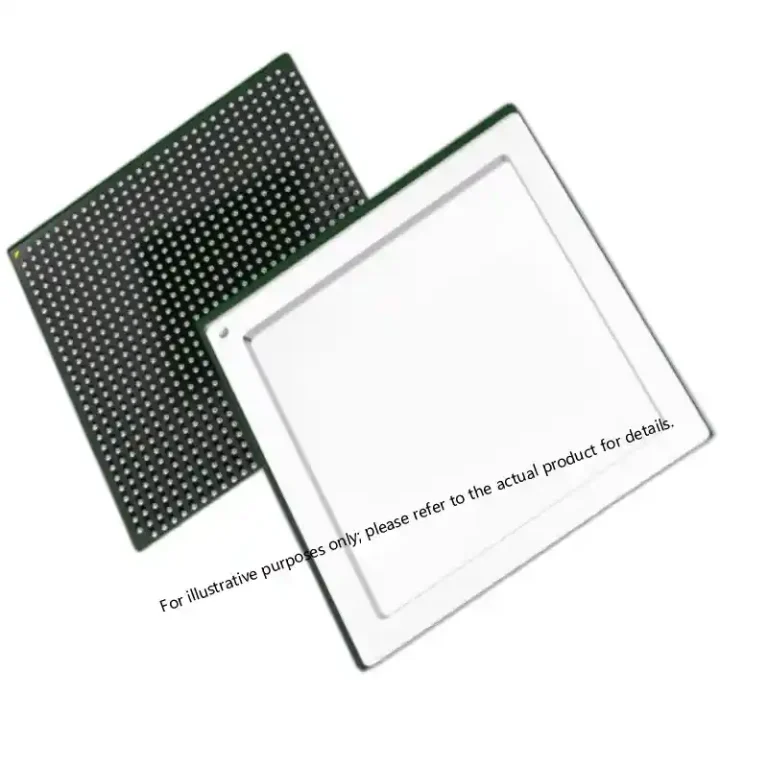
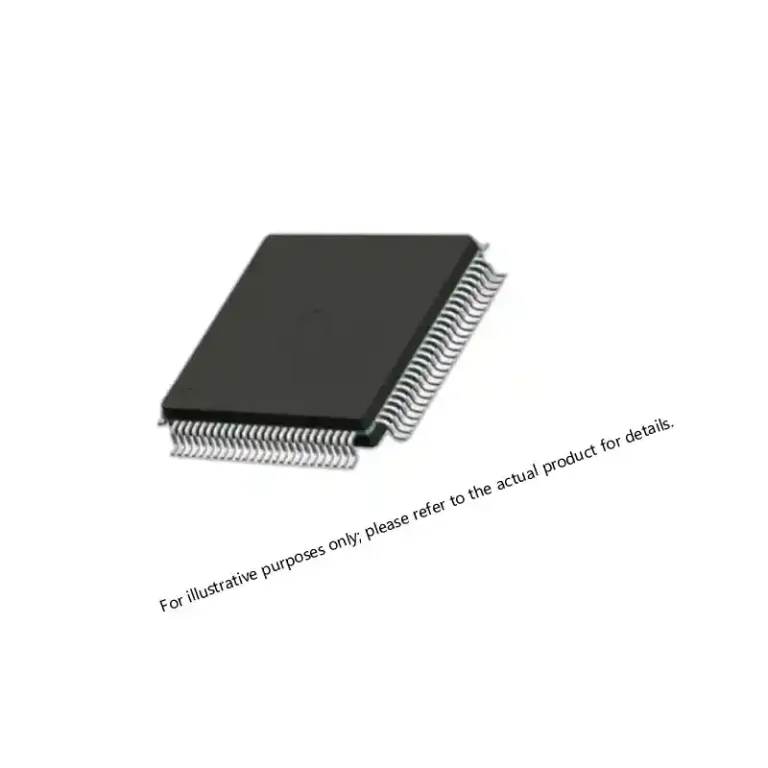
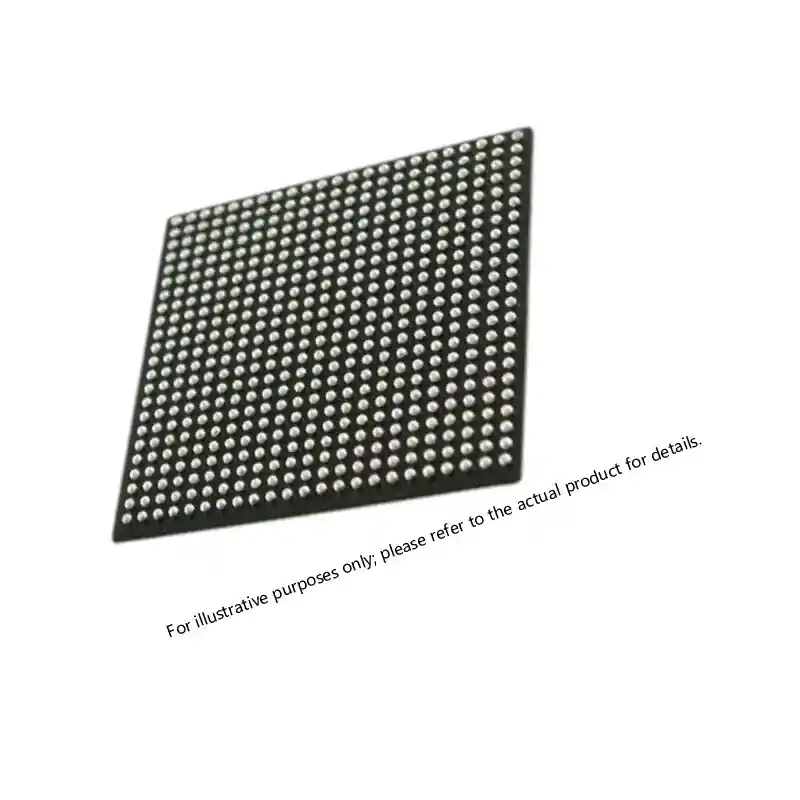
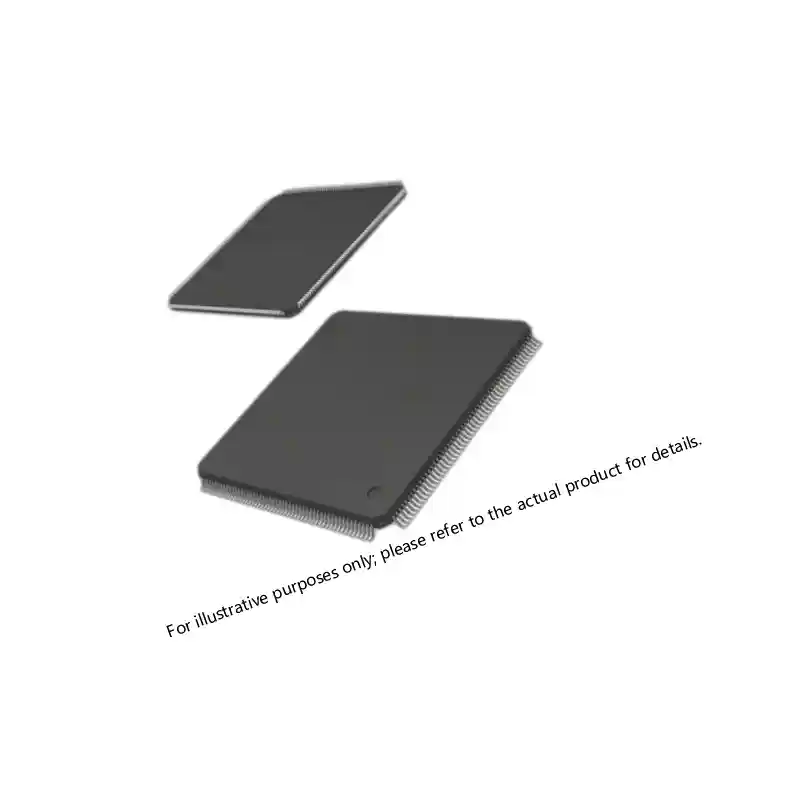
The technical vocabulary of military electronics spans device types, performance parameters, and reliability concepts. FPGA, Field Programmable Gate Array, is a reconfigurable logic device used extensively for signal processing, encryption, and interface bridging in defense systems. Military-grade FPGAs from Xilinx, Microchip, and Intel are available in MIL-SPEC temperature ranges and hermetic packages, with select families offered in QML-qualified versions.
DSP, Digital Signal Processor, handles mathematical processing of sampled analog signals — essential in radar, sonar, and electronic warfare systems. ADC and DAC bridge the analog and digital domains; high-speed ADCs from Analog Devices sample at multiple gigasamples per second for wideband receiver applications.
Radiation-hardened components are designed and tested to withstand the ionizing radiation environment of space or nuclear applications, with guaranteed performance at total dose levels typically exceeding 100 krad(Si). Radiation-tolerant components are built on processes that inherently resist radiation effects but are not tested and guaranteed to the same levels. For LEO satellite programs with shorter mission durations, radiation-tolerant devices may meet requirements at substantially lower cost and lead time than full rad-hard equivalents.
Hi-rel describes components built to elevated quality standards with additional screening, testing, and documentation beyond commercial practices. SWaP-C — Size, Weight, and Power plus Cost — captures the trade space defense system designers navigate. Derating is the practice of operating components below their maximum ratings to extend field life. MTBF provides a statistical prediction of reliability used in system-level availability calculations.
Radiation-Hardened vs Radiation-Tolerant: Which Does Your Program Require?
The choice between rad-hard and rad-tolerant depends on mission duration, orbit, and the consequence of a component failure. A geostationary communications satellite designed for fifteen years of continuous operation requires rad-hard components throughout the critical signal path, because cumulative radiation dose at GEO altitudes will degrade commercial or rad-tolerant devices beyond their parametric limits. A LEO CubeSat with a two-year mission may use rad-tolerant components for cost and availability reasons, particularly for non-critical subsystems where a soft error can be corrected through watchdog resets or error correction codes. The procurement implication: rad-hard parts have fewer qualified sources, longer lead times, and significantly higher unit costs. If your program can accept rad-tolerant devices, you gain access to a broader supply base and shorter delivery schedules, but this decision must be made with engineering analysis of the radiation environment, not procurement convenience.
Military electronics procurement is built on a foundation of precise terminology, and every term in this glossary connects to a real sourcing decision. When compliance documentation, screening levels, and supplier qualifications are understood as procurement tools rather than abstract standards, the entire sourcing process becomes more predictable. Send your part number and quantity to xuansc2144@gmail.com and we will confirm stock, traceability, and the compliance documentation package that matches your program requirements — before you commit to a sourcing decision.
Common Questions About Military Electronics Procurement
What is the most important certification for a military component distributor?
No single certification covers everything a defense buyer needs to verify, but AS6081 is the most directly relevant to counterfeit prevention. It requires documented procedures for supply chain verification, inspection, and testing — the same activities that protect your incoming stock from counterfeit parts. AS9120 addresses broader quality management for aerospace distribution. For military ICs specifically, a distributor’s ability to provide full traceability documentation and original manufacturer certificates of conformance matters as much as any certification on the wall.
Can commercial off-the-shelf components be used in military systems?
Yes, and it happens regularly in programs where the performance, cost, or availability of MIL-SPEC equivalents does not meet requirements. The key is that COTS adoption must be a deliberate engineering decision rather than a procurement shortcut. The program needs to assess whether the commercial part’s temperature range, reliability, and documentation support the system’s operational requirements. A COTS processor in a ground-based simulator may be perfectly acceptable; the same part in a flight-critical avionics module may not.
How do I verify that a component is authentic before procurement?
Verification starts with source selection. Components from the manufacturer’s authorized distribution channel carry the strongest presumption of authenticity. For parts from independent sources, verification requires multiple layers: examine the physical part for marking consistency and package condition, compare documentation against known manufacturer formats, check lot and date codes for plausibility, and perform electrical testing when the risk profile justifies it. Third-party test laboratories can perform X-ray, decapsulation, and detailed electrical characterization when in-house capability is unavailable.
What does hi-rel mean versus standard military-grade?
Hi-rel is a broader category that includes military-grade components but also extends to devices built for space, medical, and other applications where failure is not an option. A military-grade component under MIL-PRF-38535 Class B has defined screening and quality conformance requirements. A hi-rel component for space applications under Class S adds more extensive screening, tighter parametric limits, and additional lot qualification testing. The distinction matters in procurement because hi-rel space parts have fewer qualified sources and significantly longer lead times than Class B military parts.
When should an independent distributor be considered over an authorized source?
Independent distributors become the right choice when authorized channels cannot meet your requirements. In programs we have supported, this typically happens with obsolete components where the manufacturer no longer supports the part, allocation-constrained devices where factory lead times exceed program schedules, or emergency requirements where immediate availability trumps other considerations. When you use an independent distributor, the procurement package needs to include verification documentation that compensates for the lack of direct factory traceability. Share your part number and quantity with us at xuansc2144@gmail.com and we will confirm availability and the corresponding verification documentation before you commit.
If you’re interested, check out these related articles:
Virtex-7 690T FPGA: Performance, Packaging, and Reliability Insights
UltraScale KU085 FPGA Specifications for Defense Systems
XCKU085 UltraScale FPGA: Performance for Critical Systems
A1020B-PG84B ACT2 FPGA: Specs, Sourcing, and Availability