Hi-Rel Memory Sourcing Guide for Space and Defense Programs
Table of Contents
- What Makes Memory Hi-Rel for Space and Defense
- Memory Technologies Used in Hi-Rel Applications
- The Real Cost of Sourcing Hi-Rel Memory
- How to Qualify a Hi-Rel Memory Supplier
- Securing Long-Term Supply for Space and Defense Memory Programs
- Common Questions About Sourcing Hi-Rel Memory
- How do I know if a memory device is truly radiation-hardened versus just marketed as “radiation-tolerant”?
- Our program uses commercial-grade flash in a shielded enclosure. Is that acceptable for space?
- What’s the difference between QML Class Q and Class V for memory?
- How do I handle a memory device that is now obsolete but we have five years of production left?
- Can we order small quantities of hi-rel memory for prototyping and low-rate initial production?
- Working with a Hi-Rel Memory Supplier That Understands Your Program
Sourcing hi-rel memory for space and defense programs means dealing with much more than a datasheet comparison. The right memory component must survive radiation, extreme temperature swings, and multi-decade operational life, but the supply chain that delivers it must survive program changes, obsolescence, and budget cycles just as well. A qualified supplier who understands these overlapping demands reduces risk at the point where procurement and engineering meet. This guide walks through the key memory technologies, standards, and sourcing strategies that defense and aerospace teams use to secure long-term, traceable supply.
What Makes Memory Hi-Rel for Space and Defense
Memory devices used in military and space systems are not simply commercial parts with wider temperature specs. They are designed, fabricated, and tested to meet an entirely different failure threshold. A single stuck bit in a telemetry SRAM can corrupt months of mission data; a flash block failure during a firmware update on an orbiting satellite can end the mission.
The requirements stack up quickly. Radiation tolerance is the most visible differentiator. Devices must withstand total ionizing dose (TID) — often 50 to 300 krad(Si) — without parametric drift, and exhibit immunity to single-event latchup (SEL) and manageable single-event upset (SEU) rates. In deep space or high-altitude orbits, heavy ion strikes can flip memory cells, so error-correcting code (ECC) and scrubbing architectures become part of the component selection conversation.
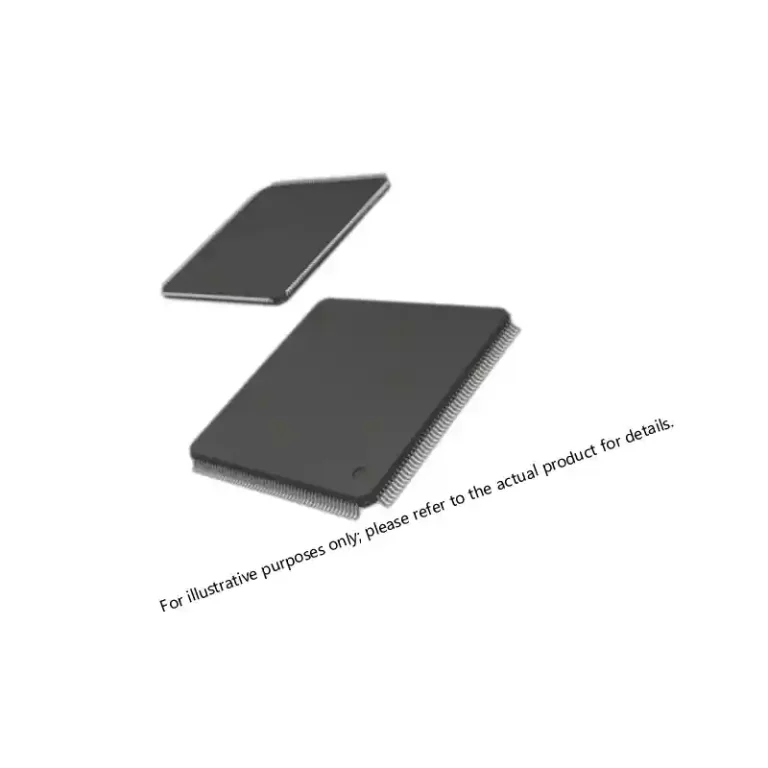
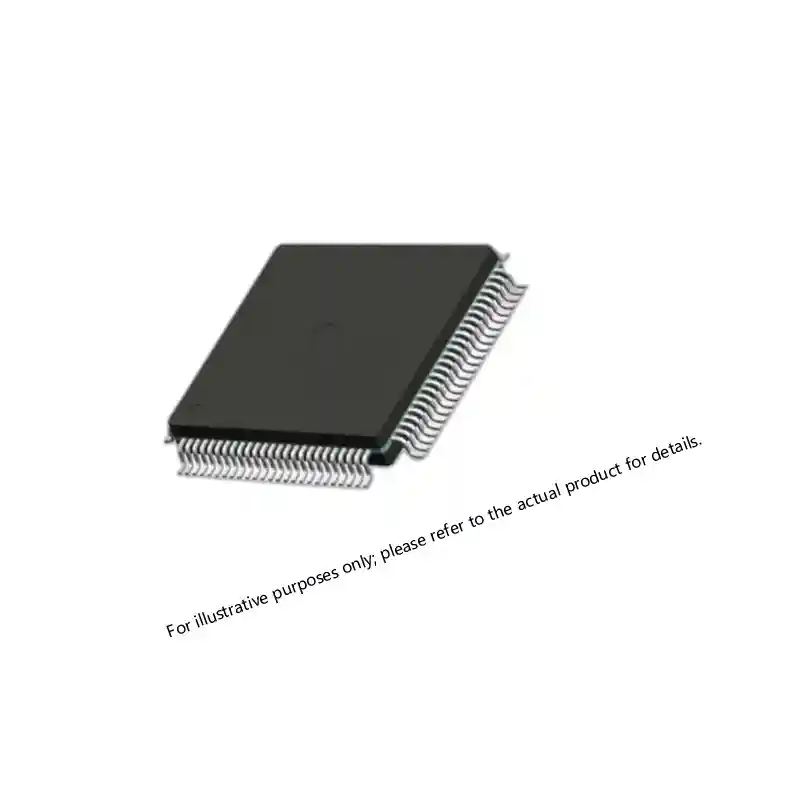
Temperature range is another fixed constant. Military memory devices typically operate from -55°C to +125°C, sometimes wider for downhole or engine-mounted applications. This temperature window must hold across storage, unpowered transit, and full operational load. That is not achievable with standard plastic packaging; hermetic ceramic packages are the baseline, often with controlled lead finish for long-term solder joint integrity.
The governing documents are well established. MIL-PRF-38535 defines the quality and reliability requirements for monolithic microcircuits, and QML Class Q and Class V devices flow from this standard. NASA’s EEE-INST-002 provides additional guidance for spaceflight parts. A hi-rel memory device that carries a 5962-series part number and QML certification has already passed a barrage of environmental, mechanical, and electrical tests before it ever reaches the buyer.
Memory Technologies Used in Hi-Rel Applications
No single memory technology covers every defense application. The choice depends on whether the function is boot code storage, fast processor cache, data logging, or parameter retention through power cycles. The table below compares the four memory types most often specified in military and space BOMs.
| Technology | Typical Density | Key Hi-Rel Attribute | Common Use |
|---|---|---|---|
| Asynchronous SRAM | 256Kb–16Mb | Fast access, no refresh, latchup immune | Processor cache, telemetry buffers |
| NOR Flash | 16Mb–2Gb | Direct execute-in-place, long retention | Firmware storage, FPGA configuration |
| NVSRAM | 64Kb–4Mb | Instant non-volatile backup, unlimited endurance | Critical data logging, parameter storage |
| SDR / DDR DRAM | 64Mb–8Gb | High density at lower cost, ECC variants available | Image processing, bulk data storage |
SRAM remains the workhorse for small, fast caches. Radiation-hardened SRAM from manufacturers like Aeroflex and Cypress (now part of Infineon) appears in many legacy and new designs. For firmware, NOR flash with 100,000 cycle endurance and 20-year data retention is the standard choice. NVSRAM, such as the SIMTEK or Cypress parts, sits in a special category: it combines fast SRAM access with an automatic non-volatile backup when power fails, which is critical in flight recorders and mission parameter stores.
High-density DRAM enters when processing throughput demands large frame buffers. For space, synchronous DRAM configured with ECC and careful board-level shielding can operate in LEO environments, but the qualification overhead is significant. In practice, many programs stick with SRAM or flash for simplicity and proven radiation performance.
The Real Cost of Sourcing Hi-Rel Memory
The part number on a drawing is only the start of the procurement challenge. The three persistent problems are lead time, obsolescence, and minimum order quantities. A QML-V SRAM with a 52-week factory lead time can delay an entire program if not ordered early enough. When that same device goes end-of-life during a 15-year defense program, the program office faces a last-time buy decision that ties up capital for the remainder of the contract.
Minimum order quantities from original component manufacturers (OCMs) add another layer of difficulty. A small defense contractor building twenty units of a ground vehicle controller cannot absorb a factory minimum order of 500 pieces. This is where a specialized distributor with existing hi-rel inventory changes the equation.
If your program involves memory devices with long lead times or you are facing a last-time buy situation with limited storage capacity, it is worth confirming current stock levels and alternative packaging options before committing to a large purchase — reach out at xuansc2144@gmail.com.
Counterfeit memory devices are a genuine threat when supply tightens. Relabeled commercial parts, recycled devices with new markings, and blank chips programmed with false IDs have all appeared in defense supply chains. A hi-rel memory supplier with a documented inspection process, incoming lot testing, and full traceability to the OCM is the single most effective countermeasure.
How to Qualify a Hi-Rel Memory Supplier
Evaluating a supplier for space and defense memory goes beyond checking a website. I recommend starting with three areas that separate transactional brokers from program-support partners.
First, demand traceability documentation. Every lot must be traceable to the original wafer or die batch, with a Certificate of Conformance that references the purchase order, date code, and country of origin. For QML devices, the supplier should provide the manufacturer’s QML certification number and the lot-specific test records. If a supplier cannot produce these documents on first request, walk away.
Second, verify that the supplier has an incoming inspection process. This includes visual inspection per MIL-STD-883 Method 2017, solderability testing, and for space-grade devices, potentially X-ray or decapsulation sampling. Not every distributor maintains these capabilities in-house, but they should be able to demonstrate through their quality manual how each lot is verified before shipment.
Third, assess the supplier’s inventory breadth and program support posture. A supplier that stocks 500 or more military component part numbers, across multiple manufacturers and memory types, can respond to shortage situations without panicking. Equally important is whether they support long-running programs with scheduled deliveries, die banking arrangements, and technology refresh planning.
Securing Long-Term Supply for Space and Defense Memory Programs
Space and defense programs routinely span ten to twenty years. Memory devices that were available at design-in rarely remain in production for the full deployment. To manage this, we use three proven strategies.
Die banking is the most common technique for high-value SRAM and flash devices. The program buys the wafers or finished die from the manufacturer and stores them in controlled conditions, then packages and tests the die as needed over time. This requires a partnership with a supplier that can manage the banking agreement, coordinate assembly at certified facilities, and maintain environmental storage records.
Last-time buy (LTB) is a fallback, not a strategy. When a memory device goes end-of-life, the program must estimate remaining lifetime demand and place a single final order. The risk is overestimating or underestimating, both of which carry financial and operational penalties. A distributor that actively monitors component lifecycles and alerts programs early enough to plan gives you a better chance of getting the numbers right.
Technology refresh is the long-term solution. When an FPGA or processor upgrades, the associated memory architecture often changes. A supplier who understands the evolving defense memory landscape can help identify drop-in replacements or migration paths before the old part becomes unprocurable. In a recent program we supported, a legacy 512Kx8 45ns SRAM was nearing obsolescence; by working with the supplier, we identified a compliant 512Kx8 17ns replacement from Aeroflex that required no board changes, avoiding a redesign.
Common Questions About Sourcing Hi-Rel Memory
How do I know if a memory device is truly radiation-hardened versus just marketed as “radiation-tolerant”?
Start with the test data. A rad-hard device will have explicit TID, SEL, and SEU characterization in the manufacturer’s radiation report, usually referencing MIL-STD-750 or ASTM test methods. Radiation-tolerant often means the device was tested at a lower level or only for TID, not for single-event effects. If your orbit or mission profile demands guaranteed latchup immunity, ask for the SEL characterization at LET of at least 75 MeV·cm²/mg.
Our program uses commercial-grade flash in a shielded enclosure. Is that acceptable for space?
It depends on the orbit and mission duration. In LEO with low inclination, commercial flash can sometimes survive with shielding and ECC, but the risk is unquantified. The manufacturer will not warrant the device for space use, and lot-to-lot variation can introduce failure modes not seen in characterization. For any program with no recovery option after launch, I would only use a QML-V qualified flash with full radiation characterization.
What’s the difference between QML Class Q and Class V for memory?
Class Q is the baseline high-reliability grade, with 100% screening per MIL-PRF-38535, including burn-in. Class V adds more stringent screening, tighter delta limits, and additional requirements for space, such as single-event effects characterization. For a satellite bus or payload, Class V is the standard. For tactical military ground equipment, Class Q is sufficient. The cost difference can be 2x to 5x, so the decision should be based on the actual environmental envelope.
How do I handle a memory device that is now obsolete but we have five years of production left?
First, confirm with the OCM that no wafer or finished die stock remains. Then, contact a specialized hi-rel distributor to check global distributor inventory and authorized aftermarket sources. If no inventory exists, you face a redesign or an LTB of any remaining stock. In either case, act fast. I have seen programs lose a years’ worth of production because they waited too long to authorize a last-time buy.
Can we order small quantities of hi-rel memory for prototyping and low-rate initial production?
Yes, if you work with a distributor that maintains hi-rel inventory and is willing to break factory packs. We regularly support prototyping builds of five to ten units with full traceability. The cost per part is higher than volume pricing, but the alternative is either paying for a factory pack of 50 or 100 devices you do not need or using commercial parts that will not represent the final flight configuration. Share your BOM and timeline with a qualified supplier and they can often build a small-lot supply plan.
Working with a Hi-Rel Memory Supplier That Understands Your Program
The difference between receiving a box of parts and receiving program support is the supplier’s ability to match supply to your actual timeline. Space and defense programs do not follow commercial product lifecycles. Prototyping may run for two years, production qualification for another year, and then a build rate of five systems per year for a decade. A supplier that only cares about the initial order will not be there when you need the last batch of SRAM for a depot repair in year nine.
At Sparkle Electronics, we stock military-grade memory devices from manufacturers including Microchip, Infineon (Cypress), Aeroflex, and Atmel, covering SRAM, flash, NVSRAM, and EEPROM across multiple density and speed grades. Every part we ship is fully traceable, protected against counterfeit ingress through rigorous incoming inspection, and documented to meet the traceability and certification requirements of MIL-PRF-38535 and AS9120. Whether you are solving an immediate shortage, planning a long-term die bank, or looking for a second source on a 5962-series memory part, send your part numbers and quantity to xuansc2144@gmail.com and we will verify availability and provide a compliance data pack within 24 hours.
If you’re interested, check out these related articles:
XC7VX485T FPGA: Virtex-7 Performance for Defense
Virtex-7 690T FPGA: Performance for Mission-Critical Systems
A1020B-PG84B ACT2 FPGA: Specs, Sourcing, and Availability
Virtex-7 XC7VX690T: Performance, Reliability, and Integration