Hypersonic Electronics: Reliability in Extreme Environments
Table of Contents
- What Makes the Hypersonic Environment So Punishing for Electronics
- Which Component Specifications Actually Matter for Hypersonic Systems
- How Qualification Standards Separate Reliable Components from Risky Ones
- Why Packaging and Material Choices Determine Hypersonic Survivability
- Where Hypersonic Electronics Development Is Heading Next
- Frequently Asked Questions
- What is the lifespan expectation for electronics in hypersonic vehicles?
- Are commercial-off-the-shelf (COTS) components ever used in hypersonic systems?
- How does radiation hardening protect hypersonic electronic devices?
- What materials are best suited for high-temperature hypersonic electronics?
- Partnering for Hypersonic Reliability
Designing electronics for hypersonic vehicles presents an array of unprecedented challenges, demanding components that can perform reliably under the most severe operational conditions. These systems, traveling at speeds exceeding Mach 5, experience intense heat, extreme vibration, and significant radiation exposure, which can compromise the integrity and functionality of conventional electronic devices. Ensuring the unwavering performance of hypersonic electronics is not merely an engineering feat; it is a critical requirement for mission success and national security.
What Makes the Hypersonic Environment So Punishing for Electronics
The unique operational envelope of hypersonic flight creates an environment unlike any other, pushing the boundaries of material science and electronic design. As a vehicle accelerates through the atmosphere and sustains high speeds, air friction generates immense heat, leading to surface temperatures that can reach thousands of degrees Celsius. This thermal load transfers to internal components, requiring specialized thermal management solutions to maintain operating temperatures within acceptable limits.
Beyond heat, the sheer speed and dynamic pressures induce severe vibration and shock, which can cause mechanical fatigue or catastrophic failure in inadequately designed components. High-altitude trajectories expose electronics to increased levels of cosmic and atmospheric radiation, necessitating radiation hardening techniques to prevent data corruption or device malfunction.
SPARKLE ELECTRONICS CO., LIMITED’s deep expertise in MIL-SPEC and hi-rel components helps clients identify and source devices capable of withstanding these defined extreme conditions. Our understanding of these environmental stressors allows us to guide engineers toward components engineered for resilience.
| Environmental Parameter | Typical Hypersonic Range | Impact on Electronics |
|---|---|---|
| Temperature | 200°C to 1000°C+ | Material degradation, performance drift |
| Vibration | 20-2000 Hz, 10-50 G | Mechanical fatigue, connection failure |
| Shock | 100-1000 G | Component fracture, circuit disruption |
| Radiation | Elevated neutron/gamma | Single Event Effects (SEE), total dose damage |
| Pressure | Dynamic, varying | Structural stress, packaging integrity |
Which Component Specifications Actually Matter for Hypersonic Systems
To function reliably in hypersonic applications, electronic components must meet stringent technical specifications that far exceed those of commercial-grade parts. Wide bandgap semiconductors, such as Gallium Nitride (GaN) and Silicon Carbide (SiC), are becoming indispensable due to their ability to operate efficiently at much higher temperatures and power densities than traditional silicon. These materials are crucial for power electronics in hypersonic vehicles, managing the significant energy demands without overheating.
RF components for hypersonic communication systems require exceptional frequency stability and power handling capabilities to maintain signal integrity through plasma sheaths formed during high-speed atmospheric flight. System-on-chip (SoC) designs for aerospace integrate multiple functions onto a single chip, reducing size, weight, and power consumption, all of which are paramount in constrained hypersonic platforms.
Sensor technology for extreme environments must provide accurate data acquisition under high g-forces and rapid temperature fluctuations, often requiring integrated cooling or robust packaging. Packaging technologies themselves are critical, using advanced materials and hermetic seals to protect sensitive die from moisture, thermal cycling, and mechanical stress. These components must perform without compromise, as failure in any part of the electronic system can lead to mission failure.
How Qualification Standards Separate Reliable Components from Risky Ones
Ensuring the integrity and reliability of components for hypersonic systems involves rigorous qualification processes, adherence to strict industry standards, and meticulous traceability protocols. Reliability testing subjects components to simulated extreme conditions, including thermal cycling, vibration, and shock, to verify their robustness.
MIL-STD-883, a United States Department of Defense test method standard, defines uniform methods, controls, and procedures for testing microelectronic devices suitable for military and aerospace applications. MIL-PRF-38534 specifies the general performance requirements for hybrid microcircuits, covering design, processing, and quality assurance. QML qualification (Qualified Manufacturers List) signifies that a manufacturer’s processes and products meet the highest reliability standards for military and space applications, ensuring consistent quality.
Component traceability is paramount in defense programs, providing a complete history of each part from raw material to final assembly. This includes documentation of manufacturing dates, lot numbers, test results, and any rework performed. Supply chain integrity becomes a non-negotiable aspect, safeguarding against counterfeit parts and ensuring that only authentic, compliant components are integrated into critical systems.
SPARKLE ELECTRONICS CO., LIMITED specializes in providing authentic, traceable, and QML-qualified components, ensuring compliance with the stringent standards required for hypersonic applications. I recall a specific instance where a client required a legacy MIL-PRF-38534 component for a hypersonic prototype. Our team conducted extensive authentication protocols, including X-ray fluorescence and decapsulation, to verify the component’s internal structure and material composition. This meticulous process identified a subtle deviation from the original manufacturer’s specifications, preventing a potential system failure that would have cost the program months of delay and millions in redesign. This proactive verification process saved the program an estimated three months of schedule and over $2 million in potential rework and re-testing.
Why Packaging and Material Choices Determine Hypersonic Survivability
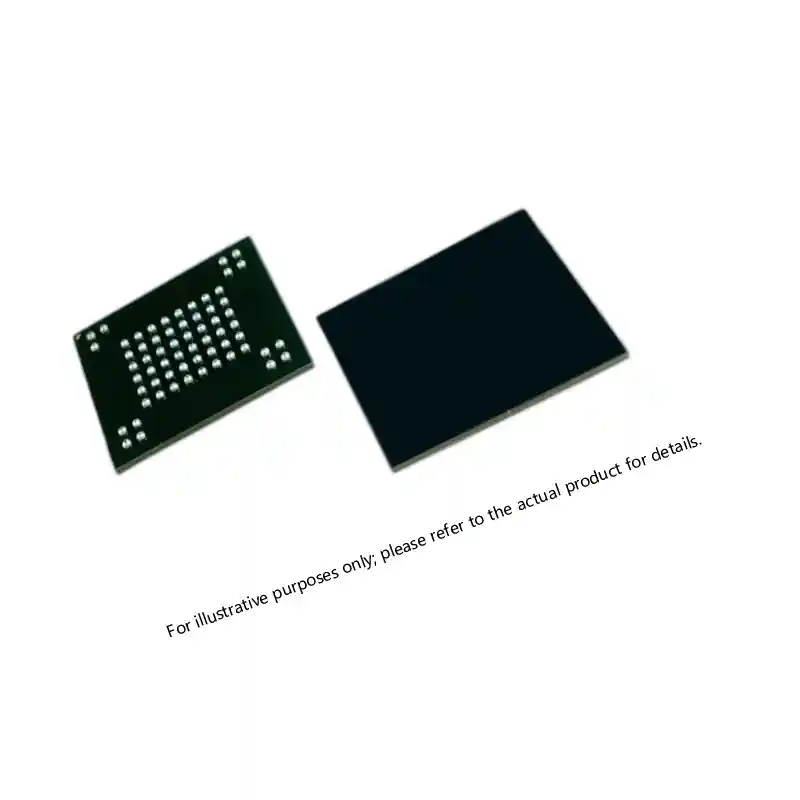
The relentless demands of hypersonic flight necessitate continuous innovation in materials science and packaging techniques to achieve enhanced durability. Traditional electronic packaging often cannot withstand the combined thermal, mechanical, and radiation stresses. Advanced packaging solutions utilize ceramic substrates, which offer superior thermal conductivity and mechanical stability compared to conventional organic substrates. High-temperature solders and bonding agents maintain electrical and mechanical connections at elevated temperatures, preventing joint failure.
Miniaturization of electronics is also a significant driver, as smaller components generate less heat and can be more effectively integrated into compact, aerodynamically optimized designs. This often involves three-dimensional integration and wafer-level packaging to achieve higher component density. Design for extreme environments incorporates strategies like robust mechanical mounting, vibration isolation, and integrated cooling channels directly into the component package. These innovations ensure that even the most sensitive digital signal processors (DSPs) and field-programmable gate arrays (FPGAs) can operate reliably within the harsh confines of a hypersonic vehicle.
SPARKLE ELECTRONICS CO., LIMITED’s inventory includes specialized components utilizing advanced materials and packaging, crucial for the enhanced durability needed in extreme environments. The physical protection of the die is as important as the silicon itself.
If your program involves legacy components or materials with limited supplier visibility, it is worth discussing authentication protocols before committing to a source.
Where Hypersonic Electronics Development Is Heading Next
The trajectory of hypersonic electronics development points toward even greater integration, autonomy, and resilience. Research frontiers include further advancements in wide bandgap semiconductors, pushing their operational limits for higher frequencies and power levels. Integrated photonics, which uses light instead of electrons for data transmission, promises significantly higher bandwidth and reduced electromagnetic interference, critical for high-speed data acquisition in complex systems.
Artificial intelligence in aerospace is poised to enable autonomous systems capable of real-time adaptation to changing flight conditions, requiring onboard processing power that can withstand the extreme environment. Additive manufacturing for electronics, such as 3D printing of circuit boards and passive components, offers the potential for highly customized, complex geometries and integrated thermal solutions directly into the component structure.
These emerging technologies will redefine what is possible for hypersonic vehicles, but they will also introduce new challenges in materials compatibility, reliability modeling, and qualification. The ongoing effort involves not just building faster and hotter components, but building smarter and more robust systems that can operate reliably in environments that push the very limits of engineering.
Frequently Asked Questions
What is the lifespan expectation for electronics in hypersonic vehicles?
The expected lifespan for hypersonic electronics is highly mission-dependent but generally designed for short, intense operational periods. Components undergo rigorous reliability testing to ensure performance for the intended duration, often focusing on immediate mission success rather than extended service life.
Are commercial-off-the-shelf (COTS) components ever used in hypersonic systems?
While specialized military-grade components are preferred, COTS components may be considered for non-critical functions if they can be rigorously tested and qualified to meet specific extreme environment requirements, though this is rare for core operational systems.
How does radiation hardening protect hypersonic electronic devices?
Radiation hardening protects devices by using specialized materials, design techniques, and shielding to prevent damage from ionizing radiation encountered at high altitudes and speeds. This ensures continued functionality and data integrity for critical digital signal processors and memory.
What materials are best suited for high-temperature hypersonic electronics?
Materials like Gallium Nitride (GaN) and Silicon Carbide (SiC) are best suited due to their wide bandgap properties, allowing them to operate at much higher temperatures and power densities than traditional silicon. Ceramic substrates and high-temperature solders are also crucial for packaging. To discuss specific component requirements for your hypersonic program, contact us at xuansc2144@gmail.com or by phone.
If you’re interested, check out these related articles:
XCKU115 UltraScale FPGA: Powering Critical Defense Systems
Virtex-7 XC7VX690T: Performance and Reliability Insights
Partnering for Hypersonic Reliability
Sourcing authentic, traceable, and compliant military-grade components for extreme environments can be a complex and high-stakes challenge. SPARKLE ELECTRONICS CO., LIMITED acts as your program support partner, providing a one-stop source for high-reliability components that meet rigorous defense standards. To discuss specific requirements, contact us at xuansc2144@gmail.com or by phone.