
High-Reliability IC Sourcing for Geostationary Satellites
Table of Contents
Sourcing high-reliability integrated circuits for geostationary satellite programs requires a procurement discipline that goes well beyond a standard mil-spec buy. A GEO payload operates in an environment where servicing is impossible, radiation accumulates over a fifteen-year mission life, and a single component anomaly can end the mission. Most published material catalogs the component types, but procurement engineers face a different problem: qualifying parts that will survive the radiation environment, securing supply continuity across a program that may span two decades, and validating traceability chains that can survive a failure review board. Over twelve years supporting defense and space programs, I have seen too many sourcing strategies treat GEO procurement as a variant of LEO or ground military procurement, and the outcomes are reliably expensive. For GEO missions, component qualification must be purpose-built for the orbit, and the supply chain must be structured for decades, not delivery dates. This article lays out the sourcing approach that consistently limits program risk.
Component Requirements for GEO Satellite Missions
Every geostationary satellite electronics design begins with a set of environmental constraints that directly shape the component selection list. The GEO radiation environment includes trapped electrons and protons in the outer radiation belt, with total ionizing dose accumulation that can exceed 100 krad behind standard shielding over a fifteen-year mission. Solar proton events add transient dose and single event effects. Consequently, the first sourcing filter is not the function but the radiation performance envelope.
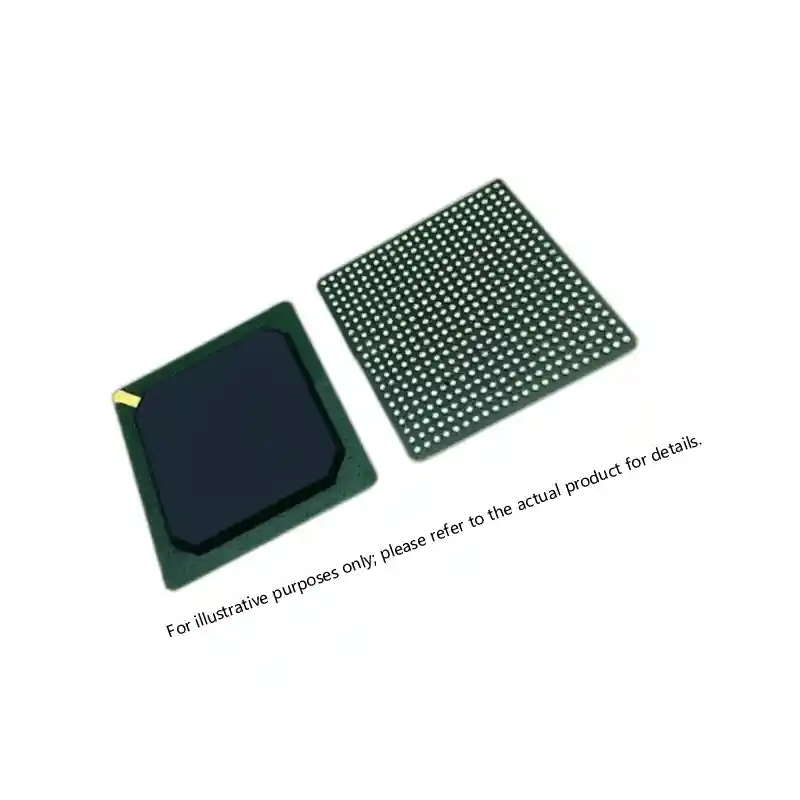
The core IC categories for a GEO payload separate into digital processing, mixed-signal conversion, power management, and memory. In digital processing, we typically lock down the FPGA choice early because it anchors the payload data path and influences the power tree. Rad-hard FPGAs from Microchip (formerly Actel) dominate many programs: the RTAX, RT ProASIC3, and RTG4 families are built on antifuse or flash technologies that are inherently immune to configuration upset. For higher gate counts, Xilinx’s radiation-tolerant Virtex-4QV and Virtex-5QV provide SRAM-based options when paired with scrubbing and TMR. For signal conversion, high-speed ADCs and DACs from Analog Devices and Texas Instruments rated to 100 krad or higher are the baseline, often requiring lot-specific TID characterization. Power modules from VPT and Vicor must handle wide input ranges with single-event burnout immunity, while memory selections pivot toward radiation-hardened SRAM and NOR flash from Aeroflex, White Electronic Designs, and 3D-Plus.
We regularly see procurement groups underestimate the radiation characterization effort. A part number with a generic “rad-hard” label is not sufficient. For GEO, you need the manufacturer’s radiation test report covering TID to the mission dose plus margin, SEE characterization including SEL, SEU, and SEFI rates at GEO-equivalent LET thresholds, and displacement damage data for optocouplers or certain bipolar devices. Without this documentation, the part is not a candidate for the payload prime contractor’s Parts, Materials, and Processes (PMP) control board.
Qualification and Radiation Hardness Assurance
Whereas a LEO smallsat can sometimes accept upscreened commercial parts with limited testing, GEO missions almost always enforce a formal radiation hardness assurance (RHA) program per MIL-STD-883 or equivalent. This program defines the part categories, test flows, and acceptance criteria. For a procurement engineer, the RHA plan translates directly into sourcing checkpoints: you cannot buy a component unless its test data package meets the mission-specific RHA requirements.
The most demanding GEO programs invoke QML Class V or QML Class Q certification in accordance with MIL-PRF-38535. QML Class V is the highest reliability level for space, requiring wafer lot acceptance, extended burn-in, and radiation lot acceptance testing on every wafer lot. This is the standard we recommend when the mission has no on-orbit redundancy or carries a twelve-to-fifteen-year service life. For satellites with some redundancy or shorter design life, QML Class Q with supplemental radiation testing can provide an acceptable balance of assurance and cost.
A practical concern we encounter frequently is the shrinking number of wafer fabrication lines that support QML Class V flows. When a foundry exits the aerospace market, the part number may remain on the qualified parts list but become unobtainable. This is why we advise procurement managers to verify that a candidate part has an active wafer supply and a current radiation test program before pinning a design to it. We have had to transition programs off parts where the manufacturer had stopped producing radiation-testable wafers, and the earlier that transition happens in the design cycle, the lower the redesign cost.
Long Lead Times, Obsolescence, and Supply Continuity
GEO satellite programs routinely experience procurement timelines that collide with component lead times. Custom or low-volume space-grade ICs can have lead times of 26 to 52 weeks, and when a program faces integration schedule pressure, those lead times become the critical path. Our approach is to separate the BOM into three categories: long-lead items that must be ordered before the design review, standard-lead items that can follow the CDR, and lower-risk items that can be procured close to integration.
Obsolescence is the other dimension that undermines GEO supply continuity. A satellite designed in 2020 and launching in 2026 will have a procurement tail that extends into the 2030s for spares and follow-on units. If the FPGA or ADC is based on a semiconductor process node that the manufacturer plans to discontinue, the program can face a last-time-buy crisis. We have supported multiple programs where we negotiated wafer purchases and die banks to secure a ten-year supply of a critical rad-hard FPGA. Die banking requires careful coordination with the manufacturer and a trusted assembly and test flow, but for a GEO program, the alternative is a mid-life payload redesign that costs far more than the die inventory investment.
Selecting a Hi-Rel Distributor for GEO Components
The GEO supply base is small, and not every distributor who handles mil-spec parts can support a GEO satellite program responsibly. We recommend evaluating distributors on four criteria that directly affect mission success. First, the distributor must demonstrate an auditable chain of custody from the original component manufacturer through to shipment, with lot traceability documents that map to the manufacturer’s radiation test reports. Second, the distributor should have experience managing QML Class V and Class Q procurement and be able to articulate the difference between a QML certificate of conformance and a radiation lot acceptance test report. Third, the distributor needs to maintain environmentally controlled storage for moisture-sensitive and static-sensitive devices, with dry-pack and nitrogen cabinet storage for long-term inventory. Fourth, the distributor should offer die banking and wafer storage services if the program’s lifetime quantity planning exceeds the available manufacturer inventory.
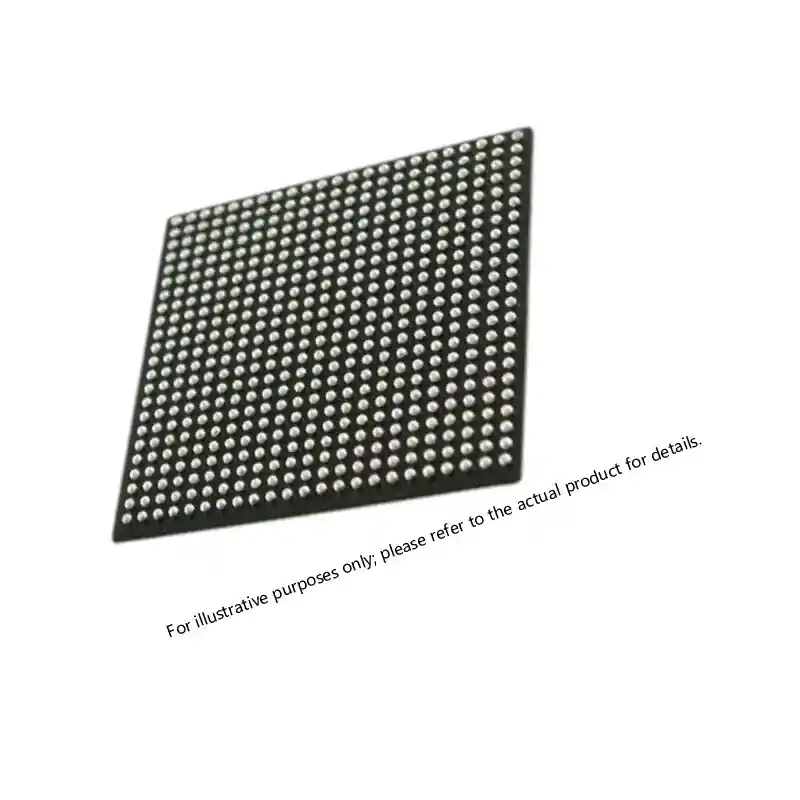
Sparkle Electronics operates within this framework by maintaining a specialized inventory of space-grade and hi-rel components from Microchip, Analog Devices, VPT, Aeroflex, and other manufacturers, and by managing storage under strict environmental controls. We handle lot-level traceability documentation and can coordinate radiation test data retrieval directly with manufacturers when the program’s RHA plan requires it. For programs facing long lead times, we are able to hold stock in bonded inventory and release it against program milestones.
Integrating Component Sourcing with GEO Program Milestones
GEO satellite procurement is most effective when the sourcing plan is integrated with the program’s design reviews and qualification gates. We typically map component procurement to the following milestones: by SRR (System Requirements Review), the long-lead parts list is frozen and RFQs are issued; by PDR (Preliminary Design Review), radiation test data packages are collected and evaluated, and any parts with insufficient radiation data are flagged for substitution; by CDR (Critical Design Review), all hardware qualification units and flight units are on order with confirmed delivery dates. After CDR, the focus shifts to managing incoming inspection, lot acceptance testing, and storage conditions for flight builds.
This phased approach prevents the most common failure mode we see: a program that discovers a radiation qualification gap on a critical part six months before flight unit integration. At that point, the lead time for an alternative part will slip the integration schedule, and the cost of a schedule slip on a GEO satellite launch campaign is measured in millions of dollars.
Practical Questions from GEO Sourcing Teams
What is the real lead time difference between QML Class V and Class Q parts for GEO programs?
The lead time delta is driven by the radiation lot acceptance testing requirement. A Class V part requires radiation testing on every wafer lot, which adds approximately eight to twelve weeks to the overall lead time compared to a Class Q part that may use generic wafer lot data. When a program can accept Class Q with supplemental radiation characterization on the flight lot, we often see lead times of 20–30 weeks versus 32–52 weeks for Class V. Programs that build early with Class Q for engineering models and transition to Class V for flight units can compress the schedule while preserving flight quality.
How do we verify that a component’s radiation test data matches the GEO orbit environment?
The key parameters to match are the total dose level (mission dose plus a factor of two margin for GEO is typical), the LET threshold for SEL immunity (we recommend a minimum of 75 MeV-cm²/mg for GEO), and the heavy ion test data for the specific device technology. The radiation test report should state the test facility, beam species, flux, and fluence, and it should be signed by the manufacturer’s radiation test engineer. Generic “radiation tolerant” datasheet notes without a test report are disqualifying.
Does a rad-hard FPGA require a different procurement approach than a rad-tolerant one for GEO?
Yes, the procurement difference is in the radiation assurance backing. A rad-hard FPGA from Microchip’s RTG4 family is designed from the substrate up for radiation hardness and comes with a full radiation test report and QML Class V qualification. A rad-tolerant FPGA like the Xilinx Virtex-5QV is manufactured on a commercial process but screened for radiation performance, so the procurement must include lot-specific SEE characterization and a clear understanding of the configuration memory scrubbing strategy. The part number alone does not tell the full story; the test data package is what matters.
What storage conditions are required for flight-grade GEO components held in distributor inventory?
Flight-grade components for GEO should be stored in nitrogen-purged or desiccant-controlled dry cabinets at 40% relative humidity or below, with continuous temperature monitoring between 18°C and 25°C. Components that are moisture-sensitive level 3 or higher must remain in sealed dry-pack until use, and the humidity indicator card must be inspected before opening. For long-term storage exceeding two years, we recommend nitrogen-pressurized enclosures and periodic solderability testing if the program’s assembly plan permits. Sparkle Electronics maintains these storage conditions as a standard for all space-grade inventory we hold.
Should we build a strategic inventory of GEO-qualified parts now, even if we don’t have a specific mission yet?
For organizations that develop GEO satellite buses on a recurring basis, maintaining a strategic inventory of long-lead, rad-hard parts makes strong financial sense. Lead times for space-grade FPGAs and ADCs have historically trended upward, and supply interruptions at the foundry level can strand a program. A strategic inventory funded early in the bus development cycle can decouple the payload integration schedule from component lead times. If you are building a GEO bus that will be adapted for multiple payloads, it is worth building an initial stocking list now and discussing it with a distributor who can manage the environmental storage and traceability. We regularly help teams model the inventory investment against schedule risk for exactly this purpose. Share your anticipated part types and timeline with us at xuansc2144@gmail.com, and we can outline a stocked inventory plan that fits your bus program’s production cycle.
If you’re interested, check out these related articles:
Virtex-7 XC7VX690T: Performance, Reliability, and Integration
XC7VX485T FPGA: Virtex-7 Performance for Defense
XCKU085 UltraScale FPGA: Performance for Critical Systems
UltraScale KU085 FPGA Specifications for Defense Systems
A1020B-PG84B ACT2 FPGA: Specs, Sourcing, and Availability