Hi-Rel Components for CubeSat and Small Satellite Missions
Table of Contents
- The Unique Environmental Demands on CubeSat Electronics
- Key Component Categories for Small Satellite Missions
- FPGAs and Processing
- High-Speed ADCs and DACs
- Memory and Storage
- Power Management Modules
- MIL-SPEC Connectors and Passives
- Radiation Hardness vs. Rad Tolerance: Matching the Specification to the Mission
- Sourcing Strategies for Traceable Hi-Rel Components
- Long-Term Supply Chain Planning for CubeSat Programs
- Securing a Reliable Component Supply for Your Next Mission
- Common Questions About Hi-Rel Component Sourcing for CubeSats
- Can I use commercial-grade components in a CubeSat if I add radiation shielding?
- What is the difference between radiation-hardened-by-design (RHBD) and radiation-hardened-by-process (RHBP)?
- How do I verify that the components I receive match the documentation?
- What ECCN classification and export controls apply to military-grade components shipped for CubeSat programs?
CubeSat and small satellite missions have transformed access to space, but their compressed timelines and lower budgets create a procurement paradox: the electronics must perform like military satellite hardware, yet the program cannot always absorb the cost and lead time of full space-grade qualification. The selection of high-reliability (hi-rel) components for CubeSat missions is often where mission success is determined, because while launch opportunities are plentiful, component failures in orbit are final. Drawing on over a decade of sourcing military-grade and hi-rel electronics for defense and space programs, I want to walk through the component categories, environmental challenges, and sourcing strategies that can keep a small satellite mission on track.
The Unique Environmental Demands on CubeSat Electronics
CubeSat designers quickly learn that the space environment punishes assumptions. Total ionizing dose (TID) from trapped protons and electrons degrades semiconductor gate oxides over time, shifting threshold voltages and increasing leakage until a device simply stops switching. Single-event effects (SEE) are even more unpredictable: a single high-energy particle can flip a memory cell, latch a CMOS output into a destructive high-current state, or induce a transient that propagates through logic. These failure mechanisms are well documented in larger satellites, but in the compact, power-constrained architectures of CubeSats where shielding is minimal and redundancy is limited, they become mission-critical.
Vacuum outgassing is another design constraint. Plastic-encapsulated microcircuits and standard conformal coatings release volatile compounds that condense on optical surfaces and cold detectors. For CubeSats carrying imaging payloads, the cumulative effect of outgassing can degrade sensor performance long before any electronic failure occurs. This is why many programs specify hermetic ceramic packages or Class H equivalent screening even when the radiation environment is relatively benign.
Thermal cycling amplitude in low Earth orbit (LEO) may be modest compared to deep space, but the frequency is punishing. A typical CubeSat in LEO completes roughly 15 orbits per day, each with a hot-side/cold-side transition. Over a two-year mission, that is over 10,000 thermal cycles. Solder joints, wire bonds, and interposers must survive that mechanical fatigue without derating. Hi-rel components rated across the full military temperature range of -55°C to +125°C have been designed and screened with exactly this kind of cycling in mind.
Key Component Categories for Small Satellite Missions
When I review a CubeSat BOM, I group the component landscape into several categories, each with its own sourcing profile and typical pain points.
FPGAs and Processing
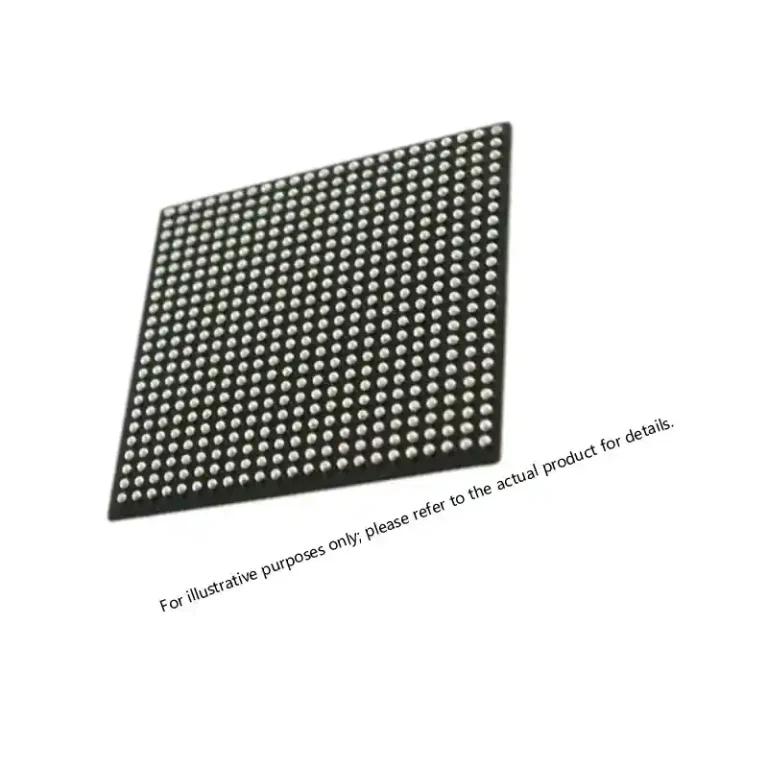
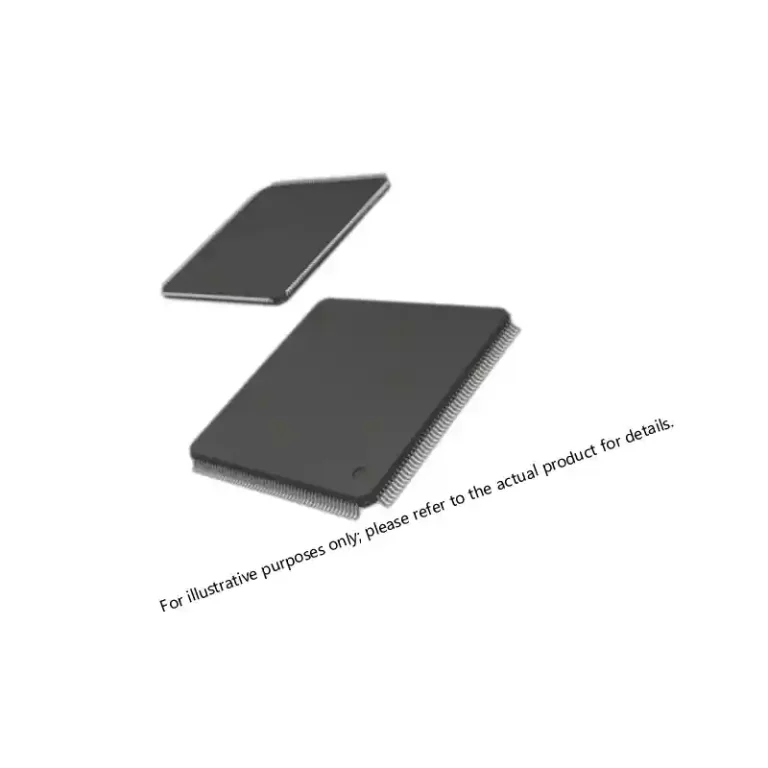
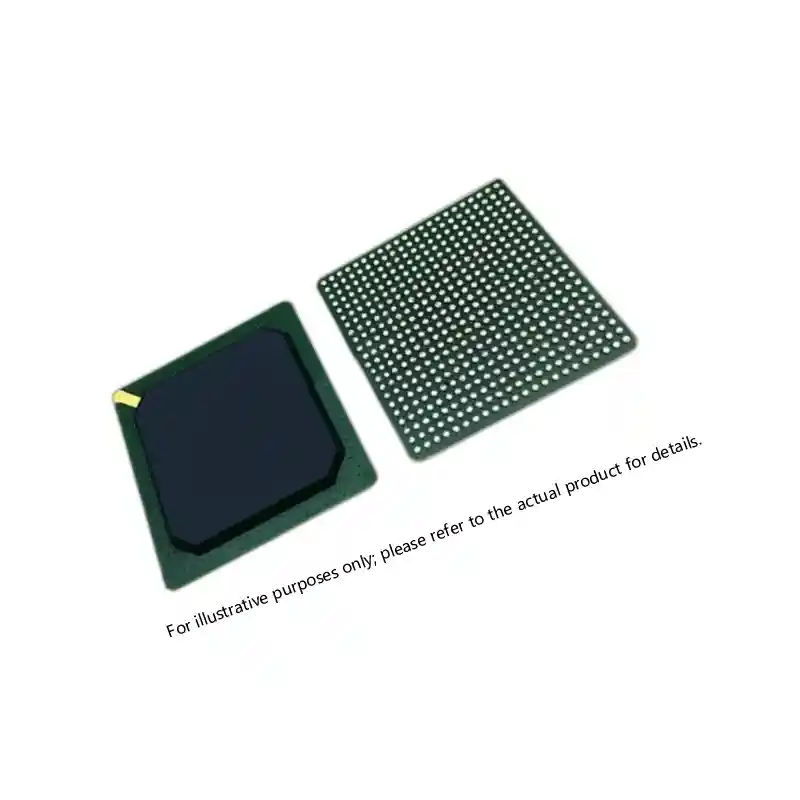
Field-programmable gate arrays serve as the central processing hub in many small satellite payloads, handling sensor data streams, encryption, and telemetry formatting. The problem is that SRAM-based FPGAs are inherently susceptible to single-event upsets (SEU) in their configuration memory, and a flipped bit in the wrong location can re-route internal signals and brick the entire logic fabric. For LEO missions below roughly 800 km, rad-tolerant FPGAs with built-in configuration scrubbing and error detection can be sufficient. These are often industrial-temperature devices that have been characterized for TID performance rather than formally qualified.
For missions operating in higher radiation orbits or for durations over three years, the decision usually converges on true radiation-hardened FPGAs, many of which are fabricated on 0.25-micron or smaller processes with radiation-hardening-by-design (RHBD) techniques. The Microsemi SmartFusion2 and PolarFire families, available from the company’s inventory, incorporate SEU-immune flash-based configuration cells that eliminate the scrubbing overhead entirely. Procurement programs that identified this architectural advantage early have simplified their FPGA sourcing strategy significantly.
High-Speed ADCs and DACs
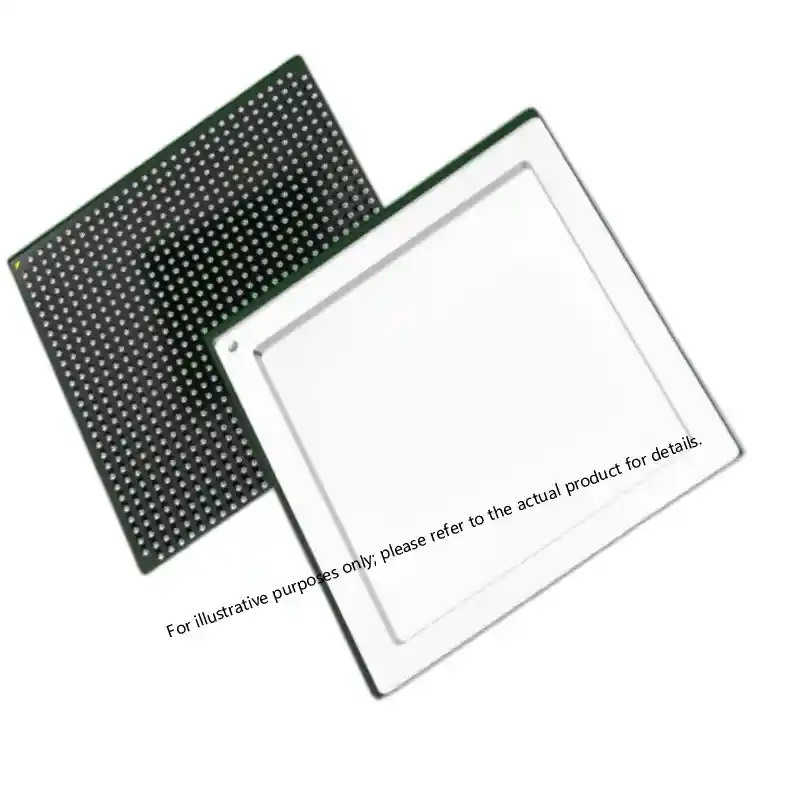
A CubeSat with a synthetic aperture radar or software-defined radio payload relies on high-speed data converters to digitize incoming signals with enough dynamic range to pull weak targets out of noise. The challenge is that high-speed ADCs are often among the first devices to show parametric drift from TID exposure. Offset and gain errors accumulate gradually, reducing the effective number of bits (ENOB) over the mission life. Selecting a converter that maintains its datasheet performance after 20 krad of TID requires either radiation test data or an informed understanding of the process technology.
Many 14-bit and 16-bit ADCs from Analog Devices and Texas Instruments have been characterized by defense labs for TID and SEE, and that characterization data exists for specific lot codes and date codes. Sourcing parts with the exact lot traceability that matches those radiation reports is a discipline that separates long-lasting small satellite payloads from those that degrade prematurely.
Memory and Storage
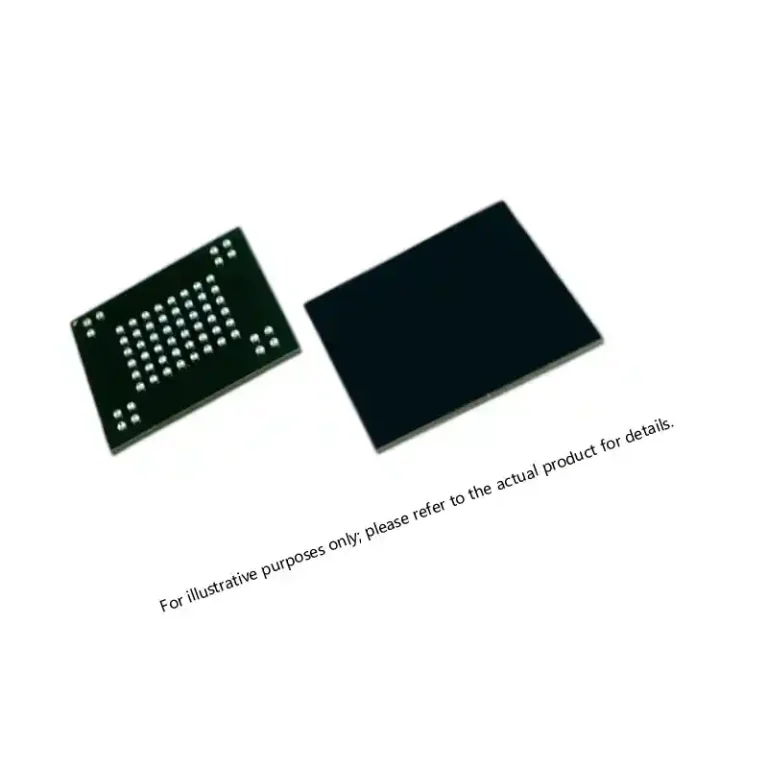
The distinction between radiation-hardened memory and rad-tolerant memory is more than just a price difference; it is an architectural decision. Rad-hard SRAM and MRAM carry the cost of substrate isolation, hardened cell design, and heavy screening. Rad-tolerant approaches, by contrast, often use a standard memory die with error-correcting code (ECC) scrubbing implemented in the FPGA fabric. This reduces unit cost but consumes FPGA resources and complicates the timing closure.
For data storage, NAND flash is almost never acceptable in its raw form. CubeSat programs that require solid-state storage for high-data-rate payloads typically rely on SLC NAND managed by a radiation-tolerant controller, or they adopt hybrid architectures that buffer data in rad-hard SRAM before committing to non-volatile storage. The product portfolio includes MIL-SPEC SRAM devices rated to 300 krad, and the part numbers that support these high-dose applications are well understood within the vendor community.
Power Management Modules
Point-of-load regulators and isolated DC-DC converters must start reliably after a cold launch phase and maintain stable output rails as input voltage varies across orbital sunlight and eclipse cycles. I have seen more than one program delayed at the integration stage because a commercial DC-DC module exhibited startup instability at the low-temperature end of its specified range. Military-grade power modules from VICOR and VPT, screened to MIL-STD-883 requirements, undergo the burn-in and temperature cycling that predict this behavior before it reaches the satellite bus.
MIL-SPEC Connectors and Passives
Connectors and passives have their own failure modes. Standard tin-lead solder joints can grow whiskers in vacuum, creating intermittent short circuits. MIL-SPEC capacitors rated under MIL-PRF-39014 and MIL-PRF-39003 use materials and processes that eliminate the tin whisker risk and provide stable capacitance across the military temperature range. Circular connectors compliant with MIL-DTL-38999 carry the hermeticity and vibration resistance that small satellites need during the launch environment, even though the CubeSat form factor may seem to demand a smaller commercial alternative.
Radiation Hardness vs. Rad Tolerance: Matching the Specification to the Mission
One of the most consistent sources of confusion in CubeSat component selection is the distinction between radiation-hardened (rad-hard) and radiation-tolerant (rad-tolerant) devices. The terms are not interchangeable, and using the wrong class of component can either overspend a limited budget or introduce unacceptable risk.
Rad-hard components are designed, fabricated, and screened to a formal dose rate and SEE cross-section specification. They are qualified to MIL-STD-883 TM 1017 for total dose and TM 1080 for single-event effects, and the test data is traceable to a specific wafer diffusion lot. Rad-tolerant devices, in contrast, have usually been characterized by a third-party lab or by the manufacturer on a best-effort basis. The data may show adequate performance, but the lot-to-lot repeatability and screening guarantee are not there.
For a CubeSat in a low-inclination 400 km orbit with a six-month primary mission, a rad-tolerant approach with system-level ECC and watchdogs can deliver adequate reliability at roughly half the component cost. For a polar orbit at 800 km or a two-year mission with a funded follow-on phase, the incremental cost of rad-hard FPGAs and memory almost always pays for itself through reduced anomaly investigation time and higher throughput.
| Screening Level | Typical TID (krad) | SEE Characterization | Traceability |
|---|---|---|---|
| MIL-STD-883 Class B | Not required | Not required | Date/lot code |
| MIL-STD-883 Class S | Up to 100 | Lot sample testing | Full wafer/die |
| QML Class Q | Per device spec | Per SMD | Full diffusion lot |
| QML Class V | Per device spec, worst-case | Statistical sample | Full diffusion lot |
| Rad-tolerant (commercial) | Data available on request | Limited or none | Varies by vendor |
If your mission profile includes a higher radiation orbit or a duration over two years, confirming the specific radiation response of a component before committing to a BOM is crucial. Reach out to us at xuansc2144@gmail.com with your intended orbit parameters and we can help validate part selections against available characterization data.
Sourcing Strategies for Traceable Hi-Rel Components
Once the component specifications are defined, the sourcing process itself becomes a risk vector. The proliferation of counterfeit parts in the global electronics supply chain is well documented, and military-grade components with high list prices and low annual consumption are a prime target. A counterfeit FPGA or ADC inserted into a CubeSat may show no electrical anomaly during bench testing but fail within the first few weeks of orbit due to compromised packaging or die contamination.
The most effective defense against counterfeit risk is not a single test but a documented chain of custody. I always advise purchasers to insist on a full certificate of conformance (C of C) that traces back to the original manufacturer’s lot number, and to verify that the distributor maintains a quality management system audited to AS9120 or AS6081. These certifications are not guarantees, but they indicate that the supplier has implemented the counterfeiting avoidance procedures defined in SAE standards.
Incoming inspection procedures for hi-rel components should include at least three layers: visual inspection under magnification for signs of re-marking or rework, x-ray inspection for internal die integrity and wire bond anomalies, and electrical testing at temperature extremes to confirm parametric compliance. For programs with flight-critical components, we often coordinate with certified test labs to perform destructive physical analysis (DPA) on a sample lot before accepting the full shipment.
Traceability documentation does not end at procurement. For CubeSat missions that may transition from prototype to a constellation of dozens of satellites, maintaining a secure archive of lot-traceable component records is necessary for anomaly investigation and for demonstrating compliance to downstream stakeholders. A single untraceable part in a BOM can delay a launch while the program team works to prove its provenance.
Long-Term Supply Chain Planning for CubeSat Programs
Small satellite programs often begin with a one-off engineering model and then evolve into multi-unit constellations. This creates a supply chain profile that looks very different from a large military satellite. The initial build quantity is small, the engineering team is lean, and the procurement cycle is short. But if the constellation plan materializes, the program suddenly needs dozens or hundreds of identical components, many of which may have gone end-of-life (EOL) during the prototyping phase.
I have worked with teams that identified this problem late and were forced to redesign an FPGA daughterboard because the original device had been discontinued between the engineering model and the flight build. The mitigation is to build an intentional component obsolescence plan early, even when the constellation is still a PowerPoint slide. This plan should include a survey of each critical part’s lifecycle status, a list of pin-compatible alternate sources, and a last-time buy (LTB) trigger date that is communicated to program management before component vendors begin accepting final orders.
For CubeSat programs that require die-level procurement for long-life missions, die banking is a viable but logistically demanding strategy. The bare dice are stored in a controlled nitrogen environment, wire-bonded and packaged at a qualified assembly house as needed, and screened to the original military specification at the wafer, die, and package levels. The cost is higher, but the supply lock-in eliminates the redesign risk. Partners with experience in die banking can coordinate the logistics so that the engineering team does not become a semiconductor supply chain manager overnight.
Securing a Reliable Component Supply for Your Next Mission
The difference between a CubeSat that meets its mission objectives and one that becomes an inert piece of space debris often comes down to component-level decisions made months before integration. The environmental demands of space are unrelenting, and the cost of a single wrong part is far higher than the price difference between that part and its properly screened replacement.
We support programs with a stocked inventory of military-grade FPGAs, high-speed ADCs and DACs, memory, and power management ICs, backed by documented traceability and export-compliant logistics. If you have a BOM of hi-rel components for an upcoming CubeSat or small satellite mission, send your part numbers and desired quantities to xuansc2144@gmail.com. We will verify lot availability, confirm radiation data where applicable, and provide a quoting timeline that respects your integration schedule.
Common Questions About Hi-Rel Component Sourcing for CubeSats
Can I use commercial-grade components in a CubeSat if I add radiation shielding?
In most CubeSat form factors, the mass budget for shielding is negligible. A few millimeters of aluminum will reduce the low-energy proton flux but do almost nothing for high-energy particles that cause single-event effects in logic devices. Commercial parts may work for very short LEO missions, but without radiation characterization data, you are betting the mission. I have seen commercial ADCs perform flawlessly for four months in a 400 km orbit, and I have seen identical parts fail within three weeks at 600 km due to latch-up. If the mission duration exceeds six months, the case for at least rad-tolerant components becomes strong, regardless of shielding.
What is the difference between radiation-hardened-by-design (RHBD) and radiation-hardened-by-process (RHBP)?
Signal integrity during launch vibration requires connectors that maintain low contact resistance across temperature and mechanical shock. While smaller, lighter connectors exist in the commercial market, I recommend MIL-DTL-38999 series connectors for any satellite that carries a high-value payload. Their scoop-proof design prevents bent pins during mating in tight payload bays, and the gold-plated contacts resist fretting corrosion through multiple integration cycles. The mass penalty of a few grams per connector is a small price for the reliability margin gained.
How do I verify that the components I receive match the documentation?
The verification sequence begins by comparing the physical marking on the component (manufacturer logo, part number, date code, lot code) against the certificate of conformance and the original manufacturer’s shipping records if available. But counterfeiters have become skilled at replicating markings. I always recommend at least a sample-based x-ray inspection, which reveals whether the internal die and wire bond pattern match the expected construction for that part number. For flight-critical lots, electrical testing across temperature and independent third-party DPA provide the highest confidence. The cost of these verification steps is a fraction of the cost of an on-orbit failure investigation.
What ECCN classification and export controls apply to military-grade components shipped for CubeSat programs?
Most MIL-SPEC ICs carry an Export Control Classification Number (ECCN) under Category 3 (electronics) or Category 7 (navigation and avionics). The specific ECCN depends on the part’s performance parameters, such as ADC sample rate, FPGA gate count, or processor clock speed. Components classified as ECCN 3A001 or 7AXXX typically require an export license unless a license exception like GOV or ENC applies. CubeSat programs that involve international partners need to navigate these controls carefully, because a single unlicensed export can delay the entire project. We handle the export documentation as part of the shipment process and can advise on the licensing requirements for your specific part list. Share your component requirements and we can identify any ECCN restrictions before you commit to a procurement path.
If you’re interested, check out these related articles:
Virtex-7 690T FPGA: Performance, Packaging, and Reliability Insights
UltraScale KU085 FPGA Specifications for Defense Systems