FPGA Selection for EW Systems: Procurement and Compliance
Selecting an FPGA for an electronic warfare program is not purely a technical exercise. In my twelve years supporting defense supply chains, I have watched too many capable designs falter when the chosen device became unprocurable, was counterfeited, or lacked the compliance documentation to pass a program audit. FPGA selection for EW systems must weigh signal processing performance alongside sourcing integrity, lifecycle availability, and regulatory compliance from the first design review. This is a guide for procurement engineers and system architects who need their FPGA choice to survive not just the qualification tests, but the full program lifecycle.
The Unique Requirements of FPGA Selection for EW Systems
Electronic warfare places a distinctive stress on FPGA resources. A modern EW system often needs to scan wide instantaneous bandwidths, detect and classify emitters in real time, and in jamming applications generate complex waveforms with sub-microsecond latency. These functions demand a fabric rich in high-speed transceivers capable of direct-RF or IF sampling interfaces, a dense array of DSP slices for channelization and FFT processing, and sufficient logic to run detection algorithms without offloading to external processors. I have seen programs where the initial FPGA selection looked adequate on paper until the team realized the selected part could not simultaneously run digital down-conversion and a polyphase filter bank while driving four AD9680-class ADCs at full rate.
SWaP-C constraints further tighten the decision. Airborne pods, man-portable SIGINT gear, and compact UAV payloads force the FPGA choice toward a narrow thermal and power envelope. The device may need to operate across a wide temperature range, often minus 40 degrees Celsius to plus 85 degrees Celsius or broader, and survive high-vibration environments. These realities mean the FPGA you select is not just a logic device; it becomes a thermal management and reliability decision point.
Key FPGA Architectural Features for Electronic Warfare
When I evaluate an FPGA for an EW signal chain, I look for more than logic cell count. The critical architectural elements are the transceiver bandwidth and lane count, the number and type of DSP slices, the internal memory hierarchy, and the configuration security features. For wideband surveillance receivers, a device like the Xilinx Virtex-7 XC7VX485T with its high-speed serial links can directly capture the output of multi-gigasample ADCs. For systems that need deterministic latency, such as electronic attack waveform generation, the FPGA must support low-jitter clocking and predictable pipeline delays.
Partial reconfiguration is another feature that EW designers value more than most other defense communities. The ability to swap signal processing chains on the fly without resetting the entire device allows a jamming system to adapt its countermeasure strategy in real time. However, partial reconfiguration also complicates procurement because the firmware image and the FPGA silicon must be treated as a validated pair. If the part number or speed grade changes mid-program, the firmware qualification may need to restart unless pin-compatible alternatives are identified early.
Radiation tolerance is not always a hard requirement for terrestrial EW, but altitude and mission environment matter. An airborne platform operating above 30,000 feet will see increased neutron flux. In those cases, devices with inherent latch-up immunity or specified single-event-upset rates should be considered, shifting the selection toward families like Microsemi’s ProASIC3EL or PolarFire, which use flash-based configuration cells that are inherently immune to single-event configuration upsets.
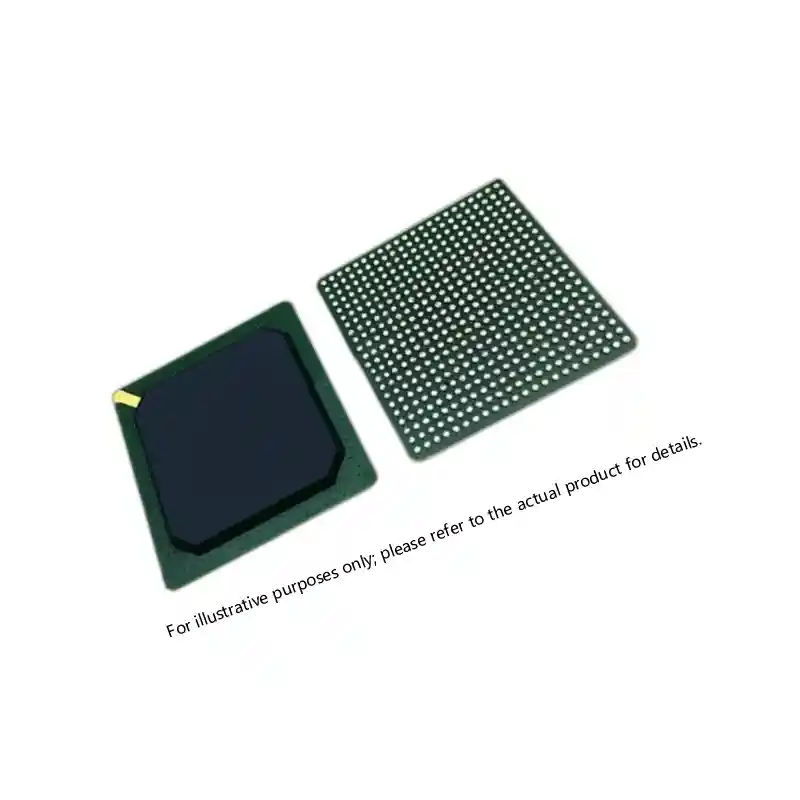
Comparing Military-Grade FPGA Families for EW Applications
The following table summarizes device families commonly evaluated for EW programs. The numbers are general guideposts, and specific part numbers must be verified against current manufacturer data sheets.
| FPGA Family | Logic Elements (typical) | DSP Slices | Transceivers (max rate) | Process Node | Rad-Tolerant Option? |
|---|---|---|---|---|---|
| Xilinx Virtex-7 | up to 690K | up to 3,600 | 28 Gbps | 28 nm | Yes (QML-V parts) |
| Xilinx Kintex-7 | up to 478K | up to 1,920 | 12.5 Gbps | 28 nm | Limited |
| Intel (Altera) Stratix V | up to 840K | up to 2,288 | 28 Gbps | 28 nm | Some MIL variants |
| Microsemi ProASIC3EL | up to 3M gates | 0 (no dedicated DSP) | None | 130 nm | Flash-based, inherently rad-tolerant |
| Microsemi SmartFusion2 | up to 150K LEs | Yes | 5 Gbps | 65 nm | Flash-based, SEU immune |
| Microsemi PolarFire | up to 300K LEs | Yes | 12.7 Gbps | 28 nm | Flash-based, SEU immune |
For radar signal processing, the emphasis falls on DSP throughput and memory bandwidth. A Virtex-7 XC7VX690T or a Kintex UltraScale KU085 can run multiple parallel FFT engines and beamforming cores, which is why we routinely source these parts for ground-based phased-array radar programs. The decision between them often comes down to the number of high-speed serial lanes needed to interface with the downstream digital beamforming network.
For SIGINT and jamming applications, the data converter interface dominates the FPGA selection. High-speed ADCs like the AD9680 or AD9625 demand JESD204B lanes that can handle 12.5 Gbps or higher per channel. The FPGA must offer enough transceiver quads and the DSP fabric to process the stream. In these cases, I have seen programs converge on the Xilinx Kintex or Virtex series, or Intel Stratix V devices, because their transceiver density and mature JESD204B IP cores shorten development time. However, if the program requires a trusted, non-volatile architecture for security-sensitive ELINT collection, a Microsemi SmartFusion2 like the M2S150-FCVG484I can be a compelling option, particularly when the SoC’s integrated ARM core simplifies command-and-control integration.
If your program involves direct-RF sampling at multi-gigasample rates, it is worth confirming the ADI AD9213 or AD9081 transceiver compatibility with the FPGA’s maximum SERDES lane rate before finalizing the BOM. Sharing your data converter selection and FPGA choice early allows us to verify lane-matching and pin-compatibility at the start.
Supply Chain Integrity and Counterfeit Prevention in FPGA Sourcing
Even a technically perfect FPGA selection becomes worthless if the devices arriving at the production line are counterfeit, remarked, or from an uncontrolled lot. I cannot overstate how much counterfeit FPGAs have increased in the defense supply chain over the past five years. Sophisticated operations strip markings, substitute lower-grade die, and repackage commercial devices as military-grade. The only consistent defense is sourcing through channels that provide full, auditable traceability back to the original manufacturer.
We at Sparkle Electronics maintain chain-of-custody documentation for every MIL-SPEC and QML-qualified FPGA we supply. For parts in the 5962-series or with QML Class Q and Class V qualification, we require Certificate of Conformance (C of C) documents that reference the manufacturer’s lot date code, test summaries, and when applicable, the DLA’s certification. For older devices like the A1020B-PG84B or A3P1000-FGG484I that are no longer in active production, we subject incoming lots to visual inspection, X-ray examination, and in some cases decapsulation analysis through partner labs to confirm die authenticity.
Counterfeit prevention is not only about the incoming inspection. It begins with the distributor’s own supplier vetting. A distributor handling defense FPGAs should hold AS9120 or AS6081 certification and should be able to demonstrate its approved vendor list management process. I encourage defense buyers to audit their distributor’s incoming inspection records and to require lot-specific photographs and electrical test reports before approving a shipment.
Planning Long-Term FPGA Availability and Technology Refresh
Defense EW programs routinely span fifteen years or more, yet FPGA process nodes change every three to five years. Even before the design is complete, the procurement team should be planning for the eventual obsolescence of the selected device. Two strategies work well together: die banking for high-risk or single-source FPGAs, and technology refresh planning through pin-compatible migration paths.
Die banking means purchasing a program’s lifetime quantity of unpackaged FPGA die and storing them in controlled conditions, assembling packages as needed. This works for programs with stable, high-confidence quantity forecasts, but it places a heavy cash-flow burden upfront. For smaller programs, we recommend identifying at least one alternate FPGA that offers pin-compatible drop-in capability. For example, the Microsemi A3P1000-FG256I and A3PE1500-1FGG676I share some package footprints across the ProASIC3 family, which can ease design migration across logic densities.
When an end-of-life notice is issued, buyers have limited time to place a last-time buy. We track EOL notifications from major FPGA manufacturers and alert our defense program contacts so they can assess remaining program needs against available stock. This early warning system has helped several customers secure enough Virtex-5 or Virtex-6 devices to bridge their production until a redesigned card could be qualified.
Compliance and Certification Requirements for Defense FPGA Procurement
Compliance is not paperwork you complete after ordering parts; it determines which parts you are allowed to order in the first place. For U.S. defense programs, DFARS compliance and NDAA Section 889 restrictions begin at the component level. An FPGA that contains a processor core sourced from a restricted entity can disqualify the entire line replaceable unit, regardless of the FPGA’s electrical performance.
Documentation requirements vary by program classification, but a complete procurement package for military-grade FPGAs typically includes: the manufacturer’s Certificate of Conformance, a full lot-traceability report, the DLA QML qualification listing for 5962-series parts, and where applicable, ITAR export classification documents. When I handle a BOM request for an EW subsystem, I ask the procurement lead specifically which test reports their customer requires before shipment, because MIL-PRF-38535 and MIL-STD-883 screening levels can vary between Class B and Class S, and the documentation burden should be agreed upon before the purchase order is issued.
Working with a distributor that understands these frameworks reduces program risk more than spreadsheet price comparisons can show. If a supplier cannot explain the difference between JANTX and JANTXV screening levels, or cannot produce a valid QML certificate for a 5962- line item, that supplier will eventually create a compliance gap that slows down a milestone review.
Common Questions About FPGAs for Electronic Warfare Systems
How do I verify the authenticity of military-grade FPGAs before they are integrated onto the board?
Begin with traceability: every device must be traceable through its lot and date code to the original manufacturer. We perform incoming visual inspection under magnification to check for signs of resurfacing or remarking, and for high-risk parts we run X-ray comparison against a known-good reference unit to verify die orientation and bond wire consistency. For the most critical applications, decapsulation and internal visual inspection through a partner lab provides definitive confirmation. The key is to build these authentication steps into the purchasing process rather than treating them as a last-minute check.
What should I do if the FPGA I designed around goes end-of-life?
First, confirm with the manufacturer whether a pin-compatible replacement exists, even if it requires a firmware rebuild. Second, calculate your remaining program quantity and compare it against available stock. If you need only a limited quantity and can place a last-time buy, work with a distributor who can secure the lot from authorized stock before brokers inflate the price. If the program requires hundreds of units for many more years, initiate a technology refresh study immediately and consider die banking the current device to cover the transition window. In programs we have supported, honest early communication with the prime contractor about EOL impact prevented schedule slips.
When is it acceptable to use a commercial-grade FPGA in a military EW system?
It depends on the program’s operational environment and qualification requirements. A ground-based training simulator may tolerate a commercial FPGA if the enclosure provides sufficient environmental protection and the system is not flight-safety-critical. However, any fielded EW system that must pass MIL-STD-810 environmental testing or operate at extended temperature ranges should use industrial or military-grade silicon. The cost savings from using a commercial part often evaporate when the program later discovers it must upscreening the entire lot and accept a yield loss. I have seen programs attempt to bypass MIL-SPEC to meet cost targets, only to face qualification failures that cost far more in schedule delay.
What documentation should I expect for a DFARS-compliant FPGA purchase?
At minimum, you need a Certificate of Conformance stating the part number, lot date code, and that the devices were manufactured and tested in accordance with the applicable MIL-PRF-38535 or MIL-STD-883 specification. For 5962-series parts, the QML certification and the DLA’s qualified manufacturers list reference should be included. If the program requires ITAR compliance, the supplier must confirm the export classification and provide any necessary license documentation. When in doubt, ask your distributor to provide a sample documentation package before issuing the first purchase order.
Is it better to source military FPGAs directly from the manufacturer or through a distributor?
For defense programs with modest, intermittent volumes, a specialized distributor often provides better availability and more flexible support than a direct OEM relationship. The manufacturer’s authorized distributors hold buffer stock that can reduce lead times, and an independent distributor with strong industry connections can locate obsolete parts or alternate sources more quickly than a sole-source channel. The tradeoff is that you must verify the distributor’s certification and traceability practices. We recommend visiting the distributor’s facility or requesting an audit of their quality management system before onboarding them as an approved supplier. If you are building your first BOM for an EW subsystem, share your FPGA part number and quantity and we will confirm stock, provide traceability documentation, and walk you through the compliance requirements specific to your program.
If you’re interested, check out these related articles:
XCKU115 UltraScale FPGA: Powering Critical Defense Systems
A1020B-PG84B ACT2 FPGA: Specs, Sourcing, and Availability