Military FPGA Technology Shifts Defense Programs Must Plan For
Table of Contents
- What’s Driving the Shift in Military FPGA Technology
- How New FPGA Architectures Are Changing Specification Requirements
- Supply Chain Implications: Sourcing, Availability, and Lifecycle Planning
- Practical Steps Defense Programs Should Take Now
- Managing Technology Refresh Without Disrupting Program Timelines
- Common Questions About Military FPGA Technology Transitions
- What is the difference between radiation-tolerant and radiation-hardened FPGAs, and which does my program need?
- Are flash-based FPGAs inherently better for defense applications than SRAM-based FPGAs?
- How long can I realistically expect to source a military-grade FPGA after it goes end-of-life?
- What documentation should I expect when buying military-grade FPGAs from a distributor?
- Should I buy military FPGAs from a distributor or directly from the manufacturer?
Military FPGA technology is entering a period of change that will reshape how defense programs specify, source, and sustain their processing hardware. New architectures from the major vendors are shifting the balance between radiation tolerance, performance density, and long-term availability, while supply chain constraints and foundry access limitations are tightening the procurement window for established part numbers. I have watched program managers caught off guard when a preferred FPGA family moves to end-of-life with no straightforward second-source path, and I have seen others lock in supply early and sail through design reviews without interruption. The difference comes down to understanding what is changing and acting on it before the BOM is finalized. This is not a distant concern. Programs in active design today will be fielded into a supply landscape that looks materially different from the one that supported the previous generation.
What’s Driving the Shift in Military FPGA Technology
Three forces are converging to remake military FPGA technology faster than most program schedules account for. The first is foundry consolidation. The number of advanced-node fabs capable of producing radiation-tolerant and hi-rel silicon has contracted, and the ones that remain operate at near-full capacity across commercial and defense orders. When a defense program competes for wafer starts against a high-volume commercial client, the commercial order usually wins on volume. That dynamic is already stretching lead times for QML-qualified devices and will only intensify as process geometries shrink further.
The second force is the vendor roadmap itself. Xilinx, Microsemi (now Microchip), and Altera (now Intel) have each moved their flagship defense-grade FPGA families toward SoC-integrated architectures that combine programmable logic with hardened processor cores, ADCs, and security blocks. The older pure-fabric FPGAs that many legacy programs were designed around — Virtex-5, Virtex-6, Axcelerator, ProASIC3 — have either entered end-of-life or are on managed lifecycle with shrinking inventory pools. The replacement parts are pin-incompatible in most cases, which means a technology refresh is not a drop-in exercise. It requires board respins, requalification, and sometimes architecture changes at the system level.
The third force is security policy. Trusted Foundry accreditation, DMEA oversight, and NDAA Section 889 compliance are tightening the list of approved sources. Parts that were acceptable five years ago may not survive a modern supply chain audit. I have seen program offices discover late in the design cycle that a planned FPGA source falls outside current accredited boundaries, forcing a last-minute redesign that could have been avoided with earlier supplier engagement.
These three forces are not independent. They compound each other. A vendor obsoleting a family, a foundry deprioritizing defense wafers, and a policy change narrowing approved sources can converge on a single part number and eliminate the procurement path entirely. Programs that treat each as a separate risk item rather than a combined threat will find themselves reacting instead of preparing.
How New FPGA Architectures Are Changing Specification Requirements
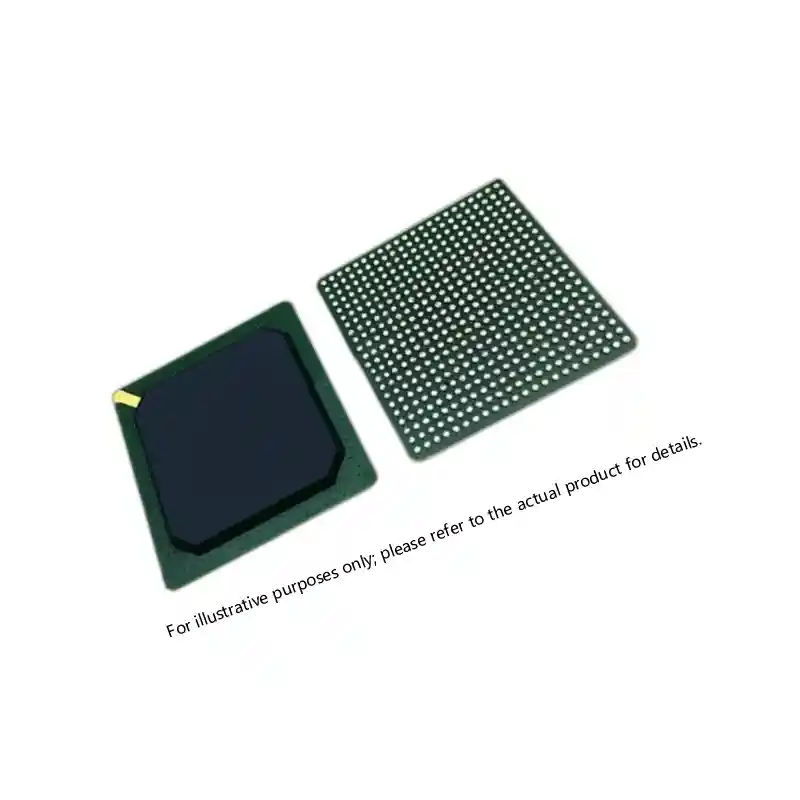
The shift toward heterogeneous SoC FPGAs is rewriting the specification playbook for defense programs. A modern military-grade FPGA such as the PolarFire MPF300T or the SmartFusion2 M2S150 integrates flash-based configuration storage, hardened security blocks, and in some cases analog mixed-signal peripherals directly on the die. This is a fundamentally different design target than a pure-fabric SRAM-based FPGA from the Virtex-5 era.
The specification implications are significant. First, power sequencing becomes more complex. An SoC FPGA may require multiple voltage rails with specific ramp orders, and the power module selection that worked for a simpler fabric part may not carry forward. Second, configuration security changes. Flash-based FPGAs from the ProASIC3 and SmartFusion families do not require an external configuration PROM and are inherently immune to certain bitstream interception attacks that SRAM-based devices must mitigate through encryption and authentication. For programs that require cyber resilience at the hardware level, this distinction matters at the architecture stage, not during procurement.
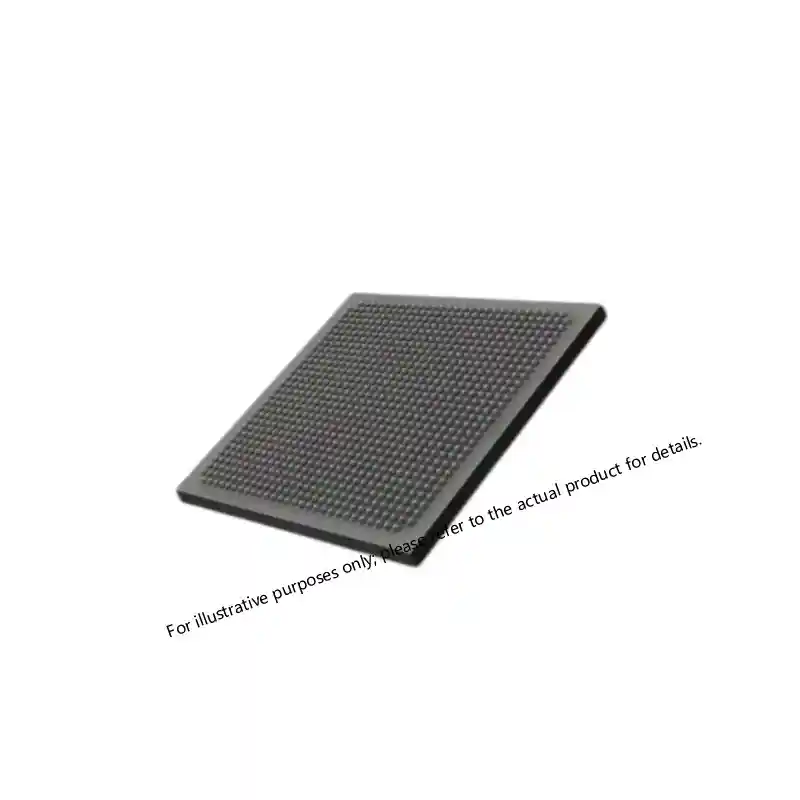
Third, pin-out compatibility across generations is essentially nonexistent. The move from an A3PE3000L in an FGG896 package to a PolarFire MPF300T in an FCSG536 package is a complete board-level change. The Axcelerator AX2000 in a CQ256 package has no direct successor in the same footprint. Program managers who assume a second-source path exists without verifying pin compatibility early in the design phase are embedding a redesign obligation that will surface at the worst possible moment.
I have supported programs where the engineering team identified this early, ran a pin-compatibility audit across the planned FPGA family against available and emerging alternatives, and documented the refresh trigger points before CDR. Those programs had options. Programs that skipped this step had to accept whatever was available when the original part went obsolete, and the available options were never ideal.
The practical takeaway is that specification reviews for new designs should include a pin-compatibility and supply-path analysis for the FPGA, not just a functional verification against requirements. If the program cannot name at least one second-source FPGA that is footprint-compatible or has a documented migration path from the primary selection, the specification is incomplete.
Supply Chain Implications: Sourcing, Availability, and Lifecycle Planning
The supply chain for military-grade FPGAs has become a planning exercise that extends well beyond the standard RFQ. Lead times for QML-qualified and radiation-tolerant devices now routinely stretch to 26 weeks or longer, depending on the vendor, the process node, and the screening requirements. For parts that require additional upscreening or lot testing, the timeline can push past 40 weeks from order placement to delivery.
This has direct consequences for program scheduling. A design that completes CDR and immediately releases a production BOM expecting 12-week lead times is operating on assumptions that no longer hold. I have seen multiple programs delay initial integration testing because FPGA deliveries were eight months out from the order date, and no one had placed the order early enough to absorb that lead time.
| FPGA Family | Typical Lead Time (Weeks) | Screening Level | Obsolescence Status |
|---|---|---|---|
| Xilinx Virtex-5 (XC5VFX) | N/A — EOL | QML | End-of-Life |
| Microsemi ProASIC3 (A3P) | 26–40 | QML, /883 | Mature/Limited Supply |
| Microchip PolarFire (MPF) | 18–26 | QML (new) | In Production |
| Intel/Altera Stratix IV (EP4S) | 30–52 | Commercial/Hi-Rel | Mature |
| Xilinx Kintex-7 (XC7K) | 20–30 | Commercial/Extended | In Production |
Die banking is a strategy I recommend for programs with production runs spanning a decade or more. By purchasing known-good die from the wafer and storing them under controlled conditions, the program insulates itself from foundry capacity fluctuations and wafer-start discontinuities. This is not a cheap strategy. It requires upfront capital, storage infrastructure, and coordination with the vendor or an authorized distributor that has die banking agreements in place. But compared to the cost of requalifying a new FPGA mid-production, it is almost always the less expensive path.
If your program involves a long-duration production contract with no planned board redesign, it is worth confirming die banking availability with your distributor before the design freeze. Waiting until the last wafer lot is announced leaves no room to negotiate.
For new designs where die banking is not feasible, the fallback is a documented technology refresh plan that identifies trigger conditions. When the primary FPGA lead time exceeds a defined threshold, when the vendor issues a discontinuation notice, or when the available inventory drops below a program-defined minimum, the refresh path activates. This is not something to figure out when the trigger fires. It should be a written section of the program’s supply chain management plan, reviewed at each major milestone.
Practical Steps Defense Programs Should Take Now
The preparation steps defense programs should take now are not theoretical. They are actions I have seen work across multiple programs with different FPGA vendors, different production volumes, and different security requirements.
First, audit the current FPGA BOM against vendor lifecycle status. For every FPGA part number in active use or planned for a new design, verify the current production status, the published end-of-life date if one exists, and the availability of pin-compatible alternatives. This sounds obvious, but I have reviewed BOMs from Tier-1 defense contractors where the FPGA selection was made three years prior and no one had checked the lifecycle status since. A part that was in full production at selection may be on a discontinuation path by the time procurement begins. The audit closes that gap.
Second, engage with suppliers early. An authorized distributor that stocks military-grade FPGAs across multiple vendors can provide lead time forecasts, alternative part cross-references, and buffer stock options that an OEM direct channel may not offer. The relationship matters because the distributor sees demand patterns across multiple programs and can alert you to tightening supply before the vendor issues a formal notice. Submit a preliminary BOM with the FPGA line items marked as critical before the design is complete. The earlier the distributor knows what you need, the more options you have.
Third, incorporate supply chain milestones into the program schedule. A technology refresh plan should have defined review points that align with program design reviews. If the FPGA lead time exceeds a program-defined threshold at any review point, the refresh discussion is mandatory, not optional. This prevents the situation where a schedule slip on the program side masks a supply problem until it is too late to resolve it.
Fourth, verify documentation compliance up front. Certificate of Conformance requirements, DFARS flow-down clauses, and NDAA 889 certifications should be confirmed with the distributor at the quoting stage. Do not assume that every distributor that lists a military part number can also provide the documentation package your program requires. The time to discover a documentation gap is during supplier qualification, not during incoming inspection.
Managing Technology Refresh Without Disrupting Program Timelines
Technology refresh is the point where the best-laid planning meets reality. The FPGA that was recommended at design start is no longer available, and the replacement requires a board spin, a qualification cycle, and possibly a firmware port. The question is not whether this will happen but whether the program has structured the refresh to absorb it without derailing the schedule.
The most effective approach I have seen programs use is to treat the FPGA as a managed-risk item from the outset, with a defined refresh budget baked into the program plan. This means allocating engineering resources and schedule margin for a board-level redesign at a predetermined point in the program lifecycle, even if the original part is still available. Programs that wait for the obsolescence notice before allocating resources are already behind.
Firmware portability is another factor that programs often underestimate. Moving from a Microsemi ProASIC3 to a SmartFusion2 or from a Xilinx Virtex-5 to a Kintex-7 involves more than pin reassignment. The IP cores, timing constraints, and in some cases the HDL itself may need modification. The refresh plan should include a firmware compatibility assessment as a discrete task, not as a footnote to the hardware redesign.
For programs that cannot afford a full board redesign within their production run, the alternative is to build a strategic inventory of the original FPGA sufficient to cover the remaining production quantity plus spares. This is a capital-intensive approach, and it requires confidence in the storage conditions and shelf-life management of the parts. But when requalification costs and schedule impacts exceed the inventory carrying cost, it is the rational choice. I have worked with programs that committed to a last-time buy that covered seven years of production, and the math worked because the alternative was a $2 million requalification effort and an 18-month schedule delay.
Common Questions About Military FPGA Technology Transitions
What is the difference between radiation-tolerant and radiation-hardened FPGAs, and which does my program need?
Radiation-tolerant FPGAs are designed to withstand a certain level of total ionizing dose and single-event effects through process and design techniques, but they are not characterized or guaranteed to the same level as fully radiation-hardened devices. Rad-hard FPGAs undergo additional design hardening and are tested to higher radiation thresholds, typically for space and strategic systems where the environment is severe and the consequence of failure is catastrophic. For most airborne and ground-based defense applications operating within the atmosphere, a radiation-tolerant device at the appropriate screening level is sufficient. Programs operating in space or at high altitudes with prolonged exposure should verify the radiation requirements with their systems engineering team and confirm the device rating against the mission profile before selecting a part.
Are flash-based FPGAs inherently better for defense applications than SRAM-based FPGAs?
It depends on the threat model. Flash-based FPGAs such as the Microsemi ProASIC3 and SmartFusion2 store their configuration on-chip in non-volatile memory, which eliminates the external configuration PROM and the bitstream interception vector that SRAM-based devices must address through encryption. For programs where physical security and resistance to configuration tampering are primary concerns, flash-based FPGAs offer a simpler security architecture. However, SRAM-based FPGAs such as Xilinx Virtex and Kintex families generally offer higher logic density and performance. Many programs use SRAM-based FPGAs with encrypted bitstreams and secure boot implementations that meet their security requirements. The choice should be driven by the program’s specific security posture, not by a blanket preference for one technology.
How long can I realistically expect to source a military-grade FPGA after it goes end-of-life?
The answer varies by vendor, part family, and your relationship with the supply chain. A formal last-time buy notice typically provides a 6- to 12-month window to place final orders, with delivery extending beyond that. After the LTB window closes, availability depends on distributor inventory, excess stock from other programs, and the aftermarket. For popular families such as the Virtex-5 or ProASIC3 that were widely designed into defense systems, distributor-held inventory may be available for several years after the LTB closes, but the selection narrows and the pricing becomes less predictable. The practical answer is that programs should not plan to source a discontinued part for more than two to three years after the LTB window closes unless they have secured their own die bank or committed inventory. Beyond that window, the risk of unavailability is high.
What documentation should I expect when buying military-grade FPGAs from a distributor?
At minimum, you should receive a Certificate of Conformance that traces the parts to the original manufacturer and confirms the screening level, a packing slip with date codes and lot numbers, and any test reports relevant to the screening level specified on the purchase order. For QML parts, the CoC should reference the applicable MIL-PRF-38535 specification and the device class. For JANTX or JANTXV discrete parts, the certification should reference the applicable MIL-PRF-19500 slash sheet. If your program requires additional documentation such as DMEA accreditation proof, ITAR export classification, or NDAA 889 compliance statements, request these at the RFQ stage rather than after delivery. A distributor that specializes in military components will provide this documentation as a standard part of the transaction. If they push back or offer to provide it later, that is a red flag.
Should I buy military FPGAs from a distributor or directly from the manufacturer?
Both channels have roles, but for most defense programs the authorized distributor path offers advantages in lead time management, inventory flexibility, and multi-vendor access that a single-OEM direct relationship cannot match. An authorized distributor that holds inventory across multiple FPGA vendors can cross-reference part numbers, propose alternatives when a lead time stretches, and consolidate shipments. For programs that need small quantities for prototyping or sustainment, the distributor is often the only practical channel because manufacturers set minimum order quantities that exceed what a single program requires. The key is working with a distributor that has documented authorization from the FPGA vendors and a quality management system that meets AS9120 or equivalent standards. Share your part number and quantity requirements with your distributor early, and they can confirm stock, lead times, and documentation availability before you commit to a procurement path.
If you’re interested, check out these related articles:
Virtex-7 XC7VX690T: Performance and Reliability Insights
Virtex-7 XC7VX690T: Performance, Reliability, and Integration