QML Kintex-7 325T: High-Reliability FPGA Performance Explained
Table of Contents
- What QML Qualification Actually Verifies in High-Reliability FPGAs
- Kintex-7 325T Architecture and What It Enables
- How the -1 Speed Grade and RF900 Package Affect System Design
- Radiation Effects and Mitigation in Aerospace Deployments
- Power Management Constraints in Defense System Integration
- Supply Chain Integrity for QML-Qualified Components
- Frequently Asked Questions
Designing systems for aerospace and defense means accepting that components will face conditions most electronics never encounter. The XQ7K325T-1RF900M, a QML-qualified Kintex-7 325T FPGA, exists specifically for these environments. It combines the processing architecture of the Kintex-7 family with qualification standards that verify performance under temperature extremes, radiation exposure, and mechanical stress. For programs where component failure translates directly to mission failure, this qualification level is not optional.
What QML Qualification Actually Verifies in High-Reliability FPGAs
QML certification under MIL-PRF-38535 is a manufacturing and testing framework, not a marketing designation. The standard specifies process controls at wafer fabrication, assembly, and final test, with documentation requirements that create complete traceability from raw materials to shipped devices. Components that pass this qualification have demonstrated consistent electrical parameters across temperature ranges that would destroy commercial parts.
The practical difference between QML and commercial-grade FPGAs becomes visible in failure modes. Commercial devices are tested to datasheet limits under benign conditions. QML parts undergo burn-in, temperature cycling, and extended electrical verification that expose latent defects before shipment. A satellite communication program I supported initially considered commercial-grade FPGAs to reduce unit costs. After reviewing MIL-PRF-38535 requirements against the radiation environment the system would encounter, the team selected a QML part instead. That decision prevented what would have been unmitigated single-event effects in orbit, where replacement is not possible.
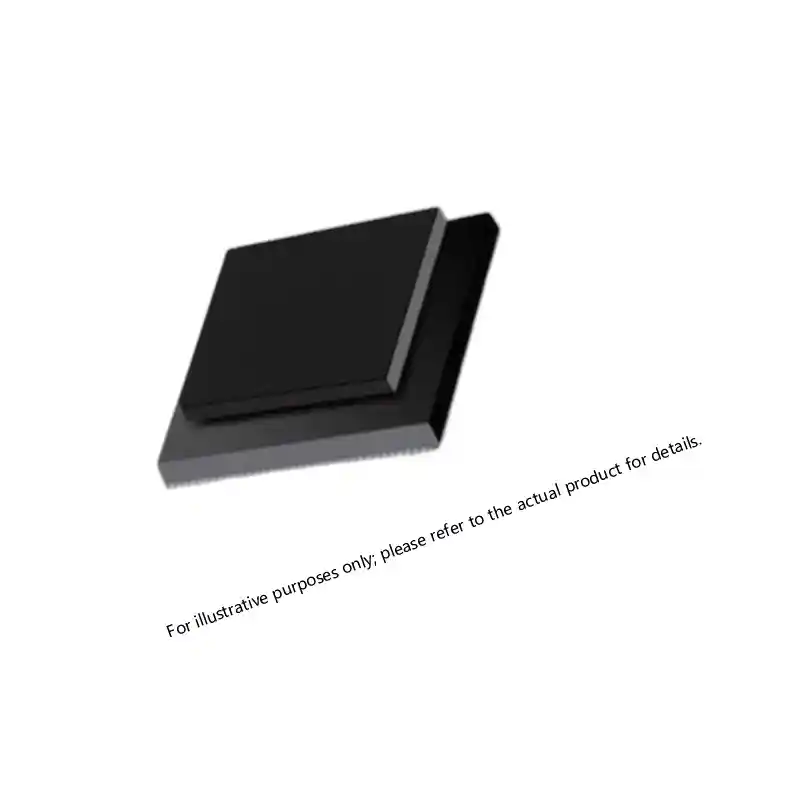
For the Kintex-7 325T specifically, QML qualification confirms the device was manufactured in a facility with quality management systems designed for high-reliability production. The certification covers not just the silicon but the ceramic RF900 package, the die attach process, and the wire bonding or flip-chip interconnects. Each of these elements affects long-term reliability in ways that only become apparent after years of field operation.
| Characteristic | QML-Qualified FPGA | Commercial-Grade FPGA |
|---|---|---|
| Testing scope | Extended temperature cycling, burn-in, radiation screening per MIL-PRF-38535 | Datasheet limits under standard conditions |
| Package construction | Ceramic lidless flip-chip BGA designed for thermal and mechanical stress | Plastic packages optimized for cost |
| Documentation | Full lot traceability from wafer to final test | Standard certificate of conformance |
| Failure rate expectation | Characterized for 20+ year operational life | Consumer product lifecycle assumptions |
Kintex-7 325T Architecture and What It Enables
The XQ7K325T provides 326,080 logic cells, 1,060 DSP48E1 slices, and 16 Mb of block RAM. These numbers define the design space available for signal processing, control algorithms, and data handling. The DSP slice count is particularly relevant for radar and electronic warfare applications, where multiply-accumulate operations dominate the computational load. Sixteen megabits of block RAM supports substantial on-chip buffering without external memory access latency.
The architecture reflects Xilinx’s 28nm process node, which balances logic density against power consumption. For battery-powered or thermally constrained systems, this balance matters. A design that fits within the Kintex-7 325T’s resources but exceeds its power budget still fails the system requirements. Thermal modeling should begin early in the design process, not after timing closure.
Configurable logic blocks in the Kintex-7 family use a six-input lookup table structure with dedicated carry logic and distributed RAM capability. This architecture handles both random logic and structured datapath operations efficiently. The 16 GTX transceivers support line rates up to 12.5 Gbps, enabling high-bandwidth interfaces to sensors, processors, or communication links without consuming general-purpose I/O.
How the -1 Speed Grade and RF900 Package Affect System Design
The -1 designation indicates the slowest speed bin in the Kintex-7 325T production distribution. Devices that meet timing at -1 conditions will meet timing across the full military temperature range, which extends from -55°C to +125°C junction temperature depending on the specific screening level. Selecting -1 speed grade provides margin against temperature-induced timing degradation.
This speed grade choice has design implications. Maximum achievable clock frequencies will be lower than -2 or -3 speed grades. Timing closure requires more careful attention to critical paths. The tradeoff is predictable behavior across environmental extremes, which is exactly what military systems require.
The RF900 package is a ceramic flip-chip ball grid array with 900 balls on a 1.0mm pitch. Ceramic construction provides coefficient of thermal expansion closer to the silicon die than plastic packages, reducing mechanical stress during temperature cycling. The flip-chip interconnect eliminates wire bond inductance, improving high-frequency signal integrity. This package also dissipates heat more effectively than plastic alternatives, though it still requires careful thermal interface design.
Thermal management for the RF900 package typically involves direct heatsink attachment to the exposed die surface. Junction-to-case thermal resistance is specified in the device datasheet, but the system designer must account for thermal interface material, heatsink performance, and airflow conditions. In conduction-cooled applications common in avionics, the thermal path to the chassis becomes the primary design constraint.
Radiation Effects and Mitigation in Aerospace Deployments
Space and high-altitude applications expose FPGAs to radiation environments that cause two distinct failure mechanisms. Total ionizing dose accumulates over the mission lifetime, gradually degrading transistor characteristics until the device fails to meet timing or functional requirements. Single-event effects occur when individual particles deposit enough charge to flip a storage element or disrupt a combinational path.
The Kintex-7 325T is not inherently radiation-hardened at the transistor level. Mitigation strategies must be implemented in the design. Triple modular redundancy replicates critical logic three times and votes on the outputs, masking single-event upsets in any one replica. This approach increases logic utilization by roughly 3x for protected functions, so selective application to mission-critical paths is typical rather than blanket TMR coverage.
Configuration memory in SRAM-based FPGAs like the Kintex-7 is vulnerable to single-event upsets that can alter the programmed function. Scrubbing, which periodically rewrites configuration memory from a known-good source, limits the accumulation of configuration errors. The scrubbing rate must be balanced against the upset rate in the target environment and the system’s tolerance for brief functional disruption during scrub cycles.
Error correction codes protect block RAM contents against single-bit upsets. The overhead is typically one additional bit per byte stored, plus the logic to compute and check the codes. For applications where data integrity is critical, this overhead is acceptable. For high-bandwidth streaming applications where occasional bit errors can be tolerated or handled at a higher protocol layer, ECC may be unnecessary.
Power Management Constraints in Defense System Integration
Defense systems frequently operate from limited power sources, whether aircraft generators, vehicle batteries, or spacecraft solar arrays. The Kintex-7 325T’s power consumption depends heavily on the implemented design, clock frequencies, and I/O activity. Static power from leakage currents sets a floor, while dynamic power scales with switching activity.
Power estimation must occur during design, not after implementation. Xilinx Power Estimator provides early-stage estimates based on resource utilization and activity factors. Post-implementation power analysis using actual switching activity from simulation refines these estimates. Designs that exceed power budgets late in development face difficult choices between functionality reduction, clock frequency reduction, or hardware redesign.
Voltage rail sequencing and monitoring are system-level concerns that affect FPGA reliability. The Kintex-7 requires specific power-up sequences to avoid latch-up or other damage conditions. Power supply transients during system operation must remain within specified limits. In military systems with multiple power conversion stages and potential for load transients from other subsystems, these requirements demand careful power architecture design.
Supply Chain Integrity for QML-Qualified Components
Counterfeit electronic components have entered defense supply chains through unauthorized distributors and brokers. A counterfeit QML FPGA might be a remarked commercial part, a failed QML device that should have been scrapped, or a completely different device with altered markings. Any of these scenarios creates unacceptable risk for mission-critical systems.
Supply chain integrity requires sourcing from authorized channels with documented traceability. Each device should have lot date codes that can be verified against manufacturer records. Incoming inspection should include visual examination for remarking evidence and electrical testing against datasheet parameters. For high-value or high-risk applications, destructive physical analysis of sample devices from each lot provides additional assurance.
Long-term availability is a separate supply chain concern. Defense programs often have production runs spanning decades, while semiconductor manufacturers may discontinue specific devices after much shorter periods. Obsolescence management strategies include lifetime buys, where sufficient inventory is purchased to cover projected program needs, and design flexibility to accommodate alternate sources or replacement devices.
If your program requires QML Kintex-7 325T FPGAs with verified traceability, discussing specific quantity and delivery requirements early in the procurement process helps ensure availability aligns with your production schedule.
Frequently Asked Questions
What does QML qualification verify for the Kintex-7 325T FPGA?
QML qualification under MIL-PRF-38535 verifies that the manufacturing facility, processes, and testing procedures meet military reliability standards. For the Kintex-7 325T, this means the device has passed extended temperature cycling, burn-in screening, and electrical parameter verification across the full military temperature range. The qualification covers the complete assembly including the ceramic RF900 package, not just the silicon die.
How does the XQ7K325T-1RF900M differ from commercial Kintex-7 devices?
The XQ7K325T-1RF900M undergoes additional screening and testing beyond commercial production flows. It uses a ceramic flip-chip package rather than plastic, providing better thermal performance and mechanical reliability. Documentation includes full lot traceability. The -1 speed grade is characterized across military temperature extremes rather than commercial ranges. These differences add cost but provide the reliability evidence required for defense programs.
Where do defense programs typically deploy QML Kintex-7 FPGAs?
Applications include radar signal processing, where the DSP slice count handles correlation and filtering algorithms. Electronic warfare systems use the high-speed transceivers for wideband signal capture. Secure communication platforms implement encryption algorithms in the configurable logic. Missile guidance systems require the combination of processing capability and environmental qualification. Avionics applications span navigation, display processing, and sensor fusion.
Can the XQ7K325T-1RF900M operate in space environments?
The QML qualification addresses manufacturing quality and temperature range, which are necessary but not sufficient for space applications. Space environments add radiation exposure that requires design-level mitigation such as TMR, scrubbing, and ECC. Total ionizing dose tolerance depends on shielding and mission duration. Single-event effect rates depend on orbit parameters. The device can be used in space with appropriate mitigation, but it is not inherently radiation-hardened.
What design constraints does the -1 speed grade impose?
The -1 speed grade has longer propagation delays and setup times than faster speed grades. Maximum achievable clock frequencies are correspondingly lower. Timing closure requires more attention to critical path optimization. The benefit is guaranteed timing performance across the full military temperature range, including the high-temperature corner where commercial devices would fail timing or cease functioning entirely.
How can procurement teams verify QML FPGA authenticity?
Verification starts with sourcing from authorized distributors who maintain chain of custody documentation. Lot date codes should be verifiable with the manufacturer. Visual inspection under magnification can reveal remarking or resurfacing evidence. Electrical testing against datasheet parameters identifies devices that do not meet specifications. For critical applications, destructive physical analysis of sample devices confirms die markings, bond wire materials, and package construction match the authentic product.
What thermal design considerations apply to the RF900 package?
The RF900 ceramic package has lower junction-to-case thermal resistance than plastic alternatives, but still requires active thermal management in most applications. The exposed die surface allows direct heatsink attachment with thermal interface material. System designers must account for the complete thermal path from junction to ambient, including interface materials, heatsink performance, and available cooling. In conduction-cooled systems, the mounting interface to the chassis dominates the thermal design. Contact us at xuansc2144@gmail.com to discuss specific thermal or integration requirements for your QML Kintex-7 325T application.
If you’re interested, check out these related articles:
Virtex-7 XC7VX690T: Performance, Reliability, and Integration
UltraScale KU085 FPGA Specifications for Defense Systems
Virtex-7 690T FPGA: Performance for Mission-Critical Systems
XCKU115 UltraScale FPGA: Powering Critical Defense Systems