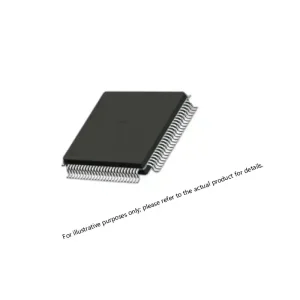
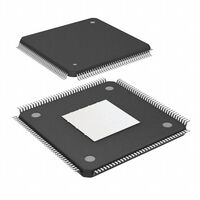
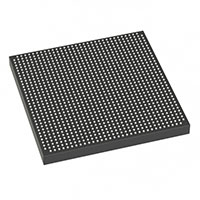
ALTERA EP3SL150F1152C2N
- 150,000 logic elements for high-complexity signal processing
- 15,744 Kbits of embedded memory for large data handling
- Extended operating temperature range of -40°C to +100°C
- FBGA-1152 package for high-density board integration
- Support for high-speed transceivers up to 6.375 Gbps
Modern radar and electronic warfare systems demand FPGAs with exceptional logic density, memory bandwidth, and I/O capabilities to process complex signals in real time. The ALTERA EP3SL150F1152C2N Stratix III FPGA delivers these high-performance features in a rugged, power-efficient package suitable for defense and aerospace applications. Its large logic capacity enables the implementation of multiple parallel processing paths, critical for handling the massive data volumes generated by advanced radar systems.
Built on a high-performance process technology, this FPGA balances computational power with energy efficiency, making it suitable for both ground-based and airborne defense platforms. The extensive embedded memory supports real-time data buffering and storage, minimizing the need for external memory components and reducing system latency. With its FBGA-1152 package, the EP3SL150F1152C2N offers a high I/O count in a compact form factor, enabling seamless integration with high-speed analog-to-digital converters and other system components.
Related Products For Your Business
The Altera EP3SL150F1152C2N is a Stratix III Logic family device — 57,000 ALMs (≈142.5K LEs), 355 M9K blocks, 16 M144K blocks, 384 18×18 multipliers, 8 PLLs — in the 1,152-pin FBGA, commercial speed grade C2 (fastest). The EP3SL150 is the second-largest Logic family member, positioned between the EP3SL110 and EP3SL200, and the C2 speed grade delivers the highest fabric performance available — making this the part of choice for high-frequency state machine, glue logic, and bus interface designs in commercial defense prototype programs where timing margins are tight.
EP3SL150 Speed Grade Comparison
| OPN | Speed Grade | Max Fabric Freq. | Temp Range | On-Package Decoupling |
|---|---|---|---|---|
| EP3SL150F1152C2N (this) | C2 (fastest) | Highest | 0°C to +85°C | Varies by package |
| EP3SL150F1152C3N | C3 | Mid | 0°C to +85°C | Varies |
| EP3SL150F1152I4N | I4 (industrial) | I4 grade | −40°C to +100°C | Varies |
The C2 grade is specified when timing closure at maximum fabric frequency is the design priority — for example, in PCIe Gen2 endpoint designs, DDR3 memory controller implementations, or high-speed serial bridging applications where the EP3SL150’s 16 global and 64 regional clock networks must be driven at maximum frequency. For designs with relaxed timing, C3 or C4 reduces cost. The F1152 package supports vertical migration to EP3SL110 and EP3SL200 within the Stratix III Logic family, protecting PCB investment across program phases.
FAQ
What is the difference between EP3SL150F1152C2N and EP3SL150F1152C3N?
Speed grade only: C2 is the fastest commercial grade, C3 is one grade slower. Logic resources, package, and temperature range (0°C to +85°C) are identical. Specify C2 when timing closure requires the highest achievable fabric frequency.
What does EP3SL150 provide in terms of embedded memory?
355 M9K blocks (9 Kbit each) plus 16 M144K blocks (144 Kbit each with integrated ECC), totaling approximately 6,390 Kbit of embedded SRAM. This combination supports both distributed storage (M9K) and deep-memory ECC applications (M144K).
How does EP3SL150 compare to EP3SE110 for mixed logic/DSP designs?
EP3SL150 has 57K ALMs (vs. 43K for SE110) and more M9K blocks (355 vs. 639 reversed — SE110 has more M9K), but only 384 multipliers vs. 896 for SE110. For designs where logic fabric utilization is the primary constraint with moderate DSP, EP3SL150 is appropriate. For DSP-dominated designs, EP3SE110 is preferred.
What package migration is available for F1152?
The F1152 package supports vertical migration within the Stratix III Logic family across EP3SL110, EP3SL150, and EP3SL200, with identical power, ground, and configuration pin assignments.
Is PCIe hard IP available in Stratix III?
No — Stratix III does not include PCIe hard IP. PCIe Gen1 can be implemented using soft IP in Quartus with an external PHY. Stratix IV GX devices include PCIe hard IP and are the recommended upgrade path for PCIe-centric designs.
What is the recommended migration path from Stratix III?
Intel’s device migration documentation covers RTL and IP portability from Stratix III to Arria V GX or Stratix IV GX/V, all of which add PCIe hard IP and transceiver hard IP not available in Stratix III.