Tundra Military ICs for Defense Embedded Bus Systems
Table of Contents
- Tundra Military ICs in Defense Embedded Bus Architectures
- Tsi578 RapidIO Switch for Deterministic Fabric Links
- CA91C142D VME to PCI Bridge Selection
- Sourcing Tundra Military ICs Without Counterfeit Risk
- Planning Tundra Military IC Sourcing for Long Program Life
- Common Questions About Tundra Military ICs
- Are Tundra Tsi578 parts still available for new defense designs?
- Is a CA91C142D VME bridge replacement always plug compatible?
- Can a Tsi578 be used in a purely commercial temperature environment?
- What documentation should accompany Tundra military ICs on a defense order?
Tundra military ICs carry a specific load in defense embedded systems: they keep processors, FPGAs, and backplane fabrics talking over deterministic buses. I review more BOMs for VME and RapidIO designs than most people see in a year, and the recurring failure pattern is the same. Teams treat the bridge or switch as an afterthought, then discover the part has gone obsolete or the source cannot document its chain of custody. This article covers what Tundra interface silicon does, how to source it without inheriting counterfeit risk, and where Tsi578 and CA91C142D parts still fit in program support.
Tundra Military ICs in Defense Embedded Bus Architectures
In defense backplane design, the processor rarely talks directly to every card. A bridge or switch part handles the translation and routing, and that is where Tundra parts have stayed relevant. The two families I specify most often are the CA91C142D Universe II VME to PCI bridge and the Tsi578 Serial RapidIO switch. Both solve a deterministic interface problem rather than a raw processing problem.
| Function | Representative Part | Role in Defense Embedded Systems |
|---|---|---|
| VME to PCI bridge | CA91C142D-33IB | Links PCI processor cards to VME64 backplanes |
| Serial RapidIO Gen2 switch | TSI578-10GILY | Routes packet traffic across eight RapidIO ports |
| Legacy VME card bridge | CA91C142D-33IB | Preserves access to installed VME hardware for new processor cards |
We see these parts on radar signal processor cards, mission computers, and test chassis that must stay in service for another decade. The CA91C142D is a 33 MHz part, but its value is not speed. It preserves access to a large installed base of VME cards when the original processor card has moved to a PCI or PCI-X architecture. The Tsi578 handles Gen2 RapidIO at up to 10 Gbps per port, which matters when multiple FPGA nodes in a radar or SIGINT chain need to exchange sample data without CPU intervention.
Tsi578 RapidIO Switch for Deterministic Fabric Links
The Tsi578 is the part I discuss most often when a program is moving from a shared bus to a switched fabric. Serial RapidIO became common in military DSP and FPGA clusters because it gives bounded latency, and packet routing can be configured to keep high priority traffic moving without processor involvement. The Tsi578 offers eight ports and carries Gen2 rates. In a typical radar or electronic warfare design, three or four FPGA cards feed a common switch, and the switch moves ADC data to a downstream processor without tying up the host bus.
One mistake I see on secondary market buys is treating the Tsi578 as a simple Ethernet switch. It is not. The configuration space, port arbitration, and maintenance transactions are RapidIO specific. If the part arrives with unknown programming or damaged pins, the failure will not show up in a simple continuity test. It appears as intermittent fabric errors during thermal or vibration profile runs, and that is the worst point to find it.
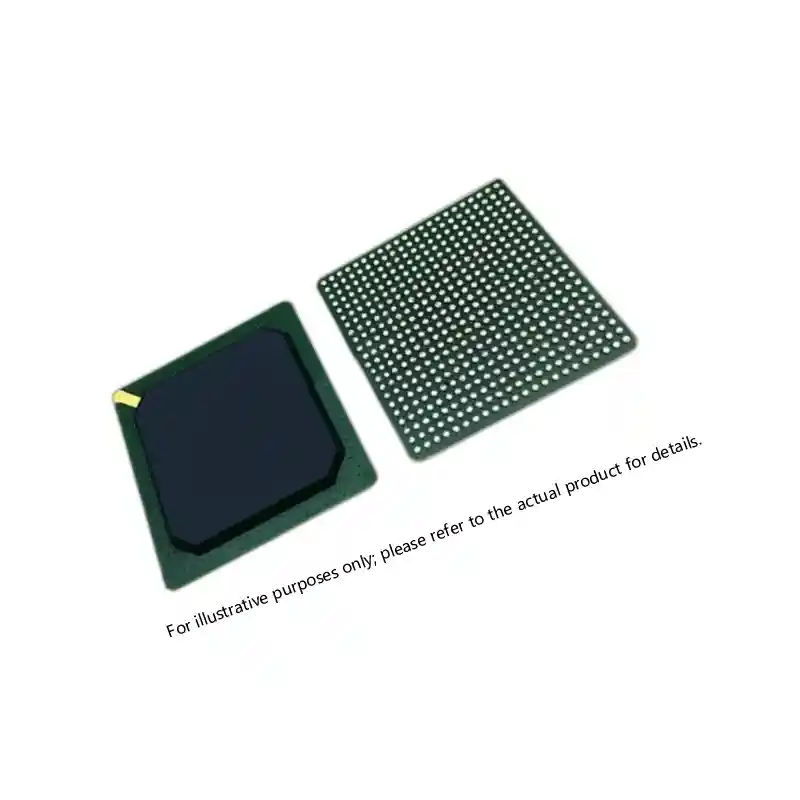
CA91C142D VME to PCI Bridge Selection
The CA91C142D Universe II is still the default answer for bridging modern PCI processors into legacy VME systems. I keep the -33IB part on the same shortlist as newer bridge options because it handles VME64, works with both 32 and 64 bit PCI, and has enough deployed history that application notes and board firmware references remain available. For a depot repair or a technology refresh that cannot touch the existing VME cards, replacing the bridge is often safer than redesigning the backplane.
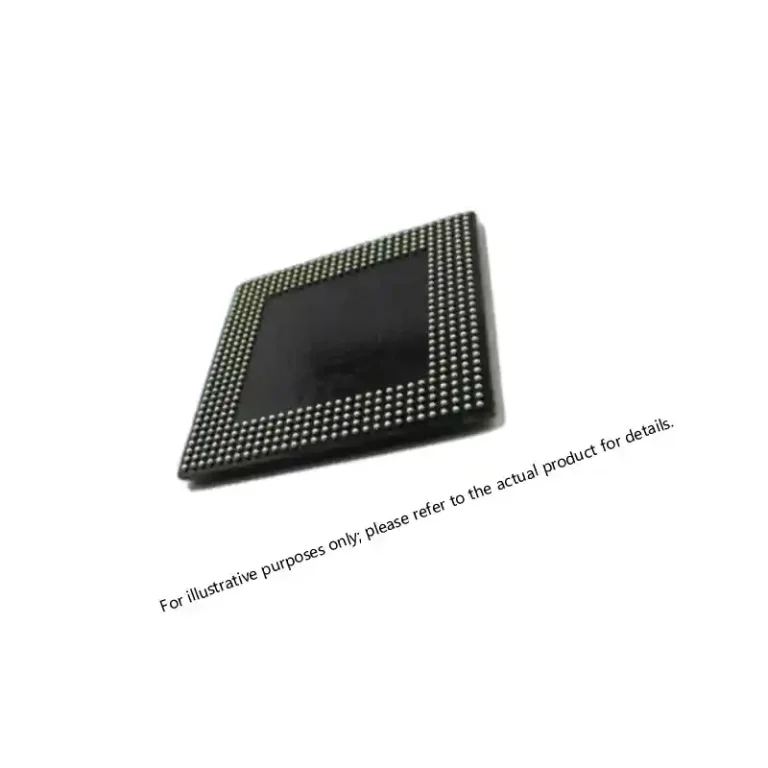
That does not mean every VME bridge is interchangeable. Software compatibility, byte ordering, and interrupt mapping differ across bridges. A CA91C142D replacement should be verified against the board’s existing firmware before the board is returned to repair stock. We photograph the physical part, read the date code, and check the package and marking before we accept it into inventory. If the part cannot be traced to a documented source, we do not ship it.
Sourcing Tundra Military ICs Without Counterfeit Risk
Defense bus interface parts are counterfeited less often than popular processors, but the risk is not zero. Many Tundra parts are now obsolete or limited to remaining stock, so buyers drift toward unfamiliar brokers. That is where marking quality, lead condition, and paperwork gaps become decision points.
At Sparkle Electronics, we hold these parts to the same incoming inspection standard we use for MIL-PRF and 5962 series components. The pass rule is simple: if the original manufacturer documentation for a Tundra part cannot be traced from the broker to us, the lot is quarantined. We also check for the small signs that matter on older ceramic and plastic packages: inconsistent laser marking, re-tinned leads, and date codes that do not line up with the part’s announced end of life.
If your program requires a specific stepping or date code of the Tsi578 or CA91C142D, send the full part number, required quantity, and target inspection date to xuansc2144@gmail.com. We can check stock and documentation before you commit the line.
Planning Tundra Military IC Sourcing for Long Program Life
Bus interface parts get less attention than processors, but they can stop a whole program. A missing Tsi578 or a questionable CA91C142D creates exactly the kind of last minute sourcing that drives counterfeit risk and schedule slips. Sparkle Electronics keeps Tundra interface silicon on the same documentation standard as our other hi-rel inventory, so the part arrives with the traceability a defense program needs.
Send your part number, quantity, and required date code to xuansc2144@gmail.com, and we will check stock, documentation, and lead time against your program schedule.
Common Questions About Tundra Military ICs
Are Tundra Tsi578 parts still available for new defense designs?
Some Tsi578 configurations remain available through remaining distributor and OEM stock, but availability narrows by speed grade, package, and condition. For new designs, the safer path is to confirm the exact part number, stepping, and date code with your source before committing the design file. We check stock against the bill of materials rather than a general family code, because even small marking differences can change which firmware baseline a board was approved against.
Is a CA91C142D VME bridge replacement always plug compatible?
Not always. The common assumption is that any Universe II bridge will drop into the same socket, but board firmware, byte swapping modes, and interrupt routing vary across board designs. A replacement should be checked against the original board schematic and the software build. If the part came from uncleared stock, we also recommend electrical testing before the board goes into a depot or flight line repair loop.
Can a Tsi578 be used in a purely commercial temperature environment?
It depends on the part number and the program. Industrial and commercial temperature versions exist, but a defense embedded system that lives in an environmental enclosure may still need the wider temperature grade. If the system stays in a cooled shelter, a commercial or industrial Tsi578 can work. If the card travels in a vehicle or aircraft bay, the engineering team should verify the junction temperature and airflow before signing off.
What documentation should accompany Tundra military ICs on a defense order?
In programs we have handled, the minimum documentation set includes the original manufacturer certificate, a traceability record, incoming inspection photos, and date code verification. That set is what defense buyers use to satisfy counterfeiting clauses without slowing down receiving. If your program requires a specific date code or full chain of custody, send your requirements to xuansc2144@gmail.com and we will confirm what is available for the Tsi578 or CA91C142D.
If you’re interested, check out these related articles:
UltraScale KU085 FPGA Specifications for Defense Systems
XCKU115 UltraScale FPGA: Powering Critical Defense Systems
Virtex-7 XC7VX690T: Performance and Reliability Insights