MIL-STD-883 Screening: What Military IC Buyers Must Know
Table of Contents
- What Does MIL-STD-883 Screening Actually Require?
- What Is the Difference Between MIL-STD-883 Screening and Qualification?
- What Documentation Do You Need for MIL-STD-883 Screened Parts?
- How Can You Verify MIL-STD-883 Screening Compliance Without an Audit?
- What Are the Common Misconceptions About MIL-STD-883 Screening?
- What Questions Should You Ask Before Buying MIL-STD-883 Screened ICs?
- Frequently Asked Questions About MIL-STD-883 Screening
- Does MIL-STD-883 screening guarantee performance over the full military temperature range?
- If a part has a 5962 designation, is it automatically MIL-STD-883 screened?
- What is the cost difference between Class B and Class S screening?
- Can a distributor perform MIL-STD-883 screening in-house?
- Does Sparkle Electronics carry MIL-STD-883 screened parts ready to ship?
As a defense electronics supply chain specialist, I have seen too many procurement teams assume that a part labeled “MIL-STD-883 screened” is automatically qualified for their program. That assumption causes field failures and audit findings. MIL-STD-883 screening is the most commonly referenced reliability stress test sequence for military integrated circuits, yet the standard itself does not guarantee component performance to any specific environmental limit. What matters is whether the screening was properly performed, documented, and appropriate for your application. This article explains what buyers need to verify and what documentation separates real screening from a paperwork exercise.
What Does MIL-STD-883 Screening Actually Require?
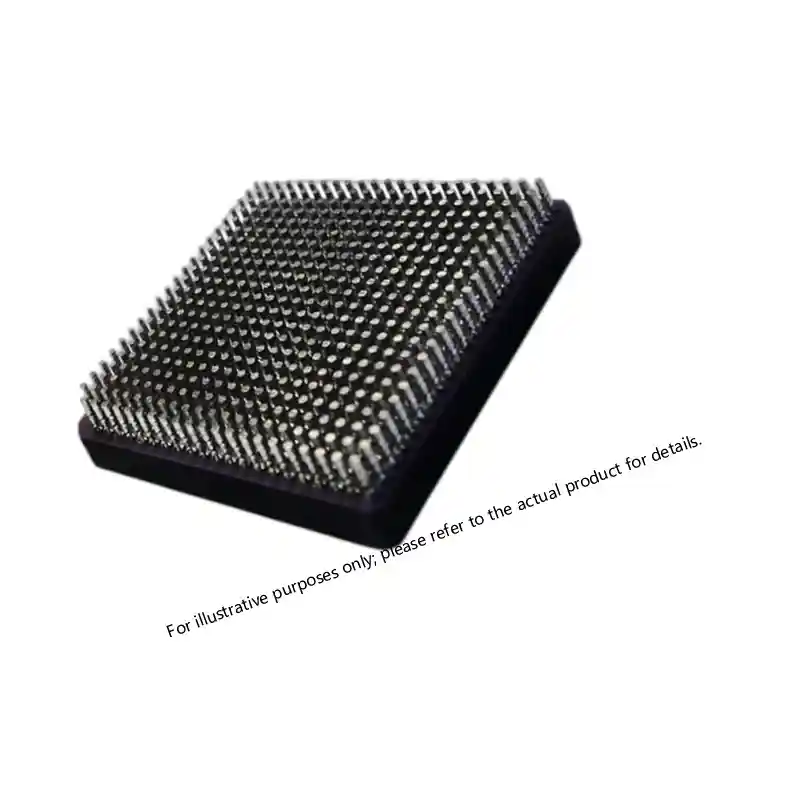
Screening under MIL-STD-883 Method 5004 defines a series of 100 percent nondestructive tests applied to every device in a production lot. The goal is to precipitate early-life failures before parts ship. The test sequence typically includes stabilization bake, thermal cycling, constant acceleration, seal test, burn-in at elevated temperature, and final electrical test. Not all steps are required for every device class, and the standard itself leaves screening level selection to the procurement specification. A buyer who does not specify the screening flow may receive parts tested to the minimum or to an inappropriate sequence.
| Test Step | Class B (Method 5004) | Class S (Method 5004, Class S) |
|---|---|---|
| Stabilization Bake | Required | Required |
| Thermal Cycling | Required | Required |
| Constant Acceleration | Required | Required |
| Seal Test (Fine/Gross Leak) | Required for hermetic packages | Required for hermetic packages |
| Burn-In | Required (160 hours minimum) | Required (240 hours minimum) |
| Final Electrical Test | Required | Required |
| PIND (Particle Impact Noise Detection) | Not required | Required for cavity devices |
| Radiographic Inspection | Optional | Required |
| Serialized Lot Tracking | Optional | Required |
What Is the Difference Between MIL-STD-883 Screening and Qualification?
This is the most common source of confusion I encounter. Screening applies to each production unit. Qualification, defined in MIL-PRF-38535 or MIL-STD-883 Method 5005, applies to the design and process. A qualified part has passed group A, B, C, and D testing on samples, proving the design meets performance and reliability requirements over the full military temperature range. A screened part has only passed 100 percent lot-level testing. A device can be screened to MIL-STD-883 without being QML-qualified. If your contract requires a QML Class Q or Class V device, a screened but not qualified part is noncompliant. I have seen programs discover this difference only during source inspection, which delays delivery by months.
If your program involves flight-safety or mission-critical functions, this distinction is the first filter for supplier qualification. It is worth confirming which standard your contract requires before finalizing your BOM. Share your part number and compliance level with us at [email protected] and we can verify availability.
What Documentation Do You Need for MIL-STD-883 Screened Parts?
Screening is worthless without paperwork. Every screened lot must be accompanied by a Certificate of Conformance that references the manufacturer’s screening lot traveler. The traveler records date, equipment ID, temperature profiles, test duration, and pass/fail counts for each step. We require these travelers for every screened lot we ship. Many buyers accept a generic C of C that says “screened per MIL-STD-883” with no details. That is not enough. A proper documentation package should include the screening lot traveler, the burn-in board map, the test yield report, and, if applicable, the radiography or PIND results for Class S devices. When these are missing, you cannot prove screening occurred during a DCMA audit or a failure investigation.
How Can You Verify MIL-STD-883 Screening Compliance Without an Audit?
You do not always have the time or access to audit a screening facility. There are surrogate indicators. A legitimate screened lot will have a unique date code and lot traveler number that tie back to a specific wafer fab and assembly site. The manufacturer should be listed on the Qualified Manufacturers List if the part is QML-specified, and the distributor should be able to produce full-chain traceability from the original manufacturer through to the final test. If any link in that chain is missing, treat the part as unscreened. We maintain traceability records for every screened IC in our inventory, from wafer lot to ship date. That traceability has resolved audit findings in under 24 hours for several customers.
What Are the Common Misconceptions About MIL-STD-883 Screening?
One persistent myth is that “military temperature range” means “MIL-STD-883 screened.” It does not. A part rated for minus 55 to plus 125 degrees Celsius may be a commercial-upgraded device with no screening at all. Another is that a part with a 5962-series part number is automatically screened. 5962 designators only indicate compliance to a military specification; the screening level is defined by the slash sheet or the procurement document. A third misconception: visual inspection replaces screening. Counterfeiters have become skilled at relabeling and resurfacing components. X-ray and decapsulation are the only reliable verification methods for suspect parts. We have seen parts with laser-etched “MIL-STD-883” markings that were actually commercial rejects. This is why we insist on full documentation for every lot.
What Questions Should You Ask Before Buying MIL-STD-883 Screened ICs?
Before placing an order, ask these five questions. Is the screening lot traveler available for this date code? What specific screening flow was applied, and does it match the device technology and package? Is the manufacturer on the QML for this part number? Can you supply a copy of the burn-in board map and yield report? What is the chain of custody from wafer probe to final electrical test? If the distributor cannot answer these within the same business day, assume the traceability is incomplete. A distributor that hesitates on these questions either does not have the product in hand or is sourcing from unauthorized channels.
Verifying MIL-STD-883 screening adds time and risk to procurement, but the right supply partner absorbs that burden. Sparkle Electronics pre-verifies documentation for every screened lot in inventory and maintains full traceability records. Send your part numbers and quantities to [email protected], and we will confirm screening status and supply documentation samples for your review.
Frequently Asked Questions About MIL-STD-883 Screening
Does MIL-STD-883 screening guarantee performance over the full military temperature range?
No. Screening removes early-life failures, but the part’s temperature rating is determined by design and qualification. A screened component with a commercial temperature rating will still fail outside that range. Always check the slash sheet or manufacturer datasheet for rated temperature limits.
If a part has a 5962 designation, is it automatically MIL-STD-883 screened?
It is not. The 5962 prefix identifies the component as a military specification device, but the screening level is defined by the individual slash sheet or the procurement document attached to that number. A 5962 part without a specified screening flow may arrive with no screening at all.
What is the cost difference between Class B and Class S screening?
Class S adds PIND, radiographic inspection, serialized tracking, and longer burn-in, which can increase cost by 30 to 60 percent over Class B. Lead time also extends by several weeks. Specify the correct class early in the program because a late change disrupts procurement schedules.
Can a distributor perform MIL-STD-883 screening in-house?
Screening must be performed by a facility that is certified and listed on the manufacturer’s QML or by an approved test laboratory. A distributor that screens parts without certification adds unauthorized processing and voids the manufacturer’s warranty. If a distributor offers in-house screening, ask for the test facility’s accreditation and the manufacturer’s authorization letter.
Does Sparkle Electronics carry MIL-STD-883 screened parts ready to ship?
Yes. We maintain inventory of screened ICs from major manufacturers including Actel, ADI, Texas Instruments, Xilinx, and others, with full traceability documentation. If a required part is not in stock, we coordinate screening through qualified test partners. If your program has a specific screening flow beyond standard Method 5004, share your screening specification and we will confirm compliance documentation availability.
If you’re interested, check out these related articles:
Virtex-7 XC7VX690T: Performance and Reliability Insights
XCKU115 UltraScale FPGA: Powering Critical Defense Systems