
Hi-Rel Components for Military Ground Vehicle Electronics
Table of Contents
- The Hi-Rel Component Profile Military Ground Vehicle Electronics Actually Requires
- Power Conversion and Motor Drive Parts That Survive Vehicle Transients
- FPGA, DSP, and ADC Choices for Ground Vehicle Processing
- Connectors, Memory, and Data Links That Keep Vehicle Systems Talking
- Sourcing Hi-Rel Components for Military Ground Vehicle Electronics Programs
- Common Questions About Military Ground Vehicle Electronics Components
- Can industrial temperature parts be used in ground vehicle electronics?
- Is MIL-STD-1553 obsolete for ground vehicle applications?
- How should I compare hi-rel distributors when documentation looks similar?
- Is lead time the most important factor in hi-rel component selection?
Hi-Rel Components for Military Ground Vehicle Electronics are not simply commercial parts with wider temperature bins. A vehicle program stands or falls on how the control chain behaves during 28 V transients, shock loading, and years of depot sustainment. I have reviewed BOMs that looked acceptable on paper and still failed at integration because one power module, one MIL-STD-1553 transceiver, or one memory device could not follow the actual operating profile. The decisions that matter are the ones made before the qualification build, and they start with tracing every part to QML, JANTX, or 5962 screening, not with a promise of availability.
The Hi-Rel Component Profile Military Ground Vehicle Electronics Actually Requires
Vehicle electronics sit inside a steel hull, but that does not make the environment gentle. The 28 V bus moves during cranking, load dump can push transients far beyond nominal, and vibration reaches circuit cards through brackets that were never designed as isolators. A commercial part that passes on a bench can fail later through a solder joint crack, a bond wire separation, or a parameter drift that only appears after repeated shock. The first filter in a ground vehicle BOM should be package and screening, not just function. QML devices, JANTX discretes, and MIL-PRF passives come with lot-level documentation that maps the part to its test history. That documentation becomes the thing a failure review board asks for after a field return.
The table below is the working view I use when a vehicle BOM comes across the desk. It groups the subsystem, a representative part class, and the screening evidence to confirm before the design freeze.
| Vehicle subsystem | Representative hi-rel component | Screening or standard to confirm |
|---|---|---|
| Control processing | XC7K410T Kintex-7 FPGA | QML or manufacturer qualification data |
| Signal processing | TMS320C6678 DSP | 5962 or manufacturer mil flow |
| Sensor digitization | AD9680 ADC | Temperature grade and screening |
| Power conversion | V300A28T500BL DC-DC module | MIL-STD-1275 transient compliance evidence |
| Vehicle data bus | HI-1573 MIL-STD-1553 transceiver | QML or source control drawing |
| Storage and boot | AT28HC256 EEPROM | MIL-PRF or 883 screening |
This table is not a substitute for a source control drawing. It is a starting point for the questions that should be asked before quotation.
Power Conversion and Motor Drive Parts That Survive Vehicle Transients
Power conversion is where ground vehicle programs fail first. A 28 V nominal bus is rarely nominal: cranking can pull it low, load dump can drive it high, and high-current actuators share the rail with the processor. A DC-DC converter selected only for rated input range will still need input transient protection and enough output capacitance for load steps from turret drives or optical payloads. For a higher power stage, the VICOR V300A28T500BL is one of the modules I specify when the program needs a regulated 28 V output and has room for a full brick format. The specific part number matters less than the screening history behind it. I have watched programs approve a converter from the datasheet alone, then pause at qualification because the transient response had never been measured with the actual vehicle harness. A converter that meets MIL-STD-704 or MIL-STD-1275 style transients will rarely be the lowest cost option. It is the option that keeps the control electronics alive through a load dump.
FPGA, DSP, and ADC Choices for Ground Vehicle Processing
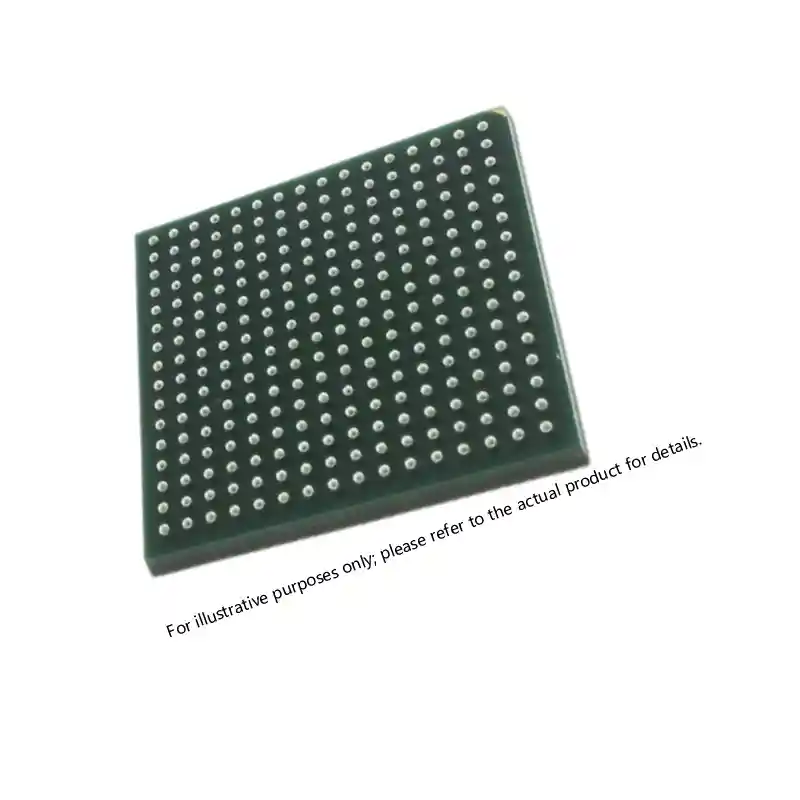
Ground vehicle processing splits into three lanes. The FPGA manages time-critical interfaces and deterministic control loops. The DSP handles signal paths where latency must stay fixed. The ADC and DAC chain converts sensor data and generates waveforms. In a vehicle enclosure, the FPGA usually sits closer to actuators and vehicle data buses than it does in a bench design. A Kintex-7 class part such as the XC7K410T offers enough logic and transceivers for a consolidated processing card without moving into a package that complicates conduction cooling. For DSP tasks, the TMS320C6678 remains a practical choice because its multi-core architecture handles parallel signal paths while keeping board area in check. On the analog side, dual 14-bit gigasample ADCs like the AD9680 fit when the system needs wideband capture from electronic protection receivers or spectral monitoring. The mistake I see most often is under-specifying the ADC clock chain. Jitter that looks acceptable on a lab bench removes effective bits once the card is mounted inside a vibrating hull.
If your vehicle program already has a 28 V bus and you are choosing between a commercial DC-DC stage and a MIL-SPEC power module, it is worth confirming input transient behavior before the BOM is locked. Send the bus voltage, load profile, and target screening level to xuansc2144@gmail.com and we will confirm stock and documentation.
Connectors, Memory, and Data Links That Keep Vehicle Systems Talking
Vehicle electronics depend on links that keep working after a hatch slams or a turret rotates. MIL-STD-1553 remains common in ground vehicles not because it is fast, but because it is deterministic and well proven in noisy environments. A single-chip interface such as the BU-61580 or a transceiver like the HI-1573 is easier to validate than a custom timing path, and easier to sustain across depot repairs. Connectors are the other mechanical risk. MS27467 cylindrical connectors with plating and strain relief are simpler to inspect and rework in the field than board-mounted alternatives. For memory, I favor the slowest device that still meets the timing budget. An EEPROM such as the AT28HC256 or an SRAM like the EDI88128 with a conservative access time is far easier to sustain over a 20 year vehicle life than the fastest available part.
Sourcing Hi-Rel Components for Military Ground Vehicle Electronics Programs
Ground vehicle programs do not reward the largest BOM or the fastest first quote. They reward a supply chain that can keep traceability documents, shipment records, and screening certificates organized for every line item. The question is not whether a distributor can locate a part number. It is whether the documentation package will survive a government source inspection. At Sparkle Electronics, we treat vehicle BOMs as controlled documents. Each line is checked against QML, JANTX, or MIL-PRF requirements before quotation, not after shipment. If your program is building a ground vehicle electronics package and needs verified stock for control, processing, power, or data link functions, send the part number and quantity to xuansc2144@gmail.com. Include the required screening level and the qualification milestone. We will confirm availability and the documentation you need before you commit.
Common Questions About Military Ground Vehicle Electronics Components
Can industrial temperature parts be used in ground vehicle electronics?
No, industrial temperature parts are not a safe default for ground vehicle electronics. The difference is not only the -55°C to +125°C range. It is the screening, the package, and the documented tests behind the part. A vehicle card can see vibration, thermal swings, and electrical transients that are outside the assumptions of an industrial temp grade. Using one may work in a prototype, but the risk shifts to the qualification phase and then to the sustainment phase. For any part that touches the control loop, the power stage, or the data bus, I would hold the line at QML, JANTX, or MIL-PRF screening unless the program has a formal upscreening plan and the original manufacturer has approved it.
Is MIL-STD-1553 obsolete for ground vehicle applications?
A common assumption is that MIL-STD-1553 is obsolete because other buses are faster. That assumption misses why it persists. Ground vehicle data links are selected for determinism, noise immunity, and a proven physical layer, not raw throughput. A 1553 bus gives a predictable transaction schedule and a clear fault boundary when a connector is damaged or a stub is shorted. That is useful when a vehicle is repaired at depot level under time pressure. Newer buses have their place, but they introduce timing and validation work that a ground vehicle program may not have the budget to complete. For many subsystems, 1553 remains the lower risk path.
How should I compare hi-rel distributors when documentation looks similar?
It depends on whether the part is still in production or has moved to last-time buy. For active production parts, compare how the distributor verifies test flow, date codes, and lot traceability before shipment. For last-time buy or discontinued parts, compare whether the distributor can show a continuous chain of custody from the original source, including prior inspection reports and storage conditions. A distributor that only forwards the manufacturer certificate may not be able to survive an audit that asks for the shipment and handling history. Ask for a document sample before placing the first order, not after the parts arrive.
Is lead time the most important factor in hi-rel component selection?
In programs I have supported, lead time is rarely the first thing that stops a build. Traceability questions are. A short lead time with incomplete documentation creates a larger delay later, because quality will not release the parts until screening records are complete. The order that works is to lock the approved part class first, confirm screening requirements second, then optimize for lead time. A part that shows immediate availability but no lot test history is not really available for a traceable military program. If your next vehicle BOM has mixed QML and commercial lines, send the list to xuansc2144@gmail.com and we will flag the parts that need screening evidence before order.
If you’re interested, check out these related articles:
Virtex-7 690T FPGA: Performance, Packaging, and Reliability Insights
UltraScale KU085 FPGA Specifications for Defense Systems
A1020B-PG84B ACT2 FPGA: Specs, Sourcing, and Availability