High-Reliability ICs for Missile Guidance and Navigation
Table of Contents
- Requirements for Missile Guidance and Navigation Electronics
- High-Reliability ICs for Guidance and Navigation Subsystems
- MIL-SPEC Screening and Compliance for Guidance ICs
- Sourcing and Obsolescence Planning for Missile Guidance Components
- Choosing a Distributor for High-Reliability Guidance Parts
- Common Questions About High-Reliability Guidance and Navigation ICs
- How does a 5962-series part differ from the commercial version?
- Do all guidance ICs need MIL-PRF-38535 QML screening?
- How far in advance should we source guidance ICs for production?
- Can a commercial high-speed ADC be upscreened for guidance use?
High-Reliability ICs for missile guidance and navigation do not tolerate ambiguity. A guidance set that drifts under vibration or loses timing during thermal shock can turn a successful launch into a missed intercept, and the component decisions behind that risk are made long before integration. For procurement engineers, the real challenge is not finding a part that meets a nominal specification. It is confirming the device remains stable from -55°C to +125°C, that its lot is traceable to a qualified source, and that the same package and screening flow will still be available when the program enters sustainment. Those three conditions determine whether a guidance subsystem works every time.
Requirements for Missile Guidance and Navigation Electronics
Missile guidance is a closed-loop control problem. Inertial sensors measure rotation and acceleration, a navigation processor compares the trajectory to an expected solution, and actuator commands steer the airframe. Every step depends on the same assumption: the electronics stay inside a defined error band while the airframe shakes, changes temperature, and pulls sustained g-loads. A component that looks stable on a laboratory bench has not yet proven anything about that environment.
The two specifications we see procurement teams underestimate are thermal cycling and vibration-induced microphonics in the reference and clock path. Crystal oscillators and clock buffers can produce spurious outputs under vibration. In our component sourcing work, we have seen a guidance program pass room-temperature functional testing and then fail during a cold soak because a commercial temperature data converter shifted beyond its specified gain error. The problem was not the converter design. It was that the part was never intended for the full -55°C to +125°C envelope in the first place.
For that reason, guidance programs start with the environment, not with the part number. The procurement team needs the vibration profile, the thermal range, the expected radiation exposure, and the production life before an IC can be shortlisted. Once those are fixed, the component discussion becomes a screening and sourcing problem.
High-Reliability ICs for Guidance and Navigation Subsystems
Guidance and navigation hardware uses a small set of core IC types. In a typical guidance electronics unit, the signal chain moves from analog sensing to digital processing and then to actuation. The table below shows the roles that appear most often in the programs we have worked with.
| Subsystem Function | Typical IC Role | What Matters Most |
|---|---|---|
| Inertial and GNSS sensing | High-speed ADC, RF front end | Noise, drift, timing jitter |
| Navigation processing | FPGA, DSP, microcontroller | Deterministic timing, configuration memory |
| Guidance law and control | FPGA or processor, memory | Program and data integrity |
| Actuator and servo control | PWM controller, gate driver, power module | Temperature range, latch-up immunity |
| Telemetry and data links | Transceiver, isolator, clock buffer | Signal integrity, isolation, vibration response |
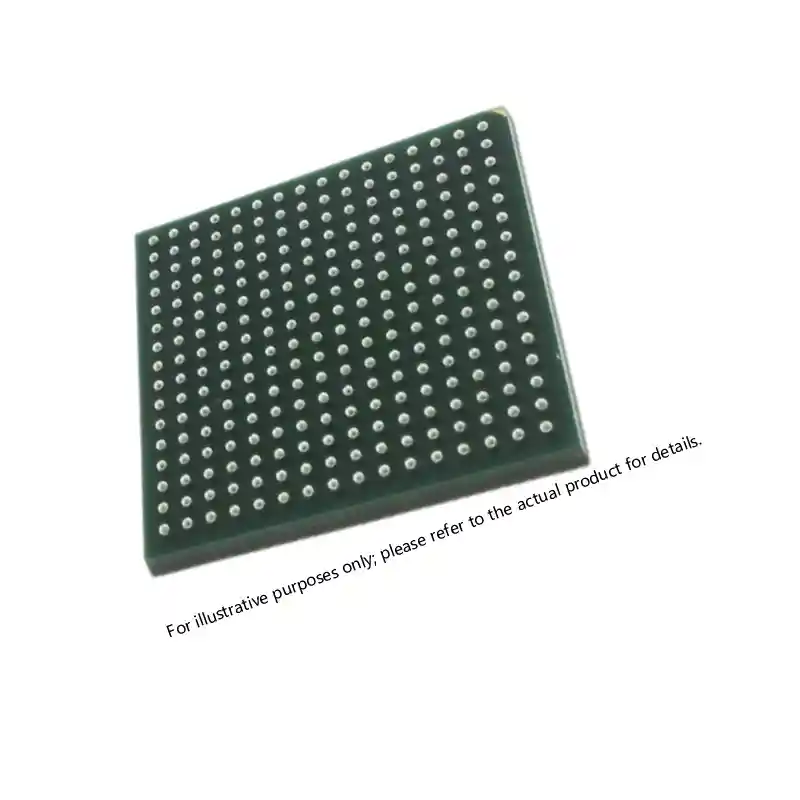
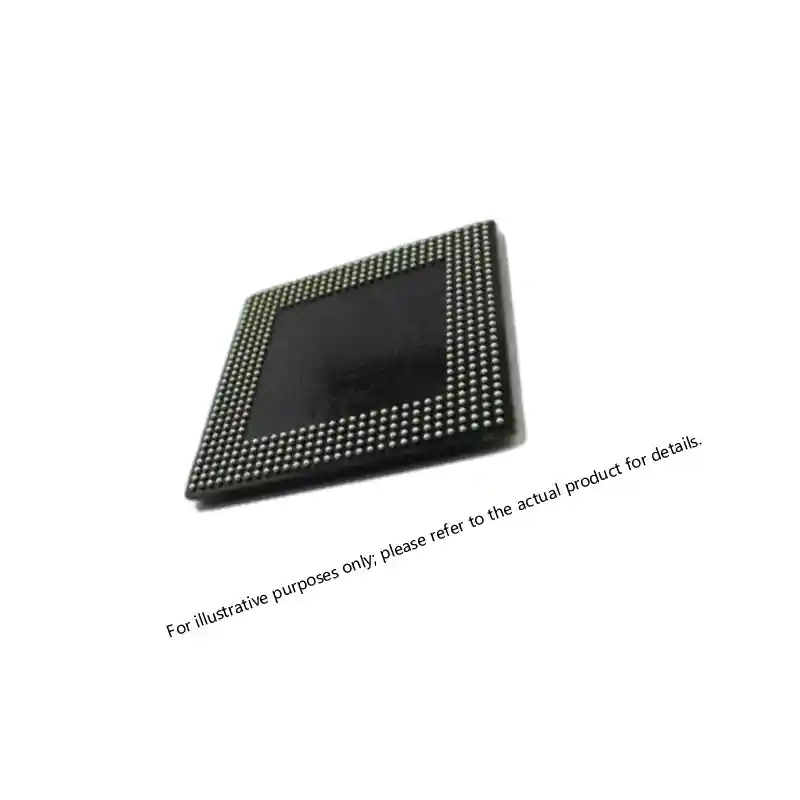
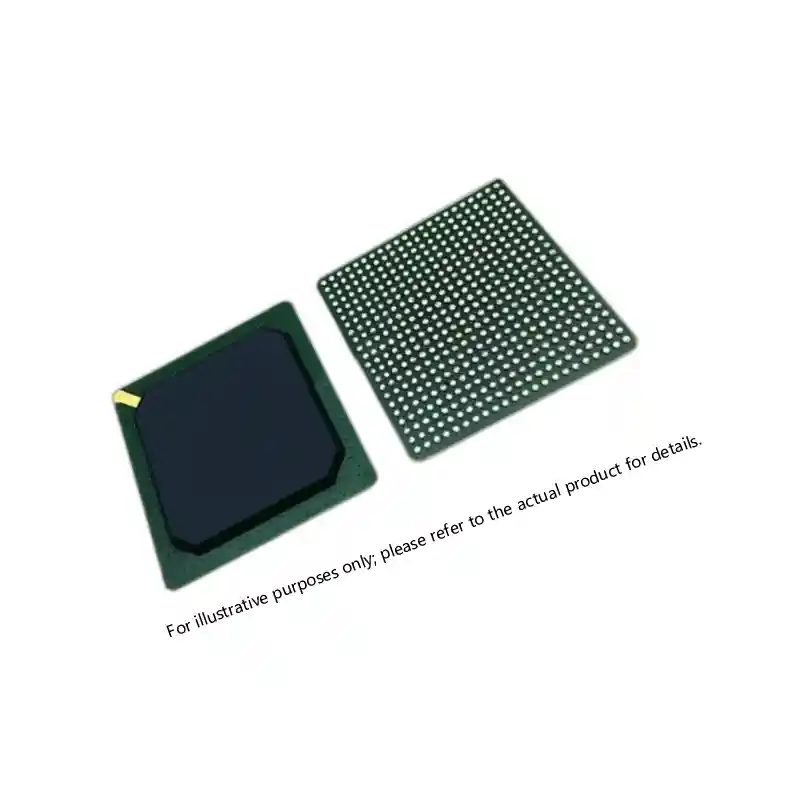
Flash-based FPGAs appear frequently in these systems because the configuration cell behavior is worth thinking about before design freeze. In guidance programs we have sourced, ProASIC3 and SmartFusion2 devices are often selected for control and interface functions where a lost configuration bit during a power transient is not acceptable. The A3P1000-FG256I, A3PE1500-1FGG676I, and A2F500M3G-FGG484I are examples of parts we have stocked or sourced for such applications.
For navigation processing, high-speed ADCs matter more than FPGA gate count. A 12-bit or 14-bit converter that samples gyro and accelerometer outputs with low jitter preserves the sensor information long enough for the tracking loop to use it. The qualification question is not only sample rate. It is whether the converter maintains its offset and gain stability across the full temperature profile, and whether the package survives the same vibration regime as the inertial measurement unit.
MIL-SPEC Screening and Compliance for Guidance ICs
MIL-STD-883 is the baseline for military-grade IC screening, but it is not a guarantee of guidance suitability by itself. The standard defines test methods for thermal shock, temperature cycling, constant acceleration, particle impact noise detection, and burn-in. A part that carries an /883 suffix has been processed to the applicable screening flow, but the specific flow can vary by part and by manufacturer. A procurement team still needs to confirm which tests were actually performed on the lot.
MIL-PRF-38535 goes further and creates QML certification for microcircuits. For guidance hardware, QML Class Q and Class V devices are common when the system must survive environmental stress and show continuous lot-level control. Discrete semiconductors follow the JANTX and JANTXV system under MIL-PRF-19500, and space or strategic applications often demand JAN Class S. The difference between a JANTX device and an upscreened commercial part is documentable lot control, not just temperature range.
If your guidance bill of materials includes high-speed ADCs or FPGAs and you are not certain whether a QML flow or a JANTX flow matches the qualification plan, it is worth confirming before the BOM is frozen. Send the part number and the intended screening level to xuansc2144@gmail.com and we will check the qualified options and the available lot documentation.
Sourcing and Obsolescence Planning for Missile Guidance Components
Missile guidance programs stay in service far longer than most commercial electronics programs. A navigation computer that entered development ten years ago may still need spare boards twenty years from now. That makes component obsolescence a production risk, not a tactical annoyance. We treat every guidance BOM as a list of devices that may have to be located from multiple qualified sources over time.
Two practices reduce that exposure. The first is die banking for critical FPGAs, processors, and converters. When the qualified device is still available, the program buys probed die or finished wafers and stores them under controlled conditions. The second is locking down approved packaging and screening flows. If a second source exists, the part number alone is not enough. The package material, lead finish, and screening level must match what the qualification test article used.
Counterfeit avoidance belongs in the same conversation. For guidance parts, authentic documentation means the lot traceability can be followed from the manufacturer to the distributor and then to your receiving dock. A certificate of conformance that cannot be tied to a specific lot is a red flag. We reject more incoming parts for inconsistent marking and incomplete date code records than most program teams expect.
Choosing a Distributor for High-Reliability Guidance Parts
Price is the wrong starting point for a guidance component decision. The distributor either has the documentation habits to pass a defense audit, or the program inherits the risk. We look for three things when we work with a new customer on their qualified vendor requirements: a documented AS9120 or AS6081 process, lot-level traceability records, and the willingness to disclose the actual source of the parts.
Sparkle Electronics carries military-grade and QML-qualified devices across FPGA, DSP, ADC/DAC, memory, power, and interface categories. The parts we stock are purchased against controlled documentation, and we maintain records that can travel with the parts into your receiving inspection. For guidance teams, that means the conversation can start with the part number and the screening flow rather than with a debate about whether the source is real.
Start with a plain text request. Send the part number, package style, quantity, and the environmental limits of the guidance subsystem to xuansc2144@gmail.com. We will respond with stock status, traceability documentation, and an availability forecast for the production life you are planning. If the part is not in stock, we will tell you what can be sourced and what documentation will accompany it.
Common Questions About High-Reliability Guidance and Navigation ICs
How does a 5962-series part differ from the commercial version?
The 5962 designation is a defense logistics identifier, not a performance grade by itself. A part marked with a 5962 number maps to a specific military drawing or specification that fixes the package, screening flow, and electrical limits. The commercial equivalent may use the same silicon but is not assembled, tested, or documented to the same controlled flow. For a guidance program, the value is in the traceability path. When an inspector asks what was actually performed on the lot, the 5962 drawing lets you point to a documented answer instead of relying on a vendor summary.
Do all guidance ICs need MIL-PRF-38535 QML screening?
It depends on what the part does. The navigation computer and inertial interface usually justify QML screening or a 5962 flow, because those functions create the safety-critical path. Support functions such as board-level timing buffers, discrete passives, or a benign interface buffer may be satisfied with JANTX or a controlled commercial part with documented upscreening. The distinction should be made in the program’s derating and failure modes analysis, not by a blanket rule. If every part is forced to the highest screening level without ranking, the bill of materials becomes expensive and difficult to sustain without adding much safety.
How far in advance should we source guidance ICs for production?
In programs we have worked with, ninety days is usually too late for anything beyond a standard logic function. FPGAs and high-speed ADCs for guidance can carry lead times that run from twelve to twenty-four weeks, and parts with specific package or screening requirements often fall outside that range entirely. We recommend locking the approved parts list during design review and placing cover orders for long-lead devices before the first production build. That gives the distributor enough time to confirm documentation, arrange the screening flow, and stage inventory without pushing the program into last-time-buy panic.
Can a commercial high-speed ADC be upscreened for guidance use?
The more useful question is whether the package and the documentation will survive the qualification review. Some commercial data converters can be upscreened for temperature, burn-in, and lot inspection, but the plastic package and the standard test flow may not satisfy a missile guidance environmental profile. The silicon may be identical, but the qualification envelope is not. In practice, we suggest comparing the upscreened part against the nearest 5962 or QML device early in the design. If your team is weighing that trade, share the part number and the environmental test profile with xuansc2144@gmail.com and we will confirm whether the documentation will satisfy the qualification path.
If you’re interested, check out these related articles:
XC7VX485T FPGA: Virtex-7 Performance for Defense
Virtex-7 690T FPGA: Performance for Mission-Critical Systems