Analog Devices Military DACs: Sourcing for Defense Programs
Table of Contents
- Key ADI Military-Grade DAC Series
- Defense Application Mapping
- Compliance and MIL-SPEC Qualification Reality
- Sourcing and Lifecycle Management
- How to Verify Authentic Military-Grade DACs Before Purchase
- What Distinguishes QML-Q DACs from Industrial-Temperature Equivalents
- When Should a Program Plan for a Last-Time Buy of a Military DAC
- How Much Stock Should a Defense Program Hold for Critical DACs
- Common Questions About Sourcing Military DACs
- What Is the Difference Between QML-V and Rad-Hard Screening
- Can I Use an AD9172 Instead of an AD9174 for a Two-Channel System
- Why Are Defense DAC Lead Times So Long Compared to Commercial DACs
- What Documentation Should a Defense Contractor Require from a DAC Distributor
- How Do I Check If an Older ADI Military DAC Still Has Available Inventory
Sourcing military-grade digital-to-analog converters for defense programs requires more than matching a part number to a datasheet. Analog Devices produces a range of high-speed DACs that appear in radar, electronic warfare, and secure communications systems, but the difference between a successful deployment and a stalled integration often resides in procurement details most spec sheets omit: QML qualification status, wafer lot traceability, and the availability of full compliance documentation. Defense programs cannot treat these ICs as interchangeable commodities.
Key ADI Military-Grade DAC Series
Analog Devices groups defense-oriented high-speed DACs under several product families distinguished by resolution, sample rate, and interface type. The most frequently specified series for mission-critical defense applications include the AD916x, AD917x, and AD9208/AD9213 families. The AD9162 and AD9164 offer 16-bit resolution at up to 12 GSPS with JESD204B serial interface, making them the default choice for direct RF synthesis in wideband radar exciters. The AD9172 and AD9176 dual-channel devices at 12 GSPS target multi-beam phased-array platforms where channel density directly influences array size and cost. For systems that require moderate sample rates with high channel count, the AD9680 (1 GSPS, dual 14-bit) and AD9208 (3 GSPS, dual 14-bit) provide a balance of throughput and power that fits multi-mode receivers. The 6 GSPS AD9213 pushes single-channel bandwidth to the limit for ELINT and strategic SIGINT applications.
| Series | Resolution (bits) | Sample Rate (GSPS) | Channels | Interface |
|---|---|---|---|---|
| AD9162 | 16 | 12 | 1 | JESD204B |
| AD9164 | 16 | 12 | 1 | JESD204B |
| AD9172 | 16 | 12 | 2 | JESD204B |
| AD9176 | 16 | 12 | 2 | JESD204B |
| AD9208 | 14 | 3 | 2 | JESD204B |
| AD9680 | 14 | 1 | 2 | JESD204B |
| AD9213 | 12 | 6 | 1 | JESD204B |
The series differ not only in performance ceilings but in how the output path is implemented. The AD9164 includes an integrated digital pre-distortion engine that linearizes the analog output when driving nonlinear loads, a feature that matters when the DAC directly feeds a power amplifier without an intermediate driver stage. I have observed programs where skipping that detail led to months of extra PA linearization work that could have been avoided by selecting the AD9164 over the AD9162.
Defense Application Mapping
Mapping a DAC to a defense program starts with the waveform requirement, not the brand preference. In electronic attack systems, where the goal is to generate wideband noise or deceptive jamming signals, instantaneous bandwidth often dictates the minimum sample rate. A 12 GSPS DAC such as the AD9172 can synthesize a 4 GHz to 6 GHz wideband signal that covers a broad threat spectrum without frequency hopping. Radar waveform generators typically need lower sample rates but higher spurious-free dynamic range (SFDR). The AD9162, with its low noise spectral density, supports frequency-modulated continuous-wave and pulse-Doppler waveforms with minimal spurious content. In SIGINT receivers, the DAC reconstructs intermediate frequency signals from digital processing chains. The AD9208 and AD9213 work in tandem with high-speed ADCs in these architectures, providing the feedback path for signal cancellation loops.
Compliance and MIL-SPEC Qualification Reality
All defense DACs eventually intersect with MIL-PRF-38535, the performance specification for monolithic microcircuits. This standard defines several quality levels, from QML-Q (military and space) to QML-V (radiation-hardened). For most defense programs, QML-Q qualification is the practical threshold; components must pass screening that includes temperature cycling, fine and gross leak tests, and burn-in. A part number like the AD9162BBCAZ carries a commercial temperature grade in its suffix, while the defense-screened equivalent requires a different ordering code and a certificate of conformance (C of C) that documents lot-level traceability. In my experience, one of the more common procurement mistakes is ordering a “military-grade” DAC from a catalog listing that does not differentiate between commercial industrial temperature range and full MIL-PRF screening. The datasheet specifications may be identical, but the test documentation is not, and a compliance auditor will flag the difference.
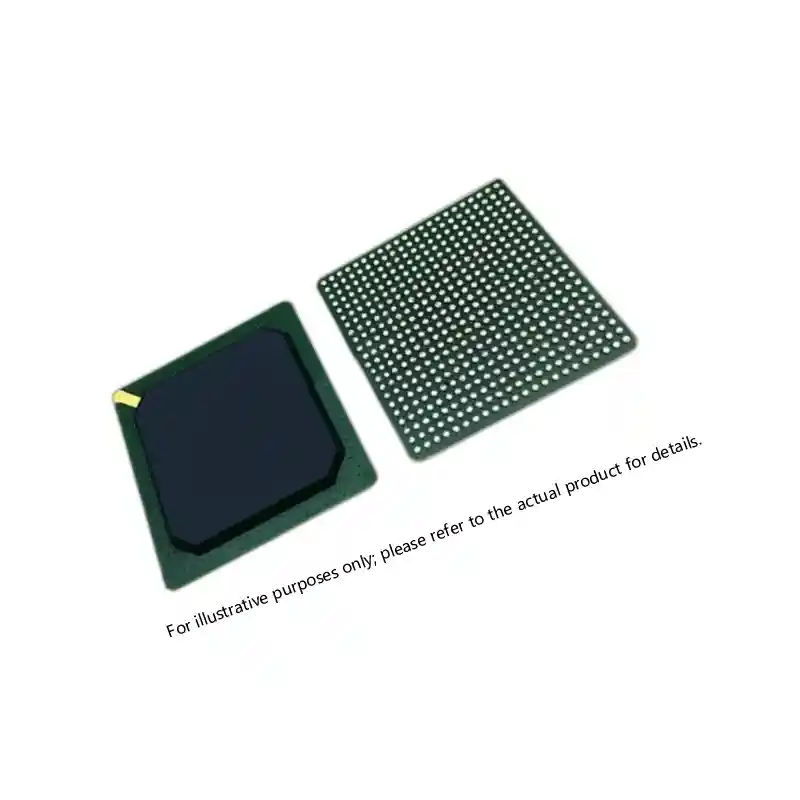
QML-V adds radiation lot acceptance testing, which dramatically reduces available inventory and pushes lead times to 26 weeks or more. Programs that need radiation hardness must plan orders around wafer fabrication schedules, because these parts are not produced continuously. I recommend confirming QML status directly with the manufacturer’s qualified products list (QPL) before accepting a supplier’s representation, because even authorized distribution channels sometimes carry both QML and non-QML material under adjacent part numbers.
Sourcing and Lifecycle Management
Analog Devices supports military DACs through its Aerospace and Defense product line, but that does not mean every series remains in active production for the 20-year lifespan of a typical defense program. The AD9739, for instance, reached end-of-life despite widespread use in legacy radar systems. When a DAC series transitions to obsolescence, the immediate risk is not the absence of parts but the difficulty of obtaining documentation for the original wafer lots. Defense programs that maintain die banks or last-time-buy agreements fare better, but setting up those arrangements requires identifying parts with diminishing demand early enough to place a life-of-type buy.
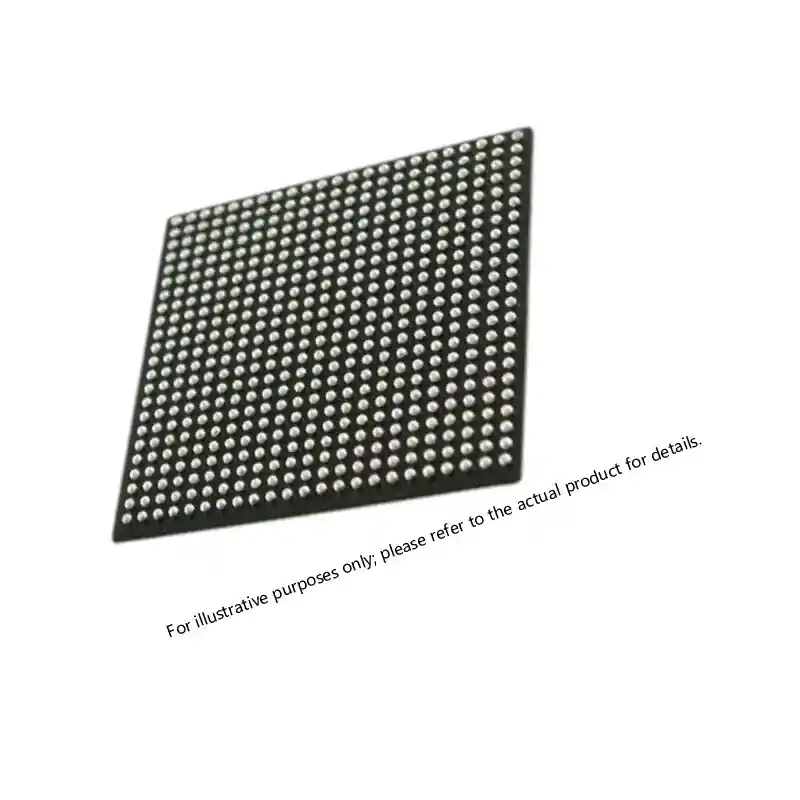
For programs in the design phase, I advise capturing at least two pin-compatible alternatives in the bill of materials. The AD9162 and AD9164 are often interchangeable in the RF path, differing mainly in the DPD engine. The AD9680 and AD9208 share the same JESD204B physical layer but differ in bandwidth, allowing a design to accommodate a performance downgrade without a board spin if the higher-bandwidth part becomes unavailable. This kind of flexibility is not free, but the cost of a respin far exceeds the extra engineering time spent qualifying a second source.
How to Verify Authentic Military-Grade DACs Before Purchase
Request a full lot traceability report that includes the assembly site, die revision, and date code. Cross-check the C of C against the manufacturer’s lot history. Physical inspection under magnification can reveal remarking, but the most reliable method is electrical testing against the datasheet limits at temperature extremes, which is more practical for high-volume procurement than for small quantity engineering builds.
What Distinguishes QML-Q DACs from Industrial-Temperature Equivalents
The difference is not in the silicon but in the documentation. A QML-Q device has passed a standardized set of environmental and mechanical tests as defined in MIL-STD-883 and MIL-PRF-38535. An industrial-temperature part with the same die may survive the same conditions, but without the test report the program cannot certify compliance. For many defense systems, the delta in procurement cost is the price of removing audit risk.
When Should a Program Plan for a Last-Time Buy of a Military DAC
As soon as the manufacturer issues a product change notification (PCN) indicating restricted availability or cancellation of a specific speed grade or package, the clock starts. I have seen lead times contract from 16 weeks to nonexistent within a 90-day window because a single wafer fab run exhausted remaining die inventory. If the DAC is sole-sourced and the end system has more than five years of production remaining, initiating a last-time buy within the first two quarters of the PCN issuance is the conservative course.
How Much Stock Should a Defense Program Hold for Critical DACs
There is no single answer, but the buffer quantity should cover projected consumption for the lead time of the slowest alternative plus the time required to qualify a substitute. If the lead time for the preferred DAC is 20 weeks and the alternate requires 12 weeks plus 8 weeks of qualification, the buffer is roughly 40 weeks of demand. Programs that run lean inventories accept the risk of production stoppage; those that stockpile consume budget and storage space. The balance point depends on the program’s acceptable mission risk.
Common Questions About Sourcing Military DACs
What Is the Difference Between QML-V and Rad-Hard Screening
QML-V includes radiation lot acceptance testing per MIL-STD-883 Method 1019, which verifies total ionizing dose performance on a sample basis from each wafer lot. Standard QML-Q does not require radiation testing. If the program must operate in space or high-altitude environments with significant radiation exposure, QML-V is the baseline; otherwise, QML-Q with additional upscreening may be acceptable but requires engineering justification.
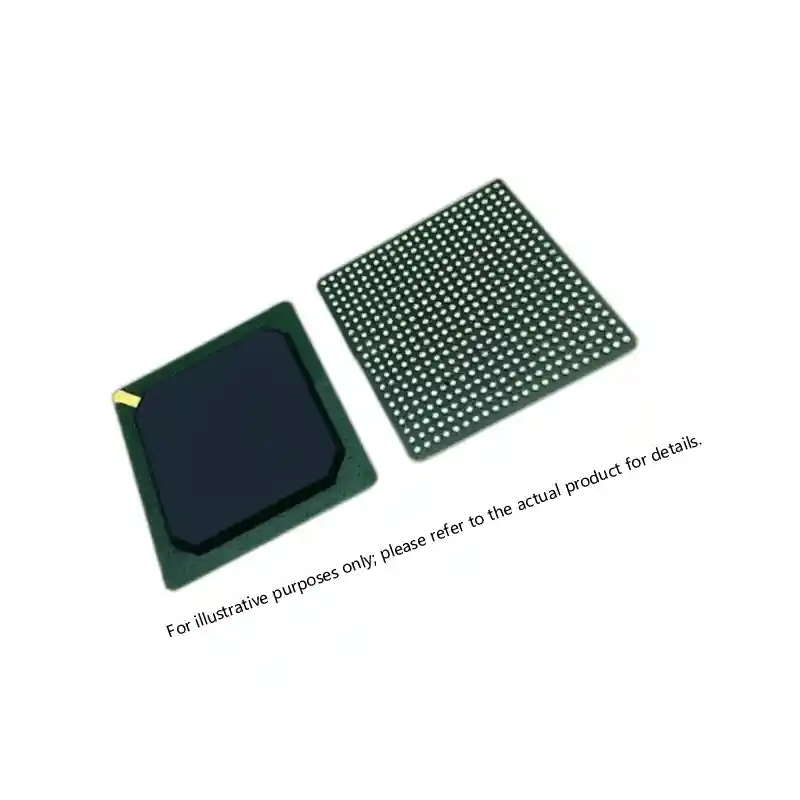
Can I Use an AD9172 Instead of an AD9174 for a Two-Channel System
In most architectures, yes. The AD9174 is essentially the AD9172 with integrated channel-to-channel synchronization, which simplifies multi-chip phase alignment. If the system already includes external synchronization circuitry, the AD9172 is sufficient and may be less expensive. If phase coherence across multiple DACs is a hard requirement, the AD9174’s internal synchronization logic removes a significant design burden.
Why Are Defense DAC Lead Times So Long Compared to Commercial DACs
Defense-screened DACs require additional assembly and test steps, including burn-in, temperature cycling, and hermeticity testing, which add weeks to the flow. Moreover, production volumes are lower, so foundries schedule defense lots less frequently. Supply chain disruptions in packaging materials or substrate availability can further stretch lead times because defense-qualified packaging lines are fewer and less automated than commercial lines.
What Documentation Should a Defense Contractor Require from a DAC Distributor
At minimum, the contractor should receive the manufacturer’s certificate of conformance, the lot test summary report, and a chain of custody record showing every intermediate handler from the wafer fab to the point of delivery. For export-controlled devices, the distributor should also provide the Export Control Classification Number (ECCN) and, if applicable, the ITAR exemption or license number under which the parts are shipped. Programs operating under DFARS or NDAA 889 restrictions need additional country-of-origin attestation for the die and package.
How Do I Check If an Older ADI Military DAC Still Has Available Inventory
Contact a distributor that maintains inventory of long-lead-time and end-of-life military components. Provide the exact part number, including the package code and temperature grade. The distributor can search current stock, but also ask for a market availability forecast, because deep-stock distributors sometimes hold inventory across multiple warehouses and can allocate quantities to specific programs. For truly obsolete parts, die bank retrieval may be the only option, and that requires verifying the source wafer lot with the OEM. If your program depends on a DAC that is no longer in production, share the full part number and annual consumption estimate with your distribution partner; they can help confirm whether remaining global inventory is genuine and supportable. Reach our team at xuansc2144@gmail.com for specific availability.
If you’re interested, check out these related articles:
XC7VX485T Virtex-7 FPGA: Performance and Sourcing for Defense
Virtex-7 690T FPGA: Performance for Mission-Critical Systems