Airborn Military Connectors: Lightweight Hi-Rel Options
Table of Contents
- Airborn Military Connectors in Weight-Sensitive Defense Systems
- Airborn RM3 Series Choices for Defense Program Requirements
- Plating and Shell Decisions That Determine Field Reliability
- Sourcing Airborn Military Connectors With Full Documentation
- Common Questions About Airborn Military Connectors
- Are Airborn military connectors interchangeable with MIL-DTL-38999 circular connectors?
- How do I confirm a lightweight connector does not sacrifice contact retention?
- What documentation should accompany Airborn hi-rel connectors on a defense order?
- Do Airborn connectors require special tooling for assembly?
Airborn military connectors sit at the intersection of two demands that often conflict in defense electronics: every connection must survive severe vibration and environmental exposure, and every gram of mass matters on platforms where payload, range, and endurance are fixed. The right Airborn hi-rel connector gives design teams a controlled way to reduce connector mass without giving up contact integrity, plating performance, or documentary traceability. My position is straightforward: lightweight is not the same as fragile, and the decision belongs in the requirements document, not in a sales comparison sheet. Buyers should specify shell material, contact plating, and qualification data before they compare part numbers.
Airborn Military Connectors in Weight-Sensitive Defense Systems
Lightweight connector selection starts with the mechanical envelope, not the catalog weight. Airborn’s defense-focused designs use precision machined shells and dense insert arrangements, which lets a system carry the same contact count in a smaller package than older circular connectors. That reduction matters most in soldier-worn electronics, UAV payloads, and avionics line-replaceable units where brackets, wire bundles, and thermal mass all add load.
I have seen a substitution based on shell weight alone produce a ground path change on an avionics LRU. The replacement used a different alloy, and the production test flagged intermittent faults that did not appear on the bench. The lesson was simple: weight is a design parameter, not an independent purchasing decision. Grounding, shielding, and mating force have to be evaluated against the original qualification envelope.
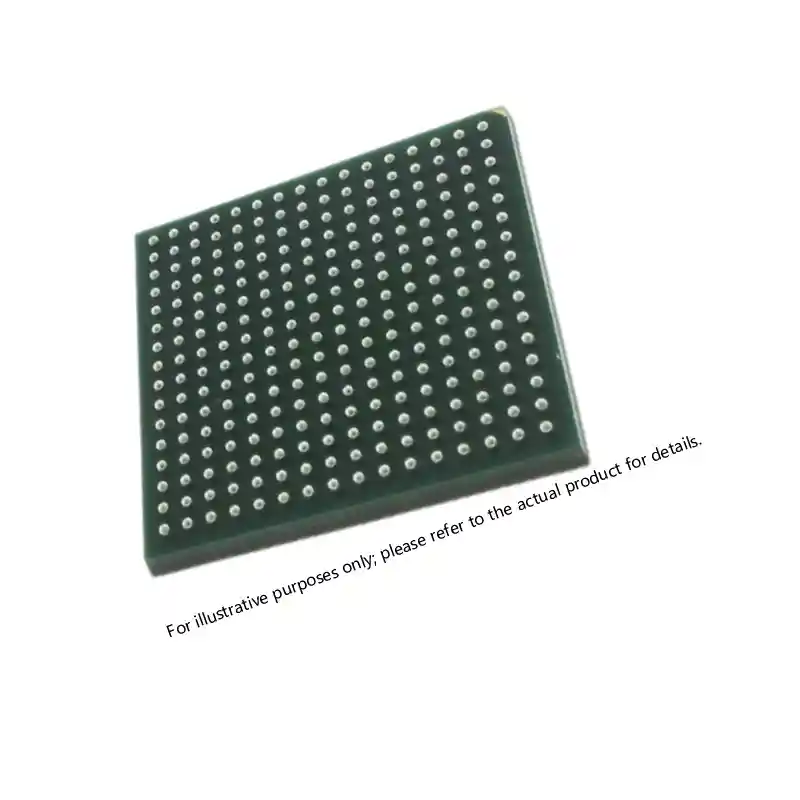
Airborn RM3 Series Choices for Defense Program Requirements
Airborn RM3 series connectors appear in dense, high pin count defense assemblies where space and mass are both constrained. Sparkle Electronics stocks RM322 and RM372 configurations, including 59 position and 71 position builds. The part numbers below are starting points for a bill of materials, not final substitutions; each build has to be checked against the mechanical drawing, keying, and contact style.
| Part number | Series | What to confirm before ordering |
|---|---|---|
| AIRBORN RM322-059-221-2900 | RM322 | Contact count, shell finish, mating key |
| AIRBORN RM322-071-221-2900 | RM322 | Insert arrangement, panel cutout, polarization |
| AIRBORN RM372-059-321-5900 | RM372 | Keying, contact style, retention hardware |
Plating and Shell Decisions That Determine Field Reliability
Plating choice is where lightweight connectors either survive or fail. Gold over nickel remains the standard for low contact resistance and corrosion resistance, but the thickness and underplate matter more than the top layer alone. In high mating cycle applications, thin gold wears quickly and exposes the underplate. In salt fog and high humidity environments, the porosity of the plating, not its color, determines whether corrosion reaches the base material.
Shell material is not just about weight. Aluminum shells offer mass savings, composite shells can reduce galvanic mismatch with carbon structure, and stainless steel adds abrasion resistance at the cost of mass. The correct choice follows the platform environment, the mounting surface, and the expected maintenance cycle. I ask teams to lock these three variables before they choose a connector, because changing the shell later usually changes the mating dimensions and the panel cutout.
If your defense program mixes aluminum and composite structure or operates near salt water, it is worth confirming contact plating and shell compatibility before finalizing the BOM. Send your part number and quantity to xuansc2144@gmail.com and we will check the build against the program environment.
Sourcing Airborn Military Connectors With Full Documentation
Airborn military connectors are only as good as the paperwork behind them. A defense order should include the manufacturer certificate of conformance, lot or date code trace, plating certification, and any program specific inspection records. If those documents are missing, the burden shifts to your incoming inspection team, and the risk of accepting a re-marked or unauthorized substitute rises.
Traceability is not a warehouse slogan. It is the only way to reconstruct a failure back to a specific production lot. For connectors with years of field life, that chain of custody becomes the difference between a controlled replacement and a fleetwide rework. We require full documentation for every Airborn RM3 line item we ship, and we hold the same standard for the stock we locate for defense customers.
Send your Airborn connector part numbers, quantities, and certification requirements to xuansc2144@gmail.com. Sparkle Electronics will confirm stock, lot trace, and lead time before you issue a purchase order. For urgent program support, the phone contact is included on the quote response after your first RFQ.
Common Questions About Airborn Military Connectors
Are Airborn military connectors interchangeable with MIL-DTL-38999 circular connectors?
No, not across the board. Airborn’s rectangular and high density connector systems are not drop in substitutes for every circular connector, even when the contact count matches. The mounting pattern, shell grounding, and mating geometry differ, and a forced substitution can change mechanical stress on the board and the cable. The right comparison starts with the insert arrangement and the panel cutout, not the part number. If a program is moving from one connector family to another, confirm the electrical and mechanical interfaces before accepting an alternate source.
How do I confirm a lightweight connector does not sacrifice contact retention?
Contact retention is confirmed by qualification test data, not by connector weight. Ask the supplier for retention force, durability cycling, and shock or vibration test evidence that matches the program environment. The failures I have seen came from untested alternates or damaged insertion tooling, not from the lightweight shell design itself. A reduced mass connector should still meet the same retention and continuity requirements as the heavier part it replaces.
What documentation should accompany Airborn hi-rel connectors on a defense order?
The document set depends on the program, but a defense order should never arrive with only an invoice. At minimum, request the manufacturer certificate of conformance and lot or date code trace. For flight critical or mission critical programs, add plating certification, inspection records, and any customer mandated test reports. If the part is hard to locate, the document package becomes the first line of authenticity checking.
Do Airborn connectors require special tooling for assembly?
In the programs we support, assembly tooling questions come up after the first prototype. Some high density RM3 contacts need specific insertion and extraction tooling, and using the wrong tool can deform the contact clip. We confirm the recommended tooling part numbers when we quote the connector set, because a damaged contact may not show up until the next vibration test. If your team is deciding between connector families, send your mechanical requirements and we will confirm which Airborn RM3 build fits.
If you’re interested, check out these related articles:
Virtex-7 690T FPGA: Performance, Packaging, and Reliability Insights
XC7VX485T FPGA: Virtex-7 Performance for Defense
Virtex-7 XC7VX690T: Performance, Reliability, and Integration
XCKU115 UltraScale FPGA: Powering Critical Defense Systems
Virtex-7 690T FPGA: Performance for Mission-Critical Systems