
FARM1H21 Vicor EMI Input Filter: H-Grade MH21 Sourcing Guide
Table of Contents
- What Is the FARM1H21 and Where It Sits in a Defense Power Chain
- FARM1H21 Key Specifications and H-Grade Temperature Range
- EMI Filtering and MIL-STD-461 Compliance
- Sourcing, Traceability, and RFQ Requirements
- Defense procurement checklist
- RFQ data requirements
- Integration with Defense FPGA and DSP Loads
- Request a FARM1H21 Quotation
- FAQ
- How do I confirm whether the FARM1H21 suffix matches my program’s source-control drawing?
- What documentation should I require with a FARM1H21 purchase?
- Can a FARM1H21 be used on a 400 Hz military aircraft AC bus?
- How does H-Grade affect derating and operating temperature?
- References
What Is the FARM1H21 and Where It Sits in a Defense Power Chain
The FARM1H21 is a Vicor filter/autoranging rectifier module — a high-reliability AC front end that converts AC line power into a conditioned, high-voltage DC bus for downstream isolated DC-DC converters. In a military power architecture, it typically sits between the platform AC source and 300 V input converter arrays, performing rectification, autoranging between nominal line voltages, inrush-current limiting, and conducted-EMI filtering [1].
For defense and aerospace integrators, that filtering function carries program-level weight. A switching converter’s conducted emissions can propagate back onto the platform power bus and defeat MIL-STD-461 conducted-emission limits if the front end is not properly conditioned and bonded [2].
FARM1H21 Key Specifications and H-Grade Temperature Range
The “H-Grade” designation identifies the extended-temperature variant of the module. Defense programs should tie the exact baseplate temperature range and derating curve to the controlled Vicor datasheet before design lock; temperature grade determines how aggressively the module can be loaded across the platform’s thermal envelope [1]. Environmental qualification is typically validated against MIL-STD-810 methods for temperature, vibration, shock, and humidity [3].
| Parameter | Function and typical guidance | Defense program note |
|---|---|---|
| Primary function | EMI filter + autoranging rectifier | AC front end for 300 V input DC-DC converters [1] |
| Input voltage | Universal AC input, commonly 90–264 VAC autoranging | Confirm exact FARM1H21 rating in current datasheet [1] |
| Output | High-voltage DC bus | Sized to the downstream converter array |
| Inrush limiting | Integrated current-limit circuit | Reduces platform bus transients at power-up [1] |
| EMI filtering | Integrated differential/common-mode filtering | Supports conducted-emission control [2] |
| Temperature grade | H-Grade extended temperature | Verify baseplate range and derating in datasheet [1] |
| Mechanical suffix | MH21 package configuration | Confirm mounting and thermal interface against source-control drawing [1] |
| Line frequency | Wide-line-frequency operation | Confirm 400 Hz hi-line support if aircraft AC bus is used [1] |
On 400 Hz military aircraft AC buses, front-end rectifier selection must account for higher line frequency. The FARM1H21 is intended for wide-line-frequency operation, but the hi-line limit for the specific suffix should be confirmed against the current datasheet and any program source-control drawing [1].
EMI Filtering and MIL-STD-461 Compliance
The module’s integrated filter is designed to attenuate both differential-mode and common-mode conducted emissions before they reach the platform bus [2]. That is only part of the compliance picture: system-level bonding, cable routing, earthing, and the converter array layout all influence measured CE102/CS101 results [2].
A compliant installation starts with the front-end module and ends with platform-level testing. Procurement should therefore treat “EMI-filtered” as a design attribute, not a standalone certification: final MIL-STD-461G margins belong to the assembled system and its test report [2].
Need a compliance-ready FARM1H21 quotation? Send your confirmed part number, quantity, and required quality or certification clauses to xuansc2144@gmail.com for a documented response.
Sourcing, Traceability, and RFQ Requirements
Defense procurement checklist
Counterfeit and misrepresented front-end modules are a real program risk, so the sourcing file should be built around traceability and documentation discipline per AS5553 [4] and DFARS source-of-supply expectations [5].
- Confirm the complete part number and suffix against the datasheet and any source-control drawing.
- Require a certificate of conformance that traces the lot to the Vicor factory of origin.
- Request date-code, lot-code, and country-of-origin information in the quotation.
- Apply incoming inspection and authenticity verification appropriate to the risk level [4].
- Keep supplier qualification records, including approved-vendor-list status and any AS9120 or equivalent QMS evidence.
- Confirm export-control applicability before cross-border shipment.
RFQ data requirements
A complete RFQ for the FARM1H21 produces a faster, more defensible quote than a bare part-number request. The table below lists the fields that procurement engineers should include.
| RFQ field | Why it matters to the quote |
|---|---|
| Full part number and suffix | Prevents wrong-revision or wrong-package quoting |
| Quantity and annual usage | Enables tiered pricing and stock reservation |
| Target delivery date | Drives availability and freight planning |
| Required certifications | CoC, test data, and QML/traceability clauses |
| Compliance clauses | DFARS, counterfeit-avoidance, and export requirements [5] |
| Screening level | Up-screening or source inspection if required |
| Program lifecycle | Supports last-time-buy and obsolescence planning |
| Point of contact | Routes technical and documentation questions correctly |
Integration with Defense FPGA and DSP Loads
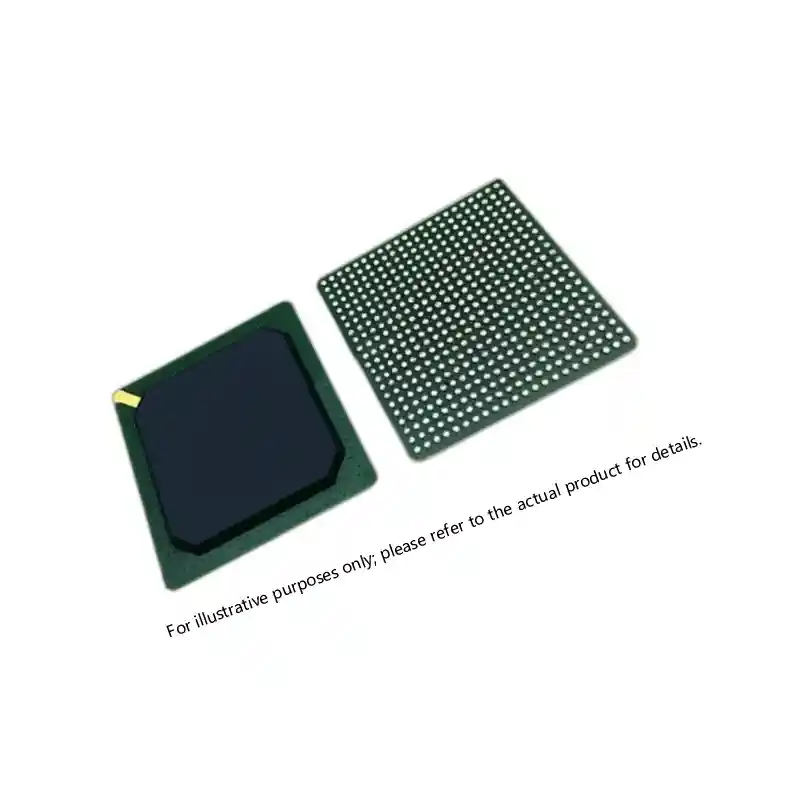
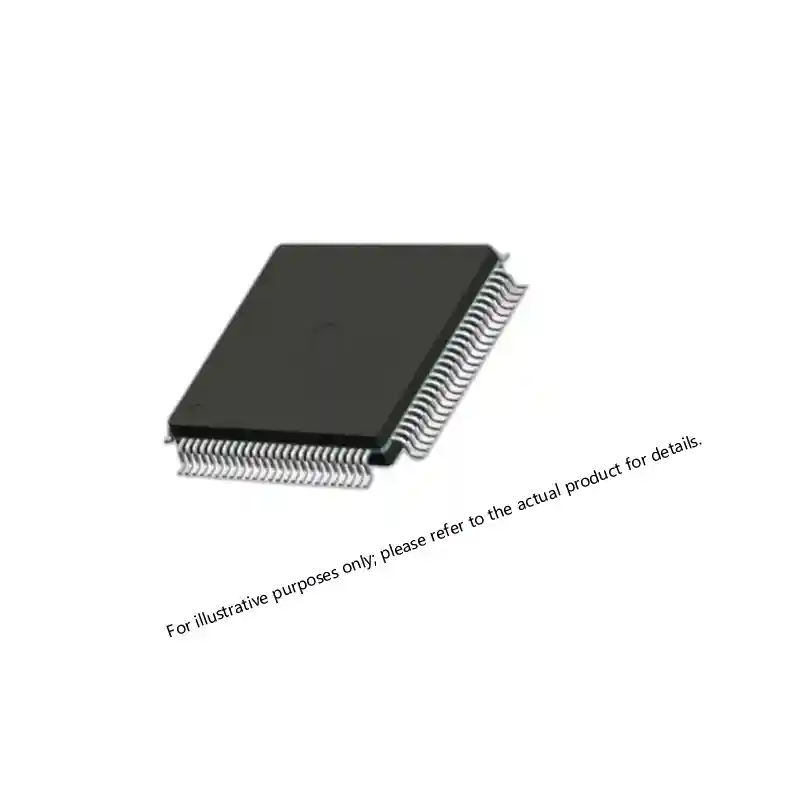
The filtered DC bus from a FARM1H21 front end typically feeds isolated converters that power digital processing boards. Those boards often carry hi-rel FPGAs such as ACTEL A3P1000-FGG484I, A54SX72A-1CQ208B, M2S150-FCVG484I, AX1000-1CQ352M, and AX2000-FGG896M, where clean, inrush-limited input power contributes directly to stable logic rails and repeatable board bring-up [1].
Many defense boards that draw from a FARM1H21 front end also carry high-density FPGA processing. <XCKU115 UltraScale FPGA: Powering Critical Defense Systems> covers sourcing considerations for those processing loads.
Request a FARM1H21 Quotation
Sparkle Electronics supports defense contractors and system integrators with traceable, documented sourcing for Vicor hi-rel front-end modules and companion converters. Submit an RFQ with the fields above and include the following in your inquiry:
- Confirmed FARM1H21 part number and suffix
- Quantity and target delivery date
- Required certificates of conformance and lot traceability
- Applicable compliance clauses, including DFARS or counterfeit-avoidance requirements [5]
- Any screening, source inspection, or export-control needs
Send the inquiry to xuansc2144@gmail.com and the sourcing team will respond with availability, documentation, and pricing.
FAQ
How do I confirm whether the FARM1H21 suffix matches my program’s source-control drawing?
Compare the complete part number, temperature grade, and mechanical suffix against the controlled Vicor datasheet and your program drawing [1]. When the drawing is legacy or unavailable, request a factory lot-traceable certificate of conformance to close the configuration gap.
What documentation should I require with a FARM1H21 purchase?
Require at minimum a certificate of conformance, lot and date-code traceability, and country-of-origin data. For higher-risk programs, add source inspection, screening records, and counterfeit-avoidance verification aligned with AS5553 [4] and DFARS expectations [5].
Can a FARM1H21 be used on a 400 Hz military aircraft AC bus?
The module is intended for wide-line-frequency operation, but the hi-line frequency limit for the specific suffix must be confirmed in the current datasheet [1]. Aircraft applications also require platform-level EMI and environmental qualification beyond the front-end module itself [2], [3].
How does H-Grade affect derating and operating temperature?
H-Grade identifies the extended-temperature variant, so it widens the thermal envelope relative to commercial-grade options. The exact baseplate temperature range and derating factors are defined in the datasheet and should drive thermal margin in the mechanical design [1].
References
[1] Vicor Corporation, “FARM: Filter/Autoranging Rectifier Module — Datasheet,” Vicor Corp., Andover, MA, USA. [Manufacturer datasheet]
[2] U.S. Department of Defense, “MIL-STD-461G: Requirements for the Control of Electromagnetic Interference Characteristics of Subsystems and Equipment,” 2015. [Online]. Available: https://quicksearch.dla.mil/
[3] U.S. Department of Defense, “MIL-STD-810H: Environmental Engineering Considerations and Laboratory Tests,” 2019. [Online]. Available: https://quicksearch.dla.mil/
[4] SAE International, “AS5553B: Counterfeit Electrical, Electronic, and Electromechanical (EEE) Parts; Avoidance, Detection, Mitigation, and Disposition,” 2016.
[5] U.S. Department of Defense, “DFARS 252.246-7008: Sources of Electronic Parts,” Code of Federal Regulations, Title 48. [Online]. Available: https://www.acquisition.gov/dfars/
If you’re interested, check out these related articles:
UltraScale KU085 FPGA Specifications for Defense Systems
XC7VX485T FPGA: Virtex-7 Performance for Defense
Virtex-7 690T FPGA: Performance, Packaging, and Reliability Insights
XCKU115 UltraScale FPGA: Powering Critical Defense Systems