
Frequency Hopping Radio Components for Defense Programs
Table of Contents
- Frequency Hopping Radios Need More Than a Wide Tuning Range
- The Signal Chain Defines Which Hi-Rel Components Carry Risk
- Documentation and Traceability Are Part of the Component
- Long-Term Hopping Radio Programs Need a Sourcing Discipline
- A Hopping Radio BOM Must Be Confirmed Before Design Freeze
- Common Questions About Hi-Rel Components in Hopping Radios
- Are commercial components acceptable in a frequency hopping military radio?
- What documentation matters most for hi-rel radio components?
- How does obsolescence affect frequency hopping radio programs?
- Can a distributor help when a hopping radio program is already behind schedule?
Frequency hopping radio components fail for reasons a standard commercial bill of materials never exposes. A military hopping radio changes carrier frequency hundreds of times per second, and every active device in the transmit and receive paths must settle quickly enough to keep the waveform intact. I have spent more than twelve years sourcing and qualifying hi-rel components for defense programs where that margin decides whether a link works during a contested mission. The practical rule is to specify parts through the same screening, documentation, and traceability discipline used for the rest of the mission system, not to accept commercial devices with an upscreening promise attached.
Frequency Hopping Radios Need More Than a Wide Tuning Range
A hopping radio looks simple from a distance: a receiver, an exciter, an antenna, and a controller that changes frequency. The difference between a working military system and a demonstration platform is less about the hop rate and more about how the components behave while the frequency is moving. Three parameters separate mission-grade parts from general purpose RF devices: phase noise during acquisition, settling time after a frequency change, and repeatability across the full operating temperature range.
Most design teams focus on the synthesizer first. In a frequency hopper, the synthesizer must switch and lock within a small fraction of the hop interval. That requirement pushes the PLL, VCO, and charge pump well past typical commercial data sheet conditions. Phase noise matters because it defines how much energy leaks outside the intended channel during each hop. If the phase noise is too high, the radio may interfere with adjacent channels or create a detectable signature. The same concern forces attention to the reference oscillator and the clock buffers that distribute timing through the system.
One area I check before the synthesizer is the clock domain. In several programs, the original problem was not the FPGA or the DSP, but a clock buffer that added enough jitter to close the link margin at the highest hop rate. That is why I treat every clock oscillator, PLL, and buffer as a hi-rel component in its own right, not as a supporting part. A part number alone does not tell you whether the clock path survives the vibration and temperature envelope of a fielded radio. You need the screening record to make that judgment.
For hop-set generation and control, an FPGA with the right mix of logic and interface resources is common. In some designs, a device like the A2F500M3G-1CSG288I provides the mixed signal fabric and allocation that older architectures used for hop control, but the selection must be validated against the waveform timing constraints. The material point is not the brand. It is whether the device is available in the grade and package the BOM requires.
The Signal Chain Defines Which Hi-Rel Components Carry Risk
A frequency hopping military radio is not a single component. It is a chain of components that must move a signal from baseband to RF and back without losing the hop timing. The table below shows where I have seen the most risk concentrate and what the supply record must show.
| Function | Typical Device Types | What Must Be Confirmed |
|---|---|---|
| Frequency synthesis | PLL, VCO, DDS, prescaler | Lock time, phase noise, temperature drift |
| Waveform processing | FPGA, DSP, CPLD | Qualified grade, package availability, programming documentation |
| Data conversion | High-speed ADC/DAC | Sampling rate margin, spurious performance, QML or 883 screening |
| RF switching | RF switch, attenuator, mixer | Switching speed, repeatability, power handling |
| Clocking | Crystal oscillator, clock buffer, PLL | Jitter, stability, holdover, military temperature range |
| Bus and interface | MIL-STD-1553, SERDES, LVDS | Protocol compliance, radiation or upset tolerance where required |
I separate the signal chain into three risk layers. The first layer is the synthesizer and clock path, because settling time and phase noise are set there. The second is the conversion and processing layer, where a degraded ADC can fold energy back into the band of interest. The third is the RF switch and interface layer, where switching speed changes how cleanly the radio exits and enters each hop. All three layers need the same paperwork discipline, but they do not carry the same technical weight. I would rather spend qualification effort on the synthesizer and clock tree than spread it evenly across passive parts that are already available from multiple compliant sources.
For a modern waveform engine, the MPF300T-1FCG484I is an example of a PolarFire FPGA that can hold the hop-set logic and control interfaces, but I would confirm the temperature grade before it enters a rotary wing or manpack BOM. Do not copy a part number from a previous design and assume it transfers to a new platform. The package, speed grade, and screening flow all matter.
If a program involves a fast-tuning synthesizer or a clocking chain that must hold phase noise across the military temperature range, it is worth confirming those parameters before the BOM freezes. Send the affected part numbers and quantities to xuansc2144@gmail.com and our team can check stock, documentation, and lead time.
Documentation and Traceability Are Part of the Component
A hi-rel component without a traceability record is a risk transfer, not a supply solution. For frequency hopping radios, the hopper depends on predictable RF performance. If a substituted device has the same part number but a different lot history, the radio may pass bench testing and fail during a temperature or vibration event. That is why I require the same document set for an RF switch as for an FPGA.
The minimum record I expect for mil-spec parts includes the certificate of conformance, the original manufacturer lot and date code, any MIL-PRF-38535 or similar QML evidence if required, and the chain of custody from the source to delivery. For devices screened to MIL-STD-883, the screening method and the test results need to be traceable to the lot. Vendor promises are not enough. If the distributor cannot show the paper trail, the component should be treated as unverified.
I also look at the incoming inspection step that happens after receipt. A hopping radio program should have a sampling plan for visual inspection, marking verification, and where the risk is high, a sample test or third party confirmation. The cost of inspection is small compared to removing a suspect part after a radio has been potted and qualified. The point is not to reject parts. It is to catch the substitution before it reaches a production line.
Long-Term Hopping Radio Programs Need a Sourcing Discipline
Frequency hopping radios stay in service longer than their components stay in production. A design that was stable in one year becomes fragile when a key synthesizer or FPGA moves to last-time-buy status. That is especially true for older waveform-specific parts that were originally specified around a single vendor. I have seen sustainment teams scramble because a connector or a specific memory part disappeared from the market, even though the radio itself still had years of life left.
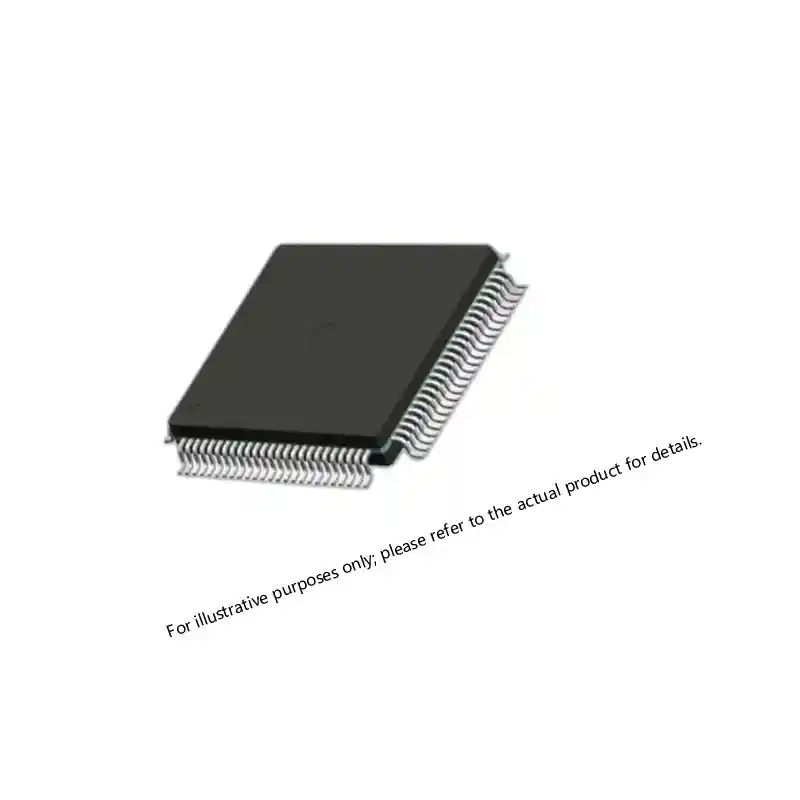
The answer is to manage the BOM as a list of supply dependencies, not as a static document. For each long-lead part, I want a second source where one exists, or a die bank or final buy plan where it does not. For devices like legacy SX-A FPGAs that appear in older hopping radio control cards, the supply options are not infinite. The A54SX72A-1CQ208B is an example of the kind of legacy part that can still be sourced, but the supply base is narrow, and each lot should be authenticated before it is accepted.
Beyond individual parts, a build plan helps. When a program knows its annual usage and its shelf life limits, a distributor can reserve stock or stage a final buy in a way that keeps the line moving without absorbing all the inventory cost. I prefer to see hi-rel parts stored under controlled conditions and shipped with their original packaging or an acceptable moisture barrier. The documentation should follow the lot, not be generated after the fact.
A Hopping Radio BOM Must Be Confirmed Before Design Freeze
The hardest moment in a hopping radio program is not the design review. It is the later discovery that a critical part cannot be supplied in the needed grade inside the program window. That failure usually comes from a BOM that was assembled from reference design notes instead of a vetted distribution channel. The result is a redesign, a waived requirement, or a last-minute buy with weak traceability.
Sparkle Electronics supplies defense contractors and research teams by checking each line item against available inventory, screening records, and lead time before the BOM is frozen. We have focused for years on MIL-SPEC, 5962-series, JANTX/JANTXV, and QML-qualified devices because these are the components a hopping radio cannot function without. If you send your part numbers, quantities, and target dates to xuansc2144@gmail.com, our team can confirm stock, documentation, and realistic delivery windows. The earlier the BOM reaches us, the more options we have to preserve the design as written.
Common Questions About Hi-Rel Components in Hopping Radios
Are commercial components acceptable in a frequency hopping military radio?
Only in non-critical support functions, and only after a formal upscreening review. A hopping radio’s RF and timing path depends on performance that commercial devices are not guaranteed to hold across the military temperature range. I have seen commercial parts survive bench testing and then shift enough at temperature or under vibration to corrupt hop timing. If a commercial device is considered, the program should own the screening plan, the test data, and the risk decision. Accepting a commercial part without that record moves the uncertainty into the field, where it is most expensive to correct.
What documentation matters most for hi-rel radio components?
Many buyers assume a certificate of conformance is the end of the trail. It is the starting point. The CoC must connect the shipped parts to a specific manufacturer lot and date code, and where the specification requires it, to QML or MIL-STD-883 screening records. For frequency hopping radios, I also keep the lot trace back to the original source, the incoming inspection notes, and any third party test results. If any link in that chain is missing, the component’s authenticity and performance history become assumptions. A complete document set is not paperwork. It is how a program defends its configuration.
How does obsolescence affect frequency hopping radio programs?
It depends on where the obsolete part sits. If it is a signal path component with no form and fit replacement, obsolescence is a schedule risk that needs a last-time-buy or die bank decision. If it is a legacy FPGA or memory part, a replacement may exist, but the code and timing must be revalidated before the swap is accepted. I have seen sustainment efforts succeed when the BOM was monitored long enough to act early, and fail when the notice arrived after the last factory build. The appropriate response is to identify second sources or final buys before the part becomes unavailable.
Can a distributor help when a hopping radio program is already behind schedule?
In programs we have supported, the most useful first step was not marketing, it was a fast line-by-line BOM check. A distributor can identify which parts are in stock, which have documentation gaps, and which require a factory lead time that will not fit the schedule. That changes the conversation from a desperate search to a management decision. If a part is not available in the needed grade, a useful distributor will say so and suggest a compliant alternative or a risk-reduction path. Speed is not enough; the alternative still needs to be traceable. Send the part list and required dates to xuansc2144@gmail.com and we will confirm stock, documentation, and realistic lead times.
If you’re interested, check out these related articles:
XCKU085 UltraScale FPGA: Performance for Critical Systems
UltraScale KU085 FPGA Specifications for Defense Systems
A1020B-PG84B ACT2 FPGA: Specs, Sourcing, and Availability
XC7VX485T Virtex-7 FPGA: Performance and Sourcing for Defense