
ISR Platform Electronics Sourcing Guide for Defense Programs
Table of Contents
- Why Do ISR Platform Electronics Require a Different Sourcing Approach?
- Which Signal Chain Components Define ISR Mission Performance?
- Processing Engines
- High-Speed Data Converters
- Memory and Storage
- Power Delivery
- What Environmental and Screening Rules Apply to ISR Platform Electronics?
- Screening and Qualification Differences
- Environmental Stress in ISR Missions
- How Should You Build a Traceable ISR Platform Electronics Procurement Trail?
- Documentation and Chain of Custody
- Authenticity and Counterfeit Controls
- What Sourcing Support Should Defense Programs Expect?
- What Questions Do Defense Buyers Ask About ISR Platform Electronics?
- What Does QML Actually Mean for an ISR Part?
- Why Are ISR Lead Times So Unpredictable?
- Can I Use Commercial-Grade Parts on an Unmanned ISR Platform?
- How Much Documentation Should I Require With Each Shipment?
ISR platform electronics carry a sourcing discipline all their own. A surveillance and reconnaissance payload holds thousands of sensor inputs, wideband data converters, and processing engines that must stay stable across altitude, vibration, and years of depot-level sustainment. At Sparkle Electronics, the recurring failure I see is not the FPGA or ADC itself; it is an earlier sourcing decision that treated a flightline asset like a commercial circuit card. This guide maps the component categories, screening rules, and traceability practices that let procurement teams source ISR platform electronics with the same rigor the mission demands.
Why Do ISR Platform Electronics Require a Different Sourcing Approach?
ISR platforms have no benign operating profile. A signals intelligence pod may ingest 2 GHz of instantaneous bandwidth while bolted to an airframe that swings from minus 40 degrees Celsius at altitude to baking sunlight on a desert apron. A synthetic aperture radar payload runs high-voltage transmit pulses next to sensitive low-noise receivers. Every component choice has to hold its electrical parameters across that envelope, and any replacement part must preserve the original qualification.
The commercial practice of matching an IC by function and package is not adequate here. ISR platform electronics move through extended temperature ranges, shock, vibration, and continuous duty cycles that commercial parts were never tested for. We review BOMs where a designer substituted a commercial-grade ADC for a screened device because the datasheet numbers looked close. The part may work on the bench and fail after repeated thermal cycling. For mission-critical ISR work, the qualification pedigree matters as much as the specification.
Which Signal Chain Components Define ISR Mission Performance?
The ISR signal chain splits into four blocks that deserve separate sourcing scrutiny: processing, data conversion, memory and storage, and power delivery. Each block fails differently in the field, and each has its own screening and traceability requirements.
| Signal Chain Block | Primary Selection Question | Common Failure Mode |
|---|---|---|
| Processing | Is the device QML or /883 screened? | Configuration corruption under thermal cycling |
| Data Conversion | What is the spur-free dynamic range at mission sample rate? | Clock jitter degrading weak signal detection |
| Memory | Does timing stay deterministic across temperature? | Data dropout during high-speed writes |
| Power | Is the converter rated for 28 VDC transients and vibration? | Output droop under pulsed loads |
Processing Engines
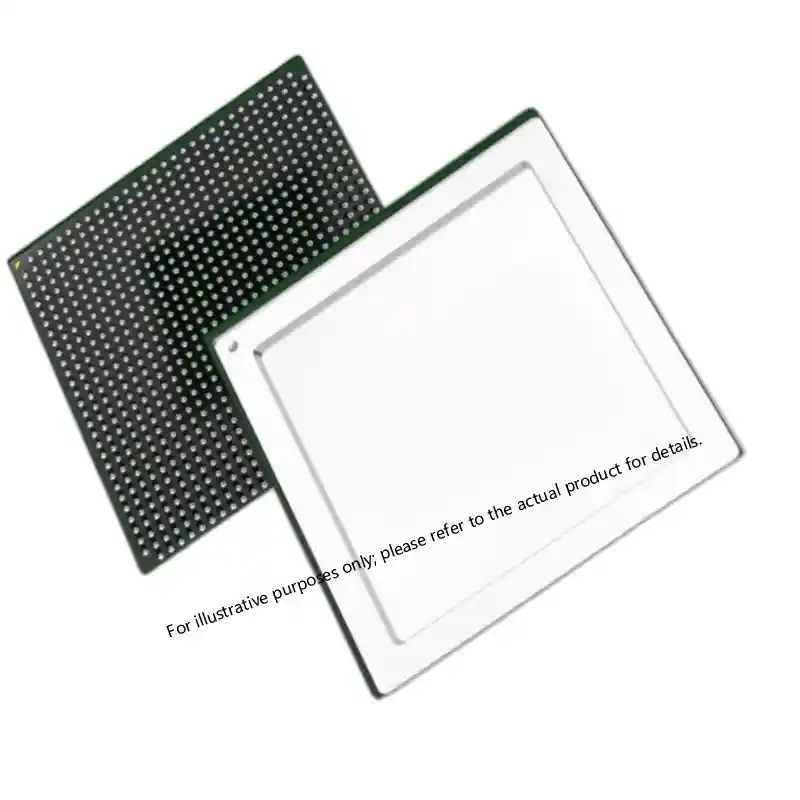
FPGAs and DSPs implement matched filters, beamforming, FFT engines, and encryption. They run hot and draw high current. Selection should pin down speed grade, package, configuration memory, and whether the device is QML qualified or screened to MIL-STD-883.
High-Speed Data Converters
ADCs and DACs set the dynamic range between a weak signal and a jammer. Sample rate, channel count, and JESD204B/C timing alignment matter more than raw bits. A 12-bit converter at 3 GSPS can have wildly different spur performance depending on clock quality and power supply noise.
Memory and Storage
Wideband sensor data needs buffer memory with deterministic timing, not just capacity. QDR SRAM, nvSRAM, and high-reliability flash each fit different mission roles.
Power Delivery
ISR payloads often operate from 28 VDC aircraft power and need isolated DC-DC conversion with tight line and load regulation. Vibration-hardened magnetics and high-temperature capacitors are part of the bill.
I have seen more ISR failures trace back to power and clocking than to the headline processor. A stable ADC clock and clean power rails prevent more intermittent field issues than a faster FPGA. That observation drives how I rank the BOM during review.
If your ISR platform collects signals above 2 GHz or uses JESD204B data converters, it is worth confirming clocking and power supply noise requirements before finalizing the BOM. Send your part number and quantity to xuansc2144@gmail.com and we will verify the screening level and availability.
What Environmental and Screening Rules Apply to ISR Platform Electronics?
ISR platform electronics must meet environmental requirements that commercial components do not. Aerospace and defense programs typically call out MIL-STD-883 for microcircuit screening, MIL-PRF-38535 for QML devices, and MIL-STD-810 for platform-level environmental testing. These are not interchangeable labels.
Screening and Qualification Differences
A QML device is qualified to a manufacturer’s certified flow. A device marked /883 has passed additional screening such as burn-in, temperature cycling, and centrifuge. An industrial temperature part rated for minus 40 to plus 85 degrees Celsius may look acceptable, but an ISR pod needs parts that hold performance from minus 55 to plus 125 degrees Celsius while absorbing vibration and conductive heat soak.
Environmental Stress in ISR Missions
High-altitude and maritime ISR platforms push beyond ground vehicle profiles. Salt fog, rapid decompression, condensation, and solar loading all affect solder joints, hermeticity, and dielectric performance. Surface-mount ceramic packages, hermetic connectors, and conformal coating decisions belong in the BOM review, not in the failure report.
How Should You Build a Traceable ISR Platform Electronics Procurement Trail?
Traceability for ISR platform electronics means being able to reconstruct the component’s path from manufacturer to installation. That includes procurement documentation, incoming inspection, and storage conditions. The weaker the trail, the harder it is to contain a suspect lot after a failure.
Documentation and Chain of Custody
Request a Certificate of Conformance for every lot, with lot number, date code, manufacturer, and packaging trace. For high-value FPGAs, DSPs, and converters, ask for a certificate of authenticity or a distributor source declaration. DFARS and export control clauses matter when the part moves across borders. A distributor should be able to show AS6081 or AS9120 quality controls and a documented incoming inspection process.
Authenticity and Counterfeit Controls
Counterfeit parts enter the supply chain through excess inventory, broker sales, and partial lots. Visual inspection, X-ray, electrical testing, and chemical decapsulation each catch different counterfeits. For ISR applications, I do not rely on a single test. We combine lot verification with supplier history and documentation review. If a part number is scarce and the quote is unusually fast, that is a separate trigger for verification.
What Sourcing Support Should Defense Programs Expect?
The hardest part of ISR component sourcing is not finding a part number; it is confirming that the part you receive is exactly what the qualification paper says it is. Long lead times, obsolescence, and counterfeit pressure make that confirmation harder every year. We work with defense contractors and systems integrators to close that gap. Send your BOM, part number, and required screening level to xuansc2144@gmail.com, and we will confirm stock, document traceability, and return a quotation with the qualification path clearly marked.
What Questions Do Defense Buyers Ask About ISR Platform Electronics?
What Does QML Actually Mean for an ISR Part?
QML, or Qualified Manufacturers List, means the device manufacturer has a certified process flow under MIL-PRF-38535. It is not the same as a commercial part with a military temperature range. For ISR platform electronics, QML devices give the most direct qualification record. If your program accepts /883 screening instead of full QML, confirm the specific screening flow with the distributor before ordering.
Why Are ISR Lead Times So Unpredictable?
ISR lead times shift because the parts sit inside long defense supply chains with limited wafer starts, hermetic packaging queues, and scheduled screening batches. A single high-rel FPGA or high-speed converter can require multiple assembly and test steps across different facilities. We recommend early BOM review and safety stock for hard-to-replace devices, especially converters and QML logic.
Can I Use Commercial-Grade Parts on an Unmanned ISR Platform?
It depends on the platform classification, flight regime, and program requirements. For short-duration, lower-altitude, development-only assets, some programs accept commercial or industrial parts with upscreening. For operational ISR platforms with long service life, the cost of a field failure outweighs the savings. Confirm the environmental and quality clauses in your contract before making the substitution.
How Much Documentation Should I Require With Each Shipment?
At minimum, request a C of C with lot and date code traceability, manufacturer source, and packaging data. For FPGAs, DSPs, and converters, add a certificate of authenticity and identify the distributor quality system. The documentation should let you trace a failed part back to a specific lot within hours. If your program handles export-controlled or mission-critical hardware, ask for chain of custody records. Share your exact part numbers and we will confirm which documentation is available before you commit.
If you’re interested, check out these related articles:
XC7VX485T FPGA: Virtex-7 Performance for Defense
A1020B-PG84B ACT2 FPGA: Specs, Sourcing, and Availability
Virtex-7 XC7VX690T: Performance and Reliability Insights