
Military FPGAs for SIGINT: Processing Density and Sourcing
Table of Contents
- SIGINT Workloads Define the FPGA Requirements
- Architecture and Converter Pairing Shape the Processing Chain
- Military FPGA Sourcing Requires More Than a Data Sheet Match
- FPGA Configuration Memory Is a Supply Variable, Not an Afterthought
- Locking the Device and Supply Decision Together
- Common Questions About Military FPGAs for SIGINT
- Does a QML designation automatically make an FPGA counterfeit proof?
- Should we choose flash based or SRAM based FPGAs for a SIGINT receiver?
- Can a commercial FPGA part number replace a 5962 version when supply is low?
- How early should we source FPGAs for a multi-year SIGINT program?
The difference between a SIGINT receiver that meets its channelization target and one that misses it usually comes down to FPGA selection before the first board spin. Military FPGAs for SIGINT carry a dual burden: dense DSP resources for wideband signal intelligence processing and sourcing discipline that holds up under program audit. Device selection and supply continuity belong in the same decision, not separate stages. We have watched boards stall not on logic design but on configuration memory gaps or parts that arrive without dated full traceability. The sections below tie the device decision to supply reality.
SIGINT Workloads Define the FPGA Requirements
SIGINT receivers rarely succeed on a single processing metric. A channelized receiver may need hundreds of narrowband channels, an FFT core, packet detection logic, and time stamping in the same fabric. When I evaluate a design, I start with instantaneous bandwidth and the number of coherent channels, not fabric size. Wideband collection at several hundred megahertz of instantaneous bandwidth generates thousands of channels after a polyphase filter bank. Those channels demand multipliers, filter coefficient memory, and routing to deliver real-time output. A device that fits static logic can fail place and route once the polyphase filter bank is added.
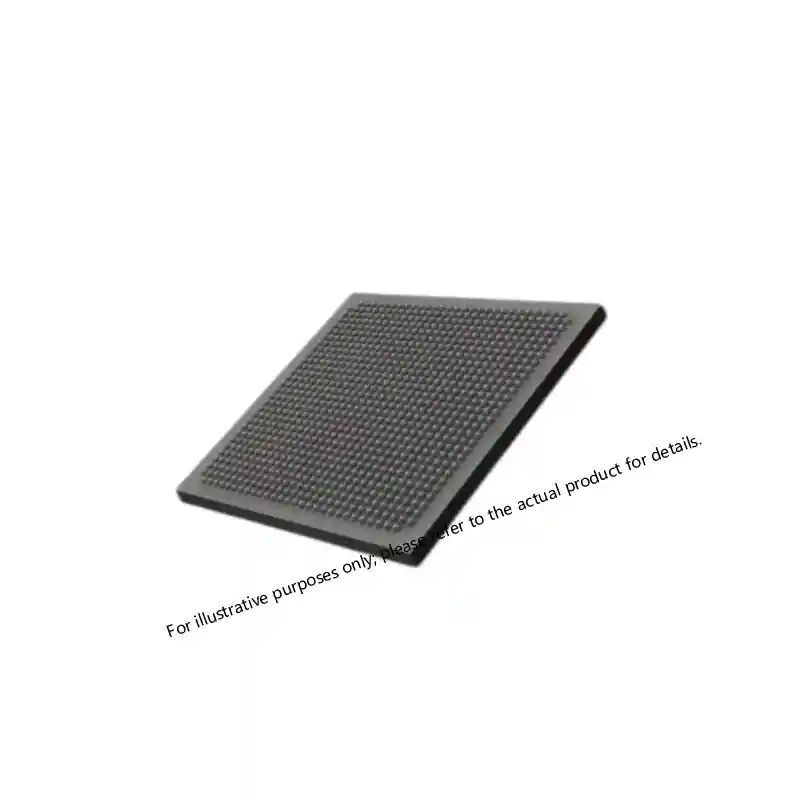
This is why Virtex-5 SXT and Virtex-6 SXT families appear so often in SIGINT work. The XC5VSX240T-1FFG1738I carries the DSP focused resources that a general-purpose Virtex-5 part does not. I have seen teams start with an LX part, then move to an SXT after failing timing on a 512 channel bank. Fabric size alone is not the requirement; the ratio of DSP slices to logic, block RAM, and high-speed serial channels matters more.
Architecture and Converter Pairing Shape the Processing Chain
Architecture should lead the part number search. SRAM based Xilinx devices give the highest DSP throughput and reconfiguration flexibility, but they depend on external configuration memory. Flash based Actel ProASIC3 and SmartFusion2 devices remove that dependency and fit control plane and security functions. The converter side sets the ceiling. A SIGINT receiver using an AD9680BCPZ-1000 dual 1 GSPS ADC will produce enough sample data to occupy a large portion of a Virtex-5 SXT. JESD204B lanes from multi-channel AD9208 or AD9694 systems demand FPGA transceivers and deterministic latency planning. On the waveform generation side, AD9172 and AD9176 RF DACs push rates that older parallel interfaces cannot handle. FPGA and converter selection should be one interface decision.
| Device | Typical SIGINT Function | Pairing Note |
|---|---|---|
| XC5VSX240T-1FFG1738I | Polyphase channelizer and spectral analysis | Match to AD9680BCPZ-1000 class ADC |
| XC6VSX475T-1FFG1156I | Dense filter banks and detection logic | Confirm DSP slice count before BOM lock |
| XC7K410T-2FFG900I | Multi-ADC JESD204B aggregation | Check transceiver count and speed grade |
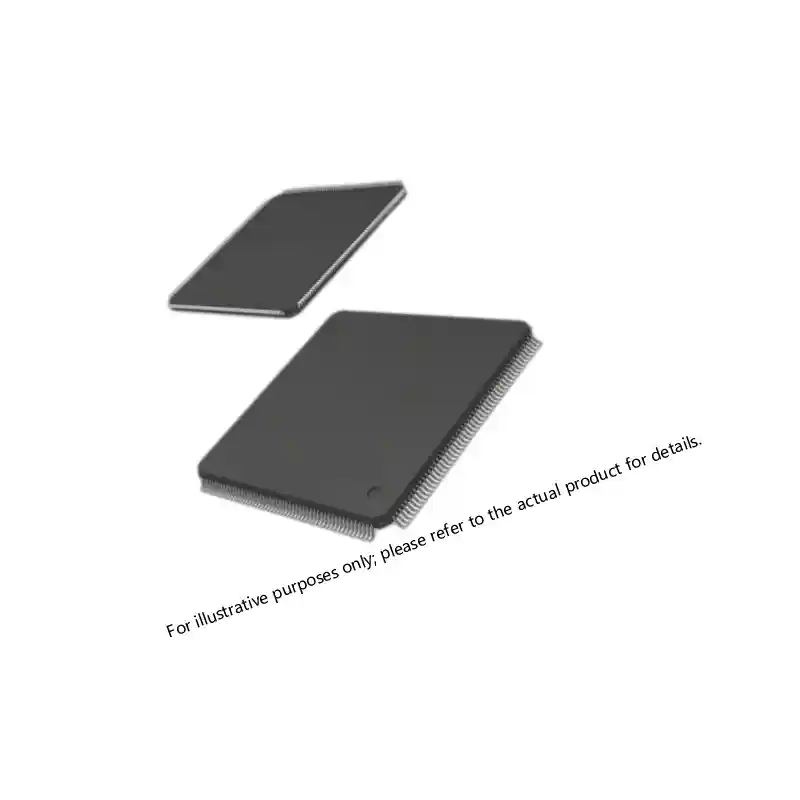
| AX1000-CQ352M | Antifuse control plane for receiver management | No external configuration PROM |
| M2S150-FCVG484I | Secure boot and ARM control in a SIGINT payload | Pair with high-speed fabric for channelization |
Military FPGA Sourcing Requires More Than a Data Sheet Match
Two parts with the same top marking can differ under audit. Military FPGA sourcing runs on the documentation trail: QML or 5962 designations, lot date codes, test reports, and chain of custody to the receiving dock. We treat the paperwork as part of the part. A missing certificate of conformance leaves an otherwise usable board waiting at incoming inspection.
Part numbers such as the 5962 series add a second layer. When a drawing calls for a 5962 device, the date code, package, and screening flow must match the drawing, not a commercial equivalent. I have seen well-meaning substitutions fail source inspection because the test reports did not match the marking on the package. Anti-counterfeit control improves when you buy from a distributor that photographs date code packaging and retains test reports by lot.
If your program mixes QML and upscreened commercial devices, confirm the documentation path for each date code before locking the BOM. Send the part list and target qualification level to xuansc2144@gmail.com and we will verify what ships with each line.
FPGA Configuration Memory Is a Supply Variable, Not an Afterthought
For SRAM based Xilinx FPGAs, the configuration PROM is a second part number that must be sourced, programmed, and re-ordered with the same discipline as the FPGA. Xilinx QML PROMs such as XQF32PVOG48M occupy a small BOM line but can stop a build. Flash based Actel devices store configuration on the FPGA, which simplifies the BOM and changes the security model. Antifuse Axcelerator parts eliminate reconfiguration entirely. We have seen programs hold because the FPGA had been approved but the configuration PROM had not passed the same incoming inspection.
Locking the Device and Supply Decision Together
A SIGINT program that treats FPGA selection and supply continuity as separate decisions usually pays for the split later, in requalification or a last time buy panic. The fix is to bring device engineering, documentation review, and configuration memory planning into one conversation before the BOM freezes. Send your device list, target qualification level, and date code concerns to xuansc2144@gmail.com. We will check each line against available mil-spec inventory and tell you which documents exist before you commit.
Common Questions About Military FPGAs for SIGINT
Does a QML designation automatically make an FPGA counterfeit proof?
No. A QML designation is a qualification route, not a substitute for physical inspection. QML parts carry a manufacturer flow, but counterfeit devices sometimes carry false markings. Incoming inspection still has to check lead finish, date code format, package dimensions, and documentation consistency against the certificate of conformance. We photograph date codes and compare them to lot records before shipping. The qualification mark lowers risk; it does not remove the need for visual and paper verification.
Should we choose flash based or SRAM based FPGAs for a SIGINT receiver?
It depends on where the device sits in the system. For wideband channelization and heavy DSP, an SRAM based FPGA offers more fabric and processing slices. For a control plane, a secure boot sequence, or a remote deployment where an external configuration PROM adds failure risk, a flash based Actel device is stronger. Many SIGINT payloads use both: a high-density SRAM device for signal processing and a flash device for secure system management.
Can a commercial FPGA part number replace a 5962 version when supply is low?
Many teams assume a pin compatible commercial part carries the same acceptance level. It does not. A 5962 version has a defined screening flow, package, and documentation trail. A commercial part with the same silicon may lack that lot heritage. If the drawing requires 5962, substitution works only when the program approves an alternate source or upscreening with full traceability. Never treat the part numbers as equivalent without written acceptance.
How early should we source FPGAs for a multi-year SIGINT program?
In programs we have supported, waiting until the first prototype build to source configuration PROMs creates the most avoidable delay. FPGAs receive design attention, but the PROM is a smaller line that can stretch lead time just as far. For a multi-year SIGINT program, start the device and PROM search after the architecture review, not after layout. Share your planned device list and date code requirements with xuansc2144@gmail.com and we will confirm long-term availability and documentation depth.
If you’re interested, check out these related articles:
XCKU085 UltraScale FPGA: Performance for Critical Systems
Virtex-7 XC7VX690T: Performance and Reliability Insights
UltraScale KU085 FPGA Specifications for Defense Systems
Virtex-7 XC7VX690T: Performance, Reliability, and Integration