MTBF Military Electronics: Selecting Components That Last
Table of Contents
- MTBF Is a Prediction, Not a Physical Property
- Component Selection Starts With the Failure Rate Model
- Derating Does the Heavy Lifting in MTBF Improvement
- Screening, Traceability, and Documentation Close the Reliability Gap
- Turning MTBF Requirements Into a Defensible Sourcing Decision
- Procurement Teams Ask These MTBF Questions
- What is a realistic MTBF figure for military electronics?
- Does a higher published MTBF always mean the component is more reliable?
- How do we handle MTBF when the manufacturer does not publish failure rate data?
- Should we base component selection on MIL-HDBK-217 predicted values?
MTBF military electronics decisions go wrong when teams treat published failure rates as physical constants instead of modeled estimates tied to operating conditions. A part rated in a benign test environment will not deliver the same reliability in a vibration heavy avionics bay or a salt fog exposed naval cabinet. The selection process has to account for temperature, voltage derating, quality level, and the documentation trail behind every claim. This article works from the component selection side rather than stopping at the formula.
MTBF Is a Prediction, Not a Physical Property
MTBF expresses an average interval between failures under a defined set of assumptions. It is not a guaranteed service life. Reliability engineers calculate it as the reciprocal of the sum of component failure rates, which only holds cleanly when failures are random and the failure rate stays constant during the useful life. Military electronics push that model hard. Screening removes early failures, and derating delays wearout, so the constant failure rate assumption can be defended only inside a stated operating envelope.
A high published MTBF does not mean any single unit will run that long. It means that across a large population under the stated assumptions, the predicted failure rate works out to that average. I treat point predictions as ranking tools and design review evidence, not as physical promises.
Component Selection Starts With the Failure Rate Model
Most MIL-SPEC reliability predictions follow a parts stress method. Each component starts with a base failure rate and is then adjusted by stress factors. For a military IC, the factors that matter most are junction temperature, quality level, environment, package complexity, and applied voltage stress. A procurement decision made without these factors is a cost decision, not a reliability decision.
The quality factor is where component sourcing and MTBF meet. A QML-qualified device and an up-screened commercial part can have the same electrical function but very different assumed failure rates. The difference comes from lot testing, burn-in, and documented screening, not from the silicon alone. When I compare components for a defense BOM, I ask whether the reliability number is backed by a controlled screening flow or simply copied from a commercial datasheet.
| Selection Factor | What It Changes in the Model | Key Procurement Question |
|---|---|---|
| Quality level | Assumed defect density after screening | Is the part QML or JANTX/JANTXV, or only up-screened? |
| Junction temperature | Acceleration of failure mechanisms | Has derating been calculated against the actual thermal profile? |
| Operating environment | Environmental stress multiplier | Is the part characterized for ground, airborne, or naval use? |
| Screening and traceability | Early failure removal and lot confidence | Can the supplier produce burn-in and lot test records? |
Derating Does the Heavy Lifting in MTBF Improvement
Temperature is the strongest lever in most military electronics reliability models. The stress acceleration relationship is nonlinear, so a small reduction in junction temperature can produce a disproportionately large improvement in predicted failure rate. That is why a designer can often improve MTBF more by improving thermal management than by replacing one component with a more expensive part.
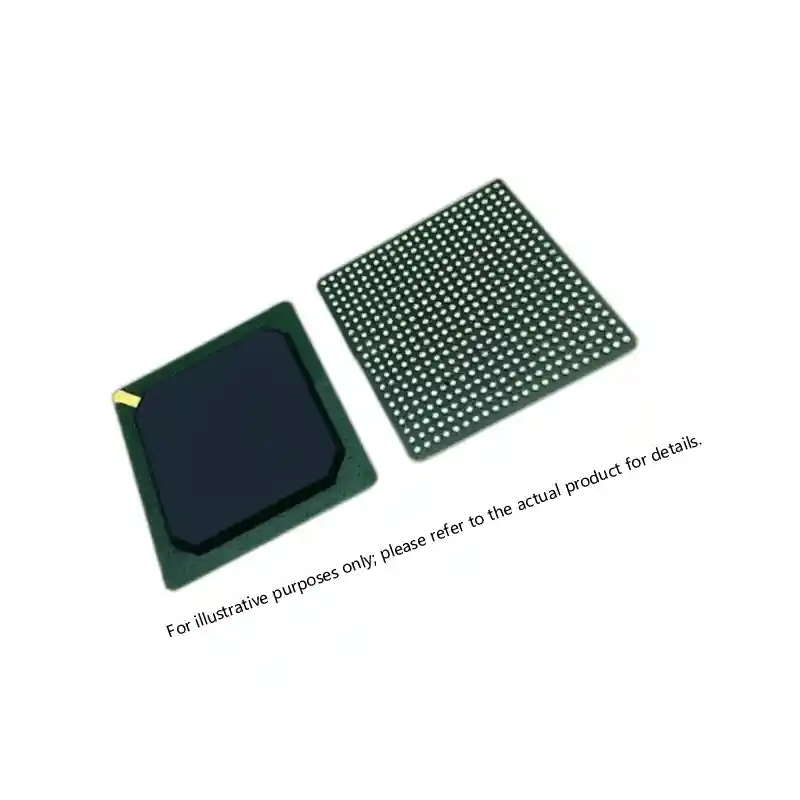
Military ICs are built to operate across the popular wide temperature range, but that does not mean they should run near the top of that range for years. Derating the junction temperature and applied voltage keeps the part inside a proven region. In my review work, the most common reliability weakness is not the component choice itself. It is a thermal profile that pushes a high speed FPGA, ADC, or power module close to its maximum rating while the reliability analysis still assumes a benign case.
If your program has an FPGA or high speed converter operating near its thermal envelope, confirm the derating curve and junction temperature calculation before finalizing the BOM. Send your part number and expected operating conditions to xuansc2144@gmail.com and we will check the reliability data against your profile.
Screening, Traceability, and Documentation Close the Reliability Gap
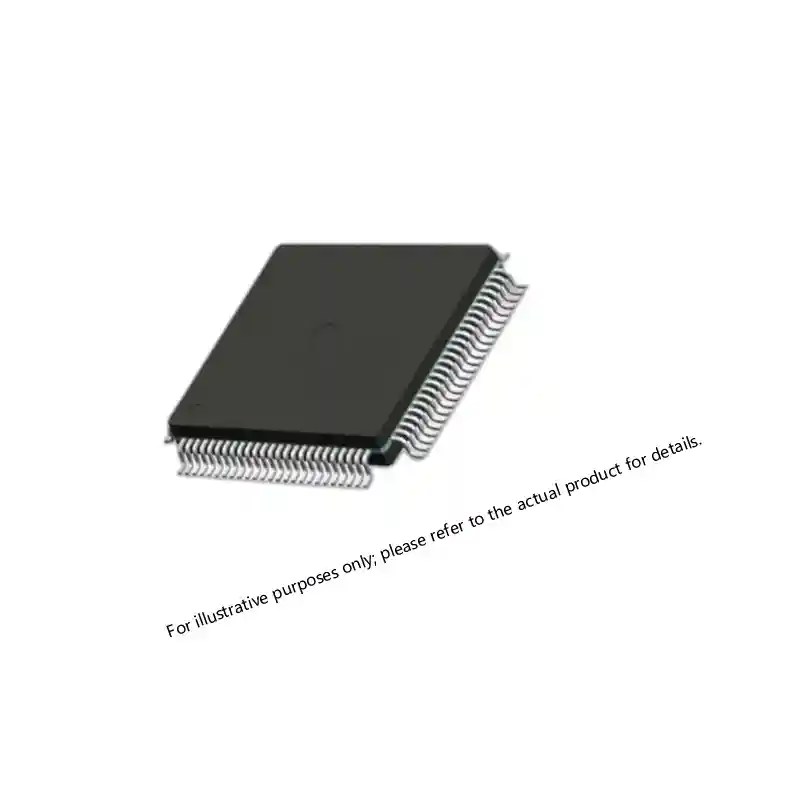
A predicted MTBF assumes every delivered part matches the screened population that produced the failure rate data. That assumption breaks when parts come from uncontrolled channels, when date codes are mixed, or when the paperwork stops at a commercial packing slip. MIL-STD-883 screening, lot test records, and a certificate of conformance turn a statistical estimate into something a program can defend.
We have reviewed components where a datasheet listed a reliability figure but the supplier could not produce the associated lot test records. In those situations, the MTBF number is not a design input. It is a marketing artifact. The correct response is to require the documentation trail before design freeze, not after boards start failing.
Turning MTBF Requirements Into a Defensible Sourcing Decision
Defense programs rarely fail because a single component is physically weak. They fail in review because the reliability assumptions were never tied to documented screening, derating, and traceability. If an MTBF requirement has to survive a design review or customer audit, the weakest part is usually the paper trail, not the silicon.
Sparkle Electronics reviews BOMs against MIL-SPEC quality levels and identifies which line items have defensible failure rate data before you commit. Send your part numbers, quantities, and operating conditions to xuansc2144@gmail.com and we will return a documented sourcing position.
Procurement Teams Ask These MTBF Questions
What is a realistic MTBF figure for military electronics?
A realistic MTBF figure comes from the predicted failure rate of every component in the assembly under your operating environment, not from a catalog headline. For a complex board, values in the tens of thousands of hours are common, and for high integrity systems the number can go higher. The figure only matters when it is tied to the assumptions used to calculate it. Ask for the calculation basis along with the result.
Does a higher published MTBF always mean the component is more reliable?
No. A higher MTBF can come from a different environment assumption, a different quality factor, or a different prediction method, not from a physically better part. Two suppliers can list different MTBF figures for the same function because they used different models. The comparison is useful only when the inputs are the same.
How do we handle MTBF when the manufacturer does not publish failure rate data?
It depends on the component’s role in the system. For a low complexity passive part, an accepted handbook value with the correct environment and quality factors may be enough. For a high complexity FPGA or processor, missing failure rate data is a bigger problem. You either substitute a similar device with documented reliability data or request the screening and lot data needed to build a defensible estimate.
Should we base component selection on MIL-HDBK-217 predicted values?
In the programs we review, MIL-HDBK-217 remains useful as a structured comparison method, but it has limits. The handbook’s stress factors do not always capture modern package failure modes or supplier specific process maturity. We treat the prediction as a relative ranking tool and pair it with derating review, screening records, and field history. If your program has to justify an MTBF requirement with incomplete data, share your BOM and operating profile with us and we will confirm what documentation can be obtained.
If you’re interested, check out these related articles:
XCKU085 UltraScale FPGA: Performance for Critical Systems
A1020B-PG84B ACT2 FPGA: Specs, Sourcing, and Availability
Virtex-7 690T FPGA: Performance for Mission-Critical Systems