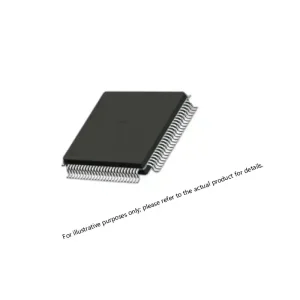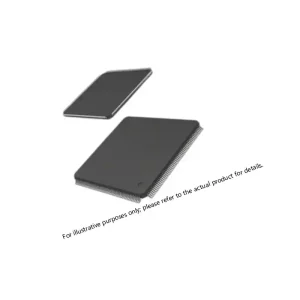
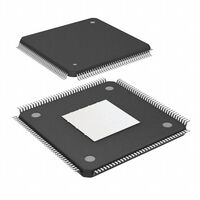
ALTERA EP3C25E144I7N
- 24,624 programmable logic units for flexible design implementation
- 608,256 bits of embedded block RAM for data storage and buffering
- Extended operating temperature range of -40°C to +100°C
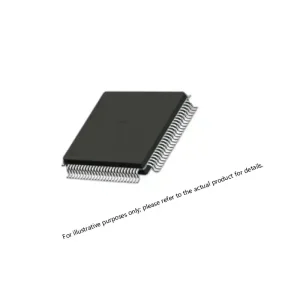
- LQFP-144-EP (20x20) package for robust board integration
- Support for multiple I/O standards including LVCMOS, LVDS, and SSTL
In aerospace and defense applications, radar and electronic warfare systems demand high-performance, reconfigurable processing solutions that can operate reliably in harsh environments. The ALTERA EP3C25E144I7N Cyclone III FPGA delivers a balanced combination of logic capacity, memory resources, and ruggedness to meet these requirements. Its programmable architecture allows engineers to implement custom signal processing algorithms, interface protocols, and control logic in a single device, reducing system complexity and improving overall reliability.
This FPGA is built on a low-power, high-performance process technology that balances computational capability with power efficiency, a critical factor in weight- and power-constrained defense platforms. The embedded block RAM provides on-chip data storage for real-time signal processing tasks, minimizing the need for external memory components and reducing system latency. With support for multiple high-speed I/O standards, the EP3C25E144I7N can interface seamlessly with analog-to-digital converters, digital signal processors, and other system components common in radar and electronic warfare systems.
Related Products For Your Business
The Altera EP3C25E144I7N is a Cyclone III mid-range FPGA — 24,624 LEs, 66 M9K memory blocks (594 Kbit), 66 18×18 embedded multipliers, 4 PLLs — in the compact 144-pin EQFP package, industrial speed grade I7. The E144 (EQFP) package is the smallest available for the EP3C25, positioning it for space-constrained PCB designs in avionics instruments, embedded control modules, and portable defense electronics where BGA package restrictions apply.
EP3C25 Package Options Comparison
| Package | Pins | Type | Max User I/Os | Suitable For |
|---|---|---|---|---|
| E144 (this OPN) | 144 | EQFP | 106 | Space-constrained, no-BGA designs |
| F256 | 256 | FBGA | 148 | Higher I/O density, standard BGA |
| F324 | 324 | FBGA | 215 | Maximum I/O for EP3C25 |
The E144 package includes an exposed ground pad on the bottom that must be connected to the PCB ground plane for electrical continuity — not for thermal dissipation. The I7 grade covers −40°C to +100°C junction temperature. With 66 M9K blocks and 66 18×18 multipliers, the EP3C25 supports moderate DSP workloads including FIR filters, FFT pipelines, and motor control algorithms without requiring the larger EP3C40 or EP3C55. For designs requiring the same logic density with higher I/O count, the EP3C25F256I7N offers 148 user I/Os in FBGA at the same die.
FAQ
What does EP3C25E144I7N decode to?
EP3C = Cyclone III; 25 = 24,624 LEs; E144 = 144-pin EQFP package; I7 = industrial temperature grade 7; N = lead-free.
What is the exposed pad on the E144 package for?
The exposed pad on the bottom of the EQFP package is a ground pad and must be connected to the PCB ground plane for electrical connectivity. It is not intended for thermal management.
How many user I/Os are available in the E144 package for EP3C25?
Up to 106 maximum user I/Os in the E144 package — significantly fewer than the F256 (148) or F324 (215) package options. Select E144 when PCB space is the binding constraint and 106 I/Os are sufficient.
What is the difference between EP3C25E144I7N and EP3C25F256I7N?
Package only — same die, same logic resources (24,624 LEs, 66 M9K, 66 multipliers, 4 PLLs). E144 is EQFP with 106 I/Os; F256 is FBGA with 148 I/Os.
Is the EP3C25 sufficient for FIR filter and FFT implementations?
Yes. With 66 18×18 multipliers and 66 M9K blocks, the EP3C25 supports moderate fixed-point DSP workloads. For wider filter widths or larger FFT sizes requiring more multiplier resources, evaluate the EP3C40 (126 multipliers) or EP3C55 (156 multipliers).
What configuration schemes does Cyclone III support?
Active serial (AS), passive serial (PS), fast passive parallel (FPP), and JTAG. The AS scheme using a dedicated serial flash device is the most common for production systems.