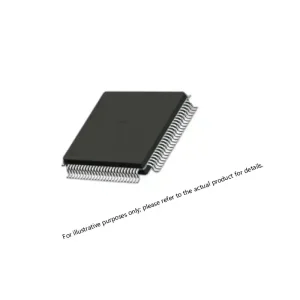

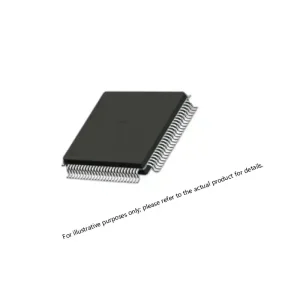
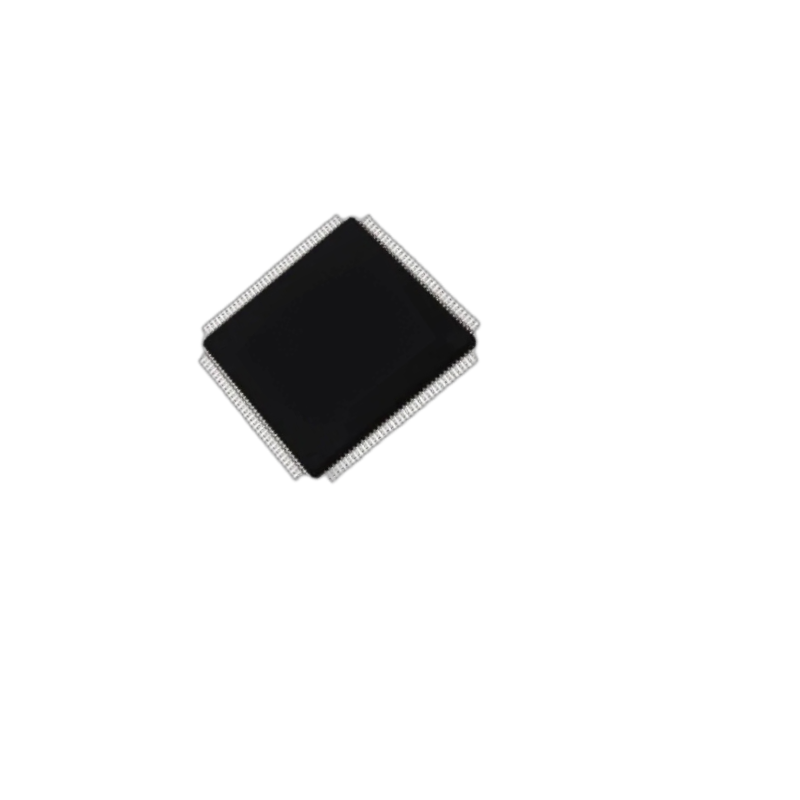
ALTERA EPF10K20T144-4N
- 10,000 usable gates with 576 macrocells
- 4ns maximum combinatorial path delay
- 208-pin hermetic ceramic quad flat package (QFP)
- MIL-STD-883 qualified for aerospace applications
- In-system programmability with JTAG interface
项目生成器Agent
Related Products For Your Business
The Altera EPF10K20T144-4N is a FLEX 10K family FPGA — 20,000 typical system gates, 1,152 LEs, 6 EABs (2,048 bits each = 12,288 total RAM bits) — in the compact 144-pin TQFP package, commercial temperature (0°C to +85°C), speed grade −4. Compared to the EPF10K10QI208-4N, the EPF10K20 doubles the LEs and EABs at the same 5.0V supply and FLEX 10K architecture, while the T144 TQFP package reduces PCB footprint versus the 208-pin PQFP — at the cost of fewer available user I/Os (102 in T144 vs. 147 in QC208).
EPF10K20 Package Options — Footprint vs. I/O Trade-off
| Package | Pins | Type | Max User I/Os | Temp Grade | Notes |
|---|---|---|---|---|---|
| T144 (this OPN) | 144 | TQFP | 102 | Commercial (C) | Smallest footprint |
| QC208 | 208 | PQFP | 147 | Commercial (C) | More I/Os |
| QI208 | 208 | PQFP | 147 | Industrial (I) | −40°C to +85°C |
| RC208 | 208 | RQFP | 147 | Commercial (C) | Heat sink compatible |
The T144 package is specified when PCB space is the binding constraint and the design’s I/O count fits within 102 pins — common in embedded control, bus interface, and moderate-complexity glue logic applications. The −4N designation confirms commercial temperature (0°C to +85°C), speed grade −4 (slowest commercial), and lead-free construction. Like all FLEX 10K devices, the EPF10K20 is a mature legacy part procured primarily for MRO and legacy board repair. For new designs requiring comparable density in a 144-pin TQFP, the Cyclone IV E EP4CE15 (15,408 LEs, M9K blocks, 60nm, 1.2V core) is the modern equivalent.
FAQ
What does EPF10K20T144-4N decode to?
EPF10K = FLEX 10K family; 20 = 20,000-gate / 1,152 LE class; T = TQFP package; 144 = 144 pins; −4 = speed grade 4 (slowest commercial); N = lead-free.
What is the difference between EPF10K20T144-4N and EPF10K10QI208-4N?
Two key differences: (1) EPF10K20 has 1,152 LEs and 6 EABs vs. 576 LEs and 3 EABs for EPF10K10 — twice the logic and memory density; (2) EPF10K20T144 is commercial temperature in a 144-TQFP, while EPF10K10QI208 is industrial temperature in a 208-PQFP. Both use 5.0V supply and speed grade −4.
How many user I/Os does EPF10K20 provide in the T144 package?
Up to 102 user I/Os. For more I/Os at the same logic density, the QC208 or QI208 package provides 147 user I/Os.
What I/O voltage standards does EPF10K20 support?
5.0V TTL and 3.3V CMOS (MultiVolt I/O). FLEX 10KA variants add 5.0V-tolerant inputs for 3.3V PCI compliance; the standard FLEX 10K EPF10K20 is a 5V device.
Does EPF10K20 include a PLL or clock management circuit?
FLEX 10K includes optional ClockLock (PLL) and ClockBoost (frequency multiplier) circuitry. Four dedicated global clock networks distribute low-skew clock signals across the device.
Is there a modern drop-in replacement for EPF10K20T144-4N?
No pin-compatible drop-in exists — FLEX 10K is a legacy architecture with no modern pin-compatible successor. For PCB redesigns, Cyclone IV E (EP4CE15 in similar package sizes) provides the closest functional equivalent with 15K LEs, M9K memory blocks, and full Quartus Prime support.