V24A12M400BL: 24 V to 12 V, 400 W DC-DC Sourcing Guide
Table of Contents
- Reading the V24A12M400BL Part Number and Package
- Where a 24 V to 12 V 400 W Stage Fits
- Electrical and Thermal Checks Before Selection
- Sourcing and Traceability Requirements
- Common Application Risks and How to Reduce Them
- Related Hi-Rel Components to Review with the Power Stage
- Sourcing Support for V24A12M400BL Programs
- FAQ
- What does the M in the V24A12M400BL part number mean?
- Is the module rated for the full 400 W at any temperature?
- What documentation should be requested when buying this module?
- Can a similar V24A12 part be used as a substitute?
V24A12M400BL is a high-power DC-DC converter identifier commonly evaluated when a 24 V defense or industrial bus must supply a regulated 12 V rail. The part number points to a 400 W output level and a BL package configuration. Selecting the module safely is not only a form-factor decision. It depends on confirming the exact input range, load profile, thermal management, screening level, and the documentation trail required for the intended program. This guide focuses on the checks procurement and engineering teams should complete before and after purchase while avoiding the assumption that a part number alone closes a hi-rel power decision.
Reading the V24A12M400BL Part Number and Package
The designation supports a useful first-pass interpretation, but it does not replace the manufacturer datasheet or the program qualification file. A common distributor listing identifies this device within the VICOR Maxi-family naming structure, so each field should be treated as a selection filter rather than a complete specification.
| Designation | Indicated meaning | Procurement check |
|---|---|---|
| 24 | Nominal 24 V input class | Confirm minimum and maximum input voltage, surge tolerance, and bus transient limits for the actual platform |
| 12 | Nominal 12 V output | Confirm output setpoint, trim range, regulation tolerance, and continuous load-current requirement |
| 400 | 400 W output power class | Confirm available power at the worst-case baseplate temperature, airflow, and input condition |
| M | Military or higher-reliability grade code in the family | Confirm exact screening, temperature range, and qualification documents apply to this specific part number |
| BL | Package and mechanical configuration | Confirm mounting, pinout, baseplate or heatsink interface, and clearance in the target assembly |
The most common mistake is to read the 400 W field as an unconditional rating. In a sealed chassis, a high ambient, or a limited airflow enclosure, derating can reduce the usable output well below the maximum nameplate value. For that reason, the thermal boundary should be evaluated before the part is designed into a power budget.
Where a 24 V to 12 V 400 W Stage Fits
A 24 V bus appears in many military vehicles, avionics subassemblies, industrial controls, and test platforms. The downstream 12 V rail often feeds processing cards, RF modules, fans, displays, sensors, and interface circuits. The converter therefore sits between a potentially noisy primary bus and loads that may have demanding sequencing, regulation, and transient behavior.
This placement creates three engineering obligations. First, the upstream supply must remain within the converter input range during engine start, load dump, or source switching. Second, the downstream load must be modeled as a current profile, not only as a static ampere value. Third, the thermal path from the module to the enclosure must be sufficient for the actual dissipation. A module that works on a bench at 25 degrees Celsius may not survive a sealed mission enclosure at 70 degrees Celsius unless the mechanical and airflow design is correct.
Electrical and Thermal Checks Before Selection
Before sourcing, reduce the bill of materials risk by checking the parameters that affect whether the module will remain stable and serviceable in the application.
| Check | What to confirm | Why it matters |
|---|---|---|
| Input range | Allowable line voltage, sag, surge, and transient conditions | A 24 V vehicle bus can swing beyond a narrow bench-supply range |
| Load profile | Steady-state current, startup inrush, pulsing, and transient loads | The module must remain stable and within regulation under the real load |
| Output adjustment | Trim range and output voltage tolerance | A 12 V nominal rail may need to be set slightly above or below 12 V for sense-point losses |
| Thermal derating | Available power at worst-case ambient and cooling | Full 400 W may not be available without enough airflow or baseplate cooling |
| Protection behavior | Overcurrent, overvoltage, and overtemperature limits | Protection settings should coordinate with upstream and downstream components |
| Documentation level | Screening, test, and traceability records | The military or hi-rel program may require evidence beyond commercial supply |
For any thermally limited design, compare the expected load current with the derated output power curve and apply margin. If the module feeds FPGAs, ADCs, or processors, also check the power-up sequence and output rise time against the load requirements.
Sourcing and Traceability Requirements
For a program using V24A12M400BL, a quote is not a complete sourcing event. The procurement file should identify how the module was stored, verified, and approved for release. Useful records include:
- Manufacturer part number and date or lot code
- Certificate of conformance or equivalent release document
- Screening and test evidence when the M suffix must map to a program-specific requirement
- Packaging and handling records for moisture-sensitive or static-sensitive modules
- Any second-source or replacement analysis if the original configuration is obsolete
The M suffix should not be taken as proof that the part meets every military or QML requirement in the program. Buyers should request the exact test and qualification data and compare those records with the relevant assembly specification. A part number that looks correct but lacks the required release authority can still delay acceptance.
Common Application Risks and How to Reduce Them
One risk is treating the 400 W rating as available output power under all conditions. The correct approach is to create a worst-case power and thermal point and verify that the module remains inside its derated operating envelope.
Another risk is accepting an alternate V24A part without confirming the output, pinout, screening, and transient response. Similar part numbers can differ in package features, baseplate options, temperature grade, or control behavior. A form-fit package is not automatically a form-fit electrical replacement in a hi-rel power stage.
A third risk is separating the power module review from the load review. When the 12 V rail feeds a processing card, the converter stability, output capacitance, and startup behavior can interact with the FPGA or DSP load. Teams should evaluate the power stage and the downstream board as one power-delivery network rather than two independent selections.
Related Hi-Rel Components to Review with the Power Stage
A 24 V to 12 V converter rarely operates alone. It commonly supports FPGAs, ADCs, DSPs, memory, and interface devices in the same defense or aerospace assembly. When consolidating a program bill of materials, it is useful to review the power stage alongside the processing and logic devices it feeds. Representative military and extended-temperature logic parts that may appear in the same inventory category include AX1000-CQ352M, AX2000-CQ256M, A3P1000-1FGG484I, M2S150TS-FCG1152I, and APA300-CQ208B.
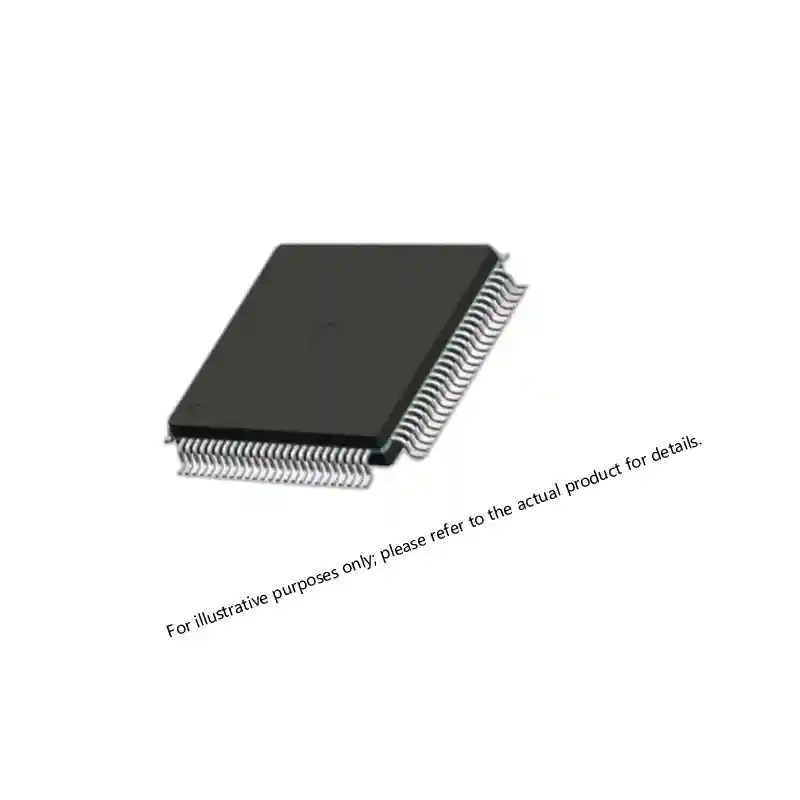
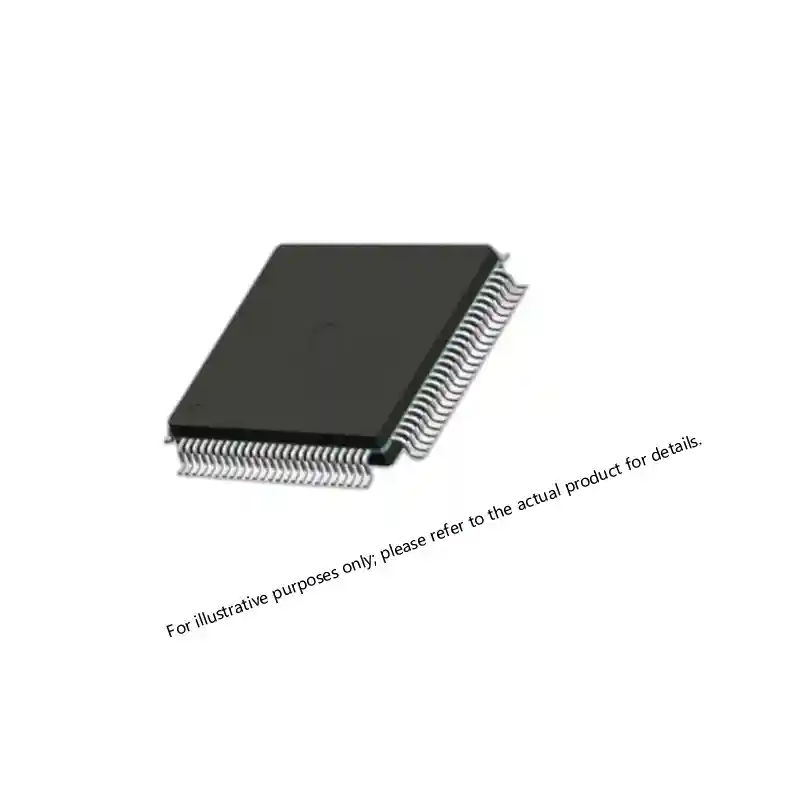
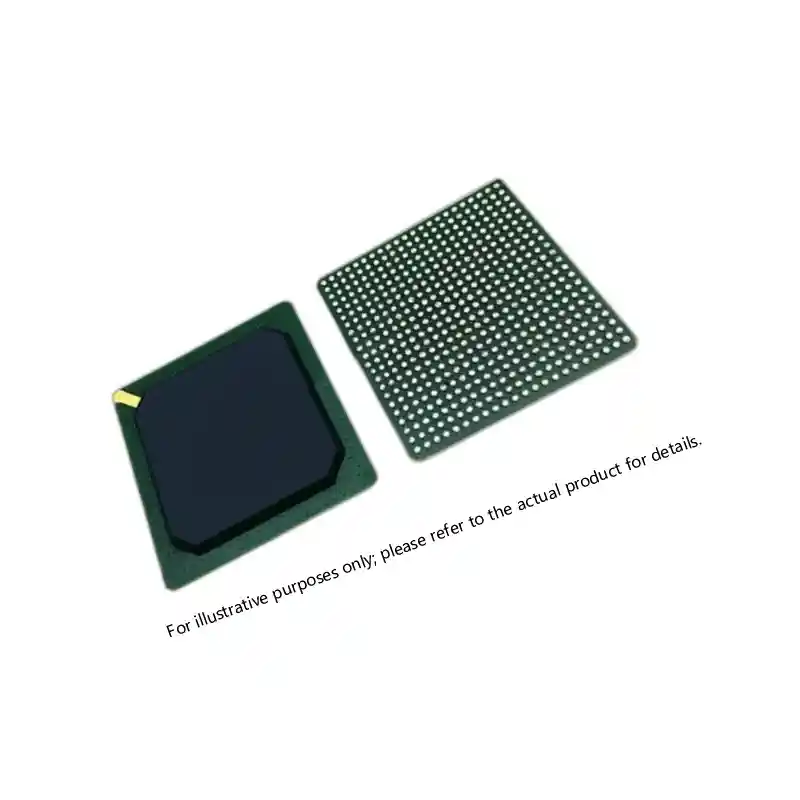
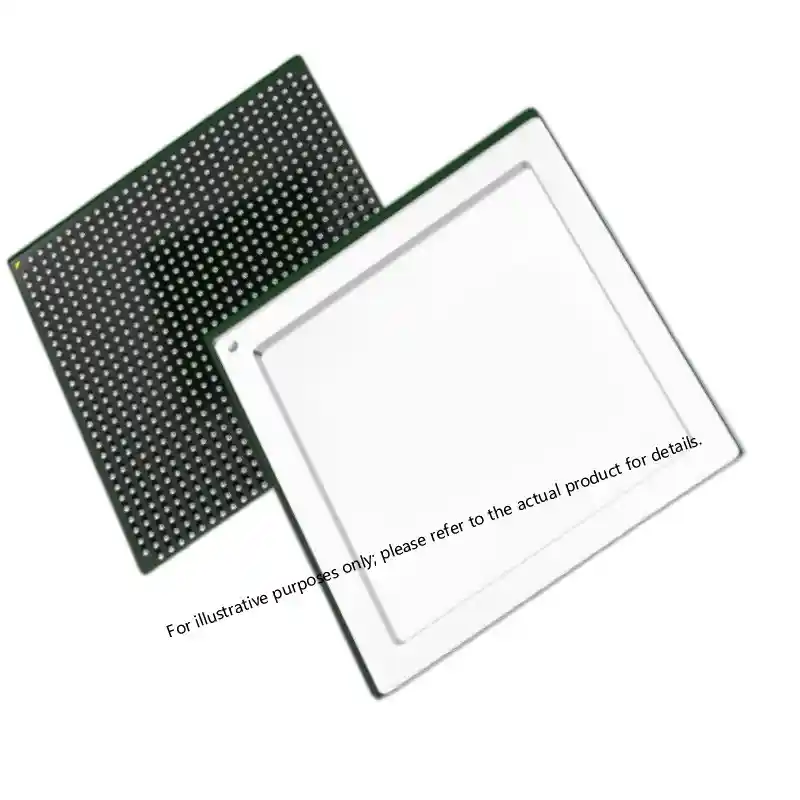
Reviewing these parts together helps identify integration dependencies such as power sequencing, rail tolerance, and total load behavior before the BOM is frozen.
Sourcing Support for V24A12M400BL Programs
To obtain a checked quote for V24A12M400BL, send Sparkle Electronics the information that affects part validation: input bus characteristics, output load profile, cooling method and worst-case ambient, required screening and documentation level, target quantity, and schedule. Our team can help confirm availability, date or lot traceability, and the coordination needed for high-reliability use. Contact our sourcing team at xuansc2144@gmail.com.
FAQ
What does the M in the V24A12M400BL part number mean?
In this product family, the M suffix is commonly associated with a military or higher-reliability grade, but the exact screening and temperature range must be confirmed from the manufacturer datasheet and part-specific test records. It does not automatically mean that every military specification or QML requirement has been satisfied. Procurement should treat the suffix as a pointer to the correct qualification package rather than as a substitute for review.
Is the module rated for the full 400 W at any temperature?
No. The 400 W field identifies a power class, not an unconditional output. Available power depends on input voltage, baseplate temperature, airflow, and heatsink design. The supplier or manufacturer derating curves must be checked at the worst-case operating point. A sealed high-temperature enclosure may require a lower continuous load or additional cooling.
What documentation should be requested when buying this module?
Request the manufacturer part number confirmation, date or lot code, certificate of conformance, screening or test evidence, handling records, and any replacement analysis if the part is being substituted. Compare these documents with the assembly specification in the program. A commercial transaction alone does not create the release authority a military or high-reliability program may require.
Can a similar V24A12 part be used as a substitute?
Only after confirming the output voltage, pinout, package configuration, temperature grade, screening, protection behavior, and transient response. A visually similar module may differ in baseplate options, control features, or qualification level. Before calling a part a drop-in replacement, engineering and procurement should review the complete datasheet and compare it against the original application conditions.
If you’re interested, check out these related articles:
Virtex-7 690T FPGA: Performance, Packaging, and Reliability Insights
XC7VX485T FPGA: Virtex-7 Performance for Defense
XCKU085 UltraScale FPGA: Performance for Critical Systems
Virtex-7 690T FPGA: Performance for Mission-Critical Systems
UltraScale KU085 FPGA Specifications for Defense Systems