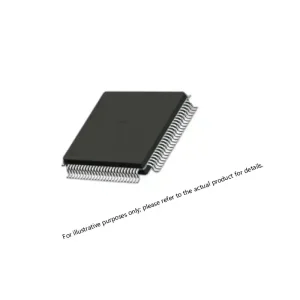
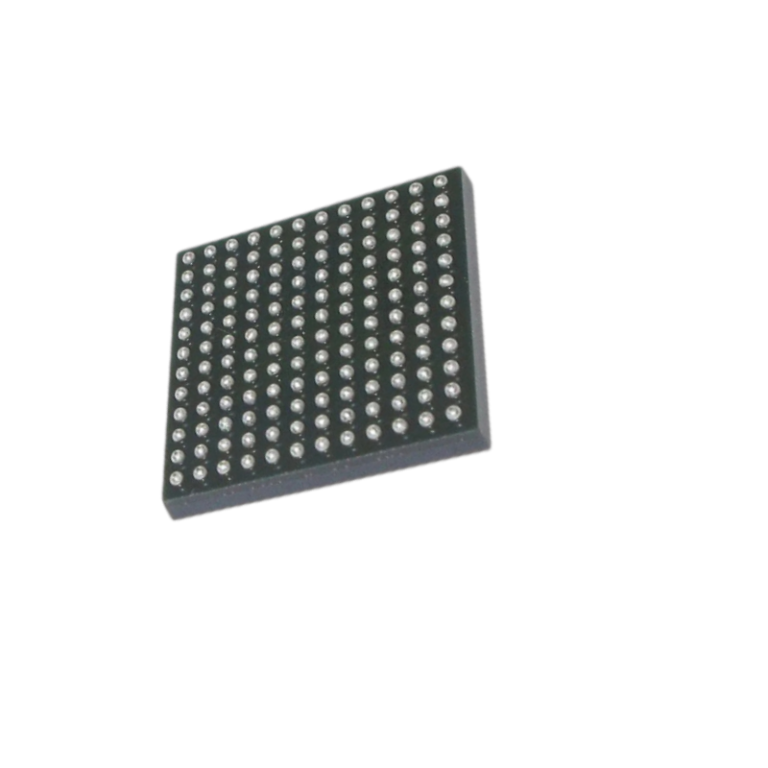
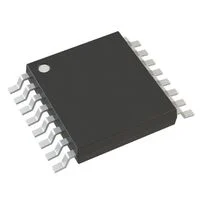
ATMEL ATF2500C-20KM
- 2,500 equivalent gate EECMOS CPLD with fully-connected universal logic array
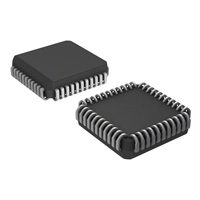
- 20ns propagation delay, 50MHz synchronous operation in 44-lead ceramic JLCC package
- 24 macrocells with 48 total registers — selectable D- and T-type flip-flops per macrocell
- Military temperature range −55°C to +125°C, 5V single-supply operation
- EEPROM-based configuration retained at power-down — no external configuration memory required
Atmel (now Microchip Technology) built the ATF2500C around a design philosophy that prioritized logic density and routing flexibility over the rigid sum-of-products structures that constrained earlier PAL-family devices. The result was the highest-density PLD available in a 44-pin surface-mount package at its introduction — a device that packs more usable gates into its lead count than comparable PLDs by combining a fully-connected universal logic array with a flexible dual-register macrocell structure. The ATF2500C-20KM is available from stock at Sparkle Electronics, a specialized distributor of high-reliability and military-temperature electronic components for defense contractors, avionics OEMs, and embedded systems engineers worldwide. In the ceramic JLCC package, the ATF2500C-20KM is qualified for the full military temperature range of −55°C to +125°C — making it directly applicable to aerospace and defense programs requiring programmable logic that can sustain specification across extreme thermal environments without the hermeticity risk of plastic-packaged devices.
The ATF2500C-20KM serves a specific procurement need: legacy defense and avionics systems originally designed around Atmel ATV2500B, ATV2500BQ, or ATV2500H PLDs that require a pin-compatible, military-temperature replacement with preserved JEDEC file compatibility. The ATF2500C is a direct functional replacement for these older devices and additionally supports T-type flip-flops, pin-level clocking, and D/T2 buried combinatorial feedback unavailable in the ATV2500H — making it a functional superset that can serve as a drop-in upgrade or an obsolescence mitigation solution. For engineers evaluating programmable logic options across the FPGA & CPLD product range, Sparkle Electronics maintains stock of both legacy-compatible PLDs and modern alternatives. Contact our team to confirm ATF2500C-20KM availability and request a same-day quote.
Related Products For Your Business
The ATF2500C-20KM as a Military-Temperature PLD: What Engineers Actually Need to Know
This is not a universal-use component. The ATF2500C-20KM occupies a specific position in the defense electronics supply chain: it is the ceramic-packaged, military-temperature variant of a CPLD that was designed to replace an aging PAL-family device line, and it remains relevant today primarily as an obsolescence solution for programs that cannot redesign their logic architecture. Understanding where it fits — and where it doesn’t — is what separates a successful procurement from a specification mismatch. Engineers searching for ATF2500C-20KM in stock, ATF2500C-20KM military temperature JLCC, or Atmel 2500C ceramic CPLD distributor will find Sparkle Electronics maintains ready inventory. Submit an inquiry for pricing and lead time within 24 hours.
Part Number Decoded: What KM Tells You
In the ATF2500C ordering system, the suffix breaks down as follows: ATF2500C = device family; -20 = 20ns propagation delay; K = 44-lead ceramic JLCC package; M = military temperature range (−55°C to +125°C). The ceramic JLCC (44K) is the military-temperature package option for applications requiring the surface-mount footprint of a PLCC with the environmental durability of a ceramic package body. The plastic JLCC equivalent (44J) is rated for industrial temperature only.
ATF2500C-20KM vs. Package and Temperature Alternatives
| Parameter | ATF2500C-20KM | ATF2500C-20JC (commercial PLCC) | ATF2500C-20GM (military Cerdip) |
|---|---|---|---|
| Manufacturer | Atmel / Microchip | Atmel / Microchip | Atmel / Microchip |
| Availability | In Stock at Sparkle | — | — |
| Package | 44-lead Ceramic JLCC | 44-lead Plastic PLCC | 40-lead Ceramic DIP |
| Assembly | Surface-mount | Surface-mount | Through-hole |
| Temperature Range | −55°C to +125°C | 0°C to +70°C | −55°C to +125°C |
| Propagation Delay | 20ns | 20ns | 20ns |
| Gates | 2,500 | 2,500 | 2,500 |
| Macrocells | 24 | 24 | 24 |
| Supply Voltage | 4.5V to 5.5V | 4.5V to 5.5V | 4.5V to 5.5V |
| Configuration | EECMOS | EECMOS | EECMOS |
The ATF2500C-20KM is the correct selection when the design requires surface-mount assembly compatibility combined with military temperature operation. The ATF2500C-20GM serves the same military temperature requirement in through-hole Cerdip format — for legacy boards where SMT is not viable.
EECMOS Architecture: Why Non-Volatile Configuration Matters in Defense Systems
The ATF2500C uses EECMOS technology for its programmable fuse array. Unlike SRAM-based FPGAs, which lose their configuration at power-down and require external flash or ROM devices to reload logic on every power cycle, the ATF2500C retains its programmed logic state permanently without external support. For defense embedded systems subject to unexpected power loss events — including combat damage, power bus transients, or controlled power cycling during maintenance — EECMOS means the device returns to its programmed operating state immediately on power-up without any initialization sequence. This is a reliability consideration with direct operational implications for mission-critical defense electronics in avionics systems and radar and electronic warfare platforms.
The dual-register macrocell structure provides 48 total registers across 24 macrocells — each flip-flop individually configurable as D- or T-type, enabling JK and SR flip-flop implementations without additional gates. Buried combinatorial feedback allows the Q2 register output to feed directly back into the logic array, providing further logic expansion without consuming I/O pins. A programmable pin-keeper circuit maintains known logic states on undriven inputs and I/Os, eliminating the floating-input uncertainty that can cause undefined behavior in military systems subject to electromagnetic interference. A security fuse prevents unauthorized reading of the programmed fuse pattern — relevant for defense applications where FPGA and PLD configurations constitute sensitive intellectual property. For broader programmable logic requirements in defense programs, Sparkle Electronics stocks components across the FPGA & CPLD category including both legacy-compatible PLDs and modern FPGA families.
Frequently Asked Questions
What does ATF2500C-20KM decode to?
ATF = Atmel FPGA/PLD family; 2500C = 2,500 equivalent gate CPLD, C-generation architecture; −20 = 20ns propagation delay; K = 44-lead ceramic JLCC package; M = military temperature range (−55°C to +125°C). The EECMOS technology suffix is implicit to the ATF2500C family and does not appear separately in the part number.
Where can I buy ATF2500C-20KM in stock?
Sparkle Electronics stocks the ATF2500C-20KM for defense, avionics, and industrial procurement. Contact our team for current pricing, available quantity, and confirmed lead time. Same-day response on qualified inquiries — we supply defense prime contractors, government procurement offices, and embedded systems integrators globally.
Is ATF2500C-20KM a direct replacement for the ATV2500B or ATV2500H?
Yes. Atmel designed the ATF2500C family as a direct pin and functional replacement for the ATV2500B, ATV2500BQ, and ATV2500H. Existing JEDEC files from these legacy devices can be programmed into the ATF2500C with no modification. The ATF2500C additionally supports T-type flip-flops and pin-level clocking not available in the ATV2500H — these features are simply unused when programming legacy ATV2500H logic files, making the ATF2500C a functional superset replacement rather than a subset substitution.
What is the difference between ATF2500C-20KM and ATF2500C-20JC?
The KM variant uses a 44-lead ceramic JLCC package rated for military temperature (−55°C to +125°C). The JC variant uses a 44-lead plastic PLCC package rated for commercial temperature (0°C to +70°C) only. The electrical performance — propagation delay, macrocell count, I/O count — is identical. Package and temperature rating are the only differences.
Why does the ATF2500C retain configuration at power-down when FPGAs do not?
The ATF2500C uses EECMOS (Electrically-Erasable CMOS) technology for its programmable logic array — the same physical mechanism as EEPROM memory. Programmed fuse states are stored in non-volatile cells that do not require power to maintain their state. SRAM-based FPGAs use volatile static RAM cells that lose their state immediately on power removal and must be reloaded from external non-volatile memory on every power-up cycle. For defense systems where power-up time and initialization complexity are operational constraints, EECMOS PLDs eliminate the configuration reload step entirely.
Does ATF2500C-20KM have a DESC SMD number for MIL-SPEC procurement?
The ATF2500C-20KM does not carry a DESC Standard Military Drawing number — it is a military-temperature commercial device, not a MIL-STD-883 screened part. For programs requiring MIL-STD-883 Class B screening and QPL traceability on programmable logic, consult the ATF2500C-15NM/883 variant or contact Sparkle Electronics to discuss screened alternatives. For Memory & Storage components requiring MIL-STD-883 screening, Sparkle Electronics stocks qualified EEPROM devices including the ATMEL AT28C010-12DM/883 as a reference for what MIL-STD-883 qualification entails.
Sourcing ATF2500C-20KM for a defense or avionics program? Sparkle Electronics stocks Atmel military-temperature PLDs and CPLDs for legacy system support and obsolescence mitigation. Submit an inquiry — same-day response on pricing, stock, and lead time.