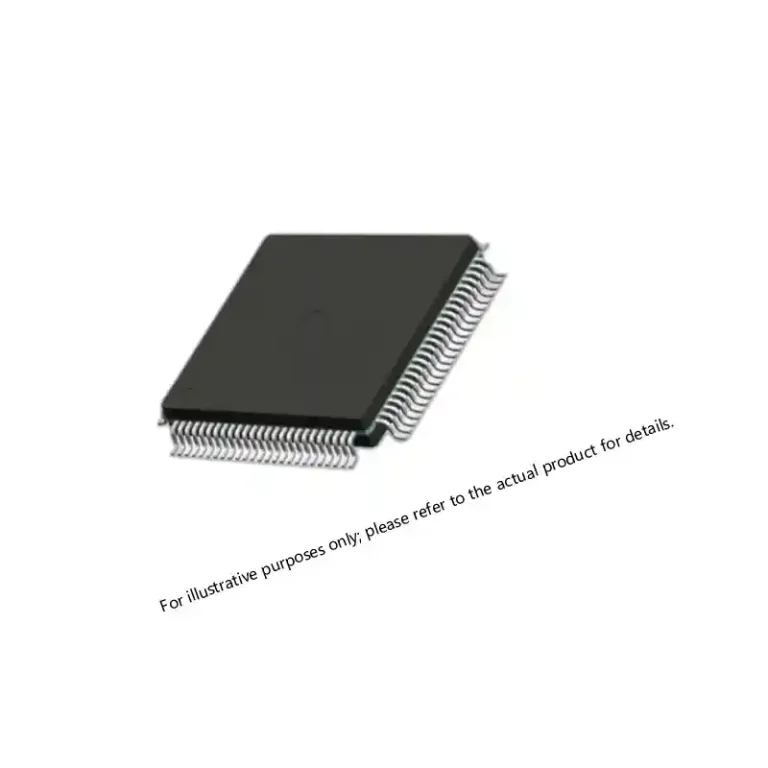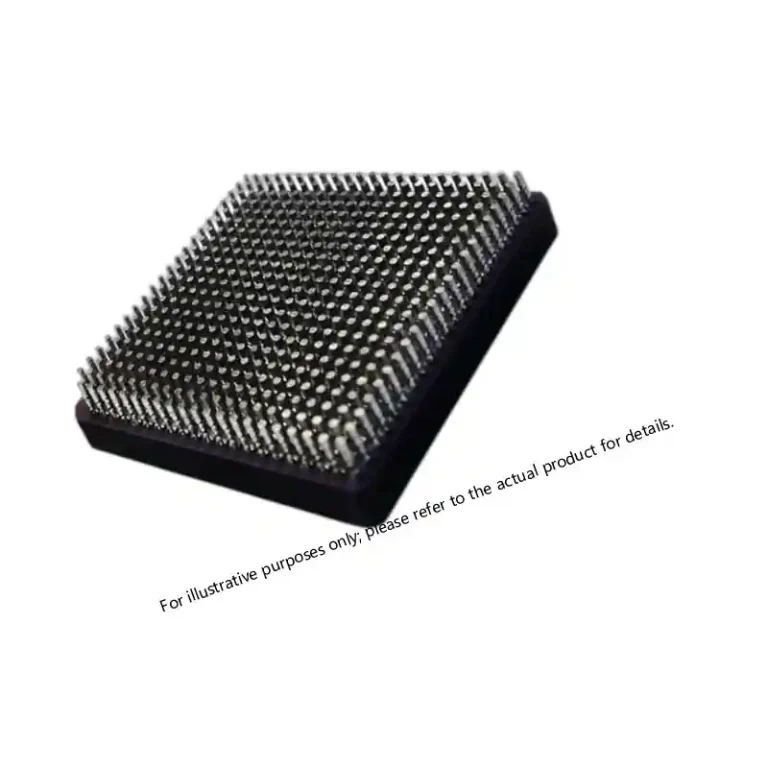
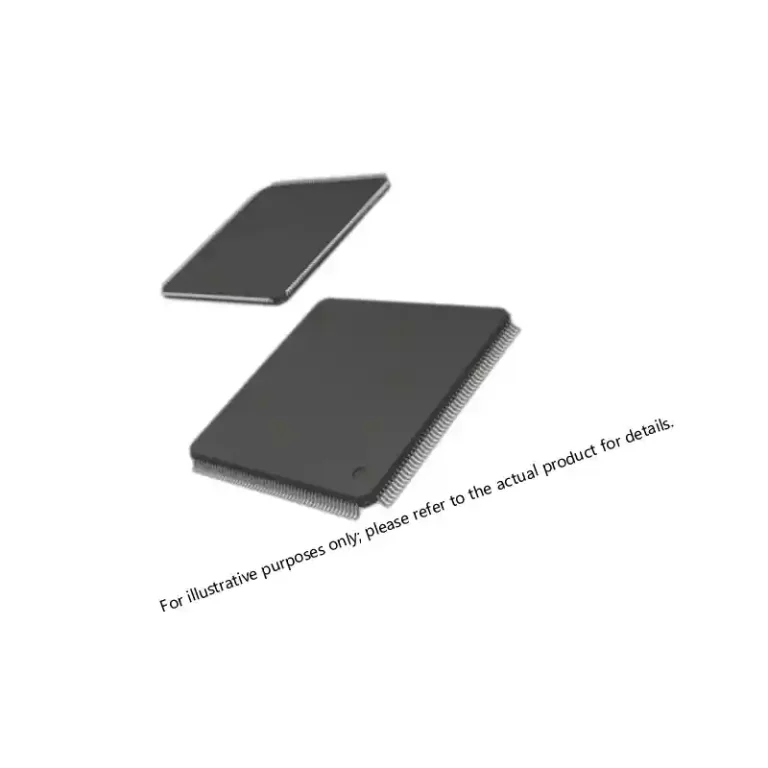
Rad Hard IC Distributor Sourcing for LEO and GEO Satellite Programs
Table of Contents
- How LEO and GEO Radiation Environments Drive Component Specifications
- Critical Rad Hard IC Categories for Satellite Payloads and Bus Systems
- What to Look for in a Rad Hard IC Distributor
- Credentials and Certifications
- Verifying Traceability and Authenticity
- Navigating ITAR, EAR, and Export Controls for Space-Grade ICs
- Building a Resilient Supply Chain for Long-Duration Programs
- Common Questions About Rad Hard IC Sourcing for Satellites
- Are rad hard and rad tolerant ICs interchangeable for satellite missions?
- What documentation typically accompanies a QML-V rad hard IC shipment?
- Can I source rad hard ICs from a non-US distributor and still meet ITAR?
- How can I confirm the authenticity of a rad hard IC before integration?
- Securing Your Rad Hard IC Supply Chain
Finding a rad hard IC distributor that can support both low Earth orbit (LEO) and geostationary (GEO) satellite programs is not simply a matter of locating in-stock parts. The procurement landscape for radiation-hardened components demands rigorous verification of traceability, compliance with ITAR and QML standards, and a supply chain that remains reliable across a mission life that often spans a decade or more. Most published guidance focuses on radiation testing and part qualification, yet the practical sourcing challenges, from vetting distributor credentials to managing long lead times, are what determine whether a satellite program meets its integration schedule. This article addresses those procurement realities from the perspective of a defense electronics supply chain specialist, providing a structured framework for sourcing rad hard ICs that balances technical requirements with supply chain security.
How LEO and GEO Radiation Environments Drive Component Specifications
Spacecraft electronics operate in radiation environments that terrestrial components are never designed to tolerate. Two orbits dominate satellite programs: LEO, typically between 200 and 2,000 kilometers altitude, and GEO, a fixed 35,786-kilometer equatorial belt. Their radiation challenges differ meaningfully.
In LEO, trapped protons and electrons in the Van Allen belts, particularly the South Atlantic Anomaly, generate elevated total ionizing dose (TID) over cumulative exposure. Single event effects (SEE), caused by galactic cosmic rays and solar particle events, include single event upset (SEU) where a logic state flips, and single event latchup (SEL) where a parasitic thyristor triggers and can destroy the device. At GEO, the environment is dominated by higher-energy electrons and a continuous proton flux from solar activity. Component TID can reach tens of kilorads over a 15-year mission, and heavy ion interactions from cosmic rays are more frequent at high altitude.
These differences dictate component selection. A LEO CubeSat might tolerate a certain SRAM upset rate if error correction is implemented, while a GEO communications payload processing high-speed data cannot risk any unmitigated SEE. This drives the choice between radiation-tolerant parts that are hardened by design but may exhibit limited SEE immunity and fully radiation-hardened devices qualified to QML Class V with characterized single event parameters. Our team always recommends aligning the orbit-specific radiation budget with the component’s test data, not just its generic “rad hard” label.
Critical Rad Hard IC Categories for Satellite Payloads and Bus Systems
Satellite electronics span multiple functional domains, each with unique radiation hardness requirements. The table below categorizes the primary IC types that procurement teams routinely source for space programs.
| IC Category | Typical Functions | Representative Vendors |
|---|---|---|
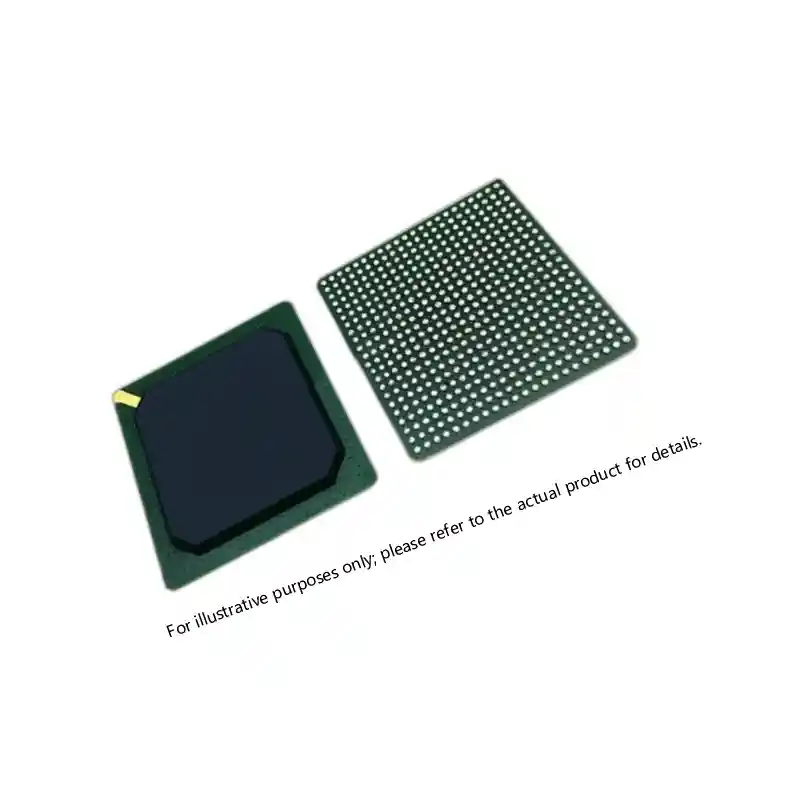
| FPGAs | On-board processing, telemetry formatting, instrument control | Microchip RTG4, Xilinx Virtex-5QV, Microsemi ProASIC3 |
| High-Speed ADC/DAC | Sensor digitization, software-defined radio, waveform generation | ADI AD9680B, TI ADS5400, Teledyne e2v EV12AQ600 |
| Memory | Boot firmware, data buffers, configuration storage | SRAM (Aeroflex ACT-S512K32N), EEPROM (Atmel AT28C256), Flash |
| Power Modules | Point-of-load regulation, isolated DC-DC conversion | VICOR DCM series, VPT SVRHF series |
| Interface & Logic | MIL-STD-1553 bus, SpaceWire, LVDS, gate drivers | DDC BU-61580, Holt HI-1573, TI SNJ54 series |
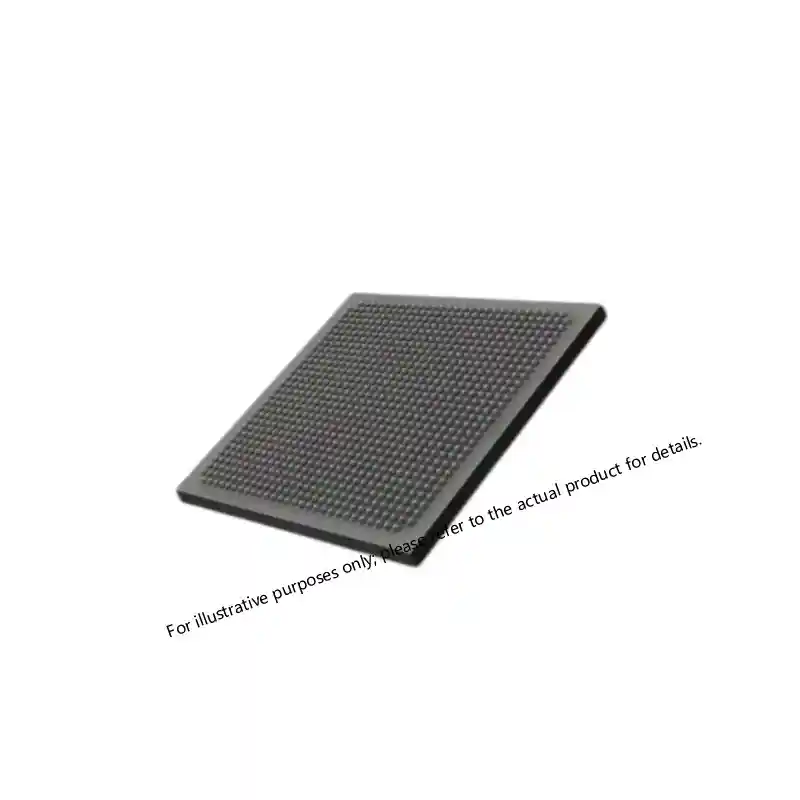
FPGAs present some of the longest lead times in the industry, often exceeding 26 weeks for QML-V qualified parts. ADCs with sampling rates above 1 GSPS similarly strain supply availability. When billions of dollars of payload capacity hinge on a single component delivery, the procurement approach must be proactive, not reactive. I have observed programs stall for months waiting for a single rad hard FPGA, a risk that proper distributor partnership can mitigate.
What to Look for in a Rad Hard IC Distributor
Selecting a distributor is as critical as selecting the component itself. The right partner understands that a satellite program is not a one-time purchase; it is a multi-year relationship with recurring qualification, compliance, and technical support demands.
Credentials and Certifications
At minimum, a rad hard IC distributor should hold AS9120 certification, which extends ISO 9001 to aerospace component storage and distribution. If the distributor handles military-grade parts, AS6081 for counterfeit detection is equally relevant. Ask whether the distributor maintains QML-qualified facilities. A QML-certified supply chain means the handling, storage, and shipping processes meet the same MIL-PRF-38535 rigor that governs the components themselves. We look for these certifications because they are not theoretical; they are evidence that a distributor has been audited against the same quality system the defense primes operate under.
Verifying Traceability and Authenticity
A Certificate of Conformance (C of C) is not enough. For rad hard parts, we require full chain-of-custody documentation, from wafer lot through final visual inspection. The distributor should be able to produce date code records, lot traveler documentation, and photographic evidence of part markings. Counterfeit mitigation starts with a distributor that sources directly from OCMs or their authorized channels. If a distributor cannot trace a part back to the wafer lot, we walk away. That standard has saved our customers from costly board-level failures during radiation testing.
If your satellite program involves mixed LEO and GEO payloads, confirming the distributor’s experience with both QML Class V and Class Q procurement paths is a worthwhile step before committing to a BOM quote. Reach out at xuansc2144@gmail.com for a preliminary qualification review.
Navigating ITAR, EAR, and Export Controls for Space-Grade ICs
Space-grade electronics sit at the intersection of commercial interests and national security regulations. Most rad hard ICs are controlled under the International Traffic in Arms Regulations (ITAR) on the US Munitions List (Category XV, spacecraft and related articles) or the Export Administration Regulations (EAR) with ECCNs that restrict re-export. Procurement teams outside the US must understand that a simple purchase order is not sufficient; the transaction may require DSP-5 export licenses, end-user statements, and non-transfer agreements.
The complication deepens when a single satellite program sources components from multiple countries. A rad hard FPGA from a US manufacturer may be ITAR-controlled, while a power module from a European supplier may fall under dual-use EAR99 or specific ECCNs. Distributors operating internationally must maintain an internal compliance program that screens every transaction against denied party lists, manages re-export controls, and retains documentation for the full statutory period. We treat export compliance not as a barrier but as a risk filter—a distributor that cannot articulate its ITAR procedures is a distributor we cannot recommend for flight-critical supply chains.
Building a Resilient Supply Chain for Long-Duration Programs
Satellite missions rarely fit standard procurement cycles. A GEO communications satellite is designed for 15 years of operation, and component demand may arise years after initial delivery for anomaly resolution or system upgrades. This exposes two supply chain risks: long lead times on rad hard parts and obsolescence of commercial-based designs that have been qualified for space.
Lead times for QML-V FPGAs and high-speed ADCs are structural, not temporary. Foundry capacity for rad hard processes is limited, and re-qualification cycles are measured in months. Forward procurement and consortium-based purchasing can smooth availability, but the most effective strategy is to work with a distributor that maintains strategic inventory of long-lead items. Sparkle Electronics carries stock of rad hard FPGAs from Actel, Altera, and Xilinx across multiple speed grades, which reduces the waiting period from factory lead time to logistics transit time.
For obsolescence management, die banking and last-time buy coordination are standard tools. A distributor that proactively flags end-of-life notices and offers form, fit, and function replacements preserves the design investment. In programs I support, we maintain a rolling obsolescence review integrated with the program’s phase gate milestones, so that no critical part number expires without a vetted alternate source.
Common Questions About Rad Hard IC Sourcing for Satellites
Are rad hard and rad tolerant ICs interchangeable for satellite missions?
They are not interchangeable. Rad tolerant parts are often commercial devices that have been tested or designed to withstand some level of radiation, typically up to a few tens of kilorads TID and with limited SEE immunity. Rad hard components are fabricated on dedicated processes, such as epitaxial silicon or silicon-on-insulator, and are fully characterized against TID, SEL, SEU, and ELDRS across temperature and voltage corners. For GEO missions with 15-year life requirements, rad hard devices are the standard. For a LEO experiment with a 3-year mission and accessible redundancy, a rad tolerant part may suffice if the radiation analysis supports it.
What documentation typically accompanies a QML-V rad hard IC shipment?
A QML-V shipment should include a Certificate of Conformance that references the governing MIL-PRF-38535 specification, along with lot traveler documentation showing wafer fabrication, assembly, screening, and quality conformance inspection steps. Date code traceability, environmental test data, and group A/B/C/D quality conformance summaries are often available upon request. For flight safety-critical applications, the distributor should provide source control drawings and packaging certifications.
Can I source rad hard ICs from a non-US distributor and still meet ITAR?
It is possible but heavily constrained. The ITAR framework restricts the export of defense articles and technical data to foreign persons, even within a US-owned company abroad. Many rad hard ICs are classified as defense articles. A non-US distributor must operate under an approved DSP-5 export license and maintain a Technology Control Plan (TCP) to prevent unauthorized access. For most US-based satellite programs, the lower-risk path is to use a US-registered distributor with validated ITAR compliance infrastructure, even if the distributor maintains a foreign warehouse. The compliance record and audit trail matter more than geography.
How can I confirm the authenticity of a rad hard IC before integration?
Start with the distributor’s source of supply. Authorized channels from the original component manufacturer (OCM) provide the strongest chain of custody. Request photographic evidence of the part marking against the C of C, and verify that the date code and lot code align with the distributor’s traceability system. For high-value or long-lead parts, third-party electrical testing at an accredited lab, including decapsulation and die verification, adds a layer of confidence. Any distributor that resists these requests should be removed from the approved vendor list. If your program requires lot testing per MIL-STD-883 methods, share your requirements at xuansc2144@gmail.com and we will confirm testing coordination and documentation availability.
Securing Your Rad Hard IC Supply Chain
Program delays caused by component shortages are preventable. The right rad hard IC distributor does more than fulfill a purchase order; it acts as a supply chain extension that understands orbit-specific qualification, ITAR licensing, and the multi-year procurement horizon of satellite missions. Sparkle Electronics works with defense contractors and research institutions worldwide to source, verify, and deliver rad hard components with the documentation and traceability that flight programs require. For a confidential review of your BOM and lead time analysis, contact our team at xuansc2144@gmail.com.
If you’re interested, check out these related articles:
XC7VX485T FPGA: Virtex-7 Performance for Defense
XCKU115 UltraScale FPGA: Powering Critical Defense Systems