
TSB12LV32TPZEP: EP-Grade 400Mbps FireWire Controller Guide
Table of Contents
- Specification and Compliance Overview
- EP Grade and Qualification Boundary
- Package and Board-Level Handling
- System Integration and Co-Processing
- Hi-Rel Devices Commonly Stocked Alongside the Controller
- Sourcing, Lot Acceptance, and RFQ Data
- Source TSB12LV32TPZEP with Traceable Documentation
- Frequently Asked Questions
- What is the TSB12LV32TPZEP?
- Does the TSB12LV32TPZEP support 400 Mbps?
- Is the TSB12LV32TPZEP a military-qualified part?
- What package should I specify?
- What documentation should accompany a purchase?
- References
The TSB12LV32TPZEP is a Texas Instruments Enhanced Product (EP) IEEE 1394 link-layer controller. It handles asynchronous and isochronous packet transport between an external FireWire PHY and host-side control logic. In hi-rel programs, this device commonly appears in legacy avionics stores interfaces, ground-support data acquisition, and rugged test systems where a 400 Mbps 1394 link must be maintained without changing the higher-level protocol stack.
The device belongs to the TSB12LV32 link-layer family and is ordered as an EP variant. The orderable suffix therefore drives more than price: it determines qualification baseline, packaging, device marking, and the documentation trail a receiving inspector will expect.
Specification and Compliance Overview
The core functionality is defined by IEEE 1394-1995 and IEEE 1394a-2000. IEEE 1394-1995 establishes the serial bus architecture, cycle timing, and 100/200/400 Mbps signaling classes [1]. IEEE 1394a-2000 refines bus arbitration, connection debounce, and PHY-to-link interactions for more reliable operation in the field [2]. The control/status register organization follows the CSR architecture commonly used by serial bus nodes [3].
The TSB12LV32TPZEP implements the link-layer controller function, not the PHY transceiver. The design therefore requires a compatible 1394a PHY to generate and recover the bus signals. The link-layer device manages packet assembly, asynchronous and isochronous transactions, and the host-side interface.
The host interface is designed to connect to a 32-bit asynchronous host bus. Teams should confirm the exact timing, byte ordering, and pin mux behavior against the current device data sheet before schematic capture.
EP Grade and Qualification Boundary
The EP suffix identifies the TI Enhanced Product flow. For this device family, the EP designation generally implies a controlled baseline and a defined product-change flow, but it does not by itself turn the part into a full military or space-qualified device. The exact temperature range, screening, and qualification set must be confirmed from the current TI documentation for the orderable suffix.
For military and aerospace designs, treat the EP grade as a starting point, not the final qualification answer. If the requirement calls for MIL-STD-883 screening, radiation characterization, or source-control documentation, the part may need additional test flows or lot-specific processing.
Documentation should be collected at the quote stage: full orderable part number, manufacturer lot/date code, certificate of conformance, qualification summary, and any external test reports.
Package and Board-Level Handling
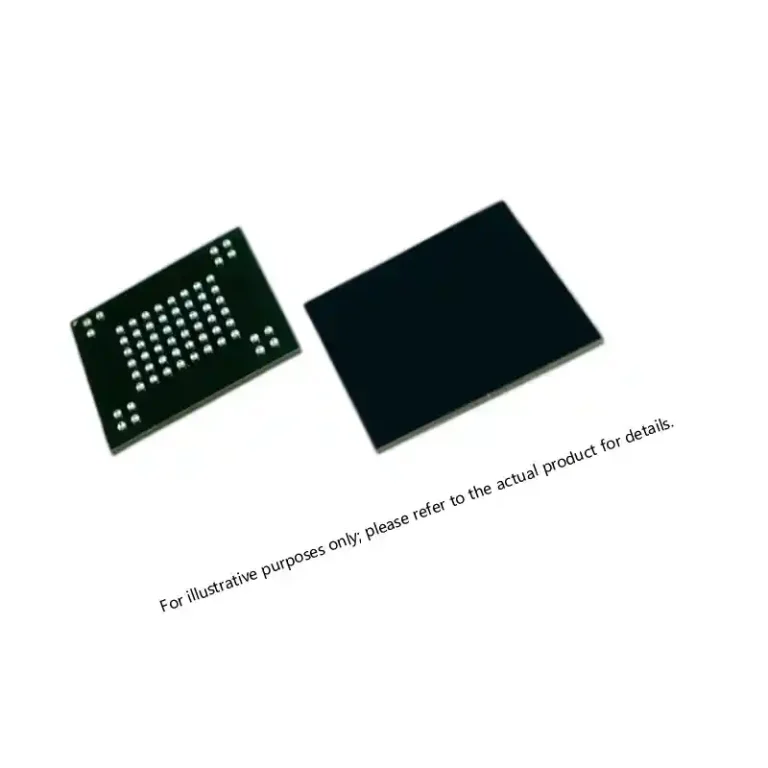
The TSB12LV32TPZEP is commonly referenced as a BGA package option. BGA is often favored in space-constrained avionics and instrumentation boards, but rework is more difficult than quad-flat-pack rework. Incoming inspection and X-ray verification are therefore not optional.
Before layout freeze, verify the exact package drawing, ball map, solder-mask geometry, and moisture-sensitivity level from the current TI documentation. A small error in the ball map can force a board spin that a high-reliability program cannot afford.
For long-term defense storage, keep the parts in the original moisture barrier packaging and follow the documented floor-life and baking instructions.
System Integration and Co-Processing
In many 1394-based nodes, the link-layer controller is paired with an FPGA or CPLD that performs deterministic framing, protocol conversion, or data buffering before the host processor. This is especially true in mission-critical systems where the 1394 bus must coexist with a modern processing plane.
FireWire nodes in mission-critical defense systems commonly sit next to an FPGA that manages deterministic framing and protocol conversion. <Virtex-7 XC7VX690T: Performance, Reliability, and Integration> covers how this Virtex-7 FPGA supports defense designs that must handle high-speed serial data paths and legacy 1394 links in the same subsystem.
Hi-Rel Devices Commonly Stocked Alongside the Controller
If the host side uses a Microsemi/Actel FPGA or CPLD, Sparkle can quote the TSB12LV32TPZEP in the same BOM as the following hi-rel parts:
Sourcing, Lot Acceptance, and RFQ Data
A weak RFQ creates downstream risk. A strong RFQ should not simply say “quote TSB12LV32TPZEP.” It should specify the following:
| Data field | Why it matters |
|---|---|
| Full orderable part number and package suffix | Locks the exact EP variant and package |
| Date code / lot code | Enables lot traceability and recall isolation |
| Certificate of conformance | Confirms documented supply chain origin |
| Test and inspection reports | Supports incoming inspection and source control |
| Target quantity and delivery window | Drives realistic allocation and lead-time planning |
This is not administrative overhead; it is the difference between a documented hi-rel supply chain and an open procurement risk.
If you are consolidating this controller into a defense BOM, route the RFQ through a sourcing team that understands the documentation load. Sparkle Electronics can support the quote with lot traceability, CoC review, and inspection coordination. Send the full part number, target quantity, and qualification requirements to xuansc2144@gmail.com.
Source TSB12LV32TPZEP with Traceable Documentation
Sparkle Electronics supplies military-grade and high-reliability components across 30+ countries. For the TSB12LV32TPZEP, the engagement should start with the exact orderable suffix, required packaging, date-code constraints, and any program-specific qualification documentation.
To request a quote, provide:
- Full part number and package suffix
- Required quantity and date-code window
- Documentation level: CoC, inspection reports, or source-control records
- Delivery target and program requirement
Contact the hi-rel sourcing team at xuansc2144@gmail.com with the BOM line item, annual usage, and required inspection level. We will confirm traceability, packaging, and lead time before the part is committed to a program baseline.
Frequently Asked Questions
What is the TSB12LV32TPZEP?
It is a Texas Instruments Enhanced Product (EP) IEEE 1394 link-layer controller. It supports asynchronous and isochronous packet transport and is intended for use with an external 1394 PHY.
Does the TSB12LV32TPZEP support 400 Mbps?
Yes. The device operates within the IEEE 1394-1995 and 1394a-2000 speed classes established for 100, 200, and 400 Mbps [1][2]. The practical maximum is 400 Mbps; 1394b 800 Mbps operation is outside its scope.
Is the TSB12LV32TPZEP a military-qualified part?
The EP suffix identifies the TI Enhanced Product flow, not a full MIL-PRF-38535 or QML qualification. Programs requiring formal military qualification should verify whether additional screening or an SMD-qualified alternative is required.
What package should I specify?
The TSB12LV32TPZEP is commonly referenced as a BGA package option. Confirm the exact package drawing and solder-mask geometry from the current TI documentation before board layout, and specify the full package suffix in the RFQ.
What documentation should accompany a purchase?
At minimum, request the full orderable part number, lot/date code, certificate of conformance, and lot-specific inspection records. If receiving inspection uses AS9120 or AS6081 controls, align the required records before shipment.
References
[1] IEEE Std 1394-1995, IEEE Standard for a High-Performance Serial Bus.
[2] IEEE Std 1394a-2000, IEEE Standard for a High-Performance Serial Bus—Amendment 1.
[3] IEEE Std 1212-2001, IEEE Standard for a Control and Status Register (CSR) Architecture for Microcomputer Buses.
If you’re interested, check out these related articles:
UltraScale KU085 FPGA Specifications for Defense Systems
XC7VX485T FPGA: Virtex-7 Performance for Defense
Virtex-7 690T FPGA: Performance, Packaging, and Reliability Insights