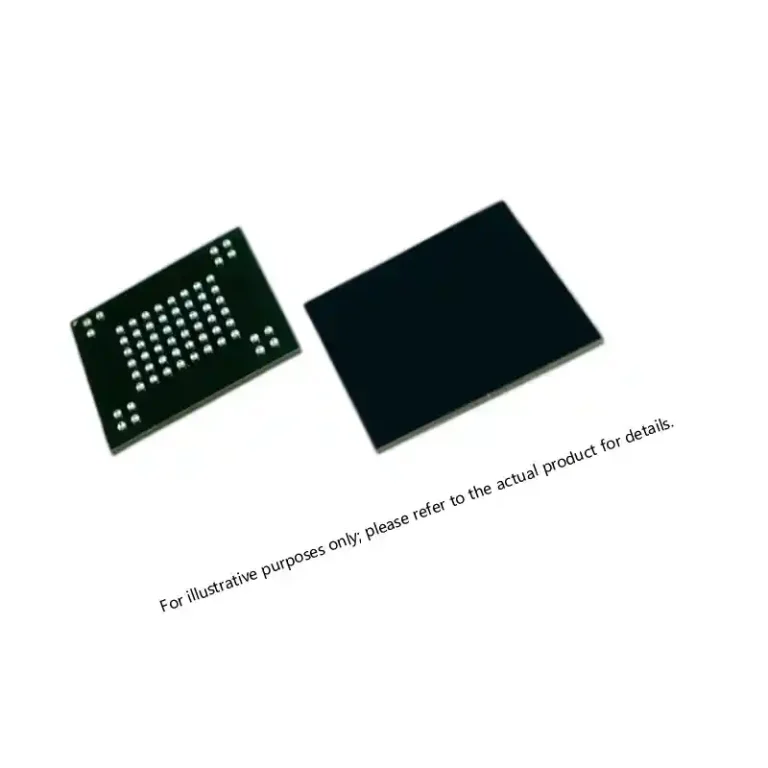

XQF32PVOG48M: QML 32Mb PROM Configuration Memory, OG48 Package
Table of Contents
- Understanding the XQF32PVOG48M
- QML Qualification and What It Means
- Storage Architecture and the 32Mb Density
- OG48 Package and Board-Level Planning
- Sourcing and Authenticity Requirements
- Electrical and Environmental Considerations
- Reliability, Retention, and Long-Term Storage
- Integration with Defense FPGA Boot Architectures
- Inspection and Counterfeit Risk
- Cost and Lead Time Drivers
- Key Questions Before Ordering
- Frequently Asked Questions
- Is the XQF32PVOG48M a replacement for a 5962 configuration PROM?
- How much configuration data fits in 32 megabits?
- Does QML guarantee device authenticity?
- What should be verified at incoming inspection?
- Can the XQF32PVOG48M support multiple boot images?
- Build a Documented Supply Trail
Understanding the XQF32PVOG48M
The XQF32PVOG48M is a 32-megabit configuration PROM qualified to the QML flow, supplied in the 44-pin OG48 package. It was designed for one job: holding FPGA bitstreams for devices that load over a serial configuration interface. In defense and aerospace programs, that job carries more weight than raw density suggests, because the configuration device is often the first component that must come up correctly after power-on.
Configuration memory sits in a unique position in the supply chain. It is not the high-profile processor or the switched fabric that gets most of the design attention, but a failure here stops the entire card. That is why sourcing teams treat this part as a compliance problem as much as a component problem.
QML Qualification and What It Means
QML stands for Qualified Manufacturers List. It is not a single test sequence but a manufacturer-level certification framework under MIL-PRF-38535. Under QML, the manufacturer’s quality management system, process controls, design rules, and lot acceptance flows are audited and approved rather than each device being qualified through a separate source control drawing alone.
The practical difference matters for procurement. A QML device carries an assumed baseline of wafer lot traceability, statistical process control, and certified test flows. For configuration PROMs used in mission-critical systems, that baseline supports the documentation package buyers need before a part reaches incoming inspection.
| QML attribute | Why it matters for configuration memory |
|---|---|
| Manufacturer-level certification | Process stability is audited continuously, not just at a one-time qualification event |
| Lot traceability | Configuration devices can be traced to wafer lot and test data |
| Certified test flow | Program, verify, and retention tests follow controlled procedures |
| Change notification | Process or design changes follow defined notification rules |
| Documentation package | Certificates and test reports support source inspections |
One common question is whether QML replaces a 5962 part number. They are related but not identical. A 5962 drawing defines a device-specific SMD. QML defines the manufacturer qualification system that can produce devices to that drawing or to a manufacturer part number approved within the QML flow. Both approaches are common in defense memory procurement, and the right choice depends on the program’s drawing set and quality plan.
Storage Architecture and the 32Mb Density
A 32Mb configuration PROM is typically organized to support serial configuration interfaces. In this context, density is usually discussed in megabits and should not be confused with a 32MB parallel memory array. The part is optimized for serial readback after bitstream programming, not random-access read/write operation like an SRAM or parallel flash.
The core value is simplified FPGA boot. Instead of holding configuration data in commodity storage and adding interface logic, the design uses a dedicated device with native support for the FPGA loading sequence. Density selection is usually driven by one factor: whether the compressed or full bitstream fits with margin.
| Bitstream size | 32Mb fit assessment |
|---|---|
| Below 16 Mb | Comfortable margin, room for boot variants |
| 16–32 Mb | Fits, but margin should be checked against compression efficiency |
| Above 32 Mb | Requires a larger PROM, multiple devices, or different boot architecture |
| Multiple images | Requires spacing plan and fail-safe image strategy |
For multi-image use cases such as fail-safe boot, a common approach is to divide the address space into a golden image region and an update image region. The device supports this in principle, but the exact boundary handling and fallback behavior must follow the FPGA configuration controller design.
OG48 Package and Board-Level Planning
The OG48 package is a leaded surface-mount configuration with 48 positions, suitable for qualified assembly processes. Leaded packages are often preferred in hi-rel applications because they tolerate thermal cycling better than leadless alternatives when solder joint reliability is a concern. The package choice also supports visual inspection of fillets during incoming and post-assembly checks.
Board-level planning should account for more than footprint. JTAG or programming access needs to stay available for lab bring-up and field rework where the program permits it. The configuration interface routing should be kept short and controlled, and the programming voltage rail needs to be verified against the exact device datasheet rather than assumed from a similar commercial part.
Sourcing and Authenticity Requirements
Configuration PROMs are attractive targets in the gray market because they are small, high-value, and difficult to screen with a quick visual check. The commercial part may look identical, but the screening level, temperature range, and traceability history are not the same.
Buyers should require a documentation package that matches the program’s quality clauses. At minimum, that package should establish part number and date code traceability, source of supply, and the test or inspection history claimed for the lot. When the requirement is QML, the supplier should be able to explain how the specific lot is covered under the manufacturer’s QML flow and provide the corresponding paperwork.
- Confirm the exact manufacturer part marking and date code revision
- Verify the claimed QML flow and lot coverage in writing
- Request certificates of conformance and any available test summaries
- Check packaging for proper moisture and ESD controls
- Review the supplier’s counterfeit risk controls and inspection records
- Validate export classification against program and destination requirements
Configuration memory is only as trustworthy as the paperwork chain behind it. QML Qualified Devices for Defense Programs covers how qualified devices support traceability and source inspections in hi-rel procurement.
Electrical and Environmental Considerations
Defense configuration PROMs are usually expected to operate across a wide temperature range, frequently from -55°C to +125°C or a program-defined subset. Derating and thermal planning should be treated as board-level exercises. A device can be qualified for a range, but local board temperature and programming conditions still require analysis.
Power sequencing is another risk area. Configuration devices must not cause excessive inrush on the boot rail, and the upstream FPGA should not drive the interface before the PROM is fully powered. Design reviews typically verify the power-up sequence against the configuration timing specification, including reset deassertion and clock stability before readback starts.
Programming is a wear mechanism. Configuration PROMs have finite program/erase endurance, and repeated lab programming of the same sample can consume endurance margin. For units that will be reprogrammed during bring-up, the test plan should track cycle counts rather than allowing unlimited bench updates.
Reliability, Retention, and Long-Term Storage
Data retention is the central reliability question for configuration memory. The specification value alone is not the full picture, because retention under continuous high-temperature operation differs from retention in benign storage. Programs that plan for multi-year deployments should address the guard-banding approach used for the bitstream image and the scheduled verification strategy.
Storage conditions before assembly also matter. Moisture sensitivity level and shelf-life handling apply to configuration PROMs just as they do to other surface-mount devices. Dry-pack integrity, exposure tracking, and bake procedures should follow the package label and the assembly site’s standard handling rules for hi-rel components.
Long-term support requires a plan for the day the device is no longer in production. Last-time buy, die banking, and lifetime buy decisions for configuration PROMs are usually tied to the FPGA’s own availability, because changing the PROM often forces a boot architecture review even when the bitstream stays the same.
Integration with Defense FPGA Boot Architectures
Most defense FPGA boot designs follow a familiar pattern: the configuration PROM holds one or more bitstreams, the FPGA pulls the image after reset, and a good-config indicator lets the system proceed. The PROM itself is a supporting component, but it must match the configuration interface, the voltage rails, and the speed grade expectations of the FPGA.
When selecting this device, the engineering team should confirm the FPGA-to-PROM interface compatibility at both ends. That includes signal voltage thresholds, clock frequency for configuration readback, and reset behavior during slow power ramps. A mismatch in any one of these areas can produce a boot failure that passes bench testing and only appears under worst-case temperature and voltage conditions.
A robust boot plan also covers failed configuration handling. If the first image fails to verify, the system needs a defined fallback path. Whether that path uses a second image region or a supervisory processor, the PROM’s role should be documented in the boot state machine.
Inspection and Counterfeit Risk
Incoming inspection for configuration memory should start with documentation and then move to physical examination. Marking consistency, package condition, lead finish, and date code plausibility are checked before electrical test. For QML devices, the supplier should provide enough lot information to confirm the part is not a commercial equivalent relabeled as a military part.
Electrical verification where available should include a basic program, readback, and verify cycle on a sample basis. Full lot screening is usually performed by the manufacturer, but independent sample testing adds confidence when the program allows it. Any discrepancy between the supplied documentation and the physical part should stop the acceptance decision.
Cost and Lead Time Drivers
QML configuration PROMs are generally priced above commercial equivalents because of the certification overhead, the controlled flow, and the narrower demand base. Lead time varies with manufacturer scheduling and military program demand. Configuration memory is sometimes treated as a lower-priority item until the FPGA bill of materials is finalized, which is the wrong time to discover a long lead time.
Procurement teams should confirm availability early, even if the exact image size is not yet known. The 32Mb density is a reasonable hedge for many programs because it covers a wide range of mid-size FPGAs while still being simpler to route than cascading multiple smaller devices. Holding strategy should be balanced against program funding and storage constraints.
A realistic RFQ for this device should include the required screening level, temperature grade, package type, and documentation expectations. Submitting full requirements up front helps the distributor return an accurate quote and avoids the back-and-forth that delays defense procurement.
Key Questions Before Ordering
| Decision factor | What to confirm |
|---|---|
| Interface | FPGA configuration protocol and pin compatibility |
| Voltage | Core and I/O rails, programming voltage requirement |
| Density | Bitstream size plus margin and multi-image needs |
| Grade | QML, screening, and temperature range requirements |
| Package | OG48 footprint availability and assembly process |
| Documentation | CoC, traceability, and any program-specific clauses |
Ordering without confirming these points creates risk later. The component choice is usually driven by the FPGA, but the contract requirements drive the screening and documentation path.
Frequently Asked Questions
Is the XQF32PVOG48M a replacement for a 5962 configuration PROM?
It can serve the same function when the interface, package, and qualification requirements align, but it is not automatically a drop-in substitute for every 5962 drawing. The design must be checked against the configuration interface and package footprint before substitution is approved.
How much configuration data fits in 32 megabits?
A 32Mb device stores 32 megabits of configuration data. The actual gate count of the FPGA it can configure depends on bitstream compression and device family, so the safest approach is to compare the exact bitstream size rather than estimating from advertised FPGA gate counts alone.
Does QML guarantee device authenticity?
QML establishes qualified manufacturing and test discipline, but authenticity still requires supply chain verification. Buyers should still validate part marking, lot coverage, and distributor documentation at incoming inspection.
What should be verified at incoming inspection?
At minimum, check marking and date code consistency, package condition, lead finish, and documentation. Where the program allows, a sample program, readback, and verify cycle adds useful electrical confidence.
Can the XQF32PVOG48M support multiple boot images?
The 32Mb density can be divided into multiple image regions when the design supports the required addressing and fail-safe logic. Boundary handling and fallback behavior are determined by the FPGA boot controller design.
Build a Documented Supply Trail
Configuration memory should never be an afterthought on a defense BOM. The XQF32PVOG48M fills a specific boot role, and the procurement decision should be based on qualification, package, interface compatibility, and traceability rather than price alone. When documentation and source verification are handled early, the component becomes a controlled part of the design baseline instead of a late-stage sourcing risk.
For QML configuration PROMs, lead time and lot verification should be addressed before the bitstream milestone. If your program needs documented XQF32PVOG48M sourcing, submit an inquiry with the required grade, package, and documentation clauses. Sparkle Electronics can confirm current availability, lot coverage, and the compliance package for your review.
If you’re interested, check out these related articles:
UltraScale KU085 FPGA Specifications for Defense Systems
XCKU085 UltraScale FPGA: Performance for Critical Systems
Virtex-7 XC7VX690T: Performance, Reliability, and Integration