Next-Generation FPGAs for Defense: Adoption Trends in 2025
Defense programs have always demanded more processing throughput in smaller, lower-power packages, but what separates the FPGA adoption decisions of 2025 from previous cycles is a practical shift from paper specifications to supply-chain reality. Over the last twelve years of supporting military component procurement, I have watched programs move from “we’ll use the latest Xilinx part because it’s the fastest” to a far more careful evaluation built around pin-out compatibility, long-term die bank commitments, and radiation tolerance data that can actually be verified before a production order is placed. Next-generation FPGAs are being adopted not just for raw gate count but because they solve specific sustainment problems that older devices cannot.
The programs that are adopting next-generation devices right now fall into three clear categories. First, radar and electronic warfare system upgrades where higher sample-rate ADCs demand FPGA fabric that can ingest and process multiple gigasamples per second without forcing a complete redesign of the analog front end. Second, satellite payload programs that need radiation-tolerant, not just radiation-hardened, devices because the cost and schedule of full rad-hard qualification no longer fit the faster tempo of low-earth-orbit constellation deployments. Third, avionics and mission computer refreshes where size, weight, and power constraints make a single-chip FPGA with integrated hard processor cores more viable than a discrete processor-plus-FPGA architecture. In each case, the adoption trigger is not marketing material but a specific bill-of-materials pain point that an older device cannot resolve.
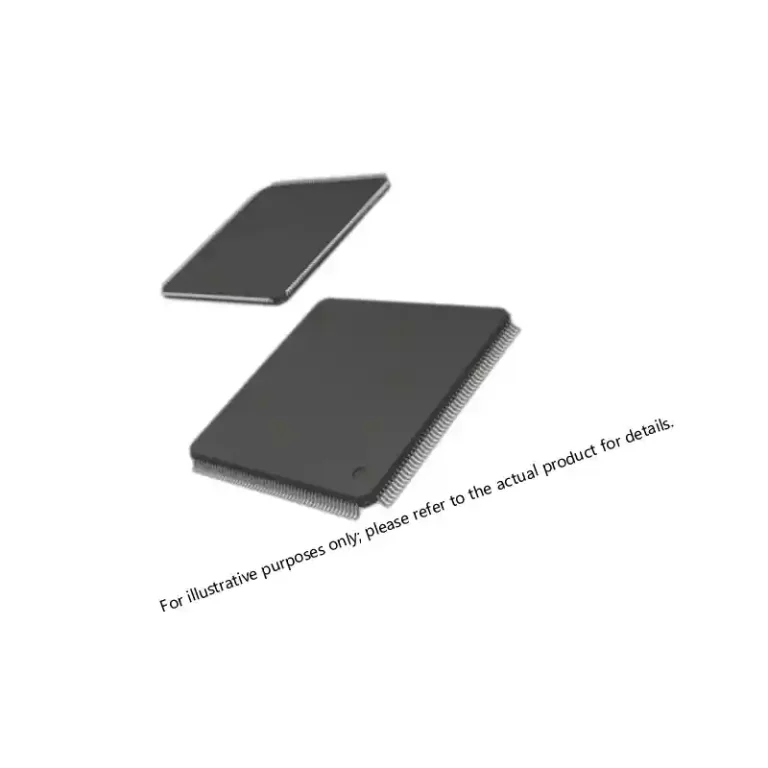
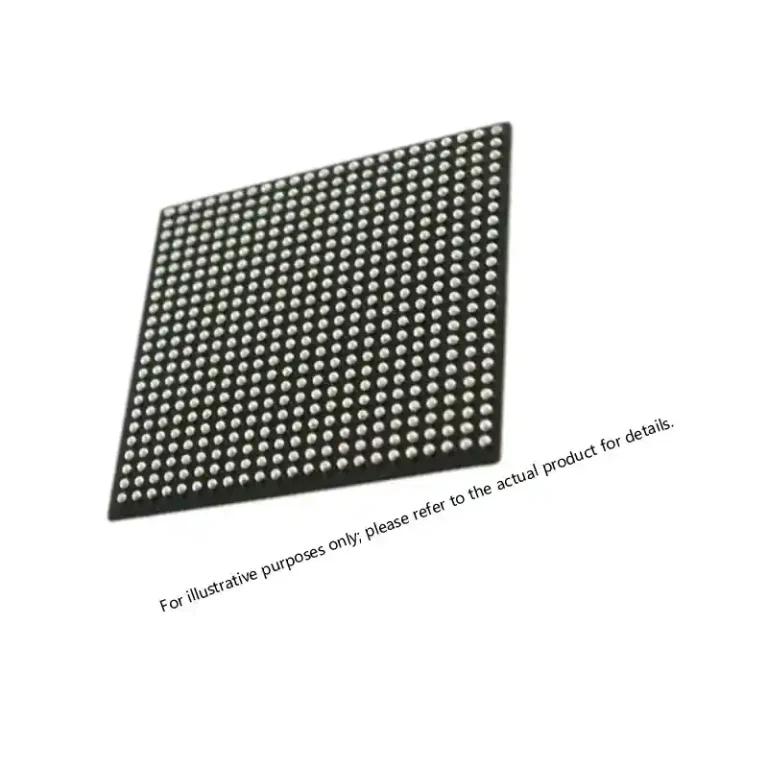
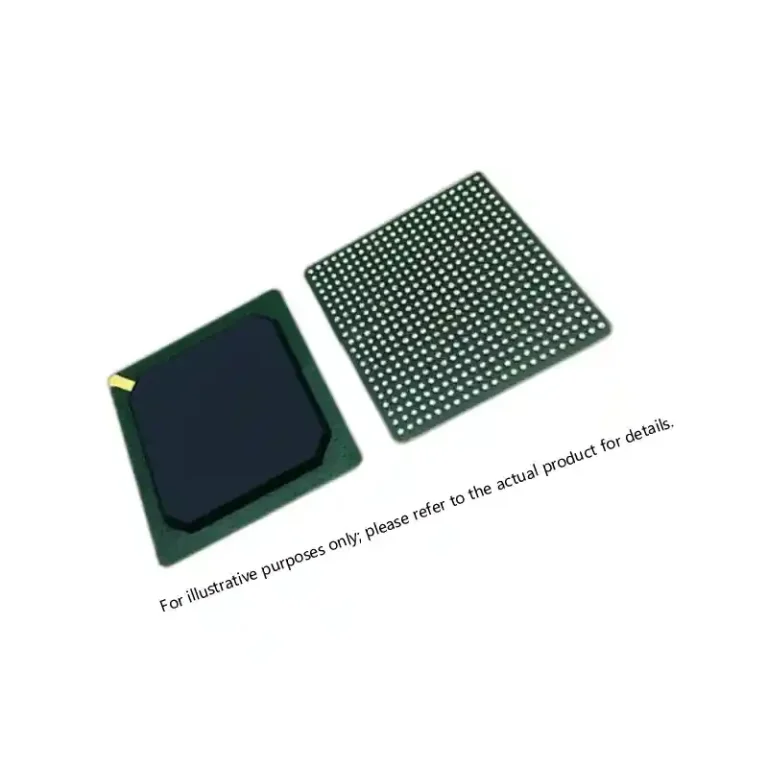
One program I supported earlier this year replaced a legacy Xilinx Virtex-5 FX130T with a Microchip PolarFire MPF300T. The choice was not driven by logic density. The Virtex-5 was still functional, but its flip-chip BGA package had become difficult to source in the required industrial temperature grade, and the program’s test fixture relied on a specific pin-out that newer Virtex-7 devices could not match without a board spin. The PolarFire device offered a compatible footprint in a FCSG536 package, and the non-volatile configuration memory eliminated the external PROM that the Virtex-5 required. That single component elimination saved six weeks of redesign and re-qualification on a program that had already passed MIL-STD-810 vibration testing. The decision to adopt a next-generation FPGA was fundamentally a supply-chain decision dressed in technical clothing.
Understanding which FPGA families are gaining traction means looking at the architecture decisions that defense programs actually make, not just the vendor roadmaps. The table below summarizes the key device categories and their typical adoption drivers in 2025.
| FPGA Family | Representative Device | Primary Adoption Driver in Defense |
|---|---|---|
| Microchip PolarFire | MPF300T-1FCG484I | Non-volatile fabric, low static power, footprint compatibility with legacy Actel/Microsemi devices |
| Microchip SmartFusion2 | M2S150TS-FCG1152I | Integrated ARM Cortex-M3 hard processor with FPGA fabric, ideal for safety-critical avionics controllers |
| Xilinx Kintex-7 / Virtex-7 | XC7K410T-2FFG900I, XC7V585T-1FFG1761I | High DSP slice count for radar and EW digital beamforming; large die banks available for long-life programs |
| Altera/Intel Cyclone V / Arria V | 5AGXBB7D4F35I5N | Cost-effective for mid-performance signal processing with transceiver options; used in C4ISR ground systems |
| AMD Xilinx Artix-7 | XC7A100T-2CSG324I | Low-cost FPGA for control and interface bridging in man-portable and soldier-worn electronics |
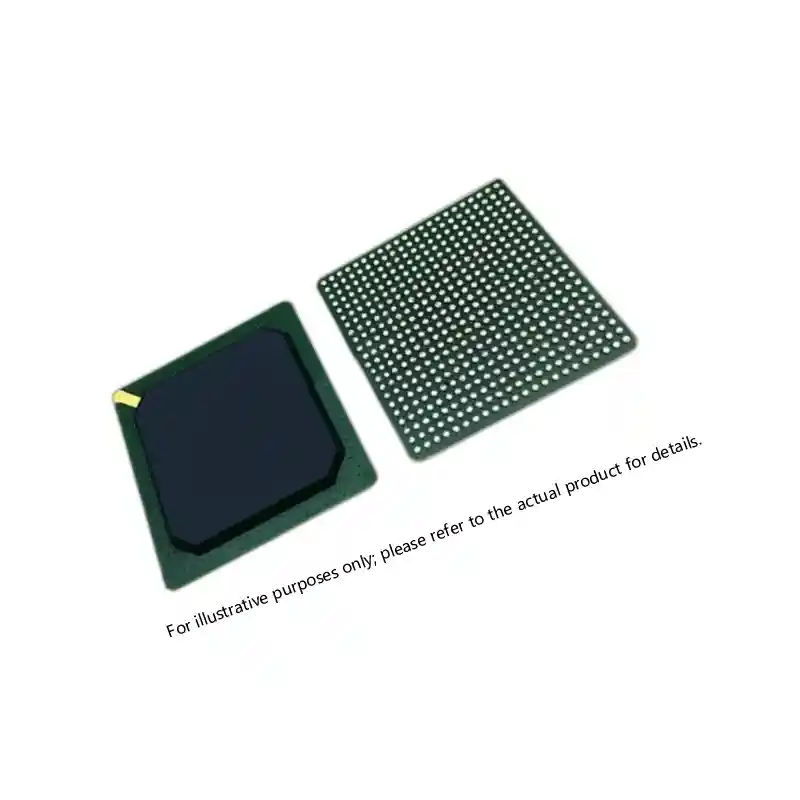
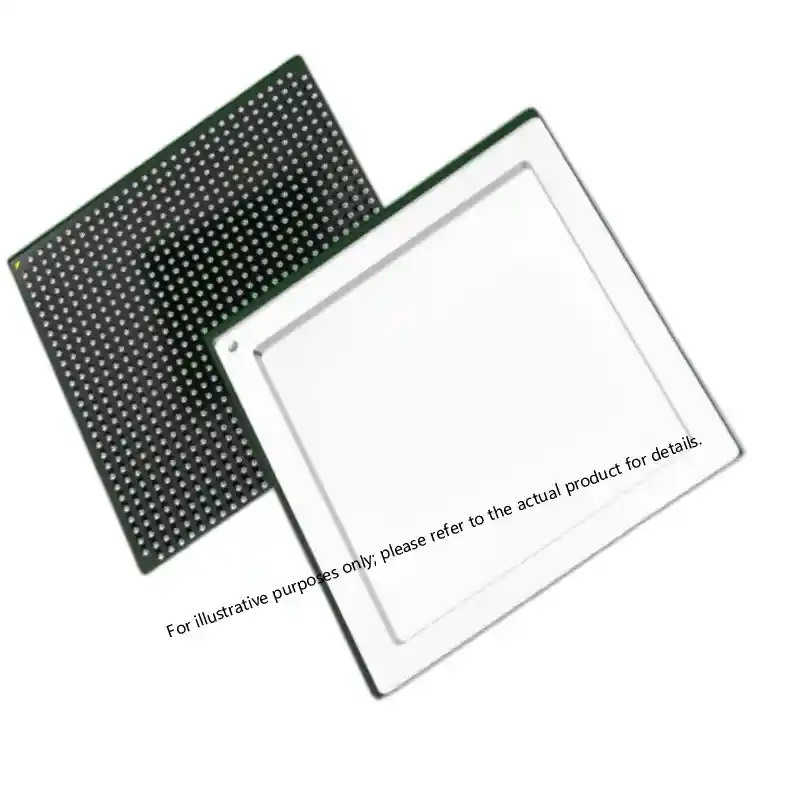
The most overlooked factor in next-generation FPGA adoption is the transition from volatile SRAM-based configuration to non-volatile and hybrid approaches. Defense programs that used to accept the reconfiguration overhead of Xilinx Virtex-4 and Virtex-5 devices now routinely specify FPGAs that can power up and be operational within microseconds without an external configuration memory. This is not a preference; it is a requirement driven by power sequencing in avionics line-replaceable units where configuration delay can trigger watchdog timeouts that cascade into system-level faults. I have seen this exact failure mode in a helicopter mission computer, and the fix was not a firmware patch but a hardware change to a Microsemi (now Microchip) SmartFusion2 device that booted from internal flash.
Another adoption driver that rarely appears in marketing literature is the de facto discontinuation of older package options. Many defense programs designed around 1.0mm ball-pitch BGA packages in the 2000s are now confronting the reality that those packages are not offered on 28nm and 16nm nodes. Moving to a 0.8mm or finer pitch forces a PCB redesign, which in turn forces a full requalification cycle. Some programs choose a next-generation FPGA solely because it is available in a thermally enhanced flip-chip BGA that can be directly assembled onto existing board layouts with minimal rework. This is not a performance upgrade; it is a sustainment bridge.
The Xilinx Kintex-7 and Virtex-7 families, despite being introduced earlier, remain heavily adopted in 2025 because they sit at the intersection of available die banks, proven reliability data, and military temperature range support. Programs that began volume production five to seven years ago with these devices are now extending production runs and will not redesign until 2030 or later. What is changing is that new programs starting in 2025 are less likely to choose Virtex-7 as their baseline. They instead evaluate the Microchip PolarFire family for its lower power and security features, or the AMD Xilinx Zynq UltraScale+ for its Arm processing subsystem integration. The transition is gradual but unmistakable.
If your program is currently evaluating a next-generation FPGA, the decision process should start with two questions that most design reviews postpone until prototype build. First, is the die bank commitment from the manufacturer sufficient for your program’s projected production life, including depot maintenance? A part number on a datasheet means nothing if the foundry has not allocated wafer capacity beyond a three-year window. Second, is the configuration memory architecture compatible with your cybersecurity and anti-tamper requirements? SRAM-based devices that load bitstreams from external flash present a different threat surface than non-volatile FPGAs, and the difference matters when the system must meet NSA Type-1 or similar certification. I recommend asking your distribution partner for a copy of the manufacturer’s die longevity letter and a documented configuration security white paper before freezing a part number.
A concrete example helps. An electronic warfare program I supported upgraded from a Xilinx Virtex-4 SX55 to a Kintex-7 XC7K410T in 2024, not for more DSP slices but because the Virtex-4 was no longer available in the industrial temperature grade required for the sealed pod environment. The Kintex-7 part offered the same temperature range, similar I/O standards, and an available die bank with a confirmed 15-year supply commitment from the manufacturer. The program gained additional digital downconverter channels as a bonus, but the real value was continuing production without a PCB spin. These are the decisions that determine program success far more than benchmark performance numbers.
For satellite applications, the distinction between radiation-tolerant and radiation-hardened is the key adoption filter. Full rad-hard devices like the Xilinx Virtex-5QV or the Microchip RTG4 are mission-essential for geostationary and deep-space missions where total ionizing dose and single-event effects can corrupt both logic and configuration memory. But for the growing number of low-earth-orbit small satellite constellations, many programs are adopting commercial-off-the-shelf FPGAs that have been characterized for radiation tolerance at the wafer level, paired with triple-modular redundancy in the logic design and scrubbing routines that correct configuration upsets. The cost difference is enormous — a rad-tolerant PolarFire device can cost an order of magnitude less than a QML-V qualified rad-hard FPGA, and for a constellation of 200 satellites, that difference dictates the entire program budget.
In man-portable and soldier-worn systems, SWaP-C constraints drive adoption toward the smallest FPGA packages that can still handle sensor fusion and secure communications processing. The Microchip SmartFusion2 and the Intel Cyclone V SoC are common choices because they integrate hard processor cores and FPGA fabric on a single die, eliminating a separate applications processor. Power budgets under 5 watts for the entire digital processing chain are typical, and the static power of SRAM-based FPGAs often exceeds that threshold before dynamic power is added. Non-volatile FPGAs have a decisive advantage here, and programs are choosing them for that reason alone.
Every adoption decision I have observed ultimately balances three variables: technical performance, supply continuity, and requalification cost. The FPGA that wins is rarely the one with the most logic cells. It is the one that fits the existing board, has a die bank that outlives the program, and can be procured with full traceability and compliance documentation. If your team is selecting a next-generation FPGA for a defense program, start with the package, confirm the die longevity, and then evaluate the logic resources. That order saves more schedule than any benchmark benchmark.
For programs with specific configuration memory or security requirements, we regularly supply the Microchip M2S150TS-FCG1152I SmartFusion2 with integrated flash, and the A3PE1500-1FGG676I and A3P1000-FG256I ProASIC3 devices for legacy sustainment. The AX2000-CQ256M Axcelerator device remains available for radiation-intensive applications that cannot tolerate any configuration upset. If your BOM includes any of these part numbers or their equivalents, we can provide availability and documentation within one business day. Send your part numbers and required quantity to xuansc2144@gmail.com, or call our office directly for urgent program support.
Common Questions About Next-Gen FPGA Adoption in Defense
What is the real advantage of non-volatile FPGAs over SRAM-based FPGAs for defense programs?
The operational advantage is configuration determinism. A non-volatile FPGA powers up in microseconds with a known, immutable bitstream, which eliminates the need for external configuration memory and the associated cybersecurity vulnerability of intercepting or corrupting a bitstream on an external bus. For avionics systems where a watchdog timer monitors processor startup, the shorter and predictable power-on sequence can mean the difference between a successful initialization and a system fault that grounds the aircraft. Not every program benefits, but those with tight power sequencing or anti-tamper requirements almost always do.
Can I use a commercial-off-the-shelf FPGA in a military program without full MIL-PRF-38535 qualification?
Yes, but only with additional characterization and acceptance testing that the program is prepared to fund and document. Many defense programs use industrial-temperature-range FPGAs that have been subjected to upscreening per MIL-STD-883 methods, such as burn-in and temperature cycling. The acceptability of this approach depends on the system’s mission profile and the contracting agency’s quality assurance provisions. We have helped programs navigate this by providing lot traceability and coordinating with approved test labs, but the decision always rests with the program’s quality and reliability engineering team.
How long can I expect a next-generation FPGA to remain in production for a defense program?
The answer depends entirely on the manufacturer’s die bank commitment, not on the data sheet’s stated product lifecycle. Some devices have a committed wafer supply of 15 years from the date of the first production order; others have no formal commitment and may be discontinued when a fabrication line is re-tasked. Before locking a part number into your BOM, request a written die longevity letter from the manufacturer through your distribution partner. If such a letter is not available, budget for a technology refresh or last-time buy within five to seven years as a prudent risk mitigation.
What documentation do I need to receive with military-grade FPGAs to satisfy program audit requirements?
At minimum, a Certificate of Conformance to the applicable military specification, full lot traceability paperwork showing the chain of custody from the manufacturer’s wafer fab through the distribution channel, and any test reports from lot-specific screening. For QML-certified devices, the QML certificate and associated test data are required. For upscreened commercial parts, the test lab’s report and the correlation documentation linking the commercial and military part numbers must be included. Our team can provide a documentation checklist tailored to your program’s specific contractual requirements — share your compliance standard and we’ll confirm what is available before shipping.
If you’re interested, check out these related articles:
UltraScale KU085 FPGA Specifications for Defense Systems
Virtex-7 690T FPGA: Performance for Mission-Critical Systems