
Reducing Military Electronic Component Procurement Costs
Table of Contents
- Where Military Component Procurement Costs Actually Accumulate
- Lifecycle Planning Reduces Cost More Than Negotiation Does
- How Does a Last-Time Buy Affect the True Cost of a Military IC
- When Should You Consider Die Banking Instead of Buying Finished Parts
- Second Source Qualification Protects Budgets and Schedules
- How Do You Qualify a Second Source Without Requalifying the Whole System
- Counterfeit Parts Turn Cheapest Quotes Into Losses
- Lock In Military Electronic Component Cost Savings Now
- Common Questions About Military Component Procurement Costs
- Why Do MIL-SPEC Parts Cost So Much More Than Commercial Equivalents
- Can We Use Commercial-Grade Parts to Cut Costs
- Is a Lower Quote From an Independent Distributor Worth the Risk
- How Do Long Lead Times Increase Total Cost
Military electronic component procurement rarely fails because the unit price was too high. It fails when a part arrives without traceability, when a component goes obsolete mid-program, or when a counterfeit device reaches the assembly floor. After twelve years sourcing MIL-SPEC, JANTX, QML, and 5962-series parts for defense programs, I have watched the same pattern repeat: the team that chases the lowest quote usually pays the highest total cost. Real cost reduction comes from lifecycle planning, second-source qualification, and counterfeit avoidance. Each section below shows where savings actually sit and how to capture them without loosening a single compliance requirement.
Where Military Component Procurement Costs Actually Accumulate
Military electronic component procurement cost is rarely set by the unit price alone. Most teams over-index on the negotiated device price while the real spending sits in layers that never appear on the quote comparison sheet. Compliance documentation is the first hidden layer. A mil-spec part needs a Certificate of Conformance, lot test reports, and often MIL-STD-883 screening records before it can enter stock. That paperwork costs money whether or not the device price moves. Incoming inspection is the second. Programs that skip incoming lot testing on hi-rel parts fund rework later, and rework costs far more than the inspection it avoided.
Schedule risk is the third layer. A component quoted below market but delivered 52 weeks late is not cheap. It is a schedule delay financed out of the program budget. Obsolescence is the final layer and usually the most expensive. When a mil-spec FPGA or a JANTX diode moves to end-of-life without warning, the forced redesign or last-time buy adds cost that no price negotiation would have prevented.
The table below separates what procurement teams typically chase from what actually determines total cost.
| Cost layer | What it looks like in practice | Where the savings actually sit |
|---|---|---|
| Unit price | The negotiated device cost on the purchase order | Often the smallest lever once compliance is locked |
| Compliance documentation | C of C, lot test reports, screening records | Prevents rejection, reinspection, and schedule stalls |
| Schedule risk | Long lead times pushing milestones | Early stock locks delivery and protects the budget |
| Obsolescence | EOL notices forcing redesign or last-time buys | Lifecycle planning avoids forced purchases |
Across defense programs we source, the purchase price of a mil-spec FPGA is frequently lower than the cost of the documentation pack that proves it is authentic. Teams that measure only unit price miss the largest savings.
Lifecycle Planning Reduces Cost More Than Negotiation Does
Negotiation has a floor. A distributor cannot sell below its cost of authenticating inventory, and a manufacturer will not discount mil-spec parts into a loss on a short run. Lifecycle planning has no such floor because it moves cost out of the program rather than out of the supplier’s margin.
Start with the bill of materials. Separate the parts that are active, the parts approaching end-of-life, and the parts already obsolete. The second and third groups are where money leaks. A part marked “not recommended for new design” still needs five to ten years of sustainment if the platform is fielded. Waiting for the final buy notice forces a panic purchase at whatever price the market sets.
How Does a Last-Time Buy Affect the True Cost of a Military IC
A last-time buy looks like a single large order, but the true cost includes storage, handling, and the risk of latent defects sitting in a warehouse for years. Financially it is often cheaper to buy staged quantities through a distributor that holds stock at controlled conditions than to tie up program capital in a decade of inventory. The comparison depends on the part, the storage environment, and the program’s sustainment horizon.
When Should You Consider Die Banking Instead of Buying Finished Parts
Die banking matters when a part is still qualified but no longer packaged for production. If the foundry will release tested die, the program can buy the die and schedule packaging as needed. This is not a universal answer. It works for FPGAs, ADCs, and processors with known die sources and stable packaging partners. For a JANTX discrete transistor, die banking rarely justifies the setup cost. The decision belongs in the BOM review, not after the EOL notice.
Second Source Qualification Protects Budgets and Schedules
Single-source parts put the program’s cost at the supplier’s mercy. Adding a second source is not about replacing the primary supplier. It is about creating a credible alternative that keeps lead times and prices honest. Qualifying that second source is the sticking point.
The first step is to separate form-fit-function equivalence from full qualification. A second-source mil-spec part with the same 5962-series drawing number and the same screening level does not require the same qualification effort as a new design. The paperwork still matters. The C of C, the lot traceability, and the test reports must match what the primary source supplied.
How Do You Qualify a Second Source Without Requalifying the Whole System
Start at the component level, not the system level. Confirm the second source’s part number maps to the same military drawing, the same package, and the same temperature range. Then run incoming lot inspection against the original qualification baseline. If the device passes the same electrical tests and the same screening, the system qualification can stay intact. One loophole to watch is a distributor offering “equivalent” parts that are actually commercial versions with a different screening history. That is not a second source. That is a new risk.
If your design includes a part that has slipped into end-of-life status, confirm remaining die or finished inventory before you accept a 52-week lead time quote. Send the part number and your annual usage to xuansc2144@gmail.com.
Counterfeit Parts Turn Cheapest Quotes Into Losses
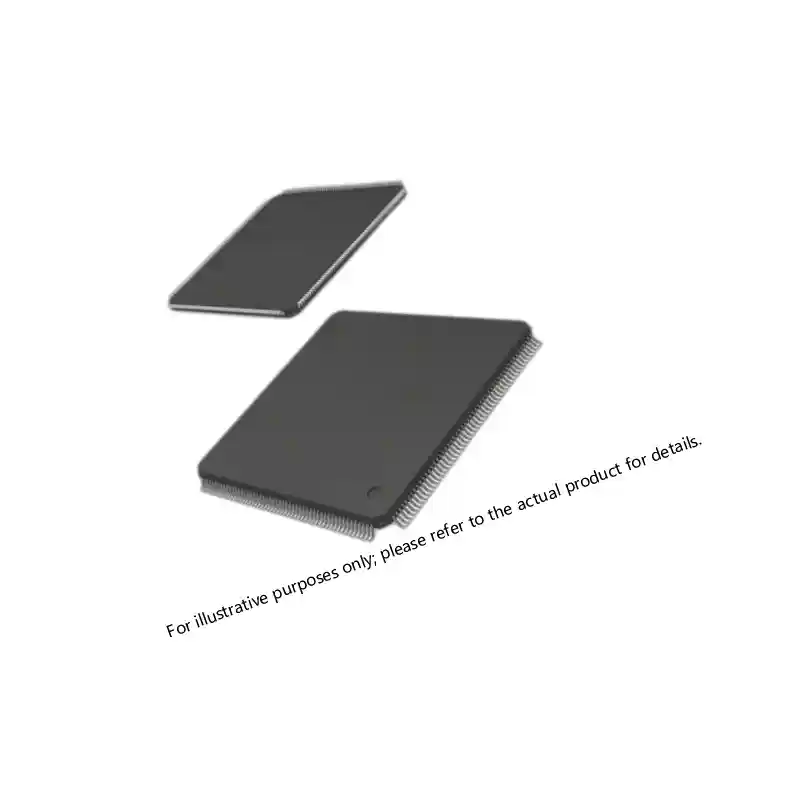
I have seen a batch of JANTX transistors offered well below the market price fail incoming lot inspection. The savings on paper would not have covered the rework and the schedule delay that followed. Counterfeit parts enter the supply chain through the least disciplined path, and price is usually the bait.
Authentication starts with documentation, not with a visual check. A C of C that cannot be traced to the original manufacturer or to an authorized chain is not authentication. Lot test reports and screening records under MIL-STD-883 give the device a verifiable history. Parts without that history carry a risk no discount can offset.
Procurement teams sometimes treat authentication as an overhead cost and strip it out to save money. That move transfers the cost to the production floor, where a failed part stops a line, not to a ledger entry that can be absorbed. Keeping verification inside the purchase process is the cheaper route every time.
Lock In Military Electronic Component Cost Savings Now
Cost reduction in military component procurement is a planning discipline, not a negotiation target. If your BOM carries single-source parts, if lead times are pushing milestones, or if an end-of-life notice just landed on your desk, the cheapest action is to lock in authentic stock before the market moves against you. Send your part numbers, target quantities, and the required screening level to xuansc2144@gmail.com with a note on your program timeline. I will confirm authentic inventory, the documentation package, and a delivery window before you commit budget. That sequence protects the schedule and the cost baseline at the same time.
Common Questions About Military Component Procurement Costs
Why Do MIL-SPEC Parts Cost So Much More Than Commercial Equivalents
The price reflects the screening, the documentation, and the traceability burden. A commercial part is built to a commercial datasheet and shipped with a packing slip. A MIL-SPEC part is lot tested, often screened to MIL-STD-883, and shipped with a C of C, traceability records, and test reports. You are not paying for a stronger device in every case. You are paying for the evidence that the device is what it claims to be and will behave as the qualification predicts. Programs that skip this evidence pay for it later in failure analysis and rework.
Can We Use Commercial-Grade Parts to Cut Costs
It depends on the qualification requirement and the operating environment. In a benign ground station with a documented upscreening plan, a commercial part can be acceptable. In a missile, a fighter, or a radiation environment, commercial parts usually fail the reliability case. The answer is not to assume either direction. The answer is to match the part grade to the system’s qualification envelope and to document that decision before procurement, not after a field failure.
Is a Lower Quote From an Independent Distributor Worth the Risk
A lower quote is not automatically a risk, and a higher quote is not automatically protection. The risk sits in the proof, not the price. An independent distributor that supplies full traceability, a manufacturer-backed C of C, and lot test records can be a legitimate lower-cost path. A distributor that offers only a part number and a promise is quoting on a different product altogether. Across the programs I source for, the deciding factor is always the documentation package, never the discount.
How Do Long Lead Times Increase Total Cost
Long lead times convert inventory cost into schedule cost, and schedule cost compounds. A 52-week item forces the program to buy early, hold stock, and still risk a line-down if the delivery slips. I have watched teams accept a cheaper quote with a longer lead time and then pay more in schedule recovery than the price difference ever returned. The lower price only matters if the part arrives when the build needs it. If a long lead time part is threatening your schedule, share the requirement and I will check distributor stock against your qualification constraints before you accept a slippage.
If you’re interested, check out these related articles:
UltraScale KU085 FPGA Specifications for Defense Systems
Virtex-7 690T FPGA: Performance, Packaging, and Reliability Insights
XCKU085 UltraScale FPGA: Performance for Critical Systems
XCKU115 UltraScale FPGA: Powering Critical Defense Systems
Virtex-7 XC7VX690T: Performance, Reliability, and Integration