Sourcing VICOR DCM Military Power Modules for Defense Programs
Table of Contents
- VICOR DCM Module Specifications and Key Parameters
- Military Qualification and Environmental Survivability
- Procurement Realities: Lead Times, Obsolescence, and Counterfeit Exposure
- How to Authenticate and Qualify a DCM Module Before Board‑Level Integration
- Evaluating a Supplier for VICOR DCM Military Modules
- Procuring VICOR DCM Modules for Mission‑Critical Systems
- Common Questions About VICOR DCM Military Power Modules
VICOR DCM military power modules have become a go-to choice for defense contractors needing compact, high‑efficiency DC/DC conversion. These isolated ChiP‑package converters combine wide input voltage tolerance with precise regulation and a temperature range that covers extreme operational environments, from desert ground vehicles to high‑altitude avionics. Getting the right module, however, means more than reviewing a datasheet. It requires navigating MIL‑STD qualification, long manufacturing lead times, and a supply chain that guarantees traceable, authentic parts every time. I have spent over a decade sourcing hi‑rel power converters for defense programs, and the DCM series consistently comes up when size, weight, and reliability are non‑negotiable.
VICOR DCM Module Specifications and Key Parameters
DCMs are isolated, regulated DC‑DC converters fabricated with Vicor’s ChiP (Converter housed in Package) platform, which integrates the magnetics and control circuitry into a single surface‑mount or through‑hole package. They operate across a wide input range, often 9 V to 50 V or 18 V to 50 V, and deliver output voltages from 3.3 V to 48 V with excellent line and load regulation. Power ratings span roughly 20 W to 600 W, depending on the case size, with efficiency routinely above 92 %.
A commonly specified part I see in both ground‑based and airborne systems is the DCM3623T36G31C2T00. It accepts a 36 V nominal bus, outputs 3.3 V at 6 A, and fits a compact 36 mm × 23 mm SiP package. Several DCM models also offer a built‑in soft‑start function, output overvoltage protection, and a paralleling feature that lets designers scale current without external components.
| Part Number | Input Voltage | Output | Power | Package | Typical Efficiency | MIL‑STD Compliance |
|---|---|---|---|---|---|---|
| DCM3623T36G31C2T00 | 18 V–50 V | 3.3 V / 6 A | 19.8 W | SiP 36 × 23 mm | 93 % | 704, 461, 810, 202 |
| DCM2322T50T2660T60 | 9 V–50 V | 24 V / 2.5 A | 60 W | SiP 23 × 22 mm | 92 % | 704, 461, 810, 202 |
| DCM4623TD2K53E0T00 | 18 V–50 V | 15 V / 13.3 A | 200 W | SiP 46 × 23 mm | 94 % | 704, 461, 810, 202 |
For programs that need additional isolation, some DCM variants provide 2250 V DC basic insulation. The modules also feature a wide‑temperature rating from -55 °C to +125 °C, making them suitable for both cold‑soak and engine‑nacelle locations.
Military Qualification and Environmental Survivability
Defense applications require more than good efficiency. The DCM series is engineered to meet MIL‑STD‑704 for aircraft power, including transients and frequency variations, and is tested to MIL‑STD‑461 for conducted and radiated emissions. Environmental durability is verified against key portions of MIL‑STD‑810, covering shock, vibration, humidity, and altitude. The combination means a single module can often replace a custom discrete design, shrinking the power solution by 40 % or more while improving reliability.
During qualification, I have seen programs demonstrate sustained operation at full load and 125 °C case temperature with no derating, using the module’s internal thermal management and minimal cooling. The ChiP packaging, with its low profile and high thermal conductivity, allows direct heat sinking to a cold plate or chassis. For systems that must survive gunfire vibration or hard landings, the DCM’s soldered termination eliminates connector‑induced failures that I have observed in older brick‑style converters. When the power budget is tight, the module’s true‑zero‑current switching architecture keeps light‑load efficiency above 80 %, an advantage for battery‑operated man‑portable electronics.
Procurement Realities: Lead Times, Obsolescence, and Counterfeit Exposure
DCM modules are manufactured in controlled facilities, and standard factory lead times for non‑stocked configurations can extend to 16 weeks or longer. I recall a program that had to redesign a power stage because the originally specified DCM variant went on allocation, pushing delivery to 26 weeks. Early BOM locking and safety‑stock agreements with a distributor that carries military‑grade inventory are the most straightforward ways to avoid this. Vicor announces last‑time‑buys for older DCM models with sufficient notice, but programs that overlook end‑of‑life notices can suddenly find themselves facing a 50‑percent price premium on the grey market.
Grey‑market sourcing also introduces counterfeit risk. A module that looks identical but contains unqualified die or substandard magnetics may pass visual inspection yet fail radiated susceptibility or long‑term burn‑in. If your program uses a niche DCM variant with limited second‑source options, verifying the supply chain becomes the single most important procurement step. Distributors who provide lot‑level traceability, factory‑direct purchase records, and a certificate of conformance for every shipment remove that uncertainty.
How to Authenticate and Qualify a DCM Module Before Board‑Level Integration
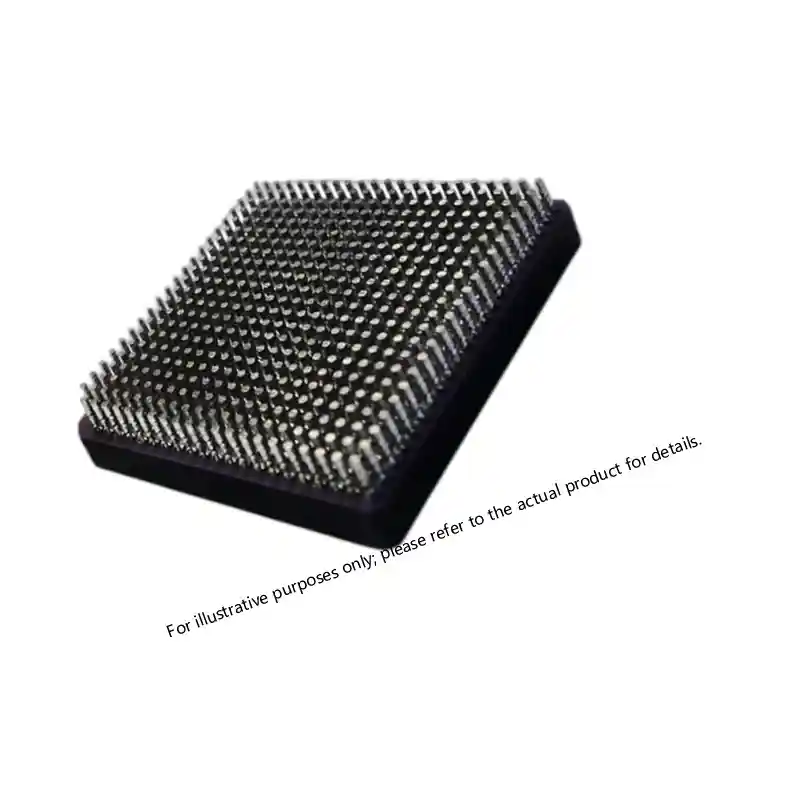
Authenticating a VICOR DCM module starts before the reel is opened. We verify the manufacturer’s label, date code format, and lot number against Vicor’s shipment records. Visual inspection under 10× magnification can reveal re‑marking or inconsistent finish on the package’s top surface. A critical test is measuring the internal control‑pin characteristics: an authentic DCM will exhibit a specific silicon signature that off‑brand copies rarely replicate.
Beyond the IC, we request a certificate of conformance that references the original Vicor purchase order and lists the applicable military specifications. For programs governed by DFARS, the distributor must be able to demonstrate that the module was not sourced from a prohibited supply chain. I always recommend that a receiving inspection include a short functional test at room temperature and under load, comparing startup behavior and ripple against a known‑good reference. Batch testing one module per lot to the full temperature range is a good practice when the lot will be used across multiple production panels.
Evaluating a Supplier for VICOR DCM Military Modules
Not every distributor that stocks commercial Vicor parts is equipped to support a defense program. I look for AS9120 certification, a documented counterfeit‑avoidance procedure that meets SAE AS6081, and the ability to hold secured inventory under a long‑term schedule agreement. A qualified supplier should be able to provide a complete data package with every shipment: certificate of conformance, test reports, and if required, destructive physical analysis (DPA) results.
Sparkle Electronics, for example, maintains an expanding stock of military‑grade VICOR DCM modules including the DCM3623 and several other variants, with full lot traceability from Vicor factory shipments. Our team supports BOM consolidation for power modules, helping programs reduce the supplier count without compromising compliance. In one recent avionics upgrade, we were able to supply a mix of DCM converters and ancillary filtering components from a single delivery, cutting the purchasing team’s administrative load noticeably. If your program is currently qualifying a DCM module, asking your supplier to demonstrate an unbroken chain of custody from Vicor to their facility is a straightforward evaluation step.
Procuring VICOR DCM Modules for Mission‑Critical Systems
The earlier your program engages with a qualified supplier, the more flexibility you have in choosing the exact DCM variant and negotiating a delivery timeline. I recommend sharing your part number, estimated annual usage, and any required compliance tests as soon as the power architecture is defined. That allows the distributor to reserve factory allocation, stage inventory, and prepare documentation tailored to your contract’s quality clauses.
We help defense teams secure VICOR DCM modules with confirmed lead times and full traceability. Send your part number and quantity to xuansc2144@gmail.com, and we will verify availability, confirm documentation, and support your program from prototype through production. Sparkle Electronics is a specialized distributor of military‑grade and hi‑rel components, serving defense contractors in over 30 countries with authentic, compliant supply.
Common Questions About VICOR DCM Military Power Modules
What input voltage ranges do VICOR DCM modules support?
DCM modules cover several nominal bus ranges, the most common being 9 V to 50 V and 18 V to 50 V. The wide input tolerance allows a single module to ride through aircraft power transients and vehicle cranking dips, simplifying the front‑end regulation. Always verify the steady‑state and transient limits in the part‑specific datasheet because some variants are optimized for 28 V MIL‑STD‑704 aircraft buses while others target 270 V high‑voltage DC systems.
Are VICOR DCM modules compliant with MIL‑STD‑704?
Yes, most DCM modules designed for defense applications are characterized for MIL‑STD‑704A through F, covering normal, abnormal, and emergency voltage conditions. The modules’ control loop is fast enough to maintain regulation during 50 ms interruption transients without external hold‑up capacitance, which I have confirmed in lab testing with a programmable aircraft power supply. A compliance test report is typically available from Vicor through an authorized distributor.
How long is the lead time on a VICOR DCM module?
Factory lead time for standard DCM models is usually 10 to 16 weeks, but configurations with uncommon voltages or special screening can push that to 20 weeks. Stocked parts from a distributor with military inventory can ship in days. I recommend contacting a supplier with your specific part number early to lock in allocation, especially during year‑end when defense purchasing spikes.
Can I get samples for prototype integration?
We regularly supply small quantities of DCM modules for engineering evaluation and qualification testing. The modules ship with a commercial or industrial datasheet; the full military compliance report is provided once the production part number is locked. If you need a DCM module with a specific output voltage that is not in our stock, we can work with Vicor to arrange a sample build.
How do I ensure the VICOR DCM modules I receive are authentic?
Request a certificate of conformance that references the Vicor factory lot number and verifies the chain of custody. Perform a visual inspection for package marking consistency, and if practical, test one module from the lot for startup behavior and full‑load efficiency against the datasheet. If your program’s quality plan requires DPA or extended burn‑in, we coordinate with an approved test house and provide the results alongside the shipment. If you are uncertain about the authenticity or documentation of your current supply, share your requirements and we will confirm compliance documentation availability. Email xuansc2144@gmail.com.
If you’re interested, check out these related articles:
UltraScale KU085 FPGA Specifications for Defense Systems
XC7VX485T FPGA: Virtex-7 Performance for Defense