
Hi-Rel Components for Military Tactical Radio Systems
Table of Contents
- What Makes a Component Hi-Rel for Tactical Communications?
- How Do Frequency Hopping and Encryption Shape the BOM?
- Why Does Traceability Matter More Than Unit Price?
- How Should Programs Manage Obsolescence in Tactical Radio Systems?
- What Does a Practical Sourcing Path Look Like?
- What Questions Do Buyers Ask About Hi-Rel Communications Components?
- How Do I Know If a Part Is Truly Hi-Rel?
- Is a Commercial Grade Part Acceptable for Non-Combat Communications?
- Why Do Lead Times Vary So Much Between Similar Part Numbers?
- How Can I Confirm a Distributor Is Acceptable for a Defense Program?
Hi-Rel components for military tactical radio systems sit at the intersection of two unforgiving requirements: the radio must keep working through temperature swings, vibration, and signal interference, and every part in the BOM must carry documentation that survives a defense audit. From frequency-hopping SINCGARS-class platforms to software-defined radios, procurement teams cannot treat these parts as interchangeable with commercial equivalents. I have spent twelve years sourcing MIL-SPEC FPGAs, ADCs, and power modules for communications programs. The difference between a qualified radio and a failed qualification comes down to environmental screening, traceability, and lifecycle planning.
What Makes a Component Hi-Rel for Tactical Communications?
The term hi-rel gets used loosely, but in a tactical radio it has a specific meaning: the component has been built, screened, and documented to stay within specification across the full military temperature range, typically -55°C to +125°C. Vibration and shock matter because a manpack or vehicle-mounted radio spends its life being knocked around. A QML-qualified FPGA carries manufacturer qualification data; a JANTX diode carries DLA-recognized screening. The commercial part with the same function does not carry either, and that single difference is where most qualification failures start. I have watched a program lose months because a commercial-grade capacitor drifted out of tolerance during thermal cycling, and the resulting failure analysis could not be closed without replacing the entire lot.
Component selection for a tactical radio BOM usually falls into the following groups:
| Function | Common Hi-Rel Options | What to Check |
|---|---|---|
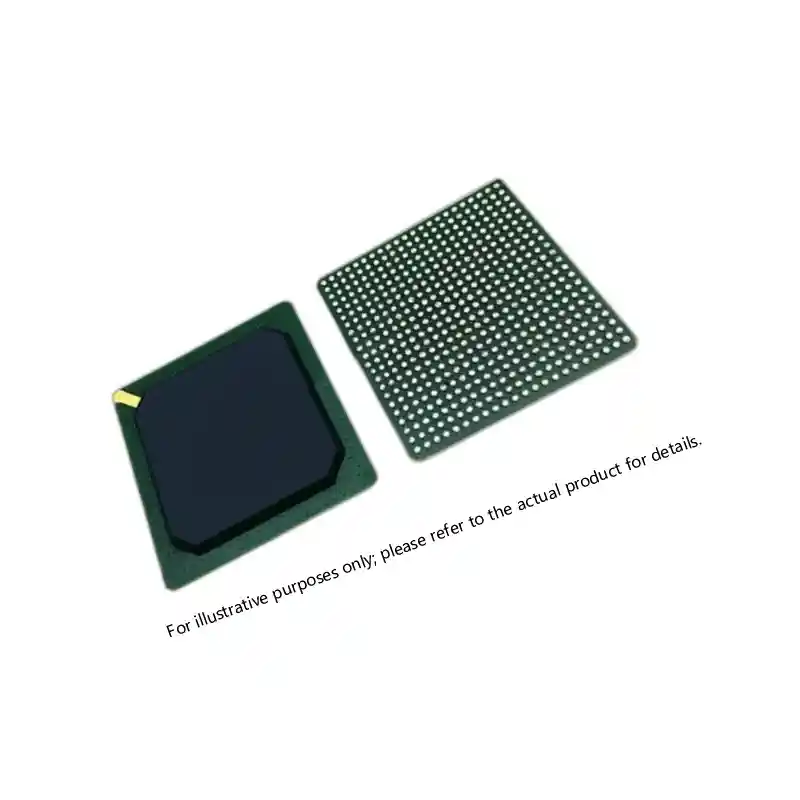
| Digital processing | QML FPGAs such as Microsemi ProASIC3 or Xilinx 5962-series parts | Temperature range, configuration memory, security features |
| Signal conversion | MIL-PRF-38535 ADCs and DACs from ADI or Teledyne e2v | Sampling rate, single-event tolerance, screening flow |
| Power conversion | Vicor or VPT military DC-DC modules | Input range, derating, hermetic packaging |
| Memory and configuration | Hi-rel SRAM, EEPROM, and configuration PROMs | Data retention, radiation tolerance, lot traceability |
| Interface and timing | MIL-STD-1553 transceivers, RS-422 drivers, clock PLLs | Protocol compliance, extended temperature, burn-in records |
How Do Frequency Hopping and Encryption Shape the BOM?
Frequency hopping does not just change the RF section; it pushes speed and timing requirements through the signal chain. A hopping radio must switch frequencies in microseconds, which means the synthesizer loop bandwidth, the DAC update rate, and the FPGA timing closure all move together. That is why we ask for the waveform description early. A narrowband voice radio and a wideband data link can both be called tactical communications, but their BOMs look nothing alike. For secure systems, the FPGA or processor must carry protected configuration and key storage capability. I have worked on secure radio builds where the most important component was not the power amplifier but the configuration PROM, because a tampered bitstream defeats the encryption before the radio ever transmits.
Why Does Traceability Matter More Than Unit Price?
Traceability is the only thing that separates a qualified part from a functionally identical counterfeit. A unit price cannot tell you whether a lot was pulled from a closed fab, remarked, or mixed with commercial stock. In defense communications, the documentation chain matters as much as the silicon. We check the certificate of conformance, the original manufacturer lot number, and the distributor’s chain of custody before a part enters our inventory. For programs under DFARS or NDAA Section 889 restrictions, that documentation has to survive an audit. I have rejected parts that looked correct in photos because the lot date did not align with the manufacturer’s lifecycle data. When a radio program is on the line, a cheaper part with no paper trail is the most expensive decision you can make.
If your program involves frequency hopping, encryption, or another specification where a single substitution can invalidate qualification, it is worth confirming the exact screening and documentation package before finalizing your BOM. Send your part numbers and quantity to xuansc2144@gmail.com and we will confirm stock, documentation status, and any screening gaps.
How Should Programs Manage Obsolescence in Tactical Radio Systems?
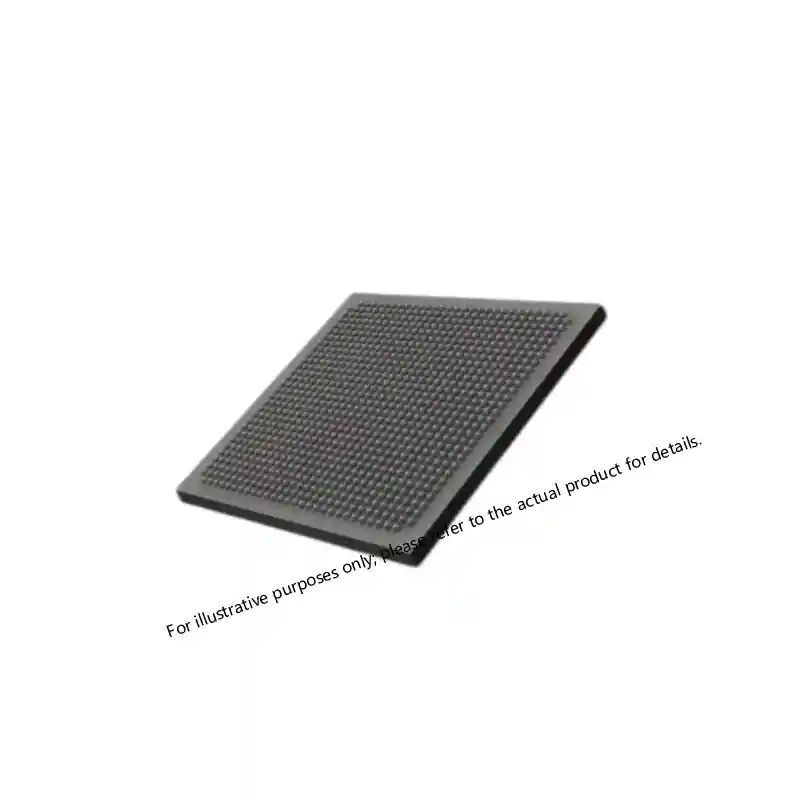
Tactical radio programs run for decades, but semiconductor fabs do not. An FPGA or ADC that was current during design may be discontinued before the first retrofit cycle. Obsolescence management starts with a lifecycle forecast and a die banking or last-time buy decision before the manufacturer issues the discontinuation notice. I recommend mapping every sole-source component against an alternate part with the same package and pin-out, even if the alternate is never used. That exercise is cheaper when the program is funded than when a production line stops. For memory and configuration devices, the risk is worse because older military PROMs and SRAMs disappear quickly. We hold inventory on hi-rel FPGAs, ADCs, and memory parts because a tactical radio cannot wait six months for a broker to find a tray of parts in unknown condition.
What Does a Practical Sourcing Path Look Like?
Practical sourcing for hi-rel communications components starts with a BOM that includes the required screening level, not just the part number. That means specifying 5962-series or QML where the program requires it, listing the operating temperature range, and noting any anti-counterfeit or DFARS constraints. From there, the work is stock verification, documentation review, and test coordination. The pain point we hear most often is the same: a buyer has quotes, but no confidence that the parts will arrive with the right paperwork. That gap is what Sparkle Electronics closes. Send your BOM, part numbers, and quantity to xuansc2144@gmail.com, and we will confirm availability, documentation status, and any screening gaps before you commit. If you are in an obsolescence decision, include your timeline and we will check stock and alternates.
What Questions Do Buyers Ask About Hi-Rel Communications Components?
How Do I Know If a Part Is Truly Hi-Rel?
A truly hi-rel part is identified by its screening and qualification documents, not by the word hi-rel in a listing. The part number should map to a MIL-PRF-38535 QML listing, a 5962-series drawing, or a JANTX/JANTXV slash sheet. The documentation should include the manufacturer lot number, test records, and a certificate of conformance. A part with none of these is a commercial component with a military-sounding description. We treat that distinction as absolute because a downstream audit will not accept a marketing label in place of paperwork.
Is a Commercial Grade Part Acceptable for Non-Combat Communications?
Many teams assume commercial grade is acceptable for a development radio, then discover the same part cannot carry into production without requalification. A commercial part may work on the bench, but it will not have the temperature, shock, or lot traceability data required for a military qualification package. The safer path is to use hi-rel parts where the radio will fly, and commercial parts only where the program has written approval for breadboard or lab use. If you are not sure which side of that line your part falls on, confirm with your program’s quality team before ordering.
Why Do Lead Times Vary So Much Between Similar Part Numbers?
Two similar part numbers can have very different lead times because one may be in distributor stock while the other requires a factory build with a scheduled screening lot. QML parts tied to a specific fab or package run often carry the longest cycles, especially when the original manufacturer has moved the part to a limited support tier. We watch these signals as part of standard quoting because a part number that looks available in a database may not have a compliant source. The practical move is to ask for stock location, documentation status, and the screening lot date before you compare lead times.
How Can I Confirm a Distributor Is Acceptable for a Defense Program?
In programs I have supported, the question usually comes down to documentation and chain of custody rather than a wall of certificates. Most defense programs accept a distributor when the source can show the part’s chain of custody from the original manufacturer or a franchised source, along with the correct certificate of conformance. We maintain traceability records on every hi-rel part and confirm screening levels before shipment. If your program requires QML, JANTX, or 5962-series documentation, send the part number and required documents to xuansc2144@gmail.com and we will confirm what is available before you make the call.
If you’re interested, check out these related articles:
XCKU085 UltraScale FPGA: Performance for Critical Systems
XC7VX485T FPGA: Virtex-7 Performance for Defense
XC7VX485T Virtex-7 FPGA: Performance and Sourcing for Defense
A1020B-PG84B ACT2 FPGA: Specs, Sourcing, and Availability
Virtex-7 690T FPGA: Performance for Mission-Critical Systems