
Hi-Rel Electronic Components for Shipboard Defense Systems
Table of Contents
- Shipboard Environmental Stress Factors for Hi-Rel Electronic Components
- MIL-SPEC and Naval Compliance Requirements for Shipboard Systems
- Salt Fog, Shock, and Condensation in Shipboard Component Selection
- Long Term Availability and Configuration Control for Shipboard Programs
- Pre-BOM Compliance Verification for Shipboard Defense Programs
- Common Questions About Shipboard Hi-Rel Electronic Components
- Are commercial-grade components acceptable in shipboard systems?
- What documentation should accompany each hi-rel component?
- How do I plan for long term availability when a part goes obsolete?
- What is the difference between conformal coating and hermetic sealing in naval use?
Shipboard military systems subject electronic components to a combination of stress factors that land-based platforms rarely see. Salt fog, condensation, shock, vibration, and long service intervals work together to turn a component that passes bench testing into a field failure if the original part selection ignored the naval environment. I have spent twelve years sourcing hi-rel electronic components for shipboard defense systems, and the recurring failure mode I see is not electrical overstress but environmental mismatch. The practical route to avoid this is to choose components whose finishes, packages, and qualification documents match the actual shipboard compartment, not just the datasheet.
Shipboard Environmental Stress Factors for Hi-Rel Electronic Components
A ship is never really dry. Condensation works its way into connector backshells and under vented covers, while salt fog attacks exposed metal at a rate that surprises engineers who have only designed for land vehicles. Diesel and turbine vibration loosens press-fit terminations over thousands of operating hours, and shock loads from weapon release or heavy sea states fracture solder joints that would be adequate on a static bench. I have seen boards returned from a coastal patrol platform with corrosion under a conformal coating that had been applied correctly. The coating was not the problem; the component finish underneath had not been specified for continuous chloride exposure.
MIL-SPEC and Naval Compliance Requirements for Shipboard Systems
Shipboard programs do not operate from a single generic standard. The governing documents split between environmental qualification, electromagnetic compatibility, component-level screening, and interconnect performance. A compliant part in a radar system may require a different test sequence than the same part installed in a bridge display. The table below summarizes the core documents we check when a BOM arrives for shipboard use.
| Standard | What It Governs | Shipboard Relevance |
| MIL-STD-810 | Environmental test methods for shock, vibration, humidity, and salt fog | Confirms whether an assembly survives deployment and operational conditions aboard ship |
| MIL-STD-461 | Electromagnetic interference control | Prevents radar and communications emissions from coupling into navigation and weapon control circuits |
| MIL-PRF-38535 | QML microcircuit qualification | Sets screening and conformance requirements for mission system ICs |
| MIL-DTL-38999 | Circular connector performance | Governs environmental sealing and contact retention for shipboard interconnects |
| MIL-PRF-39003 | Tantalum capacitor reliability | Covers qualification for hi-rel power filtering and decoupling |
The point of this review is not to collect documents. It is to confirm that the exact part number, date code, and lot code match the qualification evidence. In my experience, most shipboard nonconformances come from a substitution that looked equivalent on a datasheet but lacked the specific environmental test history the compartment required.
Salt Fog, Shock, and Condensation in Shipboard Component Selection
For a shipboard BOM, the useful question is not whether a part is hi-rel in general, but which environmental qualification it carries. Salt fog is the most direct threat. Chosen components need either hermetic packaging or a qualified conformal-coating process that covers the part, the board edge, and the mating connector. Shock behaves differently. A part that survives a 500 g pulse for one millisecond can still fail later from repeated low-level vibration if the mounting method permits relative motion. For power conversion, I check Vicor DC-DC modules and similar parts only after confirming the input range and baseplate temperature rating against the actual compartment.
Condensation is a materials problem more than a coating problem. Gold-over-nickel lead finishes and glass-sealed packages reduce the corrosion path. Edge connectors must have a finish that is matched to the mating contact, because dissimilar metals under condensation create a galvanic cell. That is why a part number alone is rarely adequate. We ask for the qualified finishes and the assembly drawing before committing to a line item.
If your program involves below-deck compartments with continuous condensation or mast-mounted topside equipment, it is worth confirming the salt fog test duration and mounting orientation before finalizing the BOM. Send your part number and quantity to xuansc2144@gmail.com, and we will check the qualification data against the shipboard profile you specify.
Long Term Availability and Configuration Control for Shipboard Programs
Ship programs routinely outlast the commercial lifecycle of integrated circuits by a factor of two or three. A frigate upgrade planned for 2028 may still require the same FPGA or high-speed ADC in 2040. Configuration control matters more than unit price because a silent manufacturing change can invalidate qualification data without changing the part number. I have worked on programs where a second-source transition was delayed by months because one package outline drawing dimension differed between the original and alternate source. That delay was not caused by component availability; it was caused by incomplete drawing comparison.
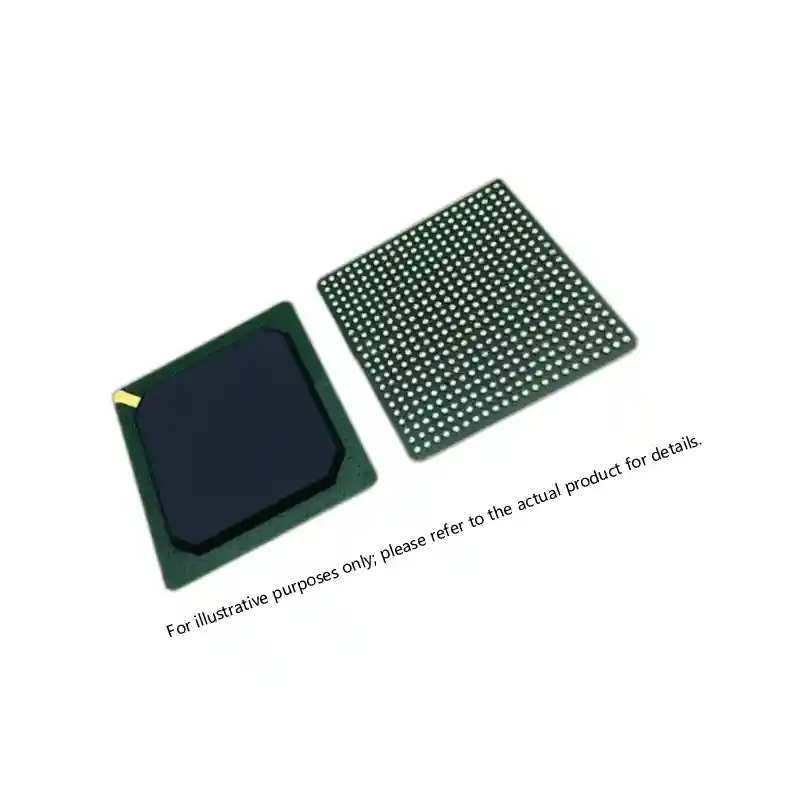
When a part goes obsolete, we evaluate drop-in replacements against the original pinout, timing, and material set. For shipboard equipment, an alternate source that fails the original salt fog or vibration profile is not an equivalent part, even if the electrical specifications match. Last-time-buy decisions need to account for the full repair cycle, not just the production build quantity. The least expensive option is often the one that avoids re-qualification rather than the one with the lowest unit price.
Pre-BOM Compliance Verification for Shipboard Defense Programs
By the time a shipboard BOM reaches procurement, the highest-cost failure is not the component price but the rework after integration. Re-qualifying a single line item can delay installation, reopen test reports, and require engineering review across multiple compartments. That is the point where a low-cost substitution becomes expensive.
Before you freeze the BOM, confirm three things for every line item. The environmental qualification must match the compartment profile. The traceability papers must cover the complete lot. The part configuration must be the same revision that was qualified. Our team at Sparkle Electronics reviews this documentation against your ship class environment and current stock. Send your part number, quantity, and ship program timeline to xuansc2144@gmail.com and we will confirm compliance and availability before you commit.
Common Questions About Shipboard Hi-Rel Electronic Components
Are commercial-grade components acceptable in shipboard systems?
Only for non-critical functions in conditioned compartments, and that decision needs to be documented at the program level. A commercial part can work in a bridge display that never sees condensation, but it becomes a different risk picture when installed near a hatch or on a mast. The acceptance decision belongs to the program’s environmental qualification authority, not the buyer. If the part is commercial, confirm that the specific lot has been inspected and that the program has accepted the reduced qualification coverage.
What documentation should accompany each hi-rel component?
A certificate of conformance alone is not enough for shipboard use. The shipment should include the full traceability trail from manufacturer lot, through any franchised or independent distribution, to the final packing slip. For QML devices, the certification should reference the slash sheet and the screening level. For passive parts, the lot documentation should show the MIL-PRF specification and any destructive physical analysis results when the program requires it. If the paperwork cannot connect a date code to a specific lot, the part is not fully traceable.
How do I plan for long term availability when a part goes obsolete?
It depends on whether the part is still in production, in last-time-buy status, or already discontinued. If production is ending, buy enough to cover build, spares, and repair for the planned service life, but verify storage conditions before accepting the inventory. If the part is already discontinued, look for drop-in replacements that match pinout, timing, and environmental qualification, not just electrical specs. Shipboard programs should keep a configuration-controlled approved vendor list because the worst time to find an alternate source is after a failure has already stopped a repair.
What is the difference between conformal coating and hermetic sealing in naval use?
In shipboard programs I have worked on, the deciding factor is usually whether the assembly sits in a conditioned space or on an exposed mast. Conformal coating slows moisture, salt, and contamination but does not stop them. Hermetic sealing isolates the die from the environment entirely and is the correct choice when condensation or salt spray is unavoidable. The tradeoff is cost and package size. Share your equipment layout and environmental test profile, and we will confirm whether the selected parts need hermetic packages or only qualified coating.
If you’re interested, check out these related articles:
Virtex-7 690T FPGA: Performance for Mission-Critical Systems
Virtex-7 XC7VX690T: Performance and Reliability Insights
A1020B-PG84B ACT2 FPGA: Specs, Sourcing, and Availability
Virtex-7 690T FPGA: Performance, Packaging, and Reliability Insights
Virtex-7 XC7VX690T: Performance, Reliability, and Integration