
How Defense Contractors Source Authentic Military-Grade FPGAs
Table of Contents
- The Authenticity Risk in Military-Grade FPGA Sourcing
- What “Military-Grade” Actually Means: QML, 5962, and MIL-PRF
- A Seven-Step Procurement Process for Authentic Military FPGAs
- Distributor Qualification: AS9120, AS6081, and Counterfeit Controls
- FPGA Selection for Defense: Family, Package, and Configuration Trade-Offs
- Documentation, Traceability, and Incoming Inspection
- Source Authentic Military-Grade FPGAs with a Traceable Supplier
- Frequently Asked Questions About Military-Grade FPGA Sourcing
- What is the difference between QML and JANTX?
- Can a distributor sell military-grade FPGAs without a C of C?
- What should I check on a 5962 part number?
- How do I avoid counterfeit or relabeled FPGAs?
- When should I choose a flash-based FPGA over SRAM-based?
- References
For defense procurement teams, the military-grade FPGA distributor you approve is a supply-chain control point, not a routine vendor decision. Authentic parts can be replaced by relabeled, remarking, or configuration-incompatible material when lot traceability is weak, and the consequences of a misrepresented device are rarely visible until qualification or field deployment. This guide covers the qualification, documentation, verification, and lifecycle controls defense contractors should apply when sourcing military-grade FPGAs through distribution.
The Authenticity Risk in Military-Grade FPGA Sourcing
Military-grade FPGAs concentrate risk because they are expensive, long-lead, and often tied to mature designs with frozen part numbers. Counterfeit and suspect-parts risk is highest where original equipment manufacturers have discontinued a package or speed grade. In those situations, buyers are pushed toward independent distribution, excess inventory, or questionable gray-market channels.
A distributor’s claim of “military grade” is not enough. The supplier must be able to connect each device to a verifiable chain of custody, an approved device class, and the screening or qualification record the program requires. Procurement teams should treat visual inspection as a preliminary check only. The real protections are documentary: manufacturer lot records, test summaries, C of C, and packaging integrity.
What “Military-Grade” Actually Means: QML, 5962, and MIL-PRF
Not every military program uses the same device qualification pathway. The most common control points are QML devices, 5962 slash-sheet parts, and JANTX/JANTXV discrete or semiconductor devices. QML-qualified microcircuits are built and tested under the requirements of MIL-PRF-38535 [1]. The 5962 numbering system then identifies the specific device type, device class, case outline, and lead finish.
Screening and conformance testing follow MIL-STD-883 [2]. Method-level testing can include temperature cycling, burn-in, centrifuge, particle impact noise detection, and electrical verification over the specified military temperature range. For many FPGA and logic devices, that range is -55°C to +125°C, but the useful requirement is not the headline temperature range alone. The buyer must verify which test methods apply to the exact slash sheet and device class being procured.
A disciplined sourcing review therefore checks four things before price: device class, slash sheet or manufacturer part number, temperature and package suffix, and the test documentation associated with that lot.
A Seven-Step Procurement Process for Authentic Military FPGAs
A workable procurement sequence for defense contractors is more than “find a part and send an RFQ.” The following seven steps reduce the chance that an authentic-looking FPGA creates a qualification failure later.
Freeze the functional and environmental requirement. Start from the interface control document, program specification, and reliability plan. Speed grade, package, configuration memory, and temperature range must be explicit.
Map the approved part number. Convert manufacturer commercial/catalog numbers to QML, 5962, or JANTX class identifiers where required. Confirm the exact package suffix and lead finish.
Screen the supply chain. Collect manufacturer name, country of origin, date code, lot code, and packaging history for the offer under review. Reject offers that cannot provide lot-level records.
Require a documentation package. The quotation should include or commit to a Certificate of Conformance, test summary, configuration memory compatibility, and evidence of continuous chain of custody.
Source through an authorized or audited distributor. The distributor should demonstrate AS9120 or equivalent quality management and counterfeit-control capability. Independent distribution is acceptable only when documentary rigor is demonstrated.
Inspect incoming material. Use incoming inspection, marking review, X-ray and visual verification where risk justifies it, and sample electrical testing against the original specification.
Lock lifecycle management. Record end-of-life status, last-time-buy options, die banking alternatives, and alternate source candidates before the part becomes unmanageable.
Need a documentation review now? Send your BOM and required date to xuansc2144@gmail.com. A practical RFQ response should identify QML candidates, configuration memory risks, alternate sources, and missing documentation before you commit to a purchase.
Distributor Qualification: AS9120, AS6081, and Counterfeit Controls
Distributor qualifications should be based on process capability, not catalog size. SAE AS9120 defines quality management system requirements for distributors supplying aerospace, space, and defense products [4]. AS6081 supplies the fraudulent and counterfeit electronic part avoidance, detection, mitigation, and disposition framework used by independent distribution organizations [3].
For FPGA sourcing specifically, the distributor should be able to explain how it handles legacy parts. A legacy ACT2 device such as A1020B-PG84B may be years out of production but still required by a fielded system. In that case, authenticity depends on incoming lot verification, historical purchase records, and inspection against the original manufacturer’s package and marking profile.
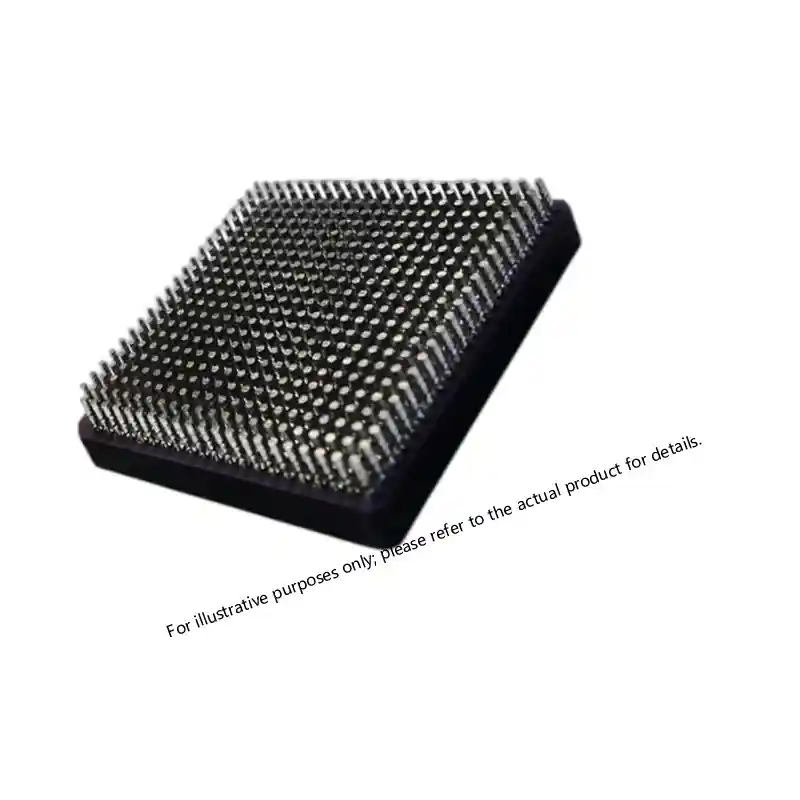
When a design is locked to a specific package and speed grade, every revision of that part needs to be verified against the original procurement record. <A1020B-PG84B ACT2 FPGA: Specs, Sourcing, and Availability> covers the key specifications and sourcing checks for the ACT2 family.
Regulatory screening adds another layer. NDAA Section 889 restricts procurement of covered telecommunications and video surveillance equipment or services from specific Chinese companies [5]. Defense buyers must confirm that the distributor’s supply chain does not introduce prohibited product or prohibited components into the bill of materials. For microelectronics produced through trusted-access programs, the Defense Microelectronics Activity Trusted Foundry and Trusted Supplier framework provides an additional assurance path [6].
FPGA Selection for Defense: Family, Package, and Configuration Trade-Offs
Defense FPGA selection is not a one-size decision. SRAM-based devices from Xilinx and Altera delivery high logic capacity and DSP performance for radar, electronic warfare, and secure communications. Flash-based or antifuse-based devices from Microsemi, Actel, and Microchip families may be selected where configuration security, single-event upset tolerance, or instant-on behavior is a stronger requirement.
Common selection drivers include:
| Device family | Typical defense use | Key sourcing check |
|---|---|---|
| ProASIC3E, such as A3PE3000L-1FGG896I | Low-power control, secure processor interfaces | Package, temperature, configuration, and EOL status |
| SmartFusion2, such as M2S150TS-FCG1152I | Integrated SoC processing with FPGA fabric | Security, package availability, licensing, and design tool support |
| Legacy ProASIC/APA devices, such as APA1000-CQ208B | Sustainment and interface logic | Counterfeit inspection, LTB, and second-source planning |
| Virtex-7 and UltraScale families | Radar, EW, SIGINT, high-throughput processing | Logic density, DSP slices, configuration memory, and screened availability |
For many control and configuration functions, lower-power flash-based devices remain the simplest path. The FPGA & CPLD selection should therefore begin with the configuration requirement before logic density.
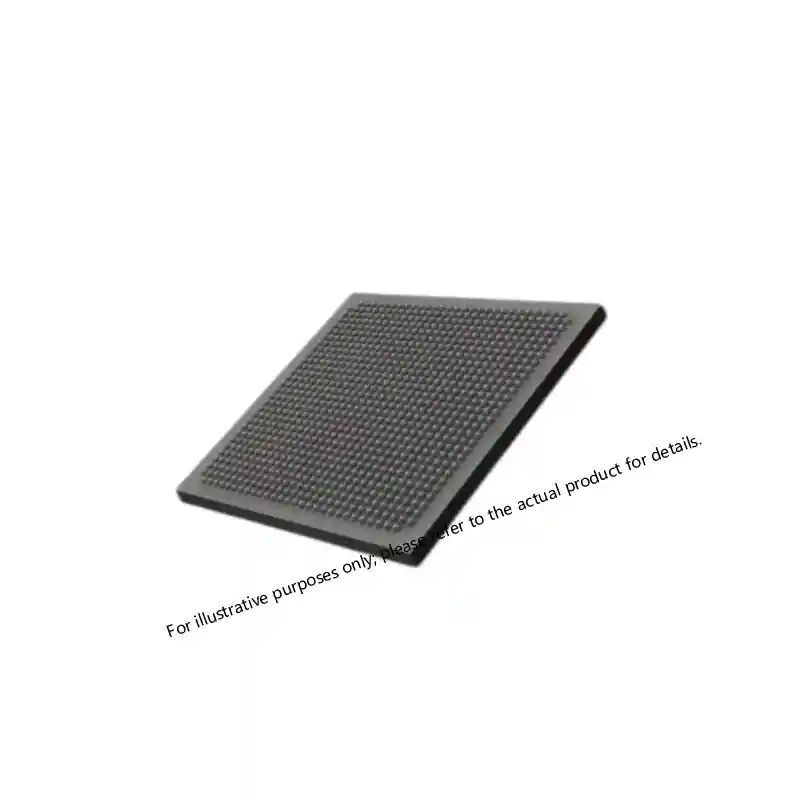
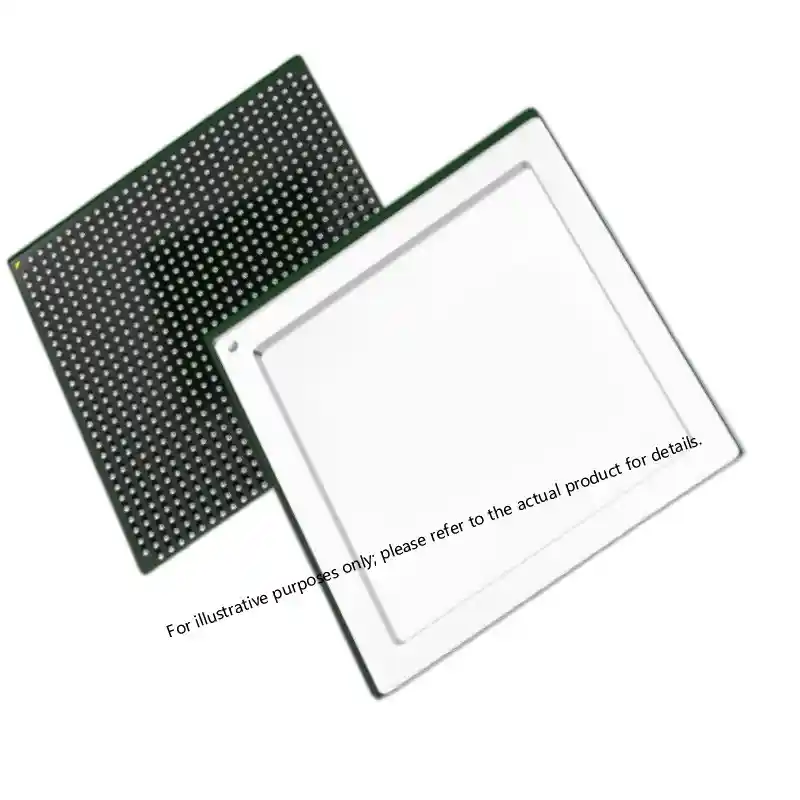
For high-throughput radar, EW, and SIGINT processing, the FPGA decision usually comes down to logic density, DSP slices, speed grade, and package availability. <Virtex-7 690T FPGA: Performance for Mission-Critical Systems> covers the performance and reliability trade-offs defense programs evaluate for mission-critical compute.
For programs moving from legacy Virtex families to newer UltraScale devices, compatibility and configuration memory planning must be handled in the same sourcing decision. <XCKU085 UltraScale FPGA: Performance for Critical Systems> covers the performance envelope and critical-system trade-offs for Kintex UltraScale devices.
Documentation, Traceability, and Incoming Inspection
A completed FPGA transaction should leave a traceable documentation trail. At minimum, the buyer should receive a Certificate of Conformance, lot test summary where applicable, packaging labels with date and lot codes, and photographs of the devices as shipped. The distributor should retain records long enough to support a later government contract audit.
Incoming inspection should follow the same rigor used for qualification. MIL-STD-883 method requirements [2] and AS6081 inspection guidance [3] provide reference points. Marking permanency, pin/ball condition, package seal integrity, and date code consistency should be checked before devices enter controlled stock. Where QML or JANTX requirements apply, sample test data should be linked to the same lot identified on the shipment label.
Source Authentic Military-Grade FPGAs with a Traceable Supplier
Sparkle Electronics supports defense contractors, systems integrators, and research institutions across 30+ countries with hi-rel FPGA, ADC/DAC, memory, power module, and MIL-SPEC passive sourcing.
For a structured RFQ response, send:
- Your BOM or part number list, including package and speed suffixes
- Required quantity, target date, and program documentation format
- Temperature, QML/5962/JANTX, or screening requirements
- Any configuration memory or alternate-source constraints
Email xuansc2144@gmail.com. A qualified inquiry response should confirm device class, lot traceability, configuration compatibility, and available documentation before you commit.
Frequently Asked Questions About Military-Grade FPGA Sourcing
What is the difference between QML and JANTX?
QML refers to qualified manufacturer list microcircuits produced under MIL-PRF-38535 [1]. JANTX and JANTXV are reliability screening levels used primarily for discrete semiconductors and some devices under MIL-PRF-19500 family requirements. The correct requirement depends on the component type and program specification.
Can a distributor sell military-grade FPGAs without a C of C?
A distributor can offer parts without a C of C, but defense programs should not accept them without a clear documentation path. The C of C should connect the shipment to the manufacturer lot, testing, and any qualification requirements. If the distributor cannot provide that traceability, the part should not be considered compliant for critical use.
What should I check on a 5962 part number?
Verify device type, device class, case outline, lead finish, and any time-limit or aging suffix. Procurement teams should compare the full 5962 number against the slash sheet and against the manufacturer part number shown on the quote. A mismatch is a stop-work issue until resolved.
How do I avoid counterfeit or relabeled FPGAs?
Source through distributors with documented counterfeit-control processes, require lot-level traceability, and inspect incoming devices against marking, package, and date code records. AS6081 provides a structured detection and disposition framework for suspect parts [3].
When should I choose a flash-based FPGA over SRAM-based?
Select flash-based or antifuse-based devices when configuration security, instant-on behavior, or low-power operation is a primary requirement. SRAM-based FPGAs are often preferred where maximum logic and DSP throughput are needed. The decision should also account for configuration memory strategy, radiation tolerance, and long-term supply.
References
[1] U.S. Department of Defense, MIL-PRF-38535, Integrated Circuits (Microcircuits) Manufacturing, General Specification for, current revision.
[2] U.S. Department of Defense, MIL-STD-883, Test Method Standard for Microcircuits, current revision.
[3] SAE International, AS6081, Fraudulent/Counterfeit Electronic Parts: Avoidance, Detection, Mitigation, and Disposition – Distributors, current revision.
[4] SAE International, AS9120, Quality Management Systems – Requirements for Aviation, Space, and Defense Distributors, current revision.
[5] U.S. Congress, National Defense Authorization Act, Section 889, Part B, Prohibition on Contracting with Certain Entities Using Covered Telecommunications Equipment or Services.
[6] U.S. Department of Defense, Defense Microelectronics Activity, Trusted Access Program Office / Trusted Foundry and Trusted Supplier Program documentation.
If you’re interested, check out these related articles:
XC7VX485T Virtex-7 FPGA: Performance and Sourcing for Defense
XC7VX485T FPGA: Virtex-7 Performance for Defense
XCKU085 UltraScale FPGA: Performance for Critical Systems