How to Source Military-Grade GPS and GNSS Electronics
Table of Contents
- Qualification Requirements for Military-Grade GPS and GNSS Electronics
- Signal Chain Components in Military GPS and GNSS Receivers
- Sourcing and Documentation for Military-Grade GPS and GNSS Electronics
- Obsolescence and Long-Term Supply for GPS and GNSS Programs
- Locking the Sourcing Decision for Military-Grade GPS and GNSS Electronics
- Common Questions About Military-Grade GPS and GNSS Electronics
- What is the difference between GPS and GNSS in military component selection?
- Do all military GPS and GNSS components need to be QML-qualified?
- How do we verify a component lot before accepting delivery?
- What should we do when a navigation processor goes obsolete?
Most GPS and GNSS receiver failures are not caused by signal processing mistakes. They come from a component that passed no lot test, carried incomplete documentation, or spent too long in uncontrolled storage. Sourcing military-grade GPS and GNSS electronics therefore begins with traceability, not datasheet comparisons. I have reviewed navigation hardware for defense programs where an unverified downconverter or low-noise amplifier was the only weak link in an otherwise qualified bill of materials. The same discipline applies to the front end, the converter, the timing chain, and the navigation processor.
Qualification Requirements for Military-Grade GPS and GNSS Electronics
Military-grade is not a single test result. It is a documentation package that ties a specific lot to a qualified manufacturer, a defined screening flow, and a chain of custody. For GPS and GNSS hardware, this point matters because the RF front end operates in a contested spectrum environment. A commercial low-noise amplifier may meet gain and noise figure on a bench, but it was not screened for operation across the full -55 to +125 degrees Celsius range or for burn-in anomalies that appear only after hundreds of hours.
The qualifications I check first are MIL-PRF-38535 QML Class Q or Class V for monolithic devices, MIL-STD-883 screening for non-QML hermetics, and certificate of conformance plus certificate of analysis documentation for lot acceptance. For passive parts, the military specification sheet, such as MIL-PRF-39014 for ceramic capacitors, defines the rejection limits. A discrete part with a JANTX or JANTXV prefix has passed a different screening flow than a commercial equivalent. That difference is not cosmetic.
One mistake I see repeatedly is treating temperature range as the only qualifier. A part rated for -55 to +125 degrees Celsius can still arrive without lot identity or with mixed date codes. In one review, a receiver lot listed a QML assembly site that did not match the lot traveler. The parts were rejected before board assembly. That is not a chip failure. It is a traceability failure.
Signal Chain Components in Military GPS and GNSS Receivers
A multi-constellation military receiver includes more than a navigation processor. The signal chain starts at the antenna and ends at the processor that runs the position, velocity, and time (PVT) solution. Each stage has a different failure mode under jamming, temperature extremes, or high vibration.
The table separates a sourcing review into stages. A weak front end cannot be corrected by a better processor, and a power module that falls out of regulation under load will corrupt every downstream measurement.
| Receiver Stage | Typical Component | Military Qualification Focus |
| RF front end | Low-noise amplifier, bandpass filter | Gain stability, EMI hardening, radiation tolerance |
| Frequency conversion | Mixer, local oscillator synthesizer | Phase noise, spurious suppression, MIL-PRF screening |
| Sampling | High-speed ADC/DAC | Temperature drift, single-event effects, JESD204 link integrity |
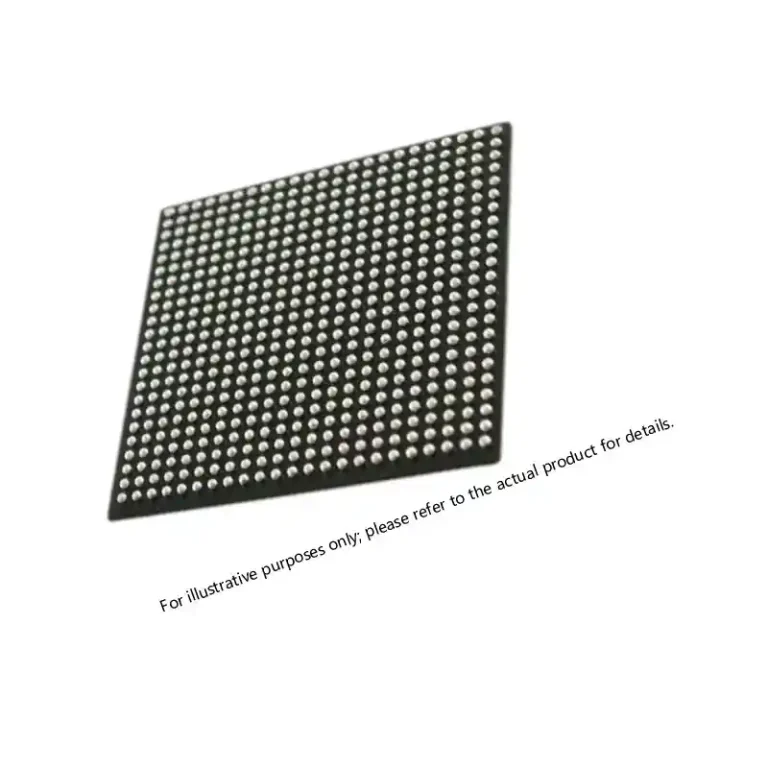
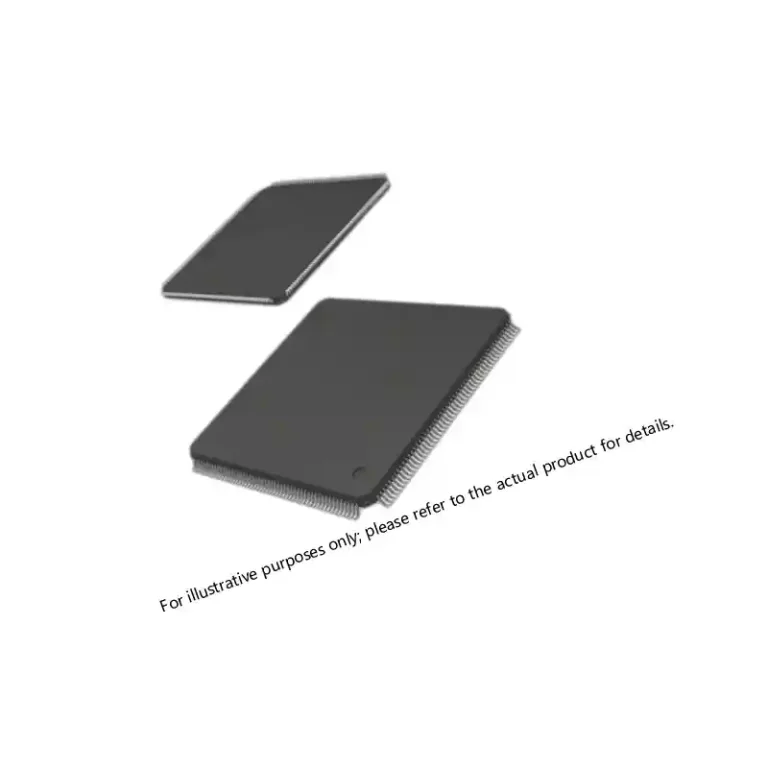
| Navigation processing | FPGA, DSP, ASIC | QML class, configuration security, pin compatibility |
| Timing | Crystal oscillator, clock PLL | Frequency stability under shock and vibration |
| Power | LDO, DC-DC module, supervisor | Input transient response, thermal derating, load step |
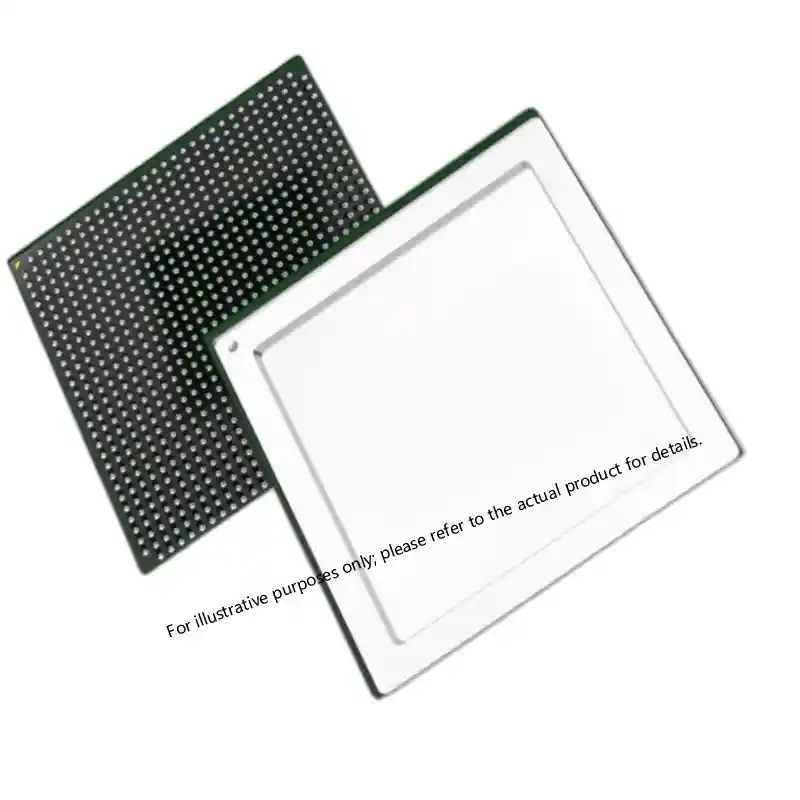
In practice, the navigation processor receives the most attention because it is the highest-value part. But anti-jam performance often depends on the linearity of the RF front end and the phase noise of the local oscillator. I have worked on programs where a lower-cost temperature-compensated crystal oscillator (TCXO) passed the datasheet on paper but produced unacceptable carrier phase noise after soldering and thermal stress. The fix was not a software update. It was a different timing device with the right screening history.
For M-code or SAASM-capable receivers, the security boundary adds another layer. The navigation processor and its configuration memory must be handled as controlled items. For most defense navigation systems, I recommend fixing the qualification level before the architecture. A QML-V FPGA may be necessary for space or strategic platforms, but a QML Class Q or suitably screened industrial variant can be the right choice for a ground vehicle receiver if the program risk profile permits it. The key is writing that decision into the bill of materials, not leaving it to a buyer to decide at quote time.
Sourcing and Documentation for Military-Grade GPS and GNSS Electronics
Sourcing starts with the documentation package, not the unit price. A part number is only as good as the lot history behind it. When I evaluate inventory for a navigation program, I ask for the manufacturer name, the date code range, the screening standard, and whether the lot includes a certificate of conformance that can be traced to the original test records. For QML-qualified parts, the qualified manufacturer and assembly site should match the listing in the QML database. For non-QML parts, the buyer should require a copy of the screening traveler.
The second check is physical. Mixed date codes in a single tube, re-marked packages, or oxidation that does not match the claimed storage conditions are grounds for rejection. Incoming inspection under AS9120 or AS6081 is not a bureaucratic step. It is the point where a counterfeit or substandard lot is caught before it reaches assembly.
Third, confirm the source path. A distributor with access to current manufacturer stock and an open line to the original manufacturer can resolve a documentation discrepancy quickly. A broker with no manufacturer relationship generally cannot. We carry military-grade FPGAs, high-speed ADCs and DACs, timing devices, and power modules from manufacturers including Xilinx, ADI, and VICOR. Even so, the right answer on a non-standard lot is sometimes to wait for factory stock rather than accept a part with incomplete paperwork.
If your program involves anti-jam or multi-constellation processing, confirm the front-end linearity and clock phase noise requirements before finalizing the BOM. Send your part number and quantity to xuansc2144@gmail.com and we will confirm stock, lot documentation, and screening records.
Obsolescence and Long-Term Supply for GPS and GNSS Programs
GPS and GNSS programs often run for ten years or more, while semiconductor manufacturers update or discontinue devices on a shorter cycle. Obsolescence planning belongs at design release, not at the first shortage. The components most likely to go end-of-life are digital navigation processors, high-speed data converters, and FPGA-based correlator engines. When they do, the replacement decision touches board layout, qualification test, and security certification.
A die bank or last-time buy is the simplest form of protection. For a navigation processor with a stable software baseline, buying enough die or packaged parts to cover the projected production run can freeze the qualification risk. But die bank requires controlled storage conditions and periodic visual inspection. If the die is stored outside the manufacturer’s recommended environment, the program inherits a new reliability risk that may not appear until assembly.
The more flexible alternative is a drop-in second source. This works when the replacement has the same package, pinout, and timing margins, and when the program can accept a delta qualification. I have seen a second-source transition succeed for an interface FPGA because the board team fixed the pin compatibility early. In another case, a navigation processor swap failed because the new device had a different power sequencing requirement that was not caught until first power-up.
When I review a long-term GPS or GNSS bill of materials, I look for the parts already marked not recommended for new design. Those are the ones to address first. A component with five years of remaining supply may be fine for a short program and unacceptable for a program that must sustain depot maintenance for two decades.
Locking the Sourcing Decision for Military-Grade GPS and GNSS Electronics
Sourcing military-grade GPS and GNSS electronics is a risk decision. The lowest quote can become the most expensive option if the lot lacks documentation or arrives with mixed date codes. The strongest position is to lock three items before ordering: the qualification level, the accepted screening standards, and the documentation required at incoming inspection. Then verify that the distributor can supply those documents for the specific lot being quoted, not a generic copy.
If your next navigation program needs verified MIL-SPEC parts with traceable lot history, send your part number, quantity, and required screening level to xuansc2144@gmail.com. We will confirm stock, lot documentation, and screening records before you commit.
Common Questions About Military-Grade GPS and GNSS Electronics
What is the difference between GPS and GNSS in military component selection?
GPS is the U.S. constellation; GNSS covers GPS, Galileo, GLONASS, BeiDou, and regional systems. For component selection, the practical difference is bandwidth and processing load. A GPS-only receiver may need a narrower front end, while a multi-constellation receiver requires wider IF bandwidth and more parallel correlators. That shifts requirements toward higher-sample-rate ADCs and more capable FPGAs, but the qualification standards stay the same.
Do all military GPS and GNSS components need to be QML-qualified?
It is a common assumption that every part in a military navigation system must be QML-qualified. That is not always true. The qualification level should match the program’s reliability and environment requirements. A space-grade receiver may need QML-V devices, while a ground vehicle receiver can often use JANTX, JANTXV, or screened industrial parts with documented testing. The requirement is that the selected level is written into the drawing and applied consistently. Do not accept a mixed qualification level without a documented rationale.
How do we verify a component lot before accepting delivery?
On defense navigation lots I have reviewed, verification starts with the paper trail. Match the manufacturer, assembly site, date code range, and screening standard against the certificate of conformance and lot traveler. Then inspect the physical parts for mixed date codes, re-marking, or packaging damage. For high-value devices, third-party electrical testing may be warranted. If any document cannot be reconciled, hold the lot until the distributor resolves the discrepancy. A rejected lot is cheaper than a field failure.
What should we do when a navigation processor goes obsolete?
The first question is not which replacement to buy, but how long the current build must remain supportable. If production is short, a last-time buy or die bank may be enough. If the program must sustain depot repairs for many years, a drop-in second source or a board-level redesign may be required. Review the end-of-life notice with the board team and the supply chain lead at the same time. Early action preserves the widest set of options. If you need a compliant replacement or must confirm remaining factory stock, send your part number to xuansc2144@gmail.com and we will check availability and documentation.
If you’re interested, check out these related articles:
UltraScale KU085 FPGA Specifications for Defense Systems
XCKU085 UltraScale FPGA: Performance for Critical Systems
A1020B-PG84B ACT2 FPGA: Specs, Sourcing, and Availability
XC7VX485T FPGA: Virtex-7 Performance for Defense