URAM2H21 Vicor AC Input Rectifier: H-Grade Specs & Sourcing
Table of Contents
- URAM2H21 in the Vicor Power Architecture
- H-Grade and H21 Package: What They Mean
- Key Specifications to Verify Before Procurement
- Defense-Grade Integration Considerations
- Traceability, Authenticity, and Documentation
- Sourcing Strategy for URAM2H21 and Adjacent Power Components
- Complementary Hi-Rel Components in the Sparkle Electronics Inventory
- Request a Quote for URAM2H21
- FAQ
- Is the URAM2H21 a DC-DC converter?
- What is the operating temperature range for H-grade?
- Can the URAM2H21 be replaced with a standard rectifier bridge?
- What documentation should accompany a URAM2H21 purchase?
- Does H-grade mean the part is MIL-SPEC?
- How should the URAM2H21 be derated in high-temperature platforms?
- References
The URAM2H21 is Vicor’s universal AC input rectifier module in the H21 package, specified for H-grade temperature operation. It is not a converter: it is the front-end stage that accepts single-phase AC mains and produces a high-voltage DC bus for downstream Vicor DC-DC converters. In defense and hi-rel power chains, selecting the correct input rectifier determines inrush behavior, bus stability, and compliance with platform power quality standards [1].
For procurement teams, the URAM2H21 requires the same documentation discipline as any other mission-critical component. H-grade does not mean “off-the-shelf commercial.” It means the part has a defined operating envelope and must be sourced with traceable records, inspection documentation, and confidence that the unit matches the build standard of the platform.
URAM2H21 in the Vicor Power Architecture
The URAM2H21 sits at the AC boundary of a distributed power architecture. It converts incoming AC mains into a rectified high-voltage DC bus, which then feeds Vicor 300 V input DC-DC converters such as the Maxi, Mini, and VI-200/VI-J00 families. This structure separates AC input handling from isolated regulation, allowing the system designer to place the AC stage near the power entry point and route the DC bus to conversion stages on the processing card.
Because it is a front-end module, the URAM2H21 influences several system-level behaviors that are not visible on a converter datasheet alone:
- Inrush current at power-on
- Bus hold-up and ride-through characteristics
- Input surge and transient withstand
- EMI signature at the AC input
- Interface compatibility with external filtering and fusing
A front-end error at this stage tends to appear later as sequencing faults, resets, or damaged bulk capacitance. That is why the part should be reviewed as part of the full power train, not as an isolated rectifier.
H-Grade and H21 Package: What They Mean
Vicor’s H-grade temperature designation is the primary reason defense programs select the URAM2H21 over standard-grade variants. H-grade parts are specified for sustained operation at elevated baseplate temperatures, typically across a -40°C to +100°C operating range. The exact thermal envelope should always be confirmed against the current manufacturer data and the specific derating curve for the intended mounting configuration.
The H21 package identifier defines the module form factor and pinout within the Vicor AC input module family. It is not a commercial/industrial temperature suffix. Procurement teams should treat any substitution of the package or grade as a form-fit-function change requiring engineering review.
For defense platforms, the H-grade temperature range aligns with the environmental stress expectations found in MIL-STD-810H test methods. Temperature cycling, high-temperature operating life, and low-temperature start-up are not merely cosmetic tests; they expose weakness in input rectifier assemblies, solder joints, and thermal interface materials [3].
Key Specifications to Verify Before Procurement
The following table summarizes the primary parameters to confirm when reviewing a URAM2H21 quote. Values are indicative and must be verified against the manufacturer’s current published data for the exact lot being acquired.
| Parameter | URAM2H21 characteristic | Verification point |
|---|---|---|
| Function | Universal AC input rectifier / front-end module | Confirm it is the AC input stage, not a DC-DC converter |
| Input voltage | Universal AC input, line-range autoranging | Verify full low-line and high-line range |
| Output | High-voltage DC bus for 300 V input Vicor modules | Confirm downstream converter compatibility |
| Temperature grade | H-grade | Confirm -40°C to +100°C envelope and derating |
| Package | H21 | Verify footprint, pinout, and mounting compatibility |
| Inrush control | Integrated inrush limiting | Confirm inrush profile under worst-case bus capacitance |
| Documentation | Certificate of Conformance and lot traceability | Require full chain-of-custody records |
Do not procure based on part number alone. A generic “URAM2H21” line item without grade, package, date code, lot number, and documentation status creates acceptance risk later.
Defense-Grade Integration Considerations
The URAM2H21 must be evaluated against the power quality requirements of the host platform. For aircraft and airborne systems, AC bus voltage, frequency transients, and normal/abnormal operating limits are defined in MIL-STD-704F. The front-end must start up, ride through, and shut down within the platform’s power profiles without propagating faults into the DC bus [1].
Electromagnetic compatibility is the second major integration concern. The rectifier and its external EMI filter network should be assessed under MIL-STD-461G test methods such as CE102 for conducted emissions and CS101 for conducted susceptibility. A compliant DC-DC converter does not automatically produce a compliant AC front-end; the URAM2H21 must be tested with the intended filter, wiring, and chassis configuration [2].
Environmental qualification follows the platform’s MIL-STD-810H test plan. For an AC input module, the most relevant exposures are high temperature operating life, low temperature start-up, thermal shock, vibration, and humidity. H-grade helps on temperature, but it does not eliminate the need for platform-level thermal validation [3].
Traceability, Authenticity, and Documentation
Power modules are a known target for counterfeiting and relabeling because they are high-value, socket-compatible, and often difficult to distinguish visually from legitimate parts. The URAM2H21 should be purchased only through channels that can provide complete traceability back to the manufacturer or an authorized source.
The applicable counterfeit-avoidance baseline is AS5553B, which establishes requirements for testing, supplier assessment, and disposition of suspect parts [4]. For U.S. defense subcontracts, DFARS 252.246-7007 adds contractor obligations for counterfeit electronic part detection and avoidance [5].
At incoming inspection, confirm:
- Manufacturer part number and grade marking
- Date code and lot code consistency
- Packaging integrity and original moisture barrier status
- Certificate of Conformance against the purchase order
- Test reports or incoming lot verification for expensive or long-lead programs
- Any requested X-ray or electrical screening for high-risk procurements
A conforming URAM2H21 is not just a part that fits: it is a part whose records survive audit.
Sourcing Strategy for URAM2H21 and Adjacent Power Components
The URAM2H21 is often ordered as part of a broader power train package. A complete acquisition should include the AC input stage, external EMI filtering, bulk capacitance, downstream 300 V input converters, and any required mounting hardware. Mixing sources across these elements without a common traceability file complicates failure analysis and warranty response.
On the card side, the URAM2H21-derived bus feeds multiple point-of-load converters and FPGA rails. Defense cards using Xilinx UltraScale, Virtex-7, or Microchip FPGAs require sequenced core, transceiver, and I/O rails; any sag or inrush event at the AC front-end propagates into those rails. This is why front-end selection is evaluated with the same severity as the FPGA selection.
On mission-critical digital back-ends, the AC front-end must support the FPGA core and transceiver rails without creating start-up sequencing failures. <UltraScale KU085 FPGA Specifications for Defense Systems> covers FPGA power rail planning that influences input rectifier sizing.
Virtex-7 designs operate with tight core-voltage windows that make bus transient response more critical at the input stage. <Virtex-7 690T FPGA: Performance for Mission-Critical Systems> covers performance and power sequencing considerations in mission-critical compute.
For high-density defense processing chains, AC input margin is evaluated alongside FPGA thermal and power load. <XCKU115 UltraScale FPGA: Powering Critical Defense Systems> covers system-level powering decisions for UltraScale defense platforms.
For a documented quote on URAM2H21, contact Sparkle Electronics directly at xuansc2144@gmail.com with the part number, target quantity, required grade, and preferred delivery window. Include whether the part is for prototype, production, or repair so the quote can be structured with the correct documentation level.
Complementary Hi-Rel Components in the Sparkle Electronics Inventory
While the URAM2H21 is the AC front-end subject of this article, Sparkle Electronics maintains inventory across the processing devices that typically sit behind Vicor power stages. The following recorded component images show representative Actel and Microchip FPGAs stocked for defense platforms:
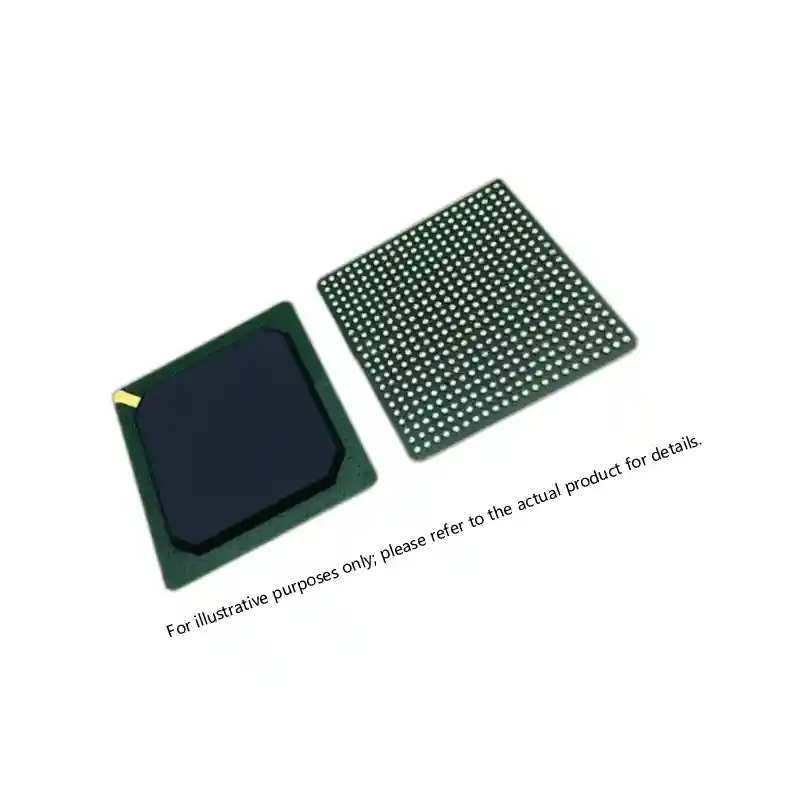
These devices are not substitutes for the URAM2H21. They are shown because complete power train sourcing usually covers the AC stage, the isolated converters, and the downstream digital load in a single program support discussion.
Request a Quote for URAM2H21
Sparkle Electronics supports defense contractors, systems integrators, and research institutions with traceable sourcing for Vicor power modules and adjacent hi-rel components. For a URAM2H21 quote or engineering support on AC front-end selection, send the following details to xuansc2144@gmail.com:
- Exact part number: URAM2H21
- Required quantity and target pricing
- Target delivery date and program milestone
- Grade and package confirmation
- Documentation requirements: C of C, test reports, lot traceability
- Export control or end-use information if applicable
The quote is prepared against verified inventory and documented lead times, not posted availability. Each lot is reviewed for continuity of documentation before it is offered to the program.
FAQ
Is the URAM2H21 a DC-DC converter?
No. The URAM2H21 is an AC input rectifier module. It converts AC mains to a high-voltage DC bus for downstream Vicor 300 V input DC-DC converters.
What is the operating temperature range for H-grade?
H-grade is specified for a wider temperature envelope than standard-grade Vicor modules. The URAM2H21 should be operated within the manufacturer’s published H-grade thermal limits, with derating confirmed for the installed cooling configuration.
Can the URAM2H21 be replaced with a standard rectifier bridge?
Not without engineering review. The URAM2H21 includes package, inrush control, and electrical characteristics matched to Vicor power architectures. A plain diode bridge does not provide equivalent inrush limiting or module compatibility.
What documentation should accompany a URAM2H21 purchase?
At minimum, request a Certificate of Conformance, lot and date code traceability, and packaging integrity records. For defense applications, also request incoming inspection evidence and any required counterfeit-avoidance documentation aligned with AS5553B [4] and DFARS [5].
Does H-grade mean the part is MIL-SPEC?
No. H-grade refers to the temperature grade assigned by the manufacturer. It does not by itself make the part a QML or MIL-PRF-qualified device. System qualification under MIL-STD-810H and platform requirements must still be completed [3].
How should the URAM2H21 be derated in high-temperature platforms?
Derating should follow the manufacturer’s published thermal curves, installed cooling, mounting surface temperature, and air flow. The final margin must be validated at the chassis level under the platform’s environmental test profile.
References
[1] U.S. Department of Defense. MIL-STD-704F: Aircraft Electric Power Characteristics. 2004.
[2] U.S. Department of Defense. MIL-STD-461G: Requirements for the Control of Electromagnetic Interference Characteristics of Subsystems and Equipment. 2015.
[3] U.S. Department of Defense. MIL-STD-810H: Environmental Engineering Considerations and Laboratory Tests. 2019.
[4] SAE International. AS5553B: Counterfeit Electronic Parts; Avoidance, Detection, Mitigation, and Disposition. 2020.
[5] U.S. Department of Defense. DFARS 252.246-7007: Contractor Counterfeit Electronic Part Detection and Avoidance. 2022.
If you’re interested, check out these related articles:
XCKU115 UltraScale FPGA: Powering Critical Defense Systems
Virtex-7 690T FPGA: Performance, Packaging, and Reliability Insights
Virtex-7 690T FPGA: Performance for Mission-Critical Systems
XC7VX485T FPGA: Virtex-7 Performance for Defense
XCKU085 UltraScale FPGA: Performance for Critical Systems