
MIL-SPEC Test Equipment and Components for Electronic Verification
Verifying that electronic components meet MIL-SPEC performance and reliability requirements is a multi-step engineering process that depends as much on having the right test hardware as it does on knowing the standards themselves. Procurement and test engineers supporting defense programs often spend weeks mapping the test equipment and component requirements for a single production lot, because one missing capability can delay qualification by months. Having supported over 30 defense contractor teams through this process, I have seen programs stall not because they failed a test, but because they could not configure the right measurement environment in time. This article covers the test equipment and component categories that matter, how to source them without creating compliance gaps, and where teams consistently underestimate the documentation burden.
MIL-SPEC Test Equipment Categories for Component Verification
Testing for MIL-PRF-38535, MIL-STD-750, and MIL-STD-883 demands instrumentation that goes well beyond a standard bench setup. The core categories include environmental chambers capable of cycling from -65°C to +150°C with controlled ramp rates, semiconductor parametric analyzers for DC and low-frequency AC measurements, high-speed digital testers for FPGA and memory ICs, and mixed-signal ATE for ADC/DAC linearity and dynamic range verification. For RF and microwave devices, vector network analyzers and spectrum analyzers with phase noise measurement capability become non-negotiable. Less obvious but equally critical are burn-in ovens, vibration shakers, and high-voltage insulation testers for passive components and connectors. In my experience, many test benches are assembled piecemeal from existing lab inventory, but a proper MIL-SPEC qualification demands instruments with traceable calibration to NIST standards and the bandwidth to capture sub-nanosecond edge rates on high-speed digital parts.
A representative set of bench instruments and their typical applications is shown below.
| Equipment Type | Key Specification | Typical Use in MIL-SPEC Verification |
|---|---|---|
| Semiconductor Parametric Analyzer | fA–mA resolution, ±200V sweep | DC parametrics, leakage, curve tracing per MIL-STD-750 |
| Mixed-Signal ATE | 500 MHz–6 GHz digital, 16-bit analog | ADC/DAC SNDR, INL, DNL testing |
| Environmental Chamber | -70°C to +180°C, 3°C/min ramp | Temperature cycling, burn-in, THB |
| Vibration Shaker | 5 Hz–2000 Hz, 10 gRMS | MIL-STD-202 mechanical shock and vibration |
| High-Speed Digital Tester | 1 Gbps per pin, per-pin PMU | FPGA and memory AC timing, pattern generation |
Components That Need Verification Under MIL Standards
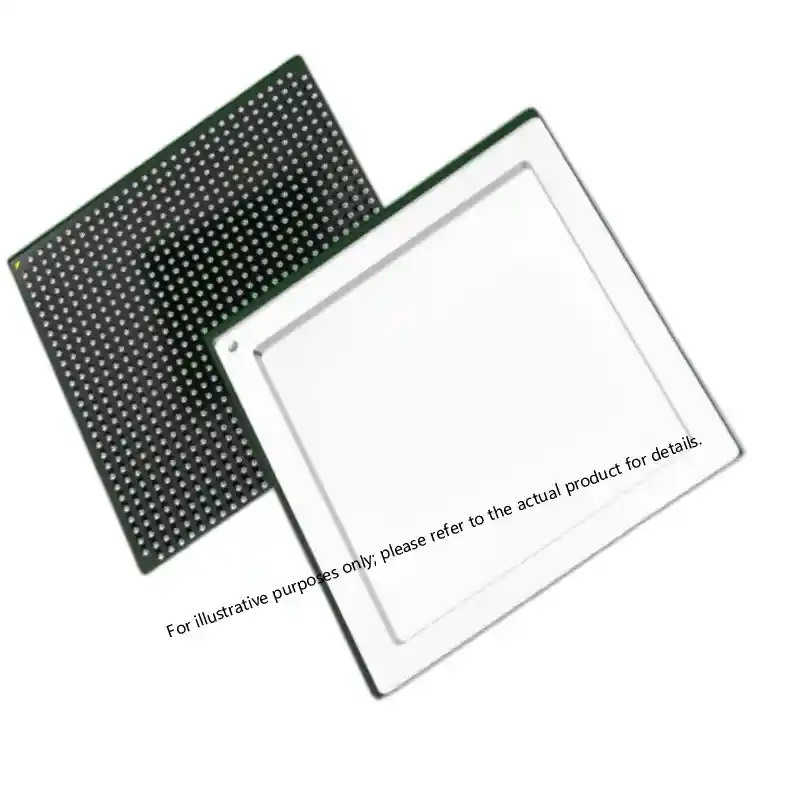
Procurement teams sometimes assume that buying a 5962 or JANTX part from the manufacturer eliminates the need for their own verification. This belief can be dangerous, particularly when parts sit in uncontrolled distribution channels before reaching the end user. I learned early in my career that even a properly marked component can carry latent ESD damage or exhibit parametric drift if storage conditions were not maintained. The components most frequently requiring incoming verification include analog ICs (op-amps, references, comparators), FPGA and CPLD devices, high-speed ADC/DACs, discrete semiconductors in hermetic packages, and MIL-SPEC passive components (tantalum capacitors, chip resistors, connectors). The verification scope for each category differs. For analog ICs, we prioritize offset voltage drift over temperature and input bias current; for FPGAs, configuration memory retention and I/O timing margin; for passives, capacitance shift under bias and insulation resistance after humidity exposure. I recommend maintaining a library of test programs that can be quickly adapted to new part numbers, because regulatory audits often expect evidence of lot-specific test coverage, not just a blanket qualification report.
Sourcing MIL-SPEC Test Gear: OEM Direct or Distributor?
The decision to buy test equipment directly from an OEM like Keysight, Tektronix, or Rohde & Schwarz versus through a specialized distributor depends on lead time, warranties, and the support arrangement. For new, current-generation instruments with proprietary calibration software, an OEM purchase with a factory service plan often makes sense. But for programs that need legacy testers, modules for older ATE platforms, or short-notice replacements for a downed test station, a distributor with strong manufacturer relationships can locate and deliver calibrated equipment much faster than waiting on a factory backorder. This speed advantage becomes critical when a production lot is sitting on hold, which I have seen cost programs tens of thousands of dollars per day. And when the test equipment itself contains components that need future replacement, the distributor’s ability to also supply those parts, as well as documentation and traceability records, becomes an underappreciated asset. If your program operates with a documented AVL and strict quality clauses, engaging a distributor who is AS9120-certified and can provide full chain of custody for refurbished instruments substantially reduces the audit risk.
Common Documentation Gaps in Test Setup
Even the most accurate measurements become useless during a DCMA or internal quality audit if the documentation trail is incomplete. I have reviewed qualification packages where the test data itself was flawless, but the program could not demonstrate that the test instruments were within their calibration interval at the time of measurement. Other recurring gaps include incomplete traceability of test adapters and cabling, especially when custom fixture losses are not characterized and accounted for in RF measurements. For every test station, you need three document sets: the instrument calibration certificates with uncertainty budgets, the test software version control log, and the correlation report showing how the measurements trace back to a primary standard. A practical step I recommend is to build a station-specific binder that includes a photograph of the physical setup with cable routing clearly visible, so that an auditor or a new engineer can immediately confirm that nothing has moved. This level of discipline may feel excessive until you are facing a non-conformance report that could have been resolved with a single photograph. For programs that engage outside test services, the requirement to transfer these documentation packages adds another layer of complexity that a knowledgeable distributor can help manage by ensuring the calibration and test records arrive alongside the components.
Building a Reliable Test Equipment Supply Chain
Test equipment procurement is a supply chain function, not just a lab management task. I have seen programs treat instrument purchasing as a one-time capital expense, only to discover three years later that a discontinued module has no replacement path and the entire test station must be revalidated. A more durable approach is to maintain a small inventory of spare interface boards, power supplies, and precision calibration standards that are specific to the test platform. Work with a distributor that carries not only mainframes but also accessories, cables, and adapters, because lead times on a custom VNA cable can exceed those of the analyzer itself. Establishing a long-term relationship with a procurement partner who understands the test environment means you can get expedited replacements when a critical piece goes down. Finally, build an obsolescence management plan that cross-references instrument end-of-life dates with your program’s expected service life. For many defense programs spanning 15 years or more, the test station’s lifecycle may be shorter than the component it is meant to verify, and planning for that early prevents a qualification crisis later.
Even when all instrumentation is correctly specified and documented, the test setup is only as strong as the surrounding logistics. If your team is facing a tight qualification deadline or needs to source a specific piece of MIL-SPEC test equipment quickly, it is worth having a sourcing partner who can respond with availability and calibration status within hours. At Sparkle Electronics, we routinely help defense contractors secure test equipment and verification-grade components from inventory in parallel with the BOM, so that the test bench does not become the bottleneck. Send your part number or instrument model and desired calibration requirements to xuansc2144@gmail.com, and we will confirm stock, lead time, and appropriate certification documentation.
Common Questions About MIL-SPEC Verification Test Equipment
How do I know if an oscilloscope is sufficient for MIL-SPEC digital testing?
It depends on the rise time of the signals you need to capture and whether you are measuring timing margins or just confirming logic levels. For 100 MHz logic and above, a scope with at least 1 GHz bandwidth and 5 GS/s real-time sampling is a practical minimum. I have seen programs try to use a 500 MHz scope to verify DDR memory interface timing on a MIL-grade FPGA, and the results were unusable because the measurement bandwidth simply could not resolve the edge placement.
The most common mistake in environmental testing is underestimating the fixture and cabling.
I have observed multiple cases where a temperature chamber was correctly profiled, but the thermal mass of the fixture holding the DUT introduced a 15-minute lag that shifted the timing of electrical measurements outside the acceptable window. The solution is to instrument the actual DUT temperature with a thermocouple on the device package, not just the chamber air temperature, and to adjust the soak time accordingly.
Can I calibrate test equipment myself for MIL-SPEC verification?
Self-calibration using an in-house standard is acceptable only if that standard itself is traceable to NIST or an equivalent national metrology institute, and the calibration procedure is documented and validated. Most defense programs require an accredited calibration lab to perform the service, because the uncertainty calculations and the auditing trail are far simpler to defend during a quality review. If you need calibrated equipment quickly, ask your distributor which partner labs they use and whether they can arrange turnaround calibration as part of the supply.
In programs I have supported, the single most avoidable qualification delay comes from a missing adaptor or a custom cable with undocumented insertion loss.
It is not the big-ticket items like a $50,000 VNA that cause the failure; it is the $200 coaxial adapter that someone assumed was “good enough” for frequency extension. Before you finalize a test station BOM, gather the S-parameter files for every RF component in the signal path and simulate the full chain, because a resonance at an unexpected frequency can invalidate an entire measurement set.
When your test schedule is driven by production demand rather than engineering convenience, having a fallback source for instruments and verification components is not optional.
If your laboratory manager tells you the ATE is down and the replacement module has a 14-week lead time, the difference between shipping on time and a line-down situation often comes down to whether your procurement partner can locate an exact replacement from stock. Share your requirements with us and we will confirm availability and calibration compliance.
If you’re interested, check out these related articles:
XC7VX485T Virtex-7 FPGA: Performance and Sourcing for Defense
Virtex-7 XC7VX690T: Performance and Reliability Insights
XCKU085 UltraScale FPGA: Performance for Critical Systems