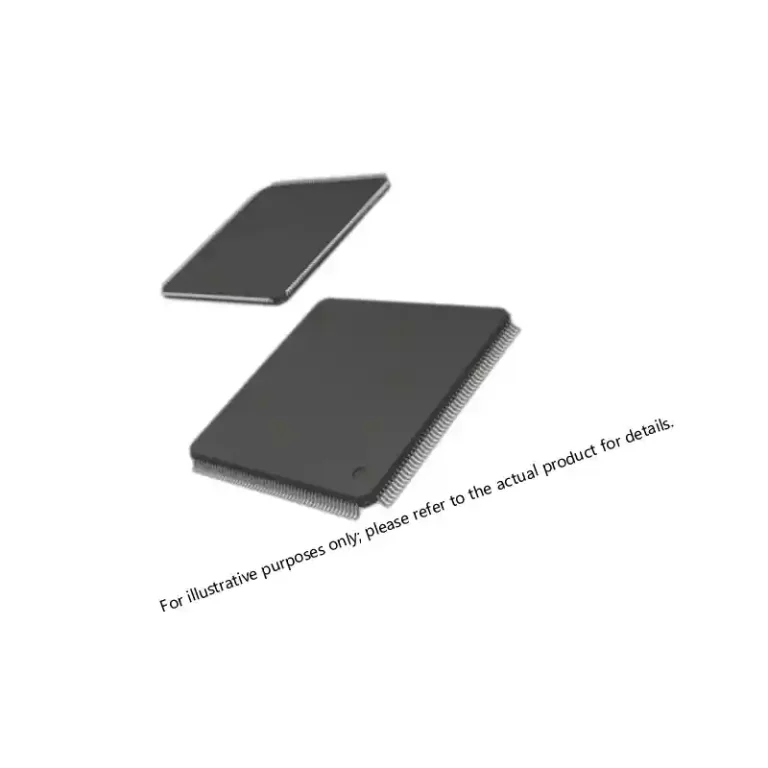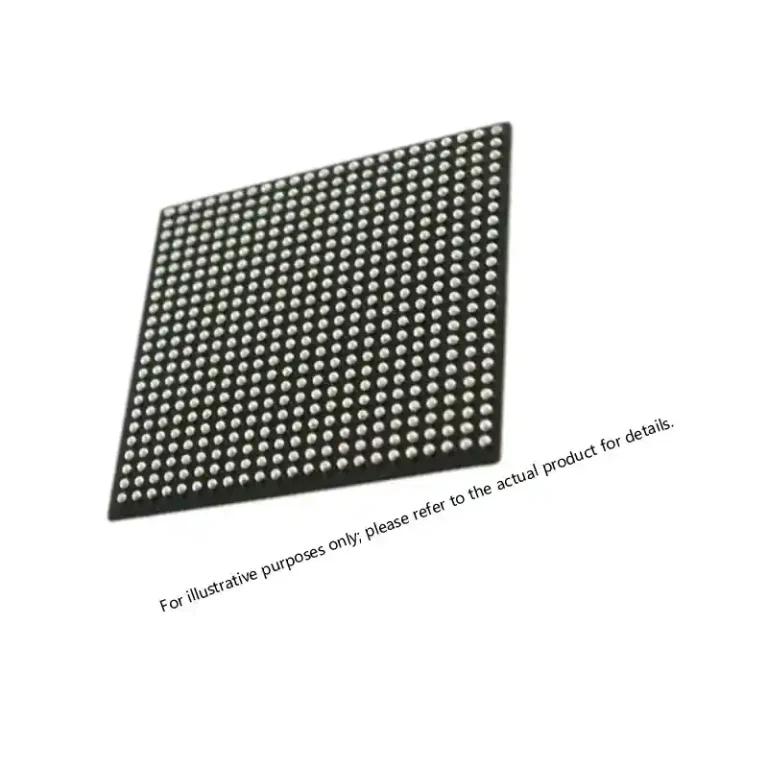
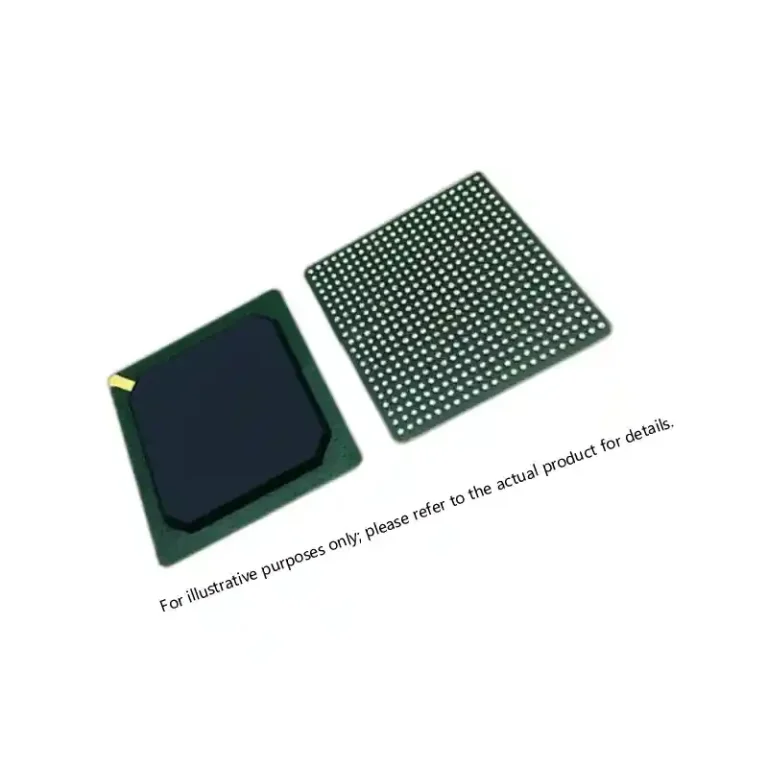
Military FPGA Selection Guide for Defense Programs
Table of Contents
- Matching FPGA Capability to Your Defense System’s Mission Requirements
- Comparing Military FPGA Families: What Each Vendor Brings
- Supply Chain Integrity: The Part Behind the Part Number
- Navigating Compliance and Export Controls
- Building a Resilient FPGA Procurement Strategy
- Common Questions About Defense FPGA Sourcing
- How do radiation-hardened and radiation-tolerant FPGAs differ?
- Can a commercial FPGA be up-screened to meet military requirements?
- Which FPGA vendor has the most reliable supply chain for defense programs?
- How should programs prepare for last-time-buy and obsolescence of military FPGAs?
- What documentation should accompany every military FPGA shipment?
A military FPGA selection that only weighs logic cells and I/O count is incomplete. In over a decade of defense electronics procurement, I’ve learned that the right choice is as much about supply chain integrity and lifecycle management as it is about speed grades. A part with impeccable datasheet specs but unknown provenance or uncertain long-term availability can stall a program just as effectively as an underpowered device. This guide walks through the technical, environmental, and sourcing considerations that defense programs need to make a decision that holds up over the full deployment lifecycle.
Matching FPGA Capability to Your Defense System’s Mission Requirements
Start with what your system actually needs to do, not what a vendor’s flagship device can accomplish. The most common misstep I observe is over-specifying logic density based on future growth that never materializes, driving up cost and lead time without a corresponding operational benefit.
For most defense signal processing and embedded computing applications, the critical parameters are logic element count, DSP slice density, and high-speed transceiver channels. A radar beamforming processor may demand hundreds of thousands of logic cells and dozens of multi-gigabit transceivers, while a cryptographic module or bus controller often runs comfortably on a low-density device. I frequently recommend mapping required IP cores and peripherals before settling on a density class—it is far easier to right-size the device early than to re-spin a board later.
SWaP-C constraints add another dimension. Airborne payloads and man-portable systems push for low-power, small-footprint parts, which can favor flash-based devices like Microsemi’s ProASIC3 or SmartFusion2 families that avoid the inrush current and configuration complexity of SRAM-based FPGAs. Conversely, large ground-based processing racks can accept higher power budgets and benefit from the raw throughput of Xilinx Virtex-7 or Intel Stratix V devices.
When mapping I/O requirements, confirm voltage standards and differential pair counts early. Defense systems often mix legacy interfaces like RS-422 or MIL-STD-1553 with modern JESD204B high-speed serial links, and not every FPGA family supports all I/O standards across every bank. A design that looks clean on paper can unravel when the selected package lacks enough transceiver quads or single-ended pins for simultaneous operation.
Comparing Military FPGA Families: What Each Vendor Brings
The military FPGA market is effectively split among three major suppliers, each with a distinct approach to reliability, security, and availability. Understanding these differences shapes the procurement path.
| Vendor | Representative Families | Key Advantage | Radiation Profile | Typical Use |
|---|---|---|---|---|
| Microsemi (Microchip) | ProASIC3, SmartFusion2, RTG4, PolarFire | Flash-based, inherently SEU immune, anti-tamper | Rad-tolerant to rad-hard | Avionics, ordnance, secure communications |
| Xilinx (AMD) | Virtex-7, Kintex-7, Artix-7, Zynq | Highest density and DSP throughput | Rad-tolerant with mitigation | Radar, SIGINT, image processing |
| Intel (Altera) | Stratix V, Arria V, Cyclone V | High-performance compute, PCIe Gen3/4 | Rad-tolerant with mitigation | C4ISR, multi-function processing |
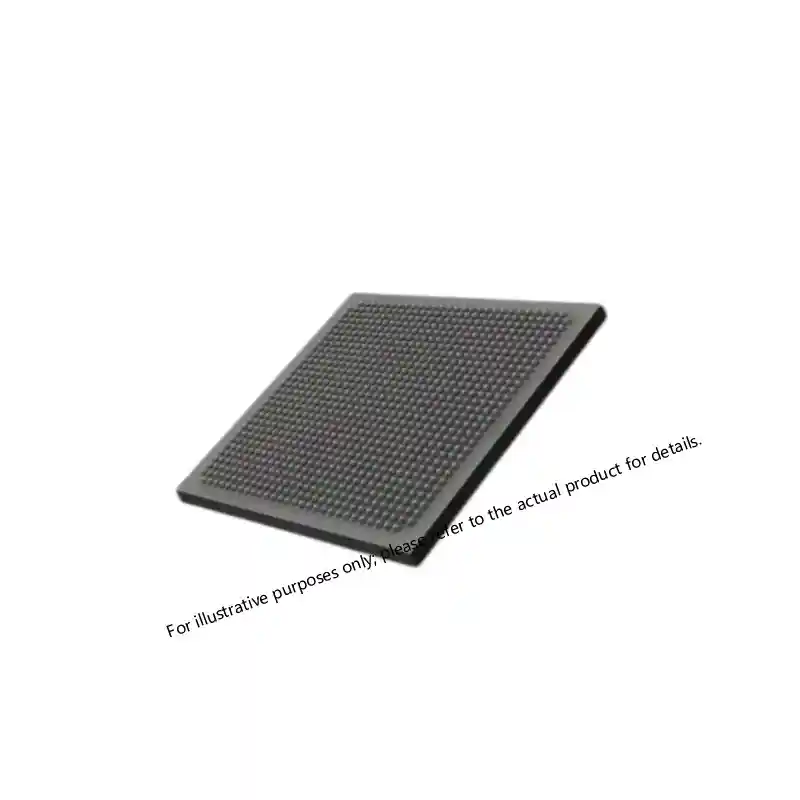
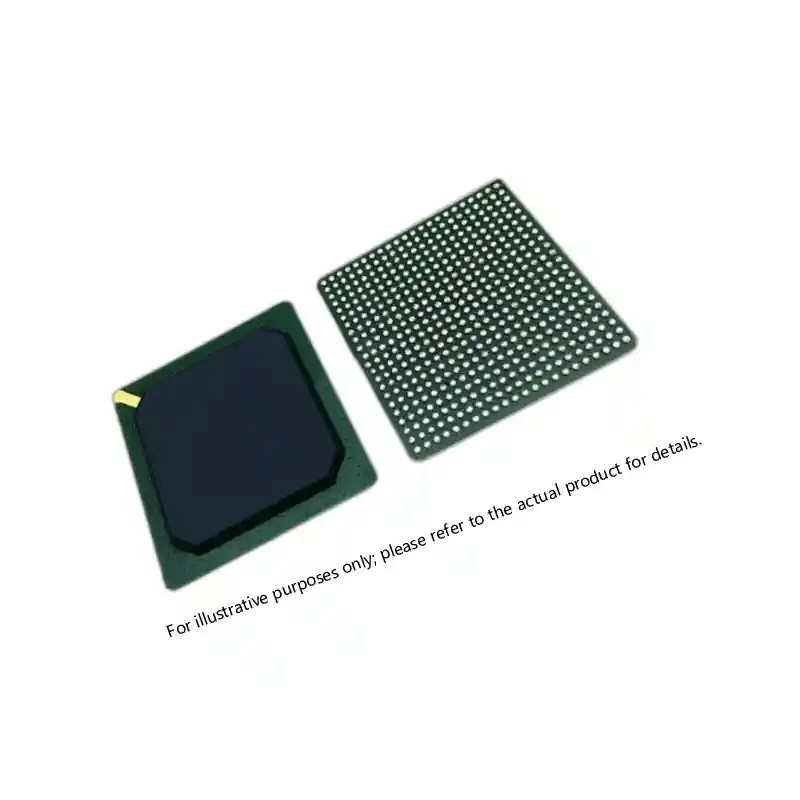
Microsemi’s flash-based architecture offers inherent SEU immunity, which simplifies board-level reliability in high-altitude or space environments without the need for scrubbing logic and external configuration memory. In avionics programs I’ve supported, this reduced the bill-of-materials count and eliminated a failure mode that would otherwise require triple-redundant SRAM devices. The SmartFusion2 line, in particular, integrates a hard ARM Cortex-M3 processor and security accelerators, allowing single-chip solutions for trusted boot and encrypted bitstream loading.
Xilinx provides the highest logic density and DSP slice count, making it the default for radar and COMINT systems that process wideband data streams in real time. The Virtex-7 family, for example, delivers up to 2 million logic cells and 96 serial transceivers operating at 28 Gbps. However, these SRAM-based devices require an external configuration memory and a secure boot flow to meet anti-tamper requirements. Defense programs using Xilinx parts should budget for a separate trusted configuration device and plan for radiation-induced configuration upset rates based on the orbit or altitude profile.
Intel’s Stratix V and Arria V families offer strong DSP and memory bandwidth, often paired with external DDR3 or DDR4 memory controllers. Their advantage in C4ISR systems lies in the seamless integration of PCI Express Gen3 hard IP and floating-point DSP blocks, which accelerate software-defined radio and sensor fusion workloads. Lead times for Intel defense-qualified devices have historically fluctuated, so I advise confirming allocation windows before committing to a design.
Supply Chain Integrity: The Part Behind the Part Number
A military FPGA is only as reliable as the channel it comes through. I have encountered programs where an otherwise sound design was jeopardized by a single counterfeit device that passed visual inspection but failed under thermal cycling. The threat is not theoretical; defense supply chains remain a target for remarking and unauthorized substitution.
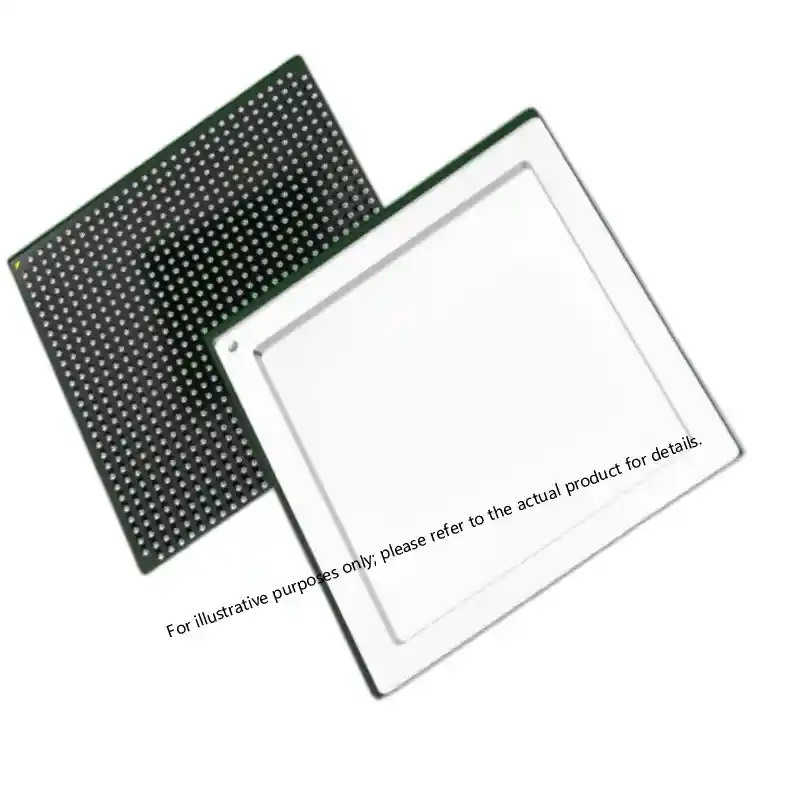
First, verify that every device comes with a full chain-of-custody record and a Certificate of Conformance that references the original component manufacturer’s lot number and test documentation. For QML-qualified devices, the Defense Logistics Agency’s Qualified Manufacturers List is the authoritative reference, and I always cross-check the marking against the QML or QPL listing before accepting stock.
Incoming inspection is the next line of defense. Beyond visual checks under a stereo microscope, I recommend X-ray inspection to verify die orientation and bond wire integrity, and decapsulation on a sample basis when mixed-source stock is involved. A distributor that performs these checks as standard practice, rather than only on request, reduces the burden on the program’s quality team.
Obsolescence management starts at the selection stage. Military FPGAs often have production lives measured in decades, but not indefinitely. Determine whether the vendor has issued a last-time-buy notice or whether a technology refresh is available. For programs with 20-year sustainment requirements, die banking or a die-level supply agreement is worth exploring. In one long-running avionics program, we secured a die bank for a specific Microsemi ProASIC3 part that gave the customer a predictable supply for the remaining eight years of planned production, avoiding a costly mid-life board redesign.
If your program involves a part number that has been out of production for several years, it is worth confirming authenticity and stock depth before finalizing your BOM. Reach out at xuansc2144@gmail.com for a traceability review.
Navigating Compliance and Export Controls
Defense electronics procurement is governed by a web of regulations that intersect at the component level. FPGAs, as programmable devices with encryption and security features, attract particular scrutiny.
ITAR (International Traffic in Arms Regulations) applies to FPGAs that are specifically designed or modified for military use and listed on the United States Munitions List. Even if the device itself is not ITAR-controlled, the technical data or bitstream may be, depending on the program. For international customers, I always verify export classification with the manufacturer’s export compliance office and ensure the distributor holds the appropriate licenses before shipment.
DFARS (Defense Federal Acquisition Regulation Supplement) compliance is increasingly required for contracts that flow down cost and price data certifications. More critically, NDAA Section 889 prohibits the use of certain Chinese-manufactured telecommunications equipment, and this prohibition has been extended to certain semiconductor supply chains. While this does not directly restrict standard military-grade FPGAs from the major U.S. suppliers, it is sensible to confirm country-of-origin and avoid devices that have passed through unauthorized intermediaries.
QML certification provides an essential confidence layer. QML-V devices are manufactured and screened on a Defense Logistics Agency qualified manufacturing line, with statistical process control and continuous monitoring. QML-Q is less stringent but still provides traceability. When comparing vendor part numbers, I recommend favoring QML-listed variants over commercial-upscreened equivalents, even when the upscreen testing claims to meet the same parameters. The difference lies in the process control documentation that the program will need to produce during a supplier audit.
Building a Resilient FPGA Procurement Strategy
Selecting the right device is only the first step; securing it over the program’s life requires a procurement strategy that anticipates supply shocks. Start by adding your preferred distributors to the program’s Approved Vendor List (AVL) early, not when a shortage hits. I have seen production lines stall because the AVL process took 12 weeks while a competitor’s approved source held the required stock.
Second, maintain a qualified second-source option wherever feasible. While the FPGA market is proprietary and direct second-sources are rare, planning for a drop-in replacement with compatible pinout and similar resource count—such as transitioning from a Xilinx Kintex-7 to a Virtex-7 with compatible package—can provide a short-term solution during allocation periods.
Finally, treat the BOM quote not as a price check but as a supply viability assessment. In the past year, I have seen lead times for certain high-density FPGAs stretch beyond 40 weeks. When you send an RFQ, ask your distributor for a projected supply forecast, not just a unit price. A quote that arrives with a lead time of six months but no allocation guarantee is little better than no quote at all.
Common Questions About Defense FPGA Sourcing
How do radiation-hardened and radiation-tolerant FPGAs differ?
Radiation-hardened devices are built on a dedicated process that provides total ionizing dose (TID) tolerance typically above 100 krad and guaranteed single-event latch-up immunity, often with substrate isolation. Radiation-tolerant devices are typically commercial or industrial-grade parts that have been characterized for lower dose levels and may require external mitigation such as triple-redundant logic and periodic configuration scrubbing. Rad-hard parts cost significantly more and have longer lead times; rad-tolerant devices can be acceptable for many ground-based and short-duration airborne missions if the failure rate budget allows.
Can a commercial FPGA be up-screened to meet military requirements?
Hermeticity cannot be retroactively added. A commercial plastic package will never meet the sealed-cavity requirements of certain MIL-STD-883 methods. However, for programs where temperature range and electrical screening are the primary concerns, temperature cycling and burn-in can bridge some gaps. I recommend this path only when the original QML or MIL-PRF part is genuinely unavailable and the program’s reliability engineer has signed off on a detailed analysis of failure modes introduced by the non-hermetic package.
Which FPGA vendor has the most reliable supply chain for defense programs?
In my experience, Microsemi’s dedicated defense and aerospace business unit maintains the most stable allocation and longest-term support for program-specific parts, partly because flash-based devices do not compete for leading-edge wafer starts. Xilinx and Intel offer higher density but have periodically shifted allocation to commercial customers during upturns. The more important variable is the distributor’s relationship with the vendor; a distributor with direct franchise authorization and consistent program management can often secure allocation more reliably than an independent broker.
How should programs prepare for last-time-buy and obsolescence of military FPGAs?
Begin monitoring the vendor’s product change notifications (PCNs) at least five years before the expected end of production. A last-time-buy order should include final assembly quantities, repair depot stock, and a buffer for test systems. For programs that cannot execute a LTB because of budget rules, die banking agreements with the manufacturer or an authorized aftermarket die bank provider are the next best option. I always recommend obtaining a written end-of-life roadmap from the vendor and filing it with the program’s configuration management records.
What documentation should accompany every military FPGA shipment?
At minimum, a Certificate of Conformance referencing the original manufacturer’s lot number, a statement of compliance to the relevant MIL-PRF or QML specification, and a packaging slip with humidity indicator card and desiccant status. For higher-risk parts, X-ray images and decapsulation reports provide additional assurance. When documentation is incomplete, the part is unverifiable, regardless of its physical appearance. If your quality team is reviewing a batch with suspect paperwork, share the lot codes with a qualified distributor for a cross-check against known counterfeits. You can reach us at xuansc2144@gmail.com to discuss a documentation audit for your incoming shipments.
If you’re interested, check out these related articles:
UltraScale KU085 FPGA Specifications for Defense Systems
XCKU115 UltraScale FPGA: Powering Critical Defense Systems
Virtex-7 690T FPGA: Performance, Packaging, and Reliability Insights