
ALTERA EPCQ128ASI16N
- 128Mbit non-volatile flash memory for FPGA configuration
- 2.7V to 3.6V wide operating voltage range
- -40°C to +85°C extended industrial temperature range
- Serial configuration interface supporting active serial (AS) mode
- In-system programming (ISP) capability for remote updates
Radar and electronic warfare systems rely on FPGAs to process complex signals in real time, and reliable configuration storage is critical to maintaining system integrity. The ALTERA EPCQ128ASI16N provides a robust non-volatile storage solution for FPGA configuration data, designed to meet the demanding environmental requirements of aerospace and defense applications.
This serial configuration flash device offers high storage density in a compact form factor, supporting the fast configuration needs of modern FPGAs. Its extended temperature range and wide operating voltage make it suitable for deployment in harsh environments, from airborne platforms to ground-based radar systems. The in-system programming capability allows for remote configuration updates, reducing maintenance requirements for field-deployed systems.
Related Products For Your Business
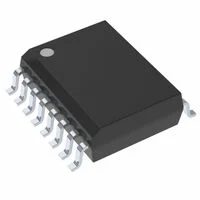
The Altera EPCQ128ASI16N is a 128 Mbit Quad-Serial (EPCQ-A series) configuration flash device in a 16-pin SOIC package, designed for active serial (AS) FPGA configuration. It is the recommended current-generation replacement for the legacy EPCS128SI16N — same 128 Mbit capacity, same 16-SOIC footprint, same pin-compatible layout, but with a 4-bit wide Quad-SPI data interface that reduces FPGA configuration time by up to 4× compared to the single-bit EPCS series, and higher capacity availability extending to 256 Mbit and 512 Mbit in the EPCQ-A family.
EPCQ128A vs. EPCS128 — Direct Comparison
| Parameter | EPCQ128ASI16N (this) | EPCS128SI16N |
|---|---|---|
| Capacity | 128 Mbit | 128 Mbit |
| Package | 16-SOIC | 16-SOIC |
| Data Interface | Quad-SPI (×4) / Single (×1) | Single-SPI (×1) |
| Configuration Speed | Up to 4× faster (×4 mode) | Standard (×1 only) |
| Pin Compatibility | Pin-compatible with EPCS128 | — |
| Status | Active (current production) | Obsolete |
| Supply Voltage | 2.7V–3.6V (3.3V nominal) | 2.7V–3.6V |
| Quartus Prime Support | Yes | Yes (legacy) |
| FPGA Compatibility | Cyclone III/IV/V, Stratix III/IV/V, Arria V | Cyclone II/III/IV, Stratix II/III/IV |
The EPCQ128ASI16N is pin-compatible with the EPCS128SI16N — it can be substituted on existing PCBs with no layout change. When using EPCQ in ×1 mode (for older FPGAs that do not natively support ×4 AS configuration), the “Disable EPCS ID check” option must be enabled in Quartus Prime settings and a new programming file (.pof) must be generated targeting the EPCQ device. The sector size differs between EPCS128 (256 KB sectors) and EPCQ128A, which affects erase operation timing and must be accounted for in any in-system update firmware. Per Intel Application Note AN 822 (FPGA Configuration Device Migration Guideline), the EPCQ-A series is the recommended migration path from all legacy EPCS devices.
FAQ
What is the difference between EPCQ128ASI16N and EPCS128SI16N?
Both are 128 Mbit, 16-SOIC configuration flash devices. The EPCQ128A adds a Quad-SPI (×4) data interface that configures FPGAs up to 4× faster than the single-SPI EPCS128. EPCS128 is now obsolete; EPCQ128A is the current-production replacement and is pin-compatible.
Is the EPCQ128ASI16N pin-compatible with EPCS128SI16N on existing PCBs?
Yes — same 16-SOIC package with compatible pin functions. Note that pin names differ slightly (DATA1/DATA0 in EPCQ vs. DATA/ASDI in EPCS) but physically connect identically. No PCB changes are required.
What FPGAs are compatible with EPCQ128ASI16N?
Cyclone III, IV, and V; Stratix III, IV, and V; and Arria V in ×4 AS mode. Older FPGAs (Cyclone II, Stratix II) can use the EPCQ in ×1 mode with the “Disable EPCS ID check” option enabled in Quartus Prime.
Do I need to regenerate programming files when switching from EPCS128 to EPCQ128A?
Yes. Generate a new .pof or .jic programming file in Quartus Prime targeting the EPCQ128A device to ensure the correct programming operation codes and sector erase sequences are used.
What capacity configuration files can fit in 128 Mbit?
128 Mbit (16 MB) accommodates bitstreams for most Cyclone IV, Stratix III, and lower-density Stratix IV designs. For Stratix IV GX large devices or when storing multiple configuration images, evaluate EPCQ256ASI16N (256 Mbit) or EPCQ512ASI16N. Bitstream compression (40–60% size reduction) in Quartus Prime can often allow a smaller device.
Is the EPCQ128ASI16N available in other packages?
The 128 Mbit EPCQ is available only in the 16-SOIC package. Smaller capacity EPCQ devices (EPCQ16, EPCQ32) are available in 8-SOIC.