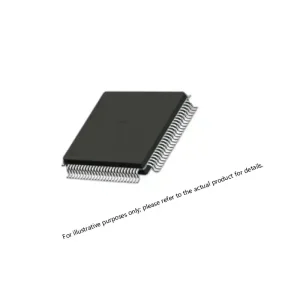

ALTERA EPF10K10QI208-4N
- 960 programmable logic elements for medium-scale design implementation
- 4096 bits of embedded RAM for on-chip data storage
- Up to 160 user-configurable I/O pins for versatile interface support
- 100MHz maximum operating frequency for real-time signal processing
- 5V single-supply operation for simplified power system design
Related Products For Your Business
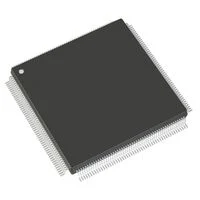
The Altera EPF10K10QI208-4N is a FLEX 10K family FPGA — 10,000 typical system gates, 576 LEs, 3 EABs (2,048 bits each = 6,144 total RAM bits), 102 user I/Os — in the 208-pin PQFP package, industrial temperature range (−40°C to +85°C), speed grade −4. FLEX 10K was the industry’s first embedded programmable logic family integrating both logic array and embedded memory on a single 5.0V SRAM-based device, pioneering the SOPC concept that became the foundation of all subsequent Altera FPGA product lines through Cyclone and Stratix.
FLEX 10K Family Density Comparison — EPF10K10 vs. EPF10K20
| Device | Typical Gates | LEs | EABs | Total RAM bits | Max User I/Os |
|---|---|---|---|---|---|
| EPF10K10 (this) | 10,000 | 576 | 3 | 6,144 | 102 |
| EPF10K20 | 20,000 | 1,152 | 6 | 12,288 | 147 |
| EPF10K30 | 30,000 | 1,728 | 6 | 12,288 | 246 |
| EPF10K50 | 50,000 | 2,880 | 10 | 20,480 | 310 |
The QI208 package suffix designates industrial temperature (−40°C to +85°C) in the 208-pin PQFP. The −4 speed grade is the slowest for industrial devices. As a legacy 5.0V FPGA, the EPF10K10 is primarily procured for MRO, legacy system sustainment, and board repair of fielded electronics — it has been in the market since the mid-1990s and is widely deployed in older defense, communications, and industrial equipment. Functional equivalents in modern process technology include the Cyclone IV E EP4CE6 or EP4CE10, which provide comparable or higher logic density at 60nm, 1.2V core, and lower power. However, for programs with frozen BOMs or approved parts lists calling out EPF10K10QI208-4N specifically, the original part number is the correct procurement target.
FAQ
What does EPF10K10QI208-4N decode to?
EPF10K = FLEX 10K family; 10 = 10,000-gate class; Q = PQFP; I = industrial temperature (−40°C to +85°C); 208 = 208 pins; −4 = speed grade 4; N = lead-free.
What is the FLEX 10K EAB and how does it differ from ACEX 1K?
FLEX 10K EABs provide 2,048 bits each (RAM, ROM, dual-port RAM, or FIFO). ACEX 1K EABs doubled this to 4,096 bits. The EPF10K10 has 3 EABs for 6,144 total bits — sufficient for small lookup tables, FIFOs, or microcontroller ROM.
What supply voltage does EPF10K10 require?
5.0V VCCINT core and I/O supply. This is the original 5V FLEX 10K architecture — not the later 3.3V or 2.5V generations. VCCIO supports 5.0V and 3.3V I/O standards.
Is EPF10K10QI208-4N still manufactured?
FLEX 10K is a legacy family. Production status must be confirmed at time of order. Sparkle Milchip sources from authorized channels with full AS6081 anti-counterfeit inspection for legacy sustainment procurement.
What configuration method does FLEX 10K use?
Passive Serial (PS), Passive Parallel Synchronous (PPS), Passive Parallel Asynchronous (PPA), Fast Passive Parallel (FPP), and JTAG. An external configuration device (EPC series) or host processor is required — FLEX 10K has no internal non-volatile flash like MAX II.
What is the recommended modern replacement for EPF10K10?
For new designs, Intel recommends Cyclone IV E (EP4CE6 or EP4CE10) as the functional successor — comparable logic density, M9K memory blocks replacing EABs, 60nm low-power process, 1.2V core, and full Quartus Prime support. Direct pin-for-pin replacement is not available; PCB redesign is required.