Radiation-Hardened Components: What They Are and When Needed
Table of Contents
- Radiation-Hardened Components Defined
- Radiation Effects That Drive Hardening Requirements
- Environments Where Rad-Hard Components Are Mandatory
- Rad-Hard, Radiation-Tolerant, and Up-Screened: A Comparison
- Sourcing Authentic Rad-Hard Components: Supplier Verification
- Common Questions About Radiation-Hardened Components
Radiation-hardened (rad-hard) components create confusion at the specification stage. Program managers see the cost multipliers and long lead times, then ask whether their payload can survive with commercial parts. The answer depends on orbit, mission duration, and what the system must tolerate without rebooting. I’ve seen engineering teams spec rad-hard across a whole board for a three-year LEO mission where a handful of radiation-tolerant parts would have met the requirement, and I’ve watched a single up-screened FPGA bring down a GEO payload during proton testing because no one checked the SEU cross-section. This article explains what rad-hard components actually are, when they are non-negotiable, and how to source them without inheriting counterfeit risk.
Radiation-Hardened Components Defined
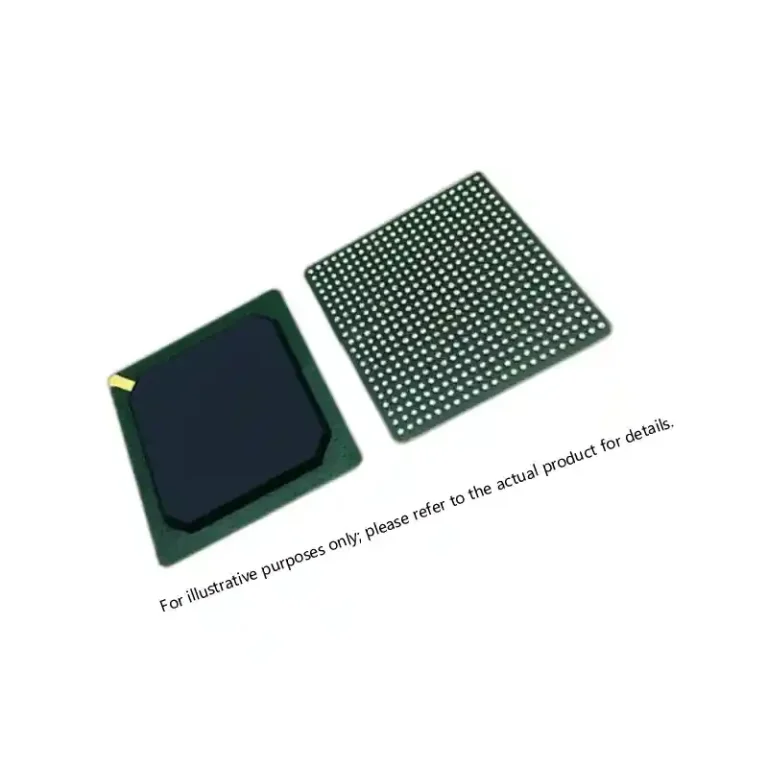
A radiation-hardened component is an integrated circuit or discrete device that has been designed, fabricated, and tested to survive specified levels of ionizing radiation and maintain functional performance within datasheet limits. This is not a post-production screening exercise. Rad-hard parts are built on dedicated process technologies, usually at trusted foundries, using radiation-hardened-by-design libraries and hardened device structures that resist charge accumulation and transient upset.
The key metrics are total ionizing dose (TID), typically measured in kilorads, and single event effects (SEE) immunity, which covers single event latchup and single event upset rates. A QML-V qualified FPGA from Microchip (formerly Actel) or a 5962-series rad-hard ADC from Analog Devices carries TID ratings of 100 to 300 krad(Si) and guaranteed LET thresholds for upset immunity. A commercial equivalent has no these guarantees because the fabrication process was never engineered for it.
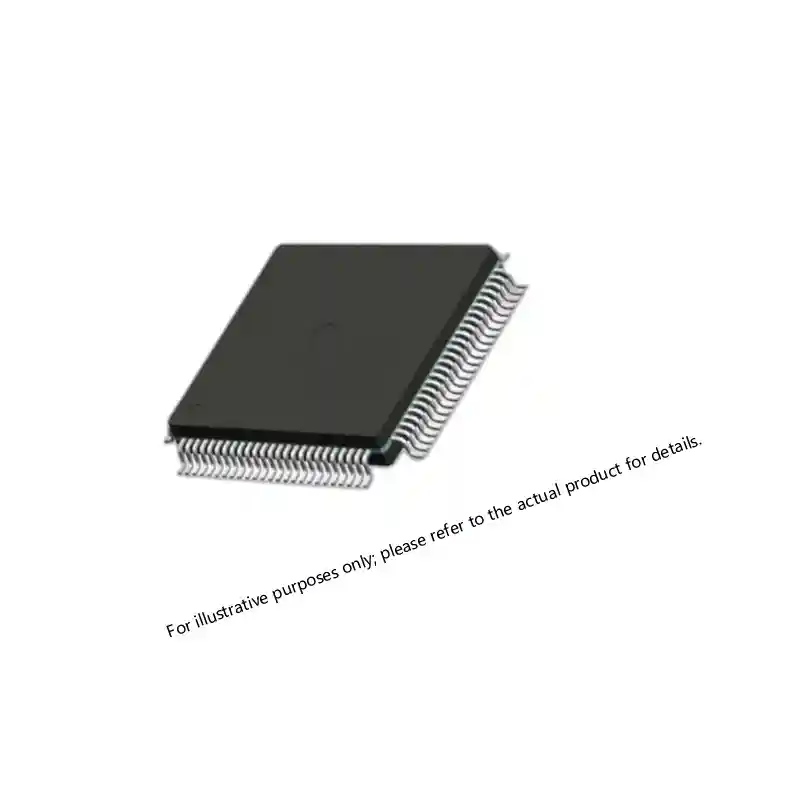
The difference shows up in the transistor-level design. Rad-hard processes increase gate oxide thickness, use triple-well isolation to prevent latchup, and often implement redundant flip-flop structures with scrubbing logic to correct bit flips. Commercial parts lack these features entirely, which means even a single energetic particle can flip a memory cell or trigger a parasitic thyristor.
Radiation Effects That Drive Hardening Requirements
The radiation environment damages electronics through three distinct mechanisms, and the type of damage dictates whether rad-hard is required.
Total ionizing dose accumulates over the mission life from trapped electrons and protons, solar particles, and cosmic rays. It shifts transistor threshold voltages and increases leakage current, eventually causing the circuit to drift out of specification. A commercial CMOS part rated for a few kilorads may function for weeks in LEO before parametric degradation becomes measurable; a rad-hard part rated for 100 krad or more will hold its specifications for the full mission.
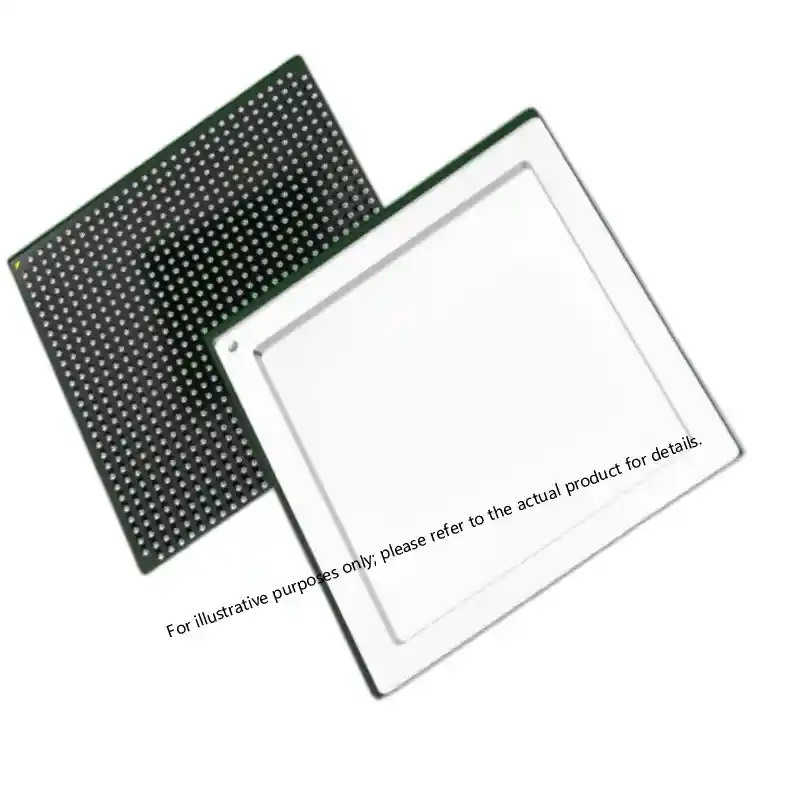
Single event effects happen when a single high-energy particle passes through the silicon and deposits charge along its track. A single event upset flips a storage cell. A single event latchup triggers a low-impedance path between power rails that can destroy the device if current is not interrupted. Rad-hard parts suppress latchup with device-level isolation; commercial parts rely on external protection circuits that react too slowly.
Displacement damage degrades bipolar and power devices by physically knocking atoms out of the crystal lattice, reducing carrier lifetime. For power MOSFETs and BJTs, this limits total dose tolerance even if oxide effects are mitigated. Space-grade power modules from VPT or VICOR use rad-hard vertical structures specifically to handle displacement damage.
Environments Where Rad-Hard Components Are Mandatory
If the system operates in space or at altitudes above approximately 30,000 feet, radiation effects are present. Whether they are severe enough to require rad-hard components depends on the orbit and the acceptable upset rate.
In geostationary orbit (GEO) and deep-space missions, the combination of high-energy trapped protons and galactic cosmic rays produces TID levels of several tens to hundreds of kilorads over a 15-year mission, and the SEE environment is harsh enough that commercial parts will latch up almost immediately. Every FPGA, memory, and ADC in a GEO payload must be rad-hard. For LEO satellites below 2,000 km, the dose is lower but the South Atlantic Anomaly creates intense particle flux during each orbit pass. Systems that require high availability, such as Earth observation platforms or communications satellites, need rad-hard parts in the digital core and the power supply.
For military systems, the requirement is formalized. Programs that must survive a nuclear event, or operate inside a reactor compartment, or fly through a radiation belt must meet specified hardness levels per MIL-STD-883 or MIL-PRF-38535. A mil-grade component tested to Method 1019 for TID and 1080 for SEE is not the same as a rad-hard QML-V part, but for many ground- and ship-based applications it is sufficient. The requirement specification, not the engineer’s preference, drives the part selection.
High-altitude avionics and particle accelerator control systems encounter neutron fluxes that can induce single event upsets in SRAM and configuration memories. Here, rad-hard is not always required; radiation-tolerant parts with error-correcting code protection and watchdog timers can often handle the soft error rate. The decision point is whether a reset or a corrupt data word is acceptable. If the system is flight-critical, rad-hard remains the baseline.
Rad-Hard, Radiation-Tolerant, and Up-Screened: A Comparison
Procurement teams frequently see these three labels used interchangeably in supplier data, but they represent fundamentally different levels of assurance.
| Parameter | Rad-Hard | Radiation-Tolerant | Up-Screened Commercial |
|---|---|---|---|
| Fabrication process | Dedicated rad-hard foundry | Modified commercial process with extended TID qualifying | Standard commercial process |
| TID rating | 100–300 krad(Si) typical | 30–100 krad(Si) | 5–30 krad(Si) |
| SEE immunity | Guaranteed LET threshold, no latchup | Characterized SEU rate, no latchup guarantee | No characterization |
| Cost multiplier vs commercial | 5–20× | 2–5× | 1–3× |
| Lead time | 20–40 weeks typical | 12–26 weeks | 8–16 weeks |
Up-screened parts are commercial devices that have been lot-tested for TID tolerance and perhaps burned in. They can work for short-duration LEO missions that accept a higher probability of functional interrupts, but I’ve seen two instances where up-screened FPGAs exhibited latchup at LET values below 15 MeV-cm²/mg — low enough to trigger in a polar LEO orbit. A rad-hard FPGA from the same logic family would not have latched up under those conditions.
If your program has a threshold dose rate or an orbit that puts you near the boundary between tolerance categories, it is worth verifying the SEE test data with your supplier before finalizing the BOM. Our team at Sparkle Electronics can walk through the radiation test reports for specific part numbers and help you map them to your mission profile. For a detailed review of your component list, send your BOM to xuansc2144@gmail.com and we’ll confirm which parts carry verified rad-hard qualification.
Sourcing Authentic Rad-Hard Components: Supplier Verification
Even when the specification is correct, the supply chain introduces risk. The niche nature of rad-hard components, combined with lead times that stretch past half a year, creates opportunities for counterfeiters and unauthorized remarking. I’ve seen parts with laser-marked rad-hard certifications that trace back to commercial die because the distributor could not provide lot-level traceability to the foundry.
A legitimate rad-hard component shipment should include the following documentation: a Certificate of Conformance referencing the applicable MIL-PRF-38535 or SMD number, test data for the specific lot showing TID and SEE results, and chain of custody from the qualified manufacturer. If your supplier cannot produce these documents within 24 hours of request, the parts should be quarantined.
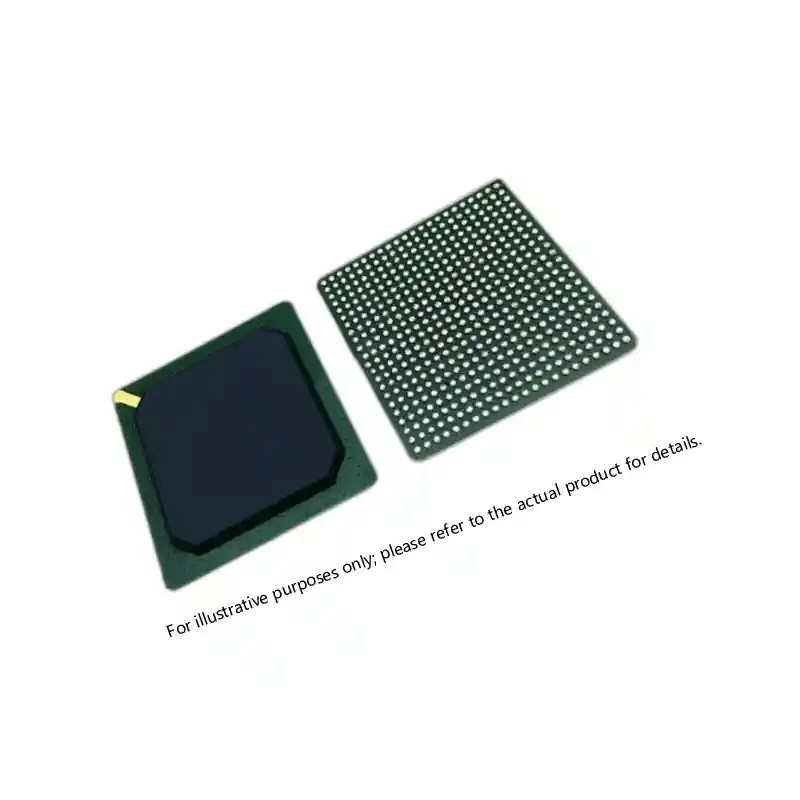
Supplier credentials matter independently of the parts themselves. An AS9120 or AS6081 certification confirms the distributor operates a quality management system for aerospace parts. For defense programs, the distributor should understand ITAR and DFARS requirements and maintain documented counterfeit detection procedures. At Sparkle Electronics, we maintain a sourcing network that reaches back to the trusted foundries and authorized distributors of rad-hard FPGA, ADC, and power module manufacturers including Microchip, Analog Devices, and VICOR. Every rad-hard part we ship includes traceability to the original wafer lot and test reports to the applicable radiation specification.
Common Questions About Radiation-Hardened Components
What is the cost premium for a rad-hard part compared to a commercial equivalent?
A rad-hard FPGA will typically cost 5 to 10 times more than the same gate-count in a commercial or industrial part, and 15 to 20 times for high-density rad-hard devices in hermetic ceramic packages. The premium covers the dedicated fab process, extended test flow, and the low-volume nature of the product. For mixed-signal and power parts, the multiplier is usually lower — 3 to 8 times — because many mil-grade power modules already incorporate some hardening.
How long are lead times and can I get rad-hard parts from stock?
Pre-production lead times for rad-hard FPGAs and ADCs generally run 20 to 40 weeks depending on part complexity and foundry allocation. Some distributors, including Sparkle Electronics, hold limited inventory of high-demand rad-hard parts such as Axcelerator and SmartFusion2 FPGAs, which can ship in days rather than months. Even when stock is available, verify the date code and shelf-life compliance with your program’s procurement rules.
Can rad-hard parts be substituted with up-screened commercial devices for LEO missions?
For short-duration LEO missions with tolerant reset architectures and non-critical payloads, up-screened commercial parts may be acceptable if the program has budgeted for a higher upset rate and additional redundancy. However, up-screening cannot eliminate latchup susceptibility or displacement damage in power devices. If your mission requires a mean time between reboots measured in years, rad-hard is the safer baseline.
What distinguishes a genuine rad-hard QML part from a remarked counterfeit?
Genuine rad-hard parts carry a QML logo and the specific QML class on the part marking, and the supplier can provide lot-specific test data for both TID and SEE. Counterfeit parts often have standard commercial date codes, mismatched package materials, and no lot-specific radiation test reports. Request a copy of the wafer lot traceability document and the C of C before accepting any shipment.
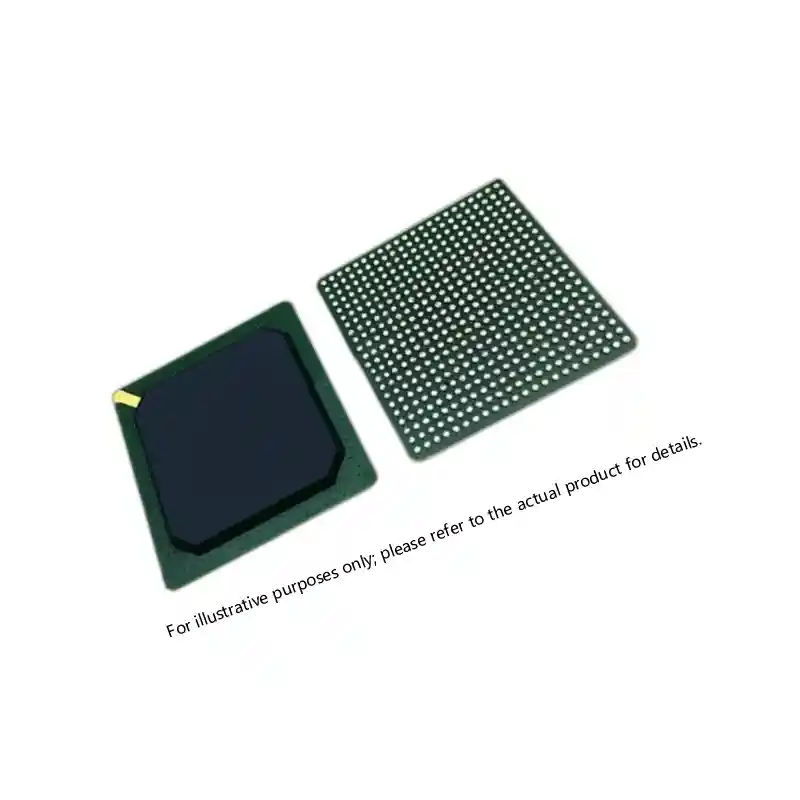
Does Sparkle Electronics stock rad-hard components for immediate delivery?
Yes. We inventory rad-hard FPGAs from Microchip including Axcelerator (AX1000, AX2000) and SmartFusion2 (M2S150, M2S150TS) families, as well as selected Analog Devices ADCs and VICOR power modules. For parts not in stock, our sourcing team can quote OEM lead times and coordinate last-time-buy or die-bank options for long-term programs. If you have a specific part number or a requirement for lot traceability and radiation test data, share your specifications and we will confirm availability and compliance documentation.
If you’re interested, check out these related articles:
Virtex-7 XC7VX690T: Performance and Reliability Insights
XC7VX485T FPGA: Virtex-7 Performance for Defense