
Sourcing Military-Grade ICs for Tactical Radio Systems
Table of Contents
- Military-Grade ICs That Define the Tactical Radio Signal Chain
- FPGA and Digital IF Partitioning
- RF Conversion, Synthesis, and Power
- How Secure Voice Processing Changes Component Selection
- Type 1 and Type 3 Security Boundaries
- Voice Processing and Codec Hardware
- Sourcing Tactical Radio ICs for Long Program Life
- Traceability and Screening Requirements for Tactical Radio Components
- Building a Tactical Radio Component Pipeline
- Questions Procurement Teams Ask About Tactical Radio Components
- What screening level should tactical radio ICs meet?
- Is MIL-STD-883 screening enough for secure voice systems?
- How do we handle obsolescence for radio-specific FPGAs and DSPs?
Military-grade ICs for tactical radio systems carry the full burden of secure voice and frequency hopping waveforms, from RF sampling to encryption and packet framing. Component choice determines whether a radio stays coherent under jamming, rapid temperature shifts, and long-duration missions. Sourcing engineers should evaluate parts by waveform-specific loading, screening level, and long-term second-source control instead of relying on datasheet headline performance. That position runs through this article, from the signal chain to the procurement decisions that keep tactical radio programs stable.
Military-Grade ICs That Define the Tactical Radio Signal Chain
A tactical radio is a software-defined radio with tight SWaP-C limits and a hardened RF front end. Four device groups carry the waveform: FPGAs run the modem, security, and digital IF; DSPs handle voice encoding and error correction; high-speed ADCs and DACs translate between the analog RF domain and the bitstream; power modules hold regulation steady across temperature and input transients. Teams that select each group independently often end up with mismatched interfaces and longer qualification loops.
FPGA and Digital IF Partitioning
Most military radios split the baseband between a control-plane FPGA and a signal-processing FPGA or DSP cluster. The control-plane FPGA generally needs flash-based configuration to reduce bitstream interception risk. Microsemi ProASIC3, SmartFusion2, and PolarFire devices appear often in this role because they store configuration on chip and resist bitstream tampering more effectively than SRAM-based parts with external memory. For wideband CNR waveforms, Xilinx Kintex-7 and Virtex-7 devices supply the serializer count to link JESD204B/C ADC and DAC arrays.
A common mistake is sizing the FPGA for logic capacity alone and leaving no margin for secure boot and configuration memory. In programs we have reviewed, the layout clears design review and then stalls because the only qualified NOR configuration memory is a discontinued part or cannot meet the required temperature range. The FPGA itself was never the bottleneck; the boot path was.
RF Conversion, Synthesis, and Power
After the baseband, the ADC and DAC set the radio’s instantaneous bandwidth and spurious-free dynamic range. High-speed parts such as the AD9680, ADC12D1600, and DAC38RF82 make direct RF sampling possible in some architectures, but only when the clock source holds enough phase-noise margin. Wideband hopping synthesizers such as the LMX2592 and LMX2820 set channel spacing and lock time. Their phase noise cannot be corrected later in FPGA code.
Power regulation is the quiet specification. Vicor V300 series modules and similar hi-rel converters are common choices, and transient response under frequency-hopping current pulses belongs in the electrical test plan. I have seen a radio pass nominal output tests and then fail cold-soak transmit because the power rail sagged during the hop burst.
| Functional block | Representative devices | Tactical radio procurement focus |
| Baseband and modem FPGA | Microsemi SmartFusion2, Xilinx Kintex-7 | Configuration security, serializer count, JESD204C lanes |
| Voice and crypto DSP | TI TMS320C6678, TMS320C6672 | Channel count, power per channel, QML variant availability |
| RF sampling | ADI AD9680, ADC12D1600, DAC38RF82 | Sample rate, SFDR, clock jitter, direct RF path fit |
| RF synthesis | LMX2592, LMX2820 | Phase noise, hop lock time, frequency coverage |
| RF power and low noise | GaN PAs, GaAs LNAs | Band coverage, PAE, linearity, pulse handling |
| Power conversion | Vicor V300 series, DVHF2812S | Input transient response, hermetic packaging, MIL-STD-461 noise |
How Secure Voice Processing Changes Component Selection
Secure voice is not one function. It spans vocoding, encryption, key handling, and traffic protection. The component choice changes with the security boundary. A ground combat radio with an external Type 1 crypto module can leave the FPGA for plaintext waveform processing, while a Type 3 or software-defined crypto design pulls key handling inside the processor. Procurement teams should map that boundary before locking the BOM.
Type 1 and Type 3 Security Boundaries
Type 1 certified radios isolate most cryptographic functions in a dedicated module, so the baseband processor has a smaller trusted area. Type 3 or exportable software cryptography shifts that burden onto the FPGA and DSP. This changes which parts are acceptable. A flash-based FPGA with on-chip configuration memory reduces bitstream tampering risk more than an SRAM-based part with external configuration storage. The same logic applies to key storage and secure boot. Parts specified for Type 3 units should not be carried into Type 1 programs without checking what remains inside the trusted boundary.
Voice Processing and Codec Hardware
DSPs still perform much of the voice and codec work in tactical radios. TI TMS320C6678, TMS320C6672, and legacy SMJ320C6701 devices appear across CNR and software-defined radio programs. Selection criteria include channel count, power per channel, and whether the part is available as a QML or military temperature variant. Many designs keep a legacy DSP because the voice codec library was built around its fixed-point instruction set. Moving to a newer part triggers a requalification that can take longer than the shortage that motivated the move. When we quote a BOM, we look for that hidden compiler dependence and flag it before the order.
If your radio is moving from single-channel secure voice to wideband data plus voice, confirm the clock architecture before the BOM freezes. The interaction between the synthesizer phase noise and the ADC sample clock determines whether a direct sampling path will meet spurious-free dynamic range. Send your block diagram or part list to xuansc2144@gmail.com and we will check the analog and digital chain.
Sourcing Tactical Radio ICs for Long Program Life
Tactical radio programs run for decades. The component that fits today matters less than the component that remains available, qualified, and traceable ten years later. That shifts the procurement decision from unit price to source control, approved vendor options, and last-time-buy planning. A long-running CNR or MANET radio should not depend on a single package from a single foundry without a second-source path.
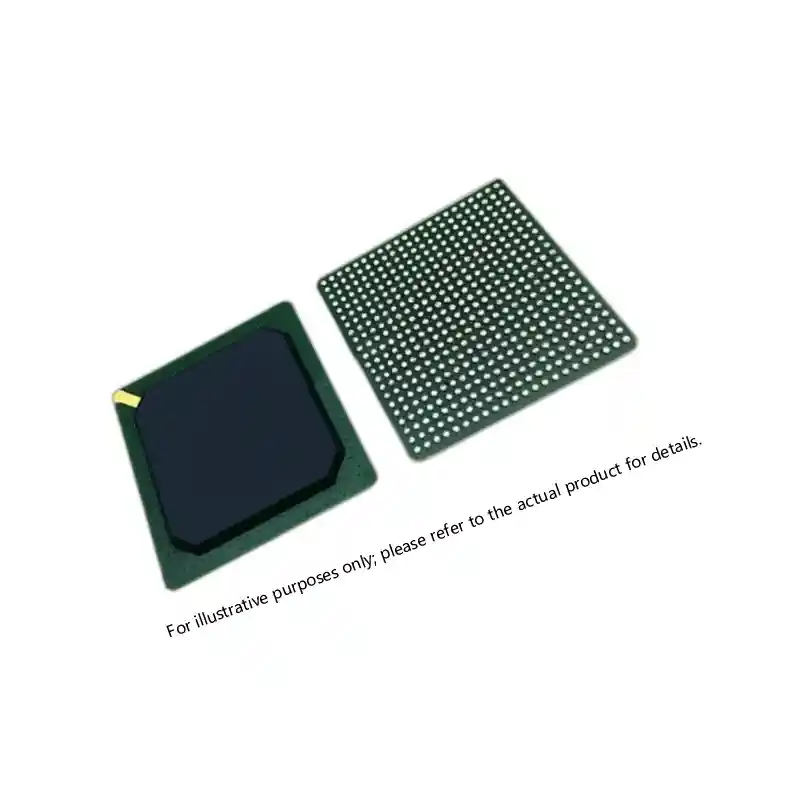
Many radios that entered service in the 1990s and 2000s still use components that are no longer in active production. Sparkle Electronics keeps inventory such as the Actel A54SX72A and A3PE3000L, Xilinx Spartan-6 and Virtex-5 devices, and TI SMJ320C6000 series DSPs for exactly this situation. New builds should balance technology freshness with lifecycle assurance. A Kintex-7 design may have enough lifespan, but the configuration flash and a socket-compatible second source need the same attention. We recommend building a lifecycle risk column into the BOM: one line for the FPGA, one for its configuration memory, one for the clocking tree, and one for the connector family.
Traceability and Screening Requirements for Tactical Radio Components
For tactical radio components, traceability is not paperwork. A mixed or counterfeit lot can pass incoming visual inspection and fail only during temperature cycling or vibration. Tactical radios operate at the outer edge of what commercial parts are rated for, so screening level, certificate of conformance, and lot traceability to the original component manufacturer decide whether a part belongs in the build.
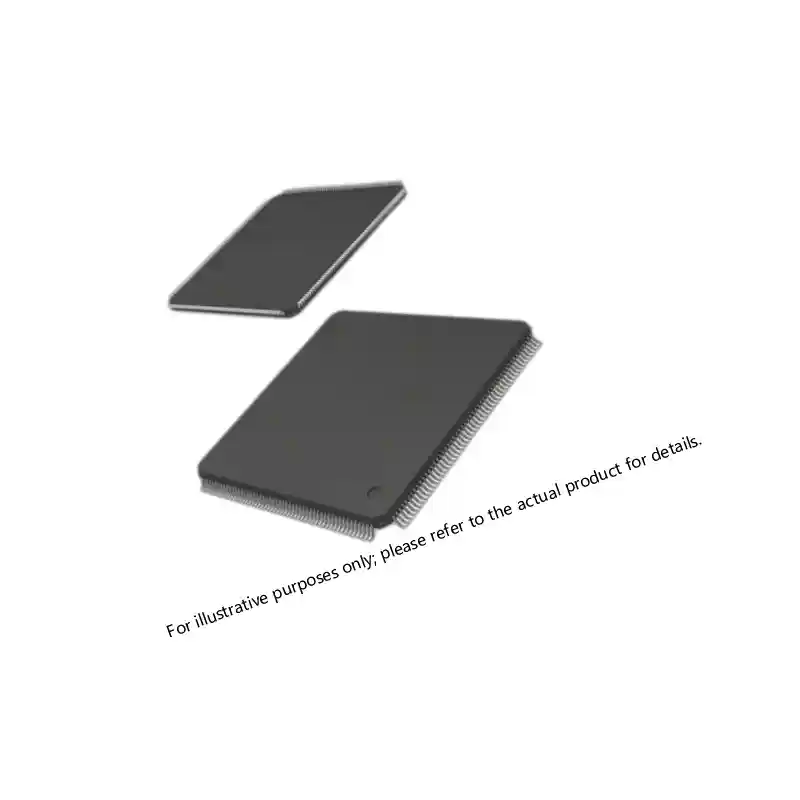
Screening requirements should follow the radio type and its operating environment. Ground and airborne units often require MIL-STD-883 class B or equivalent screening, while JANTX and JANTXV parts apply to discrete and power devices. QML-qualified devices and 5962-series parts carry defined flows. Documentation matters as much as the part itself: a certificate of conformance must tie the lot to the original component manufacturer, and the chain of custody should be available from the component maker to the distributor. For high-risk lots, x-ray and decapsulation checks add another layer before the parts enter the build.
Building a Tactical Radio Component Pipeline
Long-running tactical radio programs rarely fail because one datasheet parameter was wrong. They stall when second-source options disappear, screening documentation is incomplete, or a component changes package mid-program. Sparkle Electronics maintains inventory across FPGA, DSP, ADC/DAC, power, and MIL-SPEC passives, with traceability records and screening data for defense sourcing. Send your part number and quantity to xuansc2144@gmail.com and we will confirm availability, traceability documents, and a realistic delivery schedule.
Questions Procurement Teams Ask About Tactical Radio Components
What screening level should tactical radio ICs meet?
For most ground and airborne tactical radios, MIL-STD-883 class B or a QML-qualified flow is the baseline because it defines a sequence of burn-in, temperature cycling, and visual inspection. JANTX and JANTXV levels apply to diodes, transistors, and some power devices. The correct level depends on the program specification, not on the component’s price. A commercial part with only datasheet ratings will not pass a DFARS-compliant source review unless the program accepts commercial off-the-shelf status and documents that decision. Confirm the screening requirement before quoting, because the screening class changes both lead time and cost.
Is MIL-STD-883 screening enough for secure voice systems?
It depends on whether the security boundary allows a software-defined crypto path or requires a dedicated Type 1 crypto module. MIL-STD-883 screening addresses physical reliability, not cryptographic assurance. For a Type 3 system, the FPGA and boot memory need additional configuration security and tamper resistance beyond basic screening. For Type 1 systems, the cryptographic module carries its own assurance and the surrounding components may only need standard hi-rel screening. Match the screening level to the security boundary rather than applying one rule to the entire radio.
How do we handle obsolescence for radio-specific FPGAs and DSPs?
A common mistake is assuming the last-time-buy notice gives enough time to react. By the time procurement sees the notice, the line may already be inactive. Build a lifecycle risk column into the BOM that flags every single-source part, and track end-of-life alerts for the FPGA, its configuration memory, the clocking device, and the DSP family. For parts already discontinued, a trusted distributor can hold inventory, cross-reference form-fit-function replacements, and verify screening and traceability before the order. Send your legacy part list to xuansc2144@gmail.com and we will confirm what is still available.
If you’re interested, check out these related articles:
Virtex-7 XC7VX690T: Performance and Reliability Insights
XCKU085 UltraScale FPGA: Performance for Critical Systems
XCKU115 UltraScale FPGA: Powering Critical Defense Systems
A1020B-PG84B ACT2 FPGA: Specs, Sourcing, and Availability
Virtex-7 XC7VX690T: Performance, Reliability, and Integration