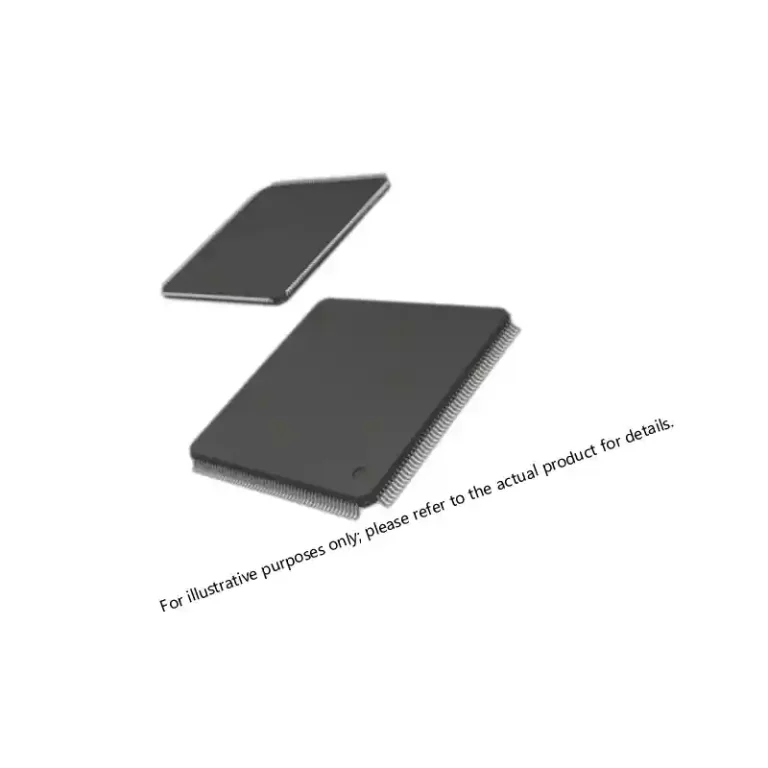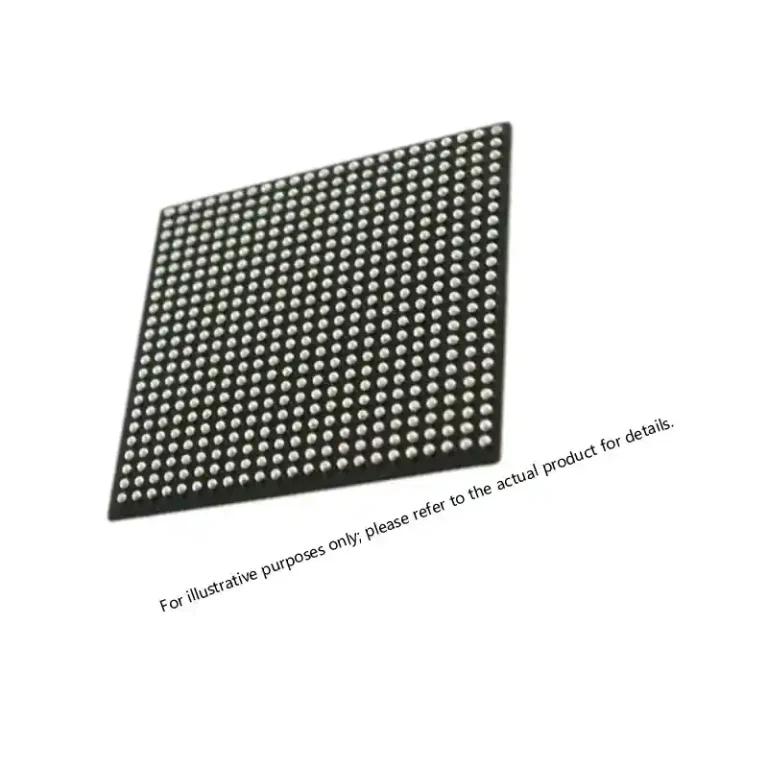
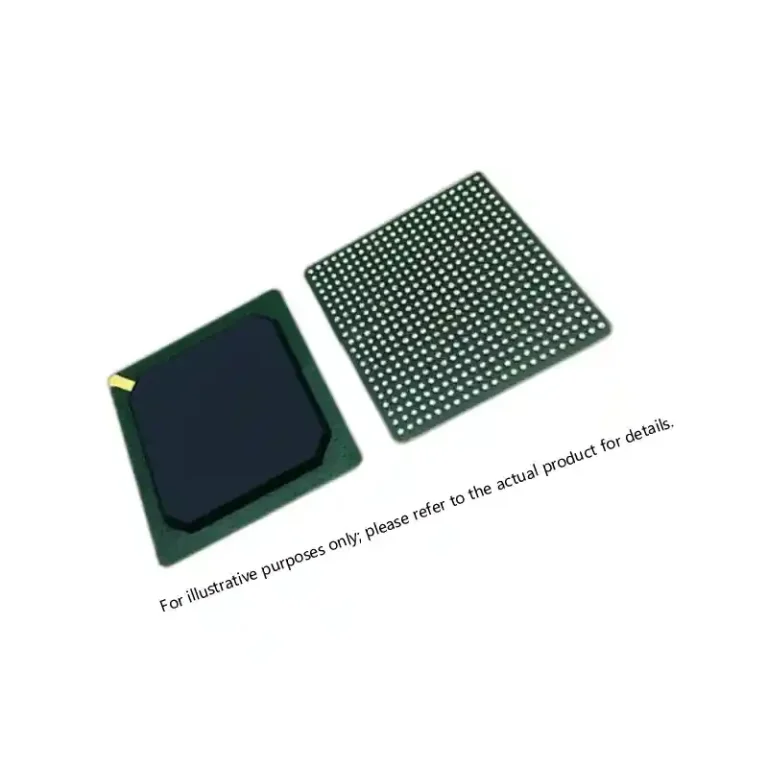
Texas Instruments Military-Grade DSPs in Defense Signal Processing
Table of Contents
- Which TI Military DSP Families Are Fielded Today
- How Defense Signal Processing Workloads Map to TI DSPs
- Three Specification Layers That Determine TI DSP Compliance
- How to Verify Authenticity Before Accepting TI Military DSP Shipments
- How a Distributor With 500-Plus Military Part Numbers Supports TI DSP Programs
- Questions Defense Engineers Ask About TI Military DSP Procurement
Defense signal processing demands components that deliver deterministic performance under conditions where failure is not an option. Texas Instruments military-grade digital signal processors (DSPs) are embedded in radar fire control, electronic warfare jamming, SIGINT collection, and secure communications across platforms that operate from -55°C to +125°C. I have seen program teams lose months resolving a single mismatch between a commercial DSP rated to 0°C and a fielded system that must cold-soak at altitude, and the lesson repeats: the processor you select either meets the full mission profile or becomes the bottleneck. This article maps the TI military DSP families used in defense signal processing today, the specific applications they serve, and the procurement discipline required to source authentic, fully traceable units without diluting program compliance.
Which TI Military DSP Families Are Fielded Today
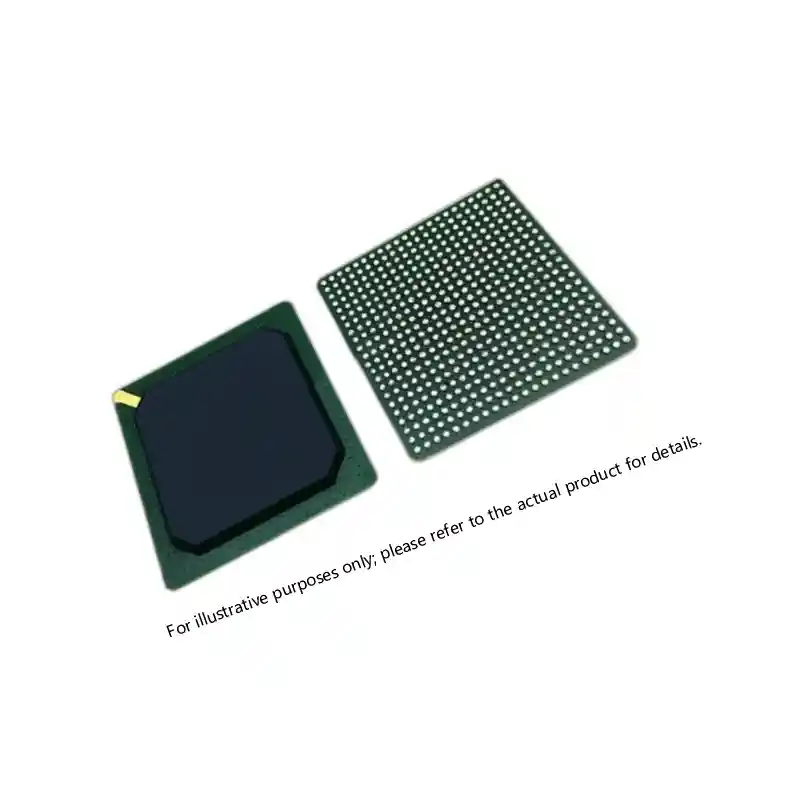
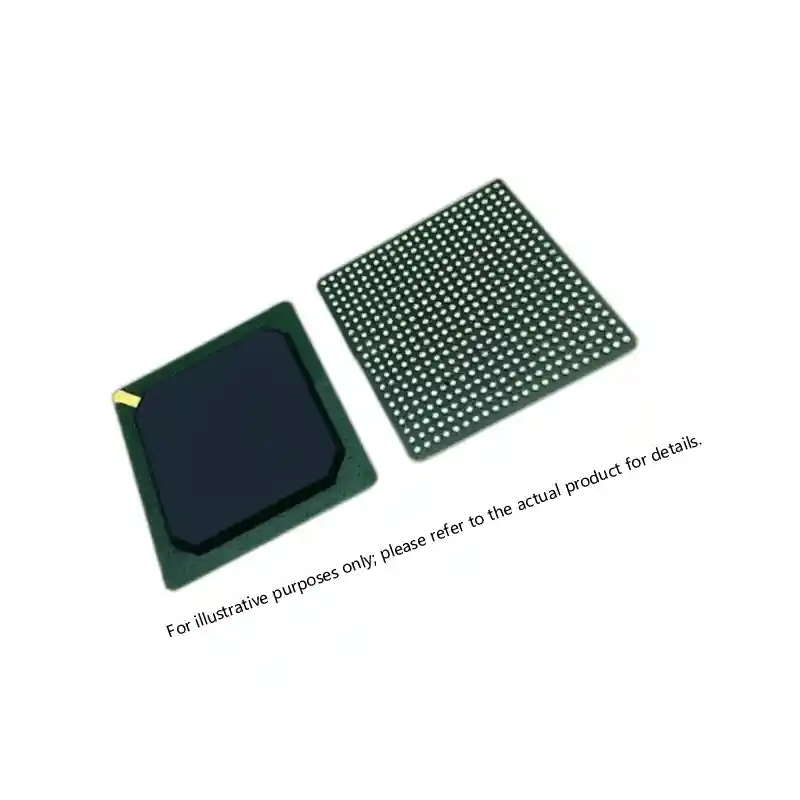
TI military DSPs fall into three broad categories that procurement teams recognize from part number prefixes: the SMJ320 series of qualified military processors, the TMS320C6000 high-performance fixed- and floating-point DSPs with extended temperature and screening options, and C2000-series real-time controllers used in motor control and power conversion subsystems. Each family addresses a different performance density point.
The TMS320C6678 is an eight-core fixed- and floating-point DSP that runs at 1.25 GHz and delivers 160 GFLOPS. In radar beamforming applications, I have seen programs use the C6678 to replace banks of older single-core processors because the package-level integration reduces board area and simplifies the clock distribution tree. The C6678 part number suffixes matter: TMS320C6678ACYPA25 indicates the 1.25-GHz speed grade in a BGA package, and ordering the wrong speed grade will derate the processing chain.
The single-core TMS320C6672ACYPA runs at 1 GHz and sees use in lower-channel-count SIGINT and COMINT receivers where power budget is tighter. The quad-core C6674 falls between them when a program needs more throughput than a dual-core but cannot justify the thermal management overhead of the full eight-core device. For floating-point workloads that do not require the C6000 VLIW architecture, the TMS320C31PQA40 at 40 MHz and the SMJ320C31GFAM40 military-qualified variant remain in long-term defense programs because the algorithm libraries are validated and the supply chain is well understood.
On the real-time control side, the SMJ320F240HFPM40 and SMJ320F2812HFGM150 belong to the C2000 line and appear in motor drives for gimbal stabilization and antenna positioning, as well as in power converter regulation. These are not signal processors, but in an integrated defense system they often sit adjacent to the high-speed DSPs, handling the control loop while the DSP manages data throughput.
How Defense Signal Processing Workloads Map to TI DSPs
I group defense signal processing into four workload types, and the TI DSP selection changes with each.
Radar pulse compression and beamforming are multiply-accumulate intensive. The C6678 and its multi-core C6000 siblings handle the vector math efficiently because the VLIW architecture allows eight instructions per cycle and because TI’s optimized FFT libraries are available in the board support package. I have observed that programs using FPGA front-end ADCs like the ADC12DJ3200 to digitize wideband radar returns pair them with C6678s to run the pulse-Doppler processing chain. The split works because the FPGA manages the sample rate decimation and the DSP handles the algorithmic flow.
Electronic warfare (EW) systems require wideband channelization. Here I see the TMS320C6455 at 1 GHz and the C6674 used for real-time spectral analysis because the fixed-point DSP engines are efficient at the polyphase filter banks that drive channelized receivers. Frequency-domain processing on a 2 GHz instantaneous bandwidth is computationally punishing, so the DSP must keep pace with the ADC sample clock. The ADC12D1800RF delivers 1.8 GSPS dual-channel digitization and partners naturally with a C6678 running at 1.25 GHz in these applications.
Software-defined radio (SDR) and tactical communications lean on the TMS320C31 and C6713 floating-point DSPs when waveform portability matters more than raw throughput. The C31 PQA40 still appears in SINCGARS-compatible terminals and legacy data links because the waveform code is certified and a processor change would trigger a full requalification. I have supported programs where the decision to continue using a 40-MHz DSP was entirely driven by the cost of recertification rather than any performance ceiling.
Missile guidance and fuze processing are latency-critical. The SMJ320C50 at 66 MHz and the SMJ320F240 at 40 MHz are embedded in seekers because the deterministic execution time of a 16-bit fixed-point DSP is easier to bound than a multi-core processor with cache coherency variations. In these applications, the worst-case execution time is the specification that matters, not the average.
Three Specification Layers That Determine TI DSP Compliance
When I receive a BOM with a TI DSP part number, I check three compliance layers before I quote a lead time.
The first is the temperature range. Extended-temperature parts rated for -40°C to +105°C cover many industrial-defense crossover applications, but a part like the SMJ320C6203GLPM20 carries a full military temperature range of -55°C to +125°C and has been screened to MIL-STD-883. If the program operates at altitude or in desert environments, I will only quote the -55°C to +125°C range because the extended-industrial devices will fail the cold-start requirement.
The second layer is the screening and qualification flow. Parts with the SMJ prefix are QML-Q devices manufactured on a qualified manufacturing line with lot-level testing. A TMS320C6000 part with an “A” suffix such as TMS320C6672ACYPA indicates an enhanced-product version with additional screening beyond commercial, but it is not QML-Q. Procurement teams that need a full Certificate of Conformance and traceability back to the wafer lot should specify the SMJ-qualified part number or ensure the distributor can supply the lot test data before shipment.
The third layer is obsolescence management. The C31, C40, and C50 families are no longer in active production, and the last-time buy dates have passed. Programs that still depend on these DSPs must source from authorized distributor stock or verified aftermarket inventory. I maintain a die bank for several SMJ320C31 and TMS320C6416 part numbers, which means I can supply wafers or packaged devices from controlled storage with full chain-of-custody documentation.
If your program uses a mix of active and legacy TI DSPs, it is worth confirming the long-term supply plan for each part number before the next milestone review. A mismatch between a 12-month program schedule and a DSP that only exists in limited stock creates procurement risk that cannot be resolved later.
How to Verify Authenticity Before Accepting TI Military DSP Shipments
Counterfeit DSPs in the defense supply chain most commonly appear as remarked commercial parts sold as military-temperature devices. I have seen C6678 parts with the original top marking ground off and a laser-etched “A” suffix added to pass visual inspection. The electrical test at ambient temperature will often pass because the silicon is functional, but the part will fail at cold soak or under extended load.
Three verification steps catch nearly all non-authentic TI military DSPs. First, request the full lot number and date code and cross-reference against TI’s authorized distribution records. TI provides a traceability portal for QML devices that confirms the original ship-to customer, which a reputable distributor can access and share with your quality team.
Second, perform decapsulation and die inspection on a sample from each lot. A genuine military-grade DSP die will have the TI logo, part number, and fab location etched into the metal layer. A remarked commercial part will show a commercial-grade die with different metallization or a missing military mask revision. I coordinate this inspection with third-party test labs before any shipment leaves our facility, so the results are on your desk before the lot arrives.
Third, test a sample from the lot across the full military temperature range. I have seen commercial C6678 parts pass the -40°C screen but fail at -55°C because the silicon was not characterized for the extended range. A lot test at -55°C, +25°C, and +125°C with a functional pattern that exercises all eight cores simultaneously will reveal timing violations that a room-temperature test misses.
When your incoming inspection catches a non-conforming device, the cost is the component. When it does not, the cost is a field failure that may occur during a mission. I have never seen a defense program recover schedule after a counterfeit DSP triggered a root-cause investigation, so the upfront verification expense is the cheapest insurance a program can buy.
How a Distributor With 500-Plus Military Part Numbers Supports TI DSP Programs
A defense program that uses a single TI DSP part number rarely stops there. The DSP connects to memory, to an FPGA for data conversion, to a power module, and to a MIL-STD-1553 interface. I carry over 500 military-grade IC part numbers across TI, Xilinx, ADI, Actel, and VICOR precisely because a BOM that arrives with a C6678 request almost always includes additional line items that the buyer needs in the same shipment.
Take the C6678 in an EW application. The DSP needs DDR3 SDRAM like the W3J128M72G-800LBI, configuration flash from the EPCQ128ASI16N, a clock synthesizer such as the CDCM7005MHFG-V, and a high-speed ADC like the ADC12D1600CIUT. If any one of those parts is on allocation or has a 26-week lead time, the DSP is useless waiting in inventory. I cross-reference the entire BOM against our stock position and offer an integrated quote with a single shipment date, which eliminates the partial-delivery risk that splits procurement across multiple suppliers.
For new designs, I support the development cycle from prototyping to production. A prototype order of five C6678 evaluation modules with supporting passives and connectors requires different handling than a 1,000-unit production buy with full lot traceability. I structure the quote to match the current phase, and I flag any part number that is likely to go end-of-life during the program lifespan so the design team can plan a pin-compatible alternate before the last-time buy notice arrives.
Programs under ITAR or EAR restrictions need export classification documentation for every line item. My compliance team provides the ECCN and any required export licenses before shipment, and we maintain records for the required retention period. I have never shipped a military DSP without confirming the end-use statement and the recipient’s compliance status, because a blocked shipment at customs is worse than a delayed quote.
If your program involves a mix of TI DSPs from different families, share the full BOM and your timeline. I will confirm stock, lead times, and compliance documentation within the same cycle, and the integrated quote will reflect realistic availability rather than optimistic sales numbers. Reach me at xuansc2144@gmail.com.
Questions Defense Engineers Ask About TI Military DSP Procurement
When should I use an SMJ-qualified DSP instead of a TMS320 enhanced-product version?
If your program requires a QML-Q device with full MIL-PRF-38535 qualification and lot-level screening per MIL-STD-883, the SMJ prefix is mandatory. A TMS320 enhanced-product part carries additional screening beyond commercial but is not QML-listed. I see SMJ parts in flight-critical avionics and missile guidance where the qualification paperwork is audited. For ground-based radar and test equipment, the enhanced-product version often meets the reliability requirement and offers shorter lead times. The decision hinges on the contract’s quality clause, not the performance specification.
How do I handle a TI DSP that is no longer in production?
Identify the exact part number and date code your design requires. If the original manufacturer has announced end-of-life, check whether authorized distributors still have inventory. For parts past the last-time buy date, source from a distributor that maintains die bank stock with documented storage conditions and chain-of-custody records. I hold TMS320C6414 and TMS320C6455 devices in controlled storage and can supply lots with full test reports. Avoid open-market brokers for legacy military DSPs; the counterfeit rate for out-of-production TI processors is high enough that the verification cost alone often exceeds the part cost.
What documentation should I expect with a military DSP shipment?
Request a Certificate of Conformance that references the manufacturer’s original lot number, a copy of the test data sheet showing the screening results for that lot, and a chain-of-custody record that traces the parts from the manufacturer to your receiving dock. For QML devices, the distributor should also provide the QML certificate and the DLA qualification listing. I include all of these as a single package with the shipment, organized by line item so your quality team can file them directly into the program’s material history.
Why do C6678 lead times fluctuate so much across distributors?
The C6678 is an in-demand processor for defense and communications infrastructure, and allocation depends on the distributor’s relationship with TI and the volume commitment. A distributor that has a standing order with TI for military-temperature DSPs will have shorter lead times than one quoting a spot buy. I place periodic inventory builds for the C6678, C6674, and C6672 across multiple speed grades, so I can often ship from stock while a spot-buy distributor waits 20 weeks. Ask your distributor whether they hold inventory or rely on back-to-back ordering; the difference will determine whether your production schedule holds.
Can I mix military and commercial temperature DSPs on the same board?
Technically yes, but signal integrity and timing closure across a -55°C to +125°C range are harder to guarantee when one device is only characterized to 0°C. The commercial part’s timing parameters may shift outside the military part’s setup-and-hold window at cold temperatures. I recommend using the same temperature grade for all devices in the signal chain unless the system has been characterized with the actual part mix across the full temperature profile. If your program needs a commercial-grade C6678 because the military version is unavailable, share your timing budget and I will check whether the extended-industrial version can meet the slack.
The last thing I would say is: if your program has already locked the DSP part number and you only need a compliance quote, send the part number and quantity to xuansc2144@gmail.com and I will return the documentation package with the pricing by the next business day.
If you’re interested, check out these related articles:
A1020B-PG84B ACT2 FPGA: Specs, Sourcing, and Availability
XC7VX485T Virtex-7 FPGA: Performance and Sourcing for Defense