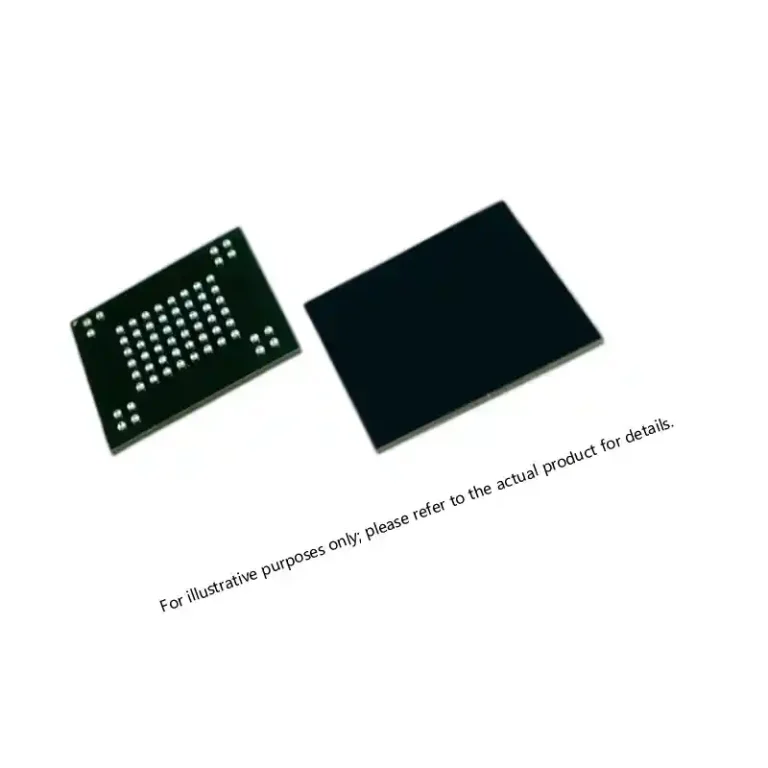

TMS320F240PQA: F240 40MHz Flash DSP/MCU in PQA Package
Table of Contents
- TMS320F240PQA Key Parameters at a Glance
- Functional Architecture and Peripheral Set
- PQA Package, Temperature Class, and Screening Reality
- Obtaining a Traceable Quote for TMS320F240PQA
- Sustainment, Second Sources, and Replacement Planning
- Sourcing TMS320F240PQA with Documentation Integrity
- Frequently Asked Questions
- What is the difference between TMS320F240PQA and SMJ320F240HFPM40?
- Does TMS320F240PQA contain on-chip flash?
- Is TMS320F240PQA QML or /883 qualified as sold?
- Can PQA plastic devices be used in defense equipment?
- What documentation should accompany a military sustainment buy?
- How do buyers verify authenticity for legacy TMS320F240 parts?
- References
The TMS320F240PQA belongs to Texas Instruments’ C2000 DSP controller line and continues to appear in legacy motor-control, power-conversion, and defense electronics programs. In those applications, the part is usually evaluated not only for speed and memory, but for package integrity, mixed-signal peripheral behavior, and the availability of traceable stock [1].
For procurement engineers, the practical question is rarely whether the F240 can perform a control function on paper. The more relevant question is whether the purchased lot matches the datasheet profile and the program’s screening, documentation, and second-source expectations. The sections below address that gap.
TMS320F240PQA Key Parameters at a Glance
The following table summarizes the device profile used in most sustainment and repair BOMs. Treat the values as vendor-published baselines to be confirmed against the specific lot documentation [1].
| Parameter | TMS320F240PQA baseline | Procurement note |
|---|---|---|
| Core | 16-bit fixed-point DSP controller | C2000-class control core |
| Maximum clock | 40 MHz | 25 ns instruction cycle at rated speed |
| On-chip program flash | 16K × 16 | Confirm programming and sector data in lot records |
| On-chip RAM | 544 × 16 | Control routines benefit from dual-access architecture |
| Analog integration | 10-bit ADC with up to 16 channels | Sample-and-hold behavior affects board-level test |
| Motor-control peripherals | Two event-manager modules, 12 PWM outputs | Capture, compare, and deadband resources vary by board revision |
| Serial and control interfaces | CAN 2.0B, SCI, SPI, watchdog timer | Pin mapping must match the target card revision |
| Package | 132-pin plastic BQFP, PQA suffix | Non-hermetic package; not QML or /883 as sold |
Functional Architecture and Peripheral Set
The F240 core is a 16-bit fixed-point DSP controller with separate instruction and data paths. This separation allows the device to fetch instructions and move operands concurrently, which matters in closed-loop control routines where tight timing determines loop bandwidth [1].
The two event-manager modules provide the timer, capture, and compare resources used in PWM generation and position-sensor interfaces. Combined with the 10-bit ADC and CAN 2.0B port, these resources explain why F240-based boards can remain in service for motor drives, actuator controllers, and power-conversion equipment long after the device is no longer the obvious choice for a new design.
From a board-level perspective, the TMS320F240PQA is frequently one item on a mixed-technology BOM. Legacy cards often pair the DSP controller with FPGA or CPLD devices that handle decoding, interface stacking, and memory control. Procurement teams should validate that adjacent programmable logic at the same time they quote the DSP line, because a missing or mismarked FPGA can stop the same repair or build.
Legacy control cards frequently place ACT2-series FPGA devices beside the TMS320F240 to handle address decoding and board-level glue. <A1020B-PG84B ACT2 FPGA: Specs, Sourcing, and Availability> covers the package and sourcing checks that apply when those companion devices are on the same BOM.
Adjacent programmable logic examples often evaluated alongside legacy C2000 controllers include these device profiles:
PQA Package, Temperature Class, and Screening Reality
The PQA suffix identifies a plastic quad flatpack configuration rather than a hermetic military package. That distinction has direct screening consequences. A PQA device may be appropriate for prototype work, ground support equipment, or repair programs with controlled environments, but it should not be assumed to carry MIL-PRF-38535 processing unless the lot documentation explicitly supports that claim [2].
| Screening factor | TMS320F240PQA | SMJ320F240HFPM40 |
|---|---|---|
| Package type | Plastic BQFP | Hermetic package |
| Intended class | Commercial or industrial as purchased | Military-marked version |
| Screening evidence | Certificate of Conformance plus vendor or independent test data | QML or DSCC documentation where available |
| Common use | Sustainment, bench, ground support | Flight, weapon, or extended-environment use |
For defense programs, upscreening from PQA plastic to a military-equivalent baseline requires more than a parameter test. Incoming inspection should compare the lot’s marking, date code continuity, lead finish, X-ray findings, and functional performance against the purchase order and the program’s counterfeit-part control plan. AS6081 provides a widely referenced framework for those controls [3].
Obtaining a Traceable Quote for TMS320F240PQA
When the target quantity, screening level, and documentation package are known, the quote request should capture the part number exactly as it appears in the BOM, including PQA package and any date-code or lot restrictions. Submit the RFQ to xuansc2144@gmail.com with the following fields:
- Full part number and board revision reference
- Required quantity plus acceptable over-shipment or under-shipment
- Date-code or lot preferences, if the program imposes them
- Commercial, upscreened, or military SMJ320F240HFPM40 baseline
- Inspection and documentation requirements: CoC, test data, X-ray, solderability
A complete RFQ reduces the back-and-forth that delays short-notice sustainment buys.
Sustainment, Second Sources, and Replacement Planning
Because the F240 is a mature device, sustainment planning should start from the assumption that stock availability, date-code quality, and documentation will vary by source. The TMS320F240PQA is not a drop-in replacement for the military SMJ320F240HFPM40 in every environment; package material and screening history differ. Conversely, moving from the military version to a PQA plastic device normally requires a formal engineering change and reliability review.
If the long-term plan is to consolidate the F240 function into programmable logic, the design team should evaluate the full migration cost before treating an FPGA as a direct replacement. Device selection, IP availability, toolchain stability, and requalification effort often exceed the cost of procuring another production lot of the original controller.
Teams studying whether to keep an aging DSP controller or absorb its functions into modern programmable logic usually compare the original timing, interfacing, and requalification burden against available FPGA capacity. <XCKU115 UltraScale FPGA: Powering Critical Defense Systems> covers the defense-system trade space for that consolidation path.
For programs that stay with the original architecture, a documented reliability review should cover packaging, thermal history, soldering, and storage condition before large lot acceptance.
Sustaining a long-running defense board means documenting reliability and integration risk for every active component, not just the primary processor. <Virtex-7 XC7VX690T: Performance, Reliability, and Integration> covers those performance and reliability checks in dense defense systems.
Sourcing TMS320F240PQA with Documentation Integrity
Sparkle Electronics supports defense contractors and hi-rel repair programs sourcing the TMS320F240PQA with traceable inspection data, export-aware documentation, and alternate military-grade options such as the SMJ320F240HFPM40. When you submit the RFQ, include:
- Exact part number and package requirement
- Required quantity and date-code window
- Screening baseline: PQA commercial/upscreened or SMJ military flow
- Certificate of Conformance and lot test-data expectations
- X-ray, decapsulation, or electrical sample requirements
Send the request to xuansc2144@gmail.com.
Frequently Asked Questions
What is the difference between TMS320F240PQA and SMJ320F240HFPM40?
The two parts share the F240 design heritage but differ in package and screening class. TMS320F240PQA uses a plastic BQFP and is typically commercial or industrial as purchased. SMJ320F240HFPM40 is the military-marked, hermetic version intended for more demanding screening and environmental requirements.
Does TMS320F240PQA contain on-chip flash?
Yes. The F240 includes 16K × 16 on-chip program flash. Buyers should confirm the programming state and lot-specific configuration documentation before release to production.
Is TMS320F240PQA QML or /883 qualified as sold?
Not in its standard PQA configuration. Some lots can be upscreened under program control, but a QML or hermetic requirement generally points to the SMJ320F240HFPM40 variant or a documented upscreening path.
Can PQA plastic devices be used in defense equipment?
They may be used in ground support, bench, repair, or other controlled environments after engineering review. They are not an automatic substitute for hermetic devices in flight, weapon, or severe-environment applications.
What documentation should accompany a military sustainment buy?
Typical documentation includes a Certificate of Conformance, date and lot traceability, available test or inspection data, chain-of-custody records, and counterfeit avoidance records.
How do buyers verify authenticity for legacy TMS320F240 parts?
Verification usually combines marking inspection, date-code and lot reconciliation, X-ray review, sample decapsulation, and functional or electrical testing. A layered control process is more reliable than any single inspection method.
References
[1] Texas Instruments, “TMS320F240/F241 DSP Controllers Data Manual,” SPRS042D.
[2] U.S. Department of Defense, “MIL-PRF-38535: Integrated Circuits (Microcircuits) Manufacturing, General Specification for,” Defense Logistics Agency.
[3] SAE International, “AS6081: Fraudulent/Counterfeit Electronic Parts: Avoidance, Detection, Mitigation, and Disposition,” SAE Aerospace Standard.
If you’re interested, check out these related articles:
Virtex-7 690T FPGA: Performance, Packaging, and Reliability Insights
Virtex-7 690T FPGA: Performance for Mission-Critical Systems
A1020B-PG84B ACT2 FPGA: Specs, Sourcing, and Availability